The “Hard Shock:” The New Madrid Earthquakes.
05 May 2022 Leave a comment
in economic history, economics of natural disasters
Madonna – Into The Groove (You Can Dance Remix Edit) [2022 Remaster]
05 May 2022 Leave a comment
in Music
Brits Belted: UK’s Subsidised Wind Power Obsession Leaves 3,000,000 Households Suffering Energy Poverty
04 May 2022 Leave a comment

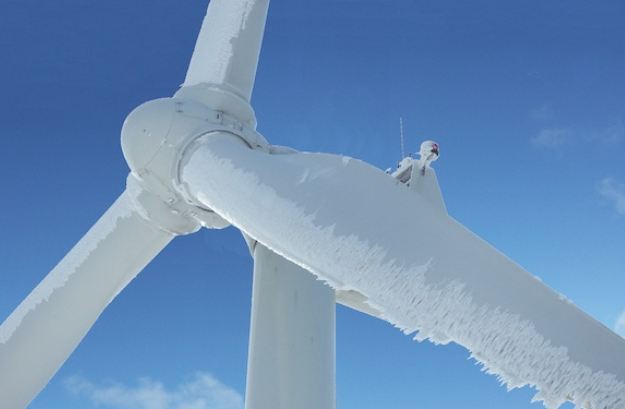
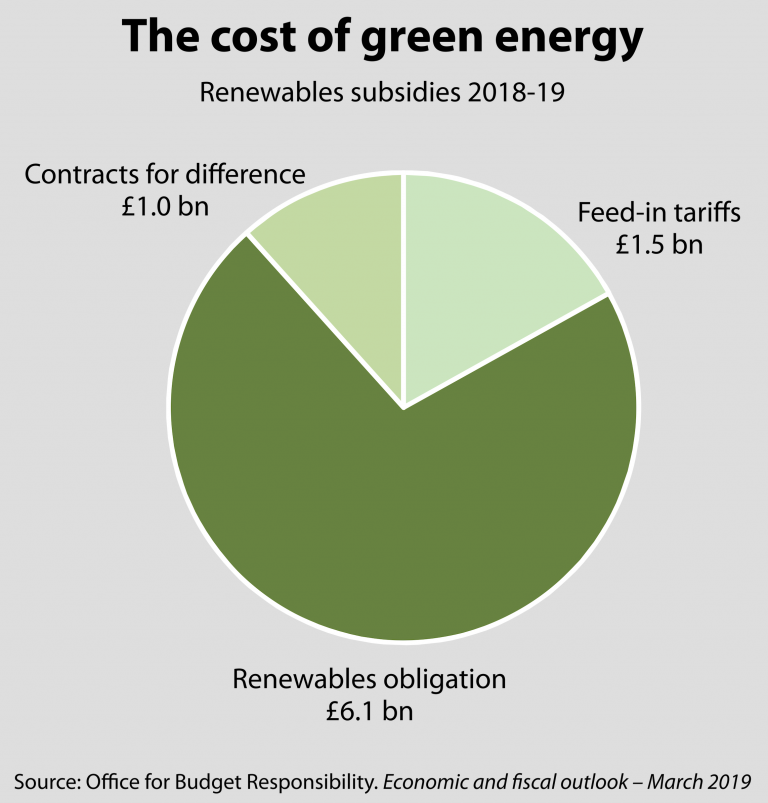
Millions of British households face another bitter winter, unable to meet their rocketing power bills. An obsession with chaotically intermittent wind power (both off and onshore) has sent power prices spiralling. And, adding to the misery, the annual cost of renewable energy subsidies, Feed in Tariffs, fixed contract prices for wind and solar etc to British households will soon reach £12,000,000,000. The current cost is already nudging £10,000,000,000.
While their parliamentarians squabble about the terms on which Britain will sever its ties with Europe, ordinary Brits are fretting about how they might light and heat their homes as temperatures plummet. Heading into winter, some 3,000,000 households are already in “energy debt” and collectively owe nearly £417,000,000 to their suppliers.
Here’s a roundup on the consequences of Britain throwing all to the wind.
Current Costs of British Renewables Subsidies per Household
Global Warming Policy Forum
John Constable
14 October 2019
The…
View original post 1,782 more words
No Escape: How Households Suffer Astronomical Cost of Great Wind & Solar Scam
04 May 2022 Leave a comment
Working out what households pay for subsidies to wind and solar is a task, in itself. Naturally, the crony capitalists that profit from the greatest economic and environmental fraud of all time, are keen to conceal the extent of the state-sponsored larceny from their unwitting victims.
To the same end, their political enablers often talk about the cost of wind and solar subsidies – and other hidden green levies – per household, in terms of the cost of a cup of coffee or scoop of ice cream.
Which might make sense, if the metaphorical cup was the size of an Olympic sports stadium and the scoop of vanilla swirl was big enough to fill it.
Dr John Constable has been on a quest to reveal the true cost born by British households for their government’s renewable energy obsession, for years.
Here he is again, with a tally of what can…
View original post 539 more words
Why Steel from Before 1945 is Weirdly Expensive
04 May 2022 Leave a comment
in defence economics, economics of education
Yoram Barzel’s Tribute to Doug North
03 May 2022 Leave a comment

A guest post by Yoram Barzel.
Doug North, Some Reminiscences
| By Yoram Barzel |
By the time I arrived at the University of Washington in 1961, Doug had been there for a decade, and he stayed for two more. Moving from one Washington (the University of Washington in Seattle) to another Washington (Washington University in St. Louis) is confusing. Most people associate Doug’s career with Washington University in St. Louis, but it was in Seattle that he did the bulk of the work for which he won the Nobel Prize. His work is well known, and I focus on other aspects of his career and on personal memories.
Doug got his PhD from Berkeley, and he was the first to admit that he hadn’t learned much there. Throughout his time in Seattle, when he needed advice when it came to economic analysis, he asked for it with great humility…
View original post 1,422 more words
“Why Managers Still Matter”
03 May 2022 Leave a comment

| Nicolai Foss |
 Here is a recent MIT Sloan Management Review piece by Peter and me, “Why Managers Still Matter.” We pick up on a number of themes of our 2012 book Organizing Entrepreneurial Judgment. A brief excerpt:
“Wikifying” the modern business has become a call to arms for some management scholars and pundits. As Tim Kastelle, a leading scholar on innovation management at the University of Queensland Business School in Australia, wrote: “It’s time to start reimagining management. Making everyone a chief is a good place to start.”
Companies, some of which operate in very traditional market sectors, have been crowing for years about their systems for “managing without managers” and how market forces and well-designed incentives can help decentralize management and motivate employees to take the initiative. . . .
From our perspective, the view that executive authority is increasingly passé is wrong. Indeed, we have found…
View original post 42 more words
Dad’s Army Documentary The Cast’s Secret Lives and Scandals
03 May 2022 Leave a comment
in television
After giving birth, the mother cat is always next to her cubs even when eating
03 May 2022 Leave a comment
Nozick Alone Among the Libertarians
02 May 2022 Leave a comment

I’ve been researching Nozick and his commentators for the MA course I’m giving next semester on Contemporary Political Theory (details on my university web page, see right hand column). The most vicious critics of Nozick are certainly his fellow Libertarians, including Murray Rothbard who Nozick refers to as important in converting him to a Libertarian point of view. Libertarian in this context means the capitalist version in which if the state exists at all, it should only exist to uphold property rights based on voluntary contract, and protect individuals from violence. In the Anarchist, or near Anarchist version, of which Rothbard is the best example, these laws emerge in a voluntary way without any need for a state.
Though I was already acquainted with the idea that Capitalist Libertarians/Anarcho-Capitalists are a quarrelsome lot and that most of them are on the fringe of the academic world, I was startled by…
View original post 653 more words
Rawls, Hayek and Libertarian Political Philosophy: The Rise of the Rawlsekians
02 May 2022 Leave a comment
Rawlsekian is a word that was first used, to the best of my knowledge, in the headline of a piece by Will Wilkinson for Cato@Liberty (part of the website of the libertarian foundation, Cato), ‘Is Rawlsekianism the Future?’, posted on 4th December 2006. The item builds on an idea floated by Brink Lindsey (like Wilkinson now an ex-Cato employee) of ‘liberaltarianism’, that is an alliance between libertarians and liberals (as social democrats are known in the United States) rather than the more familiar alliance between libertarians and conservatives. Hopes of a liberaltarian moment around Barack Obama’s election have now been obliterated, but the idea lives on, and is gaining influence, at the more philosophical and theoretical level, which is where Rawlsekianism enters the stage.
Rawlsekianism is one way of referring to the combination of the ideas of the political philosopher John Rawls with the ideas of the economist…
View original post 1,278 more words


Recent Comments