France’s toxic combo of institutions finally bites

msshugart's avatarFruits and Votes

I still think Emmanuel Macron will win reelection, but it is going to be a closer fight than most prognosticators expected before this past Sunday’s first round. In the results of that vote, Macron has the expected plurality, and it was a few percentage points higher than he got in 2017 (27.8% vs. 24.0%). His runoff opponent in both 2017 and later this month, Marine Le Pen, also improved a bit over last time (23.3% vs. 21.3%). What is new–or really accelerating a trend that was already there–is the total collapse of older established parties. The Republican (mainstream right) got 20% in 2017 but only 4.8% this time, fifth place. The Socialists were already in dire shape in 2017 with 6.4%, but did even worse this time, 1.75%, despite (or because?) of running the mayor of Paris. Jean-Luc Mélenchon of La France Insoumise, a far left group, made the race…

View original post 648 more words

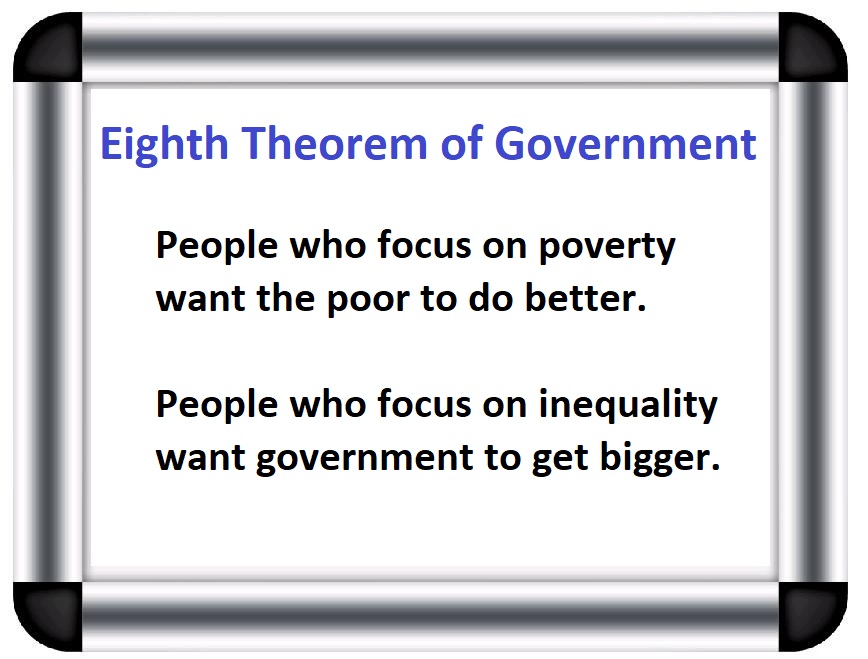
Leftist Tax Policy: Shoot at the Rich, Wound the Poor

Dan Mitchell's avatarInternational Liberty

Folks on the left tell us that they want to help the less fortunate.

I sometimes wonder if their real motive is to penalize success and punish the “rich,” but let’s be charitable and assume that many of them truly wish to help the poor.

Leftist FairnessThat’s a noble sentiment, to be sure, but this is why it’s also important to look at the consequences of policy, not just the intentions.

I explained last year that certain left-wing fiscal, regulatory, and monetary policies actually harm the poor and help the rich, and I augmented that analysis earlier this year by showing how farm policies line the pockets of upper-income people.

Let’s now add to this research by looking at a new study (h/t: Tyler Cowen) from Mario Alloza of University College London. Here are some of the key findings from the study’s abstract.

Household panel…between 1967 and 1996 is employed…

View original post 941 more words

Thomas Piketty: Bad Numbers and Bad Economics

Dan Mitchell's avatarInternational Liberty

Thomas Piketty is a big proponent of class-warfare tax policy because he views inequality as a horrible outcome.

But a soak-the-rich policy agenda, echoed by many other academics such as Emmanuel Saez and Gabriel Zucman, is fundamentally misguided. If people really care about helping the poor, they should focus instead on reforms that actually have a proven track record of reducing poverty.

The fact that they fixate on inequality makes me wonder about their motives.

And it also leads me to find their work largely irrelevant. I don’t care if they produce detailed long-run data on changes in inequality.

I prefer detailed long-run data on changes in poverty.

That being said, it appears that some of Piketty’s data is sloppy.

I shared some evidence about his bad numbers back in 2014. And, in a column for the Wall Street Journal, Phil Magness of the…

View original post 799 more words

Bill Maher Explains to Ben Shapiro How He Was Tricked by ‘Woke’ | Rubin Report

Well said

Taxing Hesh – Livia Convinces the Don To Take 500 Large!

Explaining Jokes to Idiots: Oscars Edition | Real Time with Bill Maher

Why American License Plates Are Such A Mess – Cheddar Explains

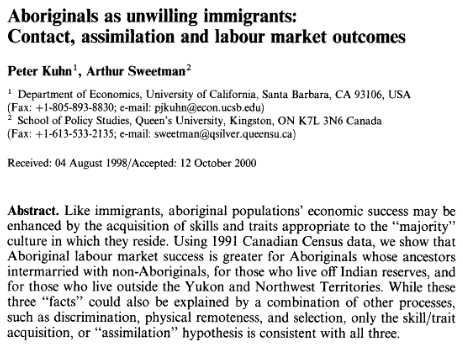
Like immigrants, aboriginals’ success may be enhanced by the acquisition of skills and traits of the “majority” culture in which they reside

From https://www.jstor.org/stable/20007814

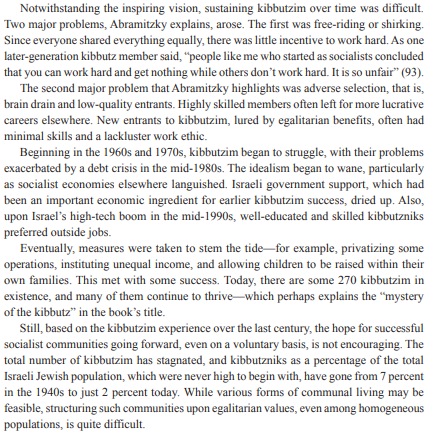
From a review of The Mystery of the Kibbutz: Egalitarian Principles in a Capitalist World Ran Abramitzky

From https://www.marketsandmorality.com/index.php/mandm/article/view/1453

“The Mystery of the Kibbutz explores the history of the kibbutz movement and its vision of economic equality, how it thrived despite inherent economic contradictions, and why it eventually declined. He focuses on three challenges in particular: first, the free rider problem, that there is no benefit for working harder when you get the same salary or personal economic benefits; second, adverse selection – that such a social system would tend to attract people who would not be as successful in a capitalist market; or the inverse, a brain drain, that the smartest people or those who could find success outside the kibbutz would tend to leave. Finally, the question of human capital investment: that there would be a tendency to underinvest in human capital, in other words that there would be a lack of incentive for young people to study or work hard because in the end as kibbutz members they can depend on equal income no matter what their contribution is.”

Star Trek: Pilot Episode “The Cage” (1965)

Great Books Guy's avatarGreat Books Guy

Original Air Date: February 1965/October 14, 1986
Star Date: 2254 (unknown in-universe date)
Writer: Gene Roddenberry
Director: Robert Butler

“There’s a way out of any cage and I’ll find it.”

★★★★★

Once notoriously rejected by NBC for being too “too cerebral,” this now legendary pilot episode of Star Trek offers a panoply of rich, complex ideas worthy of consideration. Rather than easily hooking its audience with flashy effects or explosive gun fights, “The Cage” is a slow-burn prison mystery which forces us to examine the nature of evil. Are the Talosians truly an evil alien species? According to the Talosians, the answer is emphatically “no.” The Talosians believe they are mere investigators and conjurers of innocent but deceptive imagery in order to offer a better world, test humanity’s limits, and hopefully save the future of Talos IV, their own decaying planet. The Talosians are anthropologists and…

View original post 2,478 more words

Star Trek: Season 1, Episode Three “Where No Man Has Gone Before”

Great Books Guy's avatarGreat Books Guy

Original Air Date: September 8, 1966
Stardate: 1312.4
Writer: Samuel A. Peeples
Director: James Goldstone

“Morals are for men, not gods.”

★★★★★

After NBC initially rejected Gene Roddenberry’s pilot episode for Star Trek entitled “The Cage” (they claimed it was too cerebral) Star Trek was offered the rarest of opportunities: a second chance. This was thanks in part to the earlier efforts of Lucille Ball and her company Desilu Studios which was impressed by the show’s diverse cast, in particular its elevation of women to more prominent roles. Somewhat ironically the series’s second chance removed “Number Two” (Majel Barrett) from the show. Instead of Captain Pike’s character (played by Jeffrey Hunter as featured in “The Cage”) he was replaced by Captain Kirk (played by William Shatner). Shatner had previously made a name for himself in a variety of Broadway productions as well as on The Twilight…

View original post 1,522 more words

Welsh family farms threatened by corporates pursuing ‘carbon offsetting’ schemes

oldbrew's avatarTallbloke's Talkshop

Sheep farming in Wales [image credit: BBC]
Another example of unintended consequences caused by the irrational pursuit of climate obsessions by governments.
– – –
A fifth of Welsh farms are running at a loss and there is a risk that farmers will be priced out of agriculture by big corporations buying up farmland for carbon offsetting schemes, according to a new report on family farms in Wales.

The findings of an inquiry by the Welsh Affairs Select Committee published today (7 April) paint a concerning picture for Welsh agriculture, an industry where the average farm size is just 48ha, compared to 87ha in England, says TW News.

From pressure on incomes and land availability to a lack of opportunity for new entrants, the report highlights some of the key concerns and sets out a series of recommendations to governments to address the issues.

View original post 147 more words

April 11, 1689: Coronation of William III and Mary II as Joint Sovereigns of England, Scotland and Ireland

liamfoley63's avatarEuropean Royal History

During the Glorious Revolution of November 1688 James II-VII, king of England, Scotland and Ireland was deposed and replaced by his daughter Mary II and her husband, stadtholder William III of Orange, the de facto ruler of the Dutch Republic. The Glorious Revolution
can be seen as both the last successful invasion of England and also an internal coup that toppled the reigning monarch.

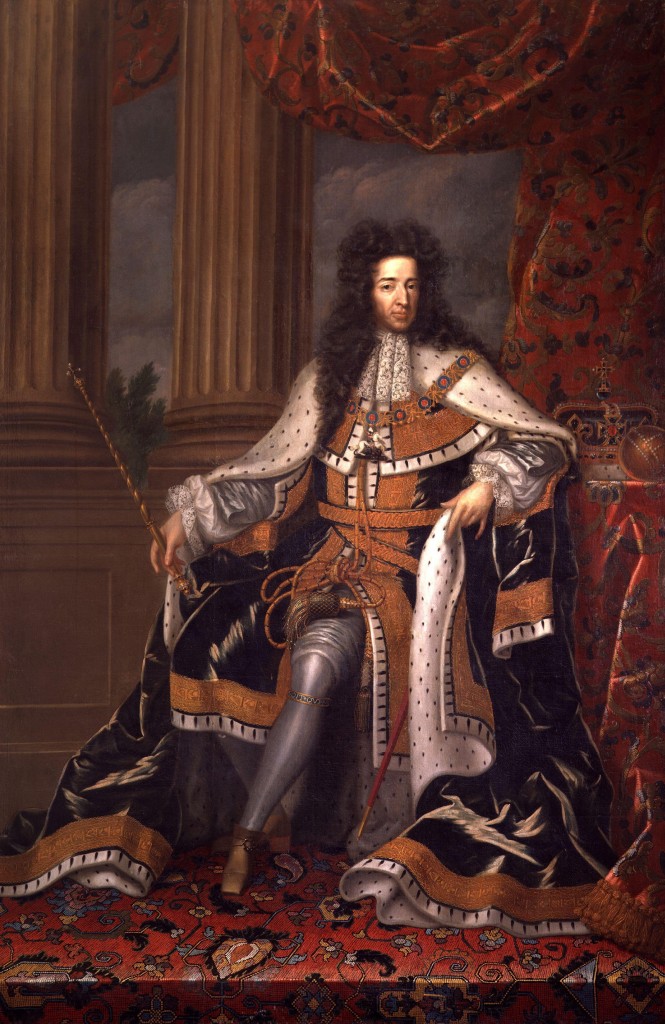
William III, King of England, Scotland and Ireland, Stadtholder of the Netherlands with his Imperial State Crown

The Revolution ended a century of political dispute and strife between the Crown and Parliament by confirming the primacy of Parliament over the Crown, a principle established in the Bill of Rights 1689.

English coronations were traditionally held at Westminster Abbey, with the monarch seated on the Coronation Chair. Main elements of the coronation service and the earliest form of oath can be traced to the ceremony devised by…

View original post 1,115 more words

Why So Many Airport Runways Cross the US-Canada Border

Previous Older Entries Next Newer Entries

Arin’s Substack

Celebrating humanity's flourishing through the spread of capitalism and the rule of law

David Andolfatto

Celebrating humanity's flourishing through the spread of capitalism and the rule of law

Monetary Non-Neutrality

Celebrating humanity's flourishing through the spread of capitalism and the rule of law

Reason Magazine

Celebrating humanity's flourishing through the spread of capitalism and the rule of law

Coyote Blog

Celebrating humanity's flourishing through the spread of capitalism and the rule of law

Thoughts from the North

Celebrating humanity's flourishing through the spread of capitalism and the rule of law

Fardels Bear

A History of the Alt-Right

Vincent Geloso

Econ Prof at George Mason University, Economic Historian, Québécois

Bassett, Brash & Hide

Celebrating humanity's flourishing through the spread of capitalism and the rule of law

Truth on the Market

Scholarly commentary on law, economics, and more

The Undercover Historian

Beatrice Cherrier's blog

Matua Kahurangi

Celebrating humanity's flourishing through the spread of capitalism and the rule of law

Temple of Sociology

Celebrating humanity's flourishing through the spread of capitalism and the rule of law

Velvet Glove, Iron Fist

Celebrating humanity's flourishing through the spread of capitalism and the rule of law

Why Evolution Is True

Why Evolution is True is a blog written by Jerry Coyne, centered on evolution and biology but also dealing with diverse topics like politics, culture, and cats.

NoTricksZone

Celebrating humanity's flourishing through the spread of capitalism and the rule of law

Homepaddock

A rural perspective with a blue tint by Ele Ludemann

Kiwiblog

DPF's Kiwiblog - Fomenting Happy Mischief since 2003

The Dangerous Economist

Celebrating humanity's flourishing through the spread of capitalism and the rule of law

Watts Up With That?

The world's most viewed site on global warming and climate change

The Logical Place

Tim Harding's writings on rationality, informal logic and skepticism

Doc's Books

A window into Doc Freiberger's library

The Risk-Monger

Let's examine hard decisions!

Uneasy Money

Commentary on monetary policy in the spirit of R. G. Hawtrey

Barrie Saunders

Thoughts on public policy and the media

Liberty Scott

Celebrating humanity's flourishing through the spread of capitalism and the rule of law

Point of Order

Politics and the economy

James Bowden's Blog

A blog (primarily) on Canadian and Commonwealth political history and institutions

Science Matters

Reading between the lines, and underneath the hype.

Peter Winsley

Economics, and such stuff as dreams are made on

A Venerable Puzzle

"The British constitution has always been puzzling, and always will be." --Queen Elizabeth II

The Antiplanner

Celebrating humanity's flourishing through the spread of capitalism and the rule of law

Bet On It

Celebrating humanity's flourishing through the spread of capitalism and the rule of law

History of Sorts

WORLD WAR II, MUSIC, HISTORY, HOLOCAUST

Roger Pielke Jr.

Undisciplined scholar, recovering academic

Offsetting Behaviour

Celebrating humanity's flourishing through the spread of capitalism and the rule of law

JONATHAN TURLEY

Res ipsa loquitur - The thing itself speaks

Conversable Economist

In Hume’s spirit, I will attempt to serve as an ambassador from my world of economics, and help in “finding topics of conversation fit for the entertainment of rational creatures.”

The Victorian Commons

Researching the House of Commons, 1832-1868

The History of Parliament

Articles and research from the History of Parliament Trust

Books & Boots

Reflections on books and art

Legal History Miscellany

Posts on the History of Law, Crime, and Justice

Sex, Drugs and Economics

Celebrating humanity's flourishing through the spread of capitalism and the rule of law

European Royal History

Exploring the Monarchs of Europe

Tallbloke's Talkshop

Cutting edge science you can dice with

Marginal REVOLUTION

Small Steps Toward A Much Better World