Green Civil War: Grassroots Environmental Groups Turn On Wind & Solar ‘Industries’
16 Mar 2022 Leave a comment

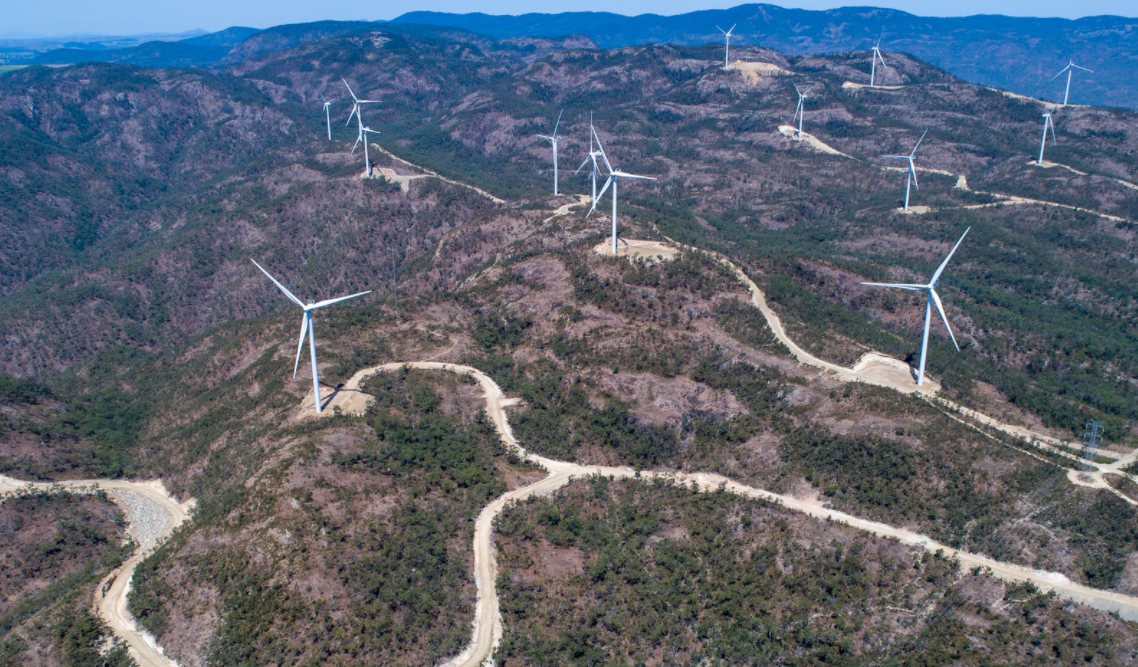
The faux environmentalist is easy to spot: they love industrial wind and solar power and couldn’t care less about the unbridalled environmental destruction they cause.
Faced with the rampant slaughter of birds and bats, he or she initially denies the evidence and then pushes the moral equivalence button, claiming that more birds are killed by cats, cars and skyscrapers. Ignoring the fact that cats, cars and tall buildings don’t kill apex predators like Eagles, Hawks and Kites. And also ignoring the fact that cars and skyscrapers deliver benefits in the form of transport and accommodation that make modern, civil societies possible. Whereas, heavily subsidised wind power delivers nothing but chaotically intermittent electricity and rocketing power prices, as a result.
However, slowly, but surely local environmental groups are waking up. No doubt driven by their increasingly troubled consciences, and the reality on the ground, people with a true concern for…
View original post 1,123 more words
The office of Governor as the Crown’s representative, symbolising `the permanence both of the authority of the Northern Ireland Government and the union with Great Britain’, 1921-1973
16 Mar 2022 Leave a comment

Ahead of next Tuesday’s Virtual IHR Parliaments, Politics and People seminar, we hear from Dr Donal Lowry of the University of Oxford. On 22 March 2022, between 5.15 p.m. and 6.30 p.m., Donal will be responding to your questions about his paper on the office of Governor of Northern Ireland between 1921 and 1973. Details of how to join the discussion are available here, or by contacting seminar@histparl.ac.uk.
Devolved assemblies in Edinburgh, Cardiff and Belfast have become familiar elements in UK political and constitutional life, especially in an age of Brexit and Covid-19. It is often forgotten that between 1921 and 1973, Northern Ireland possessed, not an `Assembly’ or `First Minister’, but an elaborate bicameral Parliament, consisting of a red-benched `Senate’ and a green-benched `House of Commons’, to which a `Prime Minister’ and `Cabinet’ – all members of the Privy Council of Northern Ireland – were responsible.
View original post 1,207 more words
Accession of Queen Anne of England, Scotland and Ireland. Part VI
16 Mar 2022 Leave a comment

Anne became queen upon the death of King William III on March 8, 1702, and was immediately popular. In her first speech to the English Parliament, on March 11, she distanced herself from her late Dutch brother-in-law and said, “As I know my heart to be entirely English, I can very sincerely assure you there is not anything you can expect or desire from me which I shall not be ready to do for the happiness and prosperity of England.”
Soon after her accession, Anne appointed her husband George, Duke of Cumberland, Lord High Admiral, giving him nominal control of the Royal Navy. Anne gave control of the army to Lord Marlborough, whom she appointed Captain-General. Marlborough also received numerous honours from the Queen; he was created a Knight of the Garter and was elevated to the rank of duke. The Duchess of Marlborough was appointed Groom of the Stool…
View original post 590 more words
Australian court strikes down landmark climate ruling
16 Mar 2022 Leave a comment

 Lots of coal in Australia
Goodbye landmark. Yet another attempt to use the courts to try to establish the myth that governments can somehow control the climate bites the dust, for now at least.
– – –
An Australian court on Tuesday threw out a landmark legal ruling that the country’s environment minister had a duty to protect children from climate change, reports Phys.org.
Last year’s legal win by a group of high school children had been hailed by environmental groups as a potential legal weapon to fight fossil fuel projects.
But the federal court found in favour of an appeal by Environment Minister Sussan Ley, deciding she did not have to weigh the harm climate change would inflict on children when assessing the approval of new fossil fuel projects.
View original post 153 more words
March 15, 44BCE: The Ides of March and the Assassination of Julius Caesar
16 Mar 2022 Leave a comment
The Ides of March is the 74th day in the Roman calendar, corresponding to March 15. It was marked by several religious observances and was notable for the Romans as a deadline for settling debts. In 44 BC, it became notorious as the date of the assassination of Julius Caesar, which made the Ides of March a turning point in Roman history.
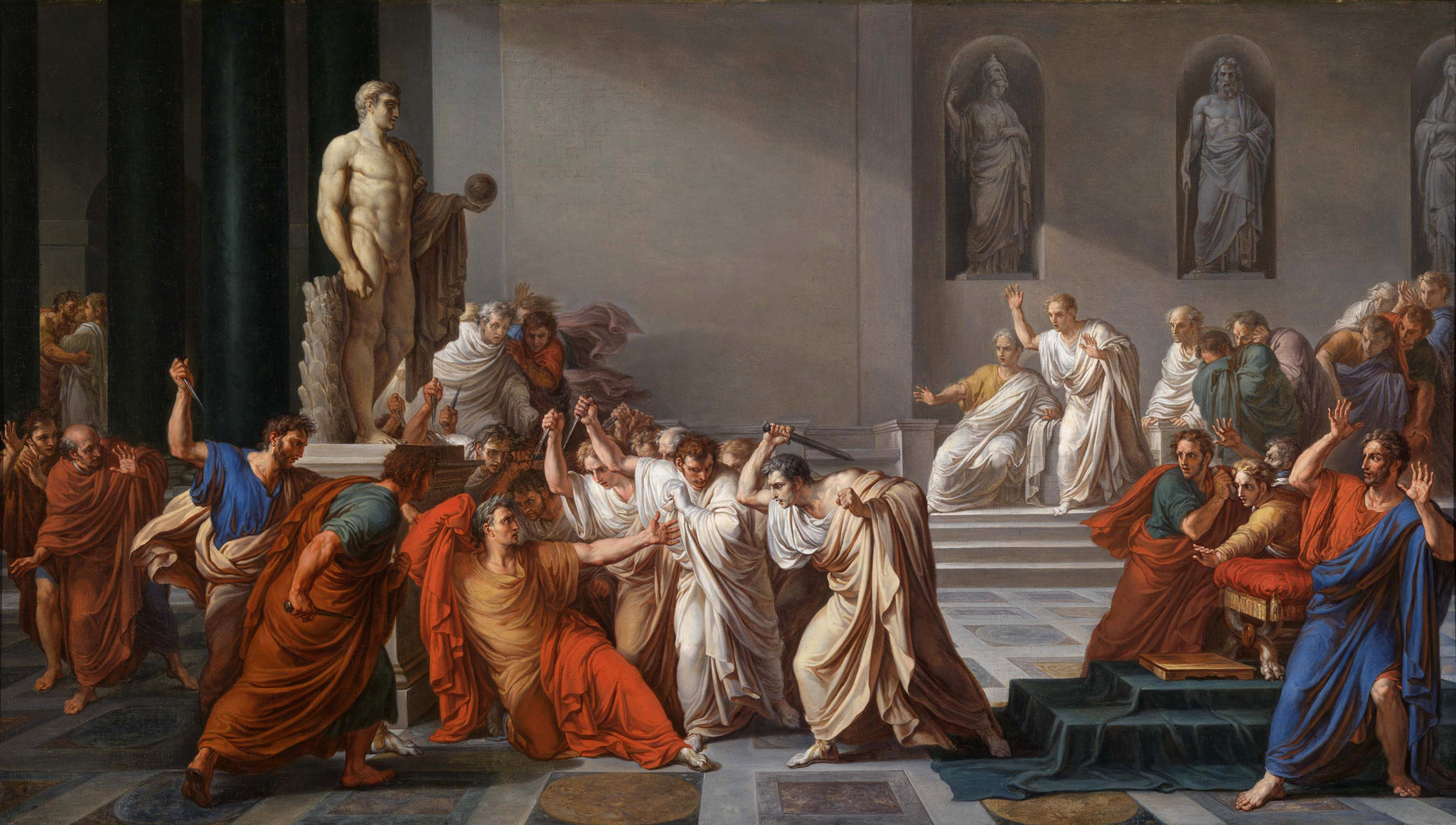 The Death of Julius Caesar (1806) by Vincenzo Camuccini
Ides
The Romans did not number each day of a month from the first to the last day. Instead, they counted back from three fixed points of the month: the Nones (the 5th or 7th, nine days inclusive before the Ides), the Ides (the 13th for most months, but the 15th in March, May, July, and October), and the Kalends (1st of the following month).
Originally the Ides were supposed to be determined by the full moon, reflecting the…
View original post 482 more words
Will Macron lose his assembly majority?
16 Mar 2022 Leave a comment

French election season is upon us. In four rounds of elections over the next three months France will choose their President and National Assembly. The presidency is elected by two-round majority (10 and 24 April), followed closely by the assembly using two-round majority-plurality (12 and 19 June). Predictably, the news media are already starting to suggest that President Emmanuel Macron, while likely to be reelected, might be at risk of losing his assembly majority (e.g., The Economist). Will he?
What is almost as predictable as the media expressing this outcome as a real possibility is that presidents–just elected or reelected–see their parties do really well in honeymoon assembly elections. You can’t get much more honeymoon-ish than the French cycle. The assembly election occurs with approximately 1/60 of the time between presidential elections having elapsed. It just so happens that we have a formula for this.
Rp=1.20–0.725E,
where
View original post 1,074 more words
Real Footage of Ernest Shackleton’s Endurance from the First Documentary Feature Film Ever Made (1919)
16 Mar 2022 Leave a comment
in economic history Tags: Age of exploration
Barclays Bank Commercial – Dad’s Army – Arthur Lowe – Ian Lavender
16 Mar 2022 Leave a comment
in television
You’re A Captain Ralphie, When I Say You’re A Captain – The Sopranos
16 Mar 2022 Leave a comment
in television
V. Bhaskar, Alan Manning and Ted To on monopsony
15 Mar 2022 Leave a comment
in applied price theory, labour economics, labour supply

Who was the first King of England ?
15 Mar 2022 Leave a comment
Figuring out who was the first King of Prussia or the first King of Bavaria was, is pretty easy given the fact that these kingdoms developed late in European history, early 18th and 19th to be precise. However, there are other kingdoms that stretch way back into history and figuring out who the first king of that nation or kingdom was, is rather difficult and subject to opinion. I am beginning a short series where I will identify the first king of England, Scotland, Denmark, Norway and Sweden. I’m going to do something special with France and also ask who was the last King of the Franks? I may have touched on this before but I will also examine who was the first Holy Roman Emperor?
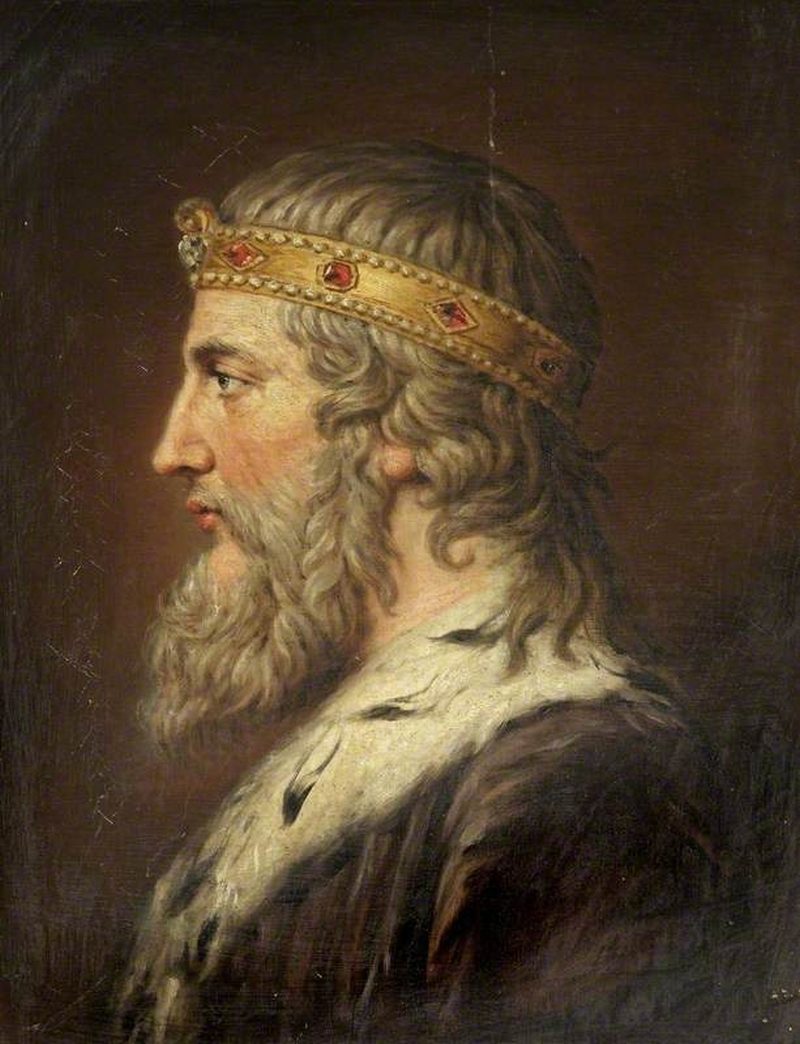 Alfred the Great: King of the West Saxons & King of the Angles and Saxons.
The reason why it can be hard for historians to determine…
View original post 912 more words


Recent Comments