Central bank research
20 Jan 2022 Leave a comment

For some reason the other day I was prompted to have a look at how many research papers the Reserve Bank had published in recent years. This chart resulted.
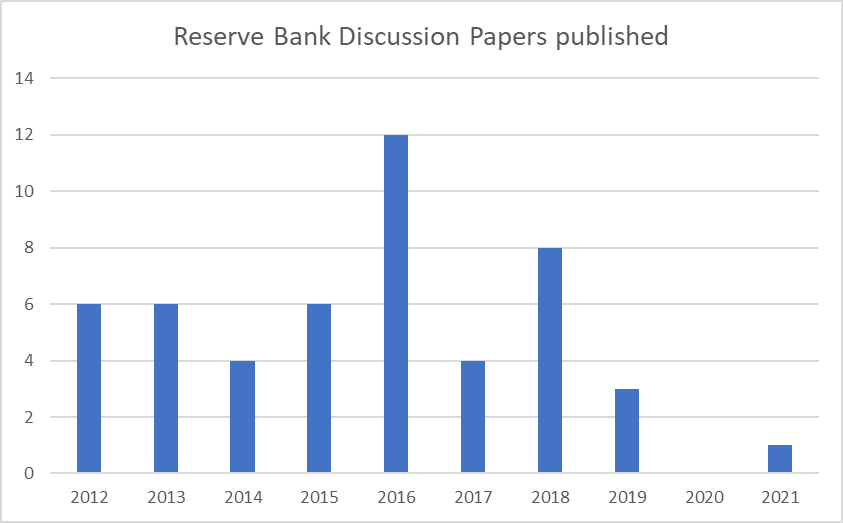
Only one in the last two years, and that one paper – published last February – had five authors, four of whom worked for other institutions (overseas). It was really quite staggering. It wasn’t, after all, as if there had been no interesting issues, policy puzzles or the like over the last two years. It wasn’t as if universities had suddenly stepped up to the mark and were producing a superfluity of research on New Zealand macro and banking/financial regulation issues. It wasn’t even as if the Bank had suddenly been put on tight rations by a fiscally austere government – in fact, the latest Funding Agreement threw money and the Bank and staff numbers have blown out. Rather, or so…
View original post 1,463 more words
The Mamas & The Papas “Monday, Monday” on The Ed Sullivan Show
20 Jan 2022 Leave a comment
in Music, television, TV shows
Narco Submarines and the Strange Economics of Cocaine Smuggling
19 Jan 2022 Leave a comment
in economics of crime, law and economics, politics - USA Tags: war on drugs
The Real Reason NYC Is Always Covered In Scaffolding
19 Jan 2022 Leave a comment
in economics of crime, law and economics, property rights, urban economics Tags: offsetting behaviour, unintended consequences
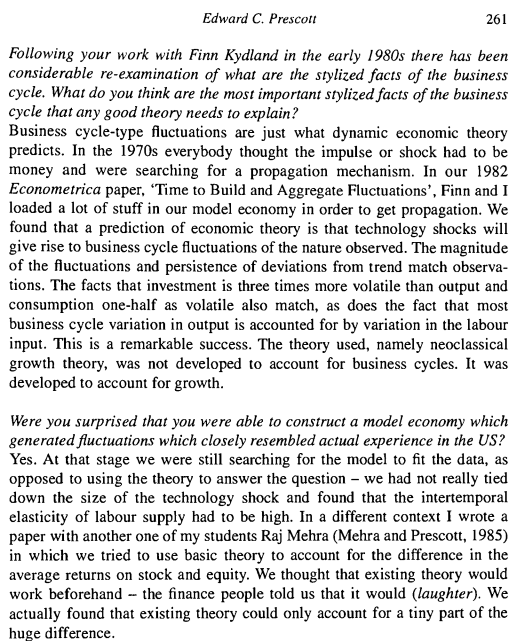
Were you surprised that you were able to construct a model economy which generated fluctuations which closely resembled actual experience in the US?
19 Jan 2022 Leave a comment
Missed question on budgie smugglers
19 Jan 2022 Leave a comment
in economics of media and culture Tags: Australia

HITLER’S AMERICAN GAMBLE: PEARL HARBOR AND GERMANY’S MARCH TO WAR by Brendan Simms and Charlie Laderman
19 Jan 2022 Leave a comment

The dates December 5 through the 7th, 1941 mark the parameters of the most consequential week of the 20th century or perhaps any other time in history. It was during that week that the Soviet Union began a major counter offensive against the Nazis who were threatening Moscow, the Japanese bombed Pearl Harbor, and Hitler declared war on the United States. It was a perilous time for the British who had endured Dunkirk, the Luftwaffe’s blitz over London and other cities, fears of Japanese attacks against British held territories in Asia, and Churchill’s fear that the only thing that could save his island empire – the entrance of the United States into the war against Germany would not occur as Washington would now focus on Japan after Pearl Harbor. The event that saved the British was the Nazi dictator’s declaration of war against the United States, an…
View original post 1,288 more words
Tristan da Cunha: Building the Most Remote Settlement on Earth
19 Jan 2022 Leave a comment
in economics of media and culture


Recent Comments