MARTHA and THE VANDELLAS – Dancing In The Street (1964) (Remastered)
11 Jan 2022 Leave a comment
in Music
Keynesian Spending Undermines Economic Expansion
11 Jan 2022 Leave a comment

I wrote in 2010 that Keynesian economics is like the Freddy Krueger movies. It refuses to die despite powerful evidence that you don’t help an economy by increasing the burden of government. In 2014, I wrote the theory was based on “fairy dust.” And in 2015, I said Keynesianism was akin to a perpetual motion machine.
What’s my proof? Well, during the period when Obama’s “stimulus” was in effect, unemployment got worse. 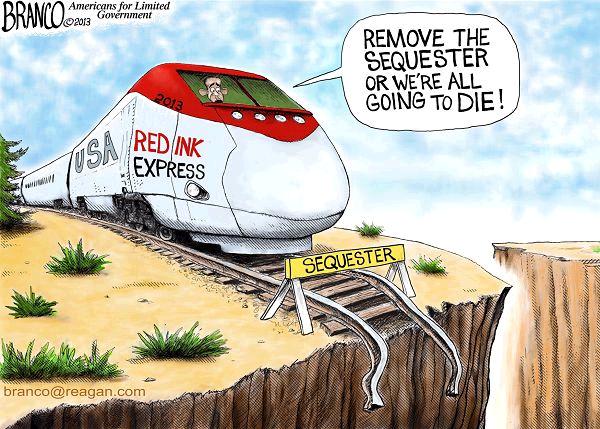 And the best growth period under Obama was after the sequester, which Obama and others said was going to hurt the economy.
When I discuss these issues with Keynesians, they reflexively claim that Obama would have gotten good results if only he had increased spending even faster (which is also their knee-jerk response when you point out that Keynesianism didn’t work for Hoover, didn’t work for FDR, didn’t work…
View original post 660 more words
Biden’s “Stimulus” Failure
11 Jan 2022 Leave a comment
At the risk of understatement, economists are not good forecasters.
And they are especially incompetent when they make forecasts based on bad policy, 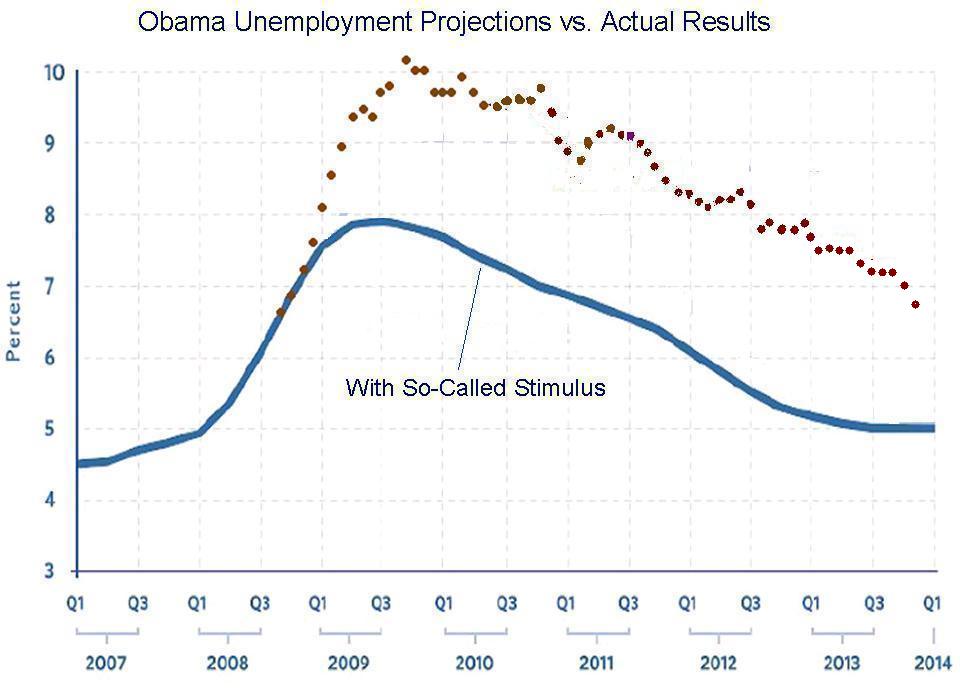 such as when the Obama White House projected that his so-called stimulus would quickly lead to falling unemployment.
In reality, the jobless rate immediately increased and then remained much higher than projected for the remainder of the five-year forecast.
The failure of Obama’s stimulus should have been a learning moment for Washington politicians.
But Joe Biden must have slept through that lesson because his first big move after taking office was to saddle the nation with a $1.9 trillion “stimulus” package.
The White House claimed this orgy of new spending would lead to four million additional jobs in 2021, on top of the six million new jobs that already were expected.
So what happened? Matt Weidinger of the American Enterprise Institute looked at…
View original post 370 more words
Has Economic Growth Really Slowed Since 1970?
11 Jan 2022 Leave a comment

In the post-WW2 era, by many different measures the US economy performed better before about 1970 than after. You can apparently see this in many different statistics. For example, the productivity slowdown is a well-known and well-studied phenomenon. And even given the productivity slowdown, median wages don’t seem to have kept pace with productivity growth.
I think there are good reasons to doubt these particular statistics. For example, on wages and productivity see this working paper by Stansbury and Summers.
But even considering all these criticisms of the statistics, we do observe that overall GDP growth has been slower since about 1970. Why might this be?
In an NBER summary of his research, Nicholas Muller argues that a big part of the GDP growth slowdown is because we aren’t including environmental damage in the calculation. This is not a new argument (Muller is an important contributor to…
View original post 182 more words
Jelena Gligorijević: Game, Set and Match for the Rule of Law
11 Jan 2022 Leave a comment

 Many diverse issues have been raised, and diverse perspectives aired, in the Australian and international public square, over the past week about the events concerning the cancellation of Novak Djoković’s visa by the Australian (federal) executive government (see here, here, here, here, here, and here).
I will focus on an issue and a principle that sits comfortably above, and has always sat comfortably above, substantive political decisions, national pandemic responses, state capacity, moral stances about vaccination, commercial decisions by organisers of a tournament, and the emotions of sports fans. That principle is the rule of law.
To quote theAustralian Prime Minister: “Rules are rules…no one is above these rules”. Indeed, the rules bind the executive government, and it is not above the law. This principle has been confirmed in theoutcome of the judicial reviewbrought by Mr Djoković against the Australian…
View original post 1,787 more words
Anarchy vs. Minarchy Debate – David Friedman vs. Austin Petersen
10 Jan 2022 Leave a comment
in applied price theory, comparative institutional analysis, constitutional political economy, David Friedman, economics of crime, law and economics, property rights, Public Choice
Francis Young: “Packing” the Lords: Some Legal Reflections
10 Jan 2022 Leave a comment

 The recent string of Government defeats in the House of Lords over amendments to the European Union (Withdrawal) Bill has reignited the debate over the role of the Lords in a modern democracy. The Daily Mail published a characteristically trenchant headline suggesting that we should “pull the plug” on the “traitors in ermine”.
The abolition of the House of Lords is still probably some way off, but the recent events have raised the question of what options a government has to deal with resistance by the Lords to its policies. The normal means of addressing this problem (if one sees it as a problem) is to invoke the Parliament Acts, which provide that the Commons can override the Lords by passing the same bill in two consecutive parliamentary sessions. But this remedy is not readily available in the context of the EU (Withdrawal) Bill, as the current parliamentary session will…
View original post 1,601 more words


Recent Comments