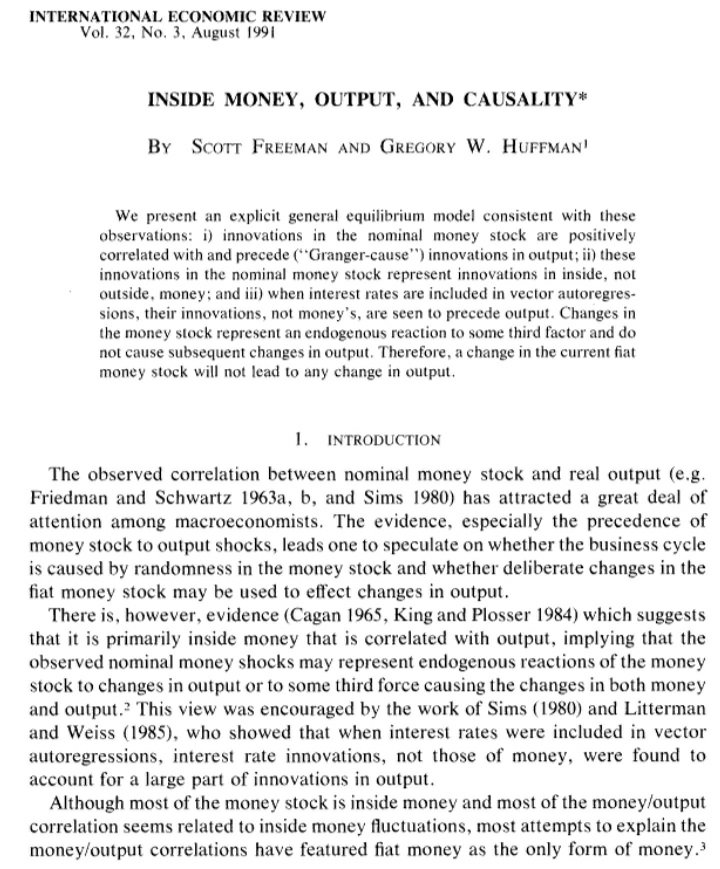
Scott Freeman on whether money matters
22 Sep 2021 Leave a comment
in applied price theory, econometerics, economic history, financial economics, macroeconomics, monetarism, monetary economics Tags: monetary policy
Why Do We Have Fewer Outbreaks? Epidemiological Transition: Crash Course Outbreak Science #3
22 Sep 2021 Leave a comment
in health economics Tags: economics of pandemics
Americans Are Getting Richer, but the Relevant Question is “How Quickly?”
22 Sep 2021 Leave a comment

Our friends on the left believe (or at least claim to believe) that the United States is an unfair nation because the rich get richer and the poor get poorer.
More specifically, they assert that the economy is a fixed pie and that when people like Bill Gates and Jeff Bezos become rich, then there is less prosperity for everyone else.
This is grotesquely inaccurate, as I explained earlier this year.
We have a great opportunity to revisit this issue because the Census Bureau just released its annual report on Income and Poverty in the United States. I went to Table A2 and created this chart to show how inflation-adjusted income has increased over time for the average household.
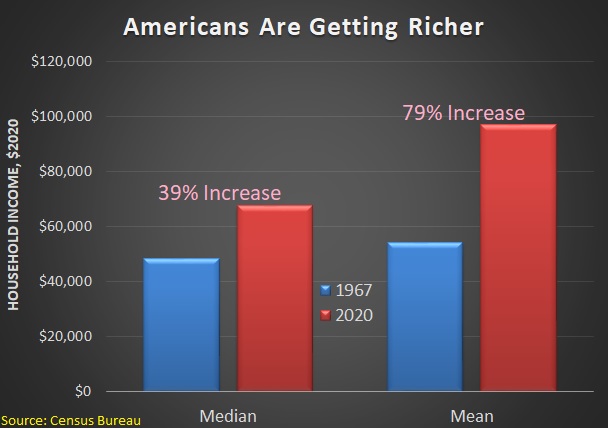
In other words, families are earning more, no matter how we measure the average (“median” is the household in the middle and “mean” is the average of all…
View original post 449 more words
Illusions of History
22 Sep 2021 Leave a comment

That is the title of a new New Zealand Initiative report out yesterday, with the subtitle “How misunderstanding the past jeopardises our future”.
I’m no fan of this government, including its economic policies, and often lament how little New Zealand economic history is taught (none at all for example in our capital city university), so I should have been favourably predisposed towards such a report, which appears to have been prompted (specifically) by a couple of recent quotes from the Minister of Finance. This is how the report starts

And here is how it ends
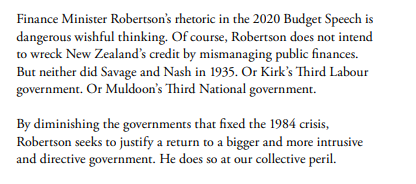
You’ll get the drift.
I’m very sympathetic to the story that both Robertson and his boss are keen on a “bigger and more intrusive and directive government”, and it is clear that they have no serious ideas about (and demonstrate little interest in) reversing the decades of relative productivity decline. Most likely, their approach will…
View original post 2,043 more words
How Chicago Economics is Helping End a Pandemic: Enabling Choice and Competition in Healthcare
22 Sep 2021 Leave a comment
in applied price theory, applied welfare economics, comparative institutional analysis, economics of regulation, entrepreneurship, health economics, industrial organisation, survivor principle
Entrevista Gary Becker, Nobel Economía 1992 – ICEX
22 Sep 2021 Leave a comment
in applied price theory, applied welfare economics, budget deficits, business cycles, comparative institutional analysis, economic growth, economics of education, fiscal policy, Gary Becker, history of economic thought, human capital, industrial organisation, labour economics, labour supply, macroeconomics
Why did the French Fail to Annex Saarland?
22 Sep 2021 Leave a comment
in defence economics, energy economics, International law, war and peace Tags: World War I, World War II



Recent Comments