Rand Paul successfully debates Jake Tapper on climate change
20 Aug 2021 Leave a comment

When President Trump announced he would withdraw the United States from the Paris Climate Agreement, Kentucky U.S. Senator Rand Paul was interviewed by Jake Tapper on CNN. In this interview, Paul does a masterful job of not only defending the president’s decision but also overcoming Tapper’s climate alarmism.
August 19, 1596: Birth of Princess Elizabeth (Stuart) of England, Scotland and Ireland. Part I.
20 Aug 2021 Leave a comment

Elizabeth Stuart (August 19, 1596 – February 13, 1662) was Electress of the Palatinate and briefly Queen of Bohemia as the wife of Friedrich V of the Palatinate. Because her husband’s reign in Bohemia as King and in the Palatinate as Prince-Elector lasted for just one winter, Elizabeth is often referred to as the “Winter Queen”.
Elizabeth was the second child and eldest daughter of James I-VI, King of England, Scotland and Ireland, and his wife, Anne of Denmark. Anne of Denmark was the second daughter of daughter of King Frederik II of Denmark and Norway and Sophie of Mecklenburg-Güstrow. Elizabeth had two siblings, infancy: Henry Frederick, Prince of Wales, who predeceased his parents and James’s future successor, Charles I. Other siblings, Margaret (1598–1600), Robert Bruce Stuart, Duke of Kintyre and Lorne (January 18, 1602 – May 27, 1602), Mary Stuart (1605–1607), and Sophia (June 22, 1606 – June 23…
View original post 917 more words
Primitive Keynesianism from the Joint Economic Committee
20 Aug 2021 Leave a comment

Washington is filled with dishonest and self-serving analysis. Much of that shoddy output is driven by privileged groups seeking bailouts, subsidies, protectionism, or a tilted playing field.
- The health insurance and pharmaceutical companies supported Obamacare.
- Big agribusiness firms support farm subsidies.
- The big Wall Street Firms supported Dodd-Frank.
But that’s not the only type of dishonest and self-serving you find in Washington.
Let’s take the example of President Biden’s proposal to gut welfare reform with per-child handouts.
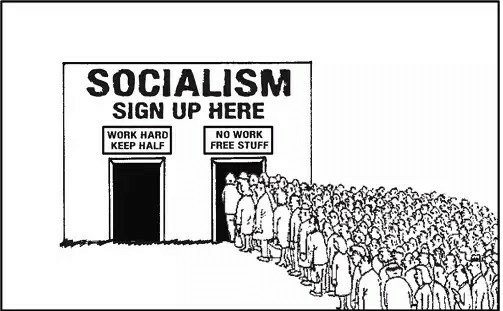 The micro-economic problem with that policy is that it reduces incentives to work – as illustrated by this Wizard-of-Id parody or this cartoon about socialism.
The macro-economic problem with that policy is that it’s part of a radical expansion in the burden of government that will make the U.S. more like Europe.
For today’s topic, though, I want to call attention to a recent…
View original post 308 more words
The iron law of electricity
20 Aug 2021 Leave a comment
“In 2019, the government’s Interim Climate Change Committee estimated 100% renewables could produce 100 times more blackouts than business as usual. “
Recalling a Parliament Already Dissolved? Not in Canada: the 43rd Parliament Is Dead
20 Aug 2021 Leave a comment


Introduction
On 15 August 2021, Prime Minister Boris Johnson requested that the Speaker recall the House of Commons from its summer recess early so that MPs could hold an emergency debate over the fallout of the American withdrawal from Afghanistan, which the Taliban took as an opportunity to recapture Kabul and to install themselves as the de facto government once more.[1]The House of Commons would originally have reconvened on 6 September under its regular sitting calendar but met instead on 18 August.[2] The Lords Speaker also recalled the House of Lords for the same day. The British House of Commons and House of Lords could meet to discuss the British response and efforts to evacuate their diplomatic personnel and refugees because the two houses had merely adjourned for their regular summer recess. The British House of Commons has cut short its adjournments in such a manner…
View original post 2,459 more words
Another Discussion with David Friedman about interesting ideas
20 Aug 2021 Leave a comment
in applied price theory, applied welfare economics, comparative institutional analysis, constitutional political economy, David Friedman, economics of crime, economics of education, economics of regulation, history of economic thought, industrial organisation, law and economics, liberalism, libertarianism, property rights
How Did Apollo Avoid a Radiation Disaster?
20 Aug 2021 Leave a comment
in economics of media and culture Tags: moon landings, space
The Second World Wars: How the First Global Conflict Was Fought and Won
20 Aug 2021 Leave a comment
in defence economics, laws of war, war and peace Tags: World War II
Why Justin Trudeau’s Snap Election in 2021 Does Not Break the Fixed-Date Elections Law
20 Aug 2021 Leave a comment

The Signs Pointing to a Snap Election, June to August 2021
Since at least mid-June, the media had treated an early election as a fait accompli, and politicians and political parties began acting as if the writ had already begun by early July. On 15 June, several MPs in the House of Commons delivered their “Farewell Speeches”, including Jack Harris (New Democratic Member for St. John’s East), Simon Marcil (Blocist Member for Mirabel), and Kate Young (Liberal Member for London West).[1]The very same day, Elections Canada announced that it could administer a general election during the pandemic without the statutory amendments contemplated by Parliament which ultimately died on the Order Paper on 15 August.[2]On 22 June, Prime Minister Trudeau denounced the 43rd Parliament for its “obstructionism and toxicity,” not the sort of thing that one would say in advance of a…
View original post 4,532 more words
Douglas Murray and His Continuing Fight against the “Madness of Crowds”
19 Aug 2021 Leave a comment
in economics of education, law and economics, liberalism, Marxist economics, politics - Australia, politics - New Zealand, politics - USA
On the MPS
19 Aug 2021 Leave a comment

In the end, of course, the bottom line of yesterday’s Reserve Bank announcement was unsurprising and perhaps inevitable – action deferred on account of Covid. It wasn’t as if they were on some statutory schedule, so they could easily have postponed the decision for a couple of weeks, but in the scheme of things the difference between that and waiting for the next scheduled review (6 October) isn’t great. It is clear from the Bank’s forecast numbers they had not been minded to raise the OCR by 50 basis points this time, so if need be they can always catch up by acting a bit more firmly in October.
There was even something to praise. The Bank had revamped the look of the document and – bad-wig new logo aside – it was a definite improvement, even if it is hard to be sure what (if anything) the front cover…
View original post 1,331 more words


Recent Comments