Germany in Two-Front War and the Schlieffen-Plan I THE GREAT WAR – Week 2
06 Aug 2021 Leave a comment
in defence economics, war and peace Tags: World War I
Tory rebels vow to fight 2030 ban on new petrol and diesel cars
05 Aug 2021 Leave a comment

 The GWPF has produced a 64-page Fair Fuel document. See the Chairman’s Summary on pages 56-58 for a flavour of the many present and future problems with the unplanned rush to EVs, which the ‘rebels’ fear is likely to be a disaster both for themselves and the motoring public. But they’re mixing up carbon dioxide emissions cuts with pollution, which is an entirely separate issue. Such confusion plays into the hands of the so-called ‘green’ activists.
– – –
Tory rebels have vowed to fight the 2030 ban on new petrol and diesel cars, reports The Sun (via The GWPF).
Thirteen MPs urged the Government to think again or face public fury.
The Fair Fuel all-party parliamentary group today calls on ministers to publish a full-cost analysis of what it will mean for the economy to go electric, and how they will slash emissions.
View original post 103 more words
“Just when you thought it was safe to go back in the water”: holidays by the sea in the 18th century
05 Aug 2021 Leave a comment

In the course of the 18th century a variety of spas and seaside resorts became popular destinations for busy Georgians seeking cures for a variety of chronic conditions, as well as for relaxation from the dramas of high politics. Dr Robin Eagles, Editor of the House of Lords 1715-90 project, considers the experiences of some of the high-profile individuals who took their holidays at two of the most popular in the late 18th century.
Among the most popular resorts for members of the elite seeking the benefits of sea air during the later part of the 18th century were Brighton and Weymouth. Earlier in the period Scarborough had been the foremost spa town, but in the course of the century it had been steadily eclipsed by a variety of rivals and by the 1760s and 70s the delights of East Sussex were beginning to attract regular holiday-makers. Brighton’s burgeoning…
View original post 1,196 more words
General Equilibrium, Partial Equilibrium and Costs
05 Aug 2021 Leave a comment

Neoclassical economics is now bifurcated between Marshallian partial-equilibrium and Walrasian general-equilibrium analyses. With the apparent inability of neoclassical theory to explain the coordination failure of the Great Depression, J. M. Keynes proposed an alternative paradigm to explain the involuntary unemployment of the 1930s. But within two decades, Keynes’s contribution was subsumed under what became known as the neoclassical synthesis of the Keynesian and Walrasian theories (about which I have written frequently, e.g., here and here). Lacking microfoundations that could be reconciled with the assumptions of Walrasian general-equilibrium theory, the neoclassical synthesis collapsed, owing to the supposedly inadequate microfoundations of Keynesian theory.
But Walrasian general-equilibrium theory provides no plausible, much less axiomatic, account of how general equilibrium is, or could be, achieved. Even the imaginary tatonnement process lacks an algorithm that guarantees that a general-equilibrium solution, if it exists, would be found. Whatever plausibility is attributed to the assumption that…
View original post 1,867 more words
The Lies of the Modern Left
05 Aug 2021 Leave a comment

Gina Florio delivers a fascinating talk discussing the relentless indoctrination she was subjected to at Harvard and how she was able to ultimately reject what she was taught. The left’s domination of academia is the source of its power both here and abroad.
In order to ultimately defeat them, the left’s stranglehold on education must be ended. If not, the political fight the defenders of civilization are engaged in will, ultimately, fail. Higher education is now geared to turning out brainwashed graduates who are destroying the country and, by extension, the world.
George Stigler 50 Years Later: Part 2 – Advancing The Theory of Economic Regulation
05 Aug 2021 Leave a comment
in applied welfare economics, behavioural economics, comparative institutional analysis, economics of bureaucracy, economics of information, economics of regulation, history of economic thought, income redistribution, law and economics, Public Choice, rentseeking, Sam Peltzman
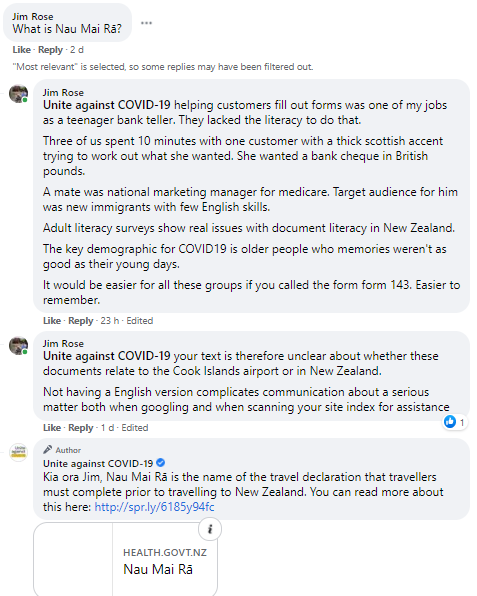
August 4, 1900: Birth of Queen Elizabeth The Queen Mother
05 Aug 2021 Leave a comment

Elizabeth Angela Marguerite Bowes-Lyon (August 4, 1900 – March 30, 2002) was Queen of the United Kingdom 1936 to 1952 as the wife of King George VI. She was the last Empress of India from 1936 until India gained independence from Britain in 1947. After her husband died, she was known as Queen Elizabeth The Queen Mother, to avoid confusion with her daughter, Queen Elizabeth II.
Born into a family of British nobility, Elizabeth was the youngest daughter and the ninth of ten children of Claude Bowes-Lyon, Lord Glamis (later the 14th Earl of Strathmore and Kinghorne in the Peerage of Scotland), and his wife, Cecilia Cavendish-Bentinck. Her mother was descended from British Prime Minister William Cavendish-Bentinck, 3rd Duke of Portland, and Governor-General of India Richard Wellesley, 1st Marquess Wellesley, who was the elder brother of another prime minister, Arthur Wellesley, 1st Duke of Wellington.
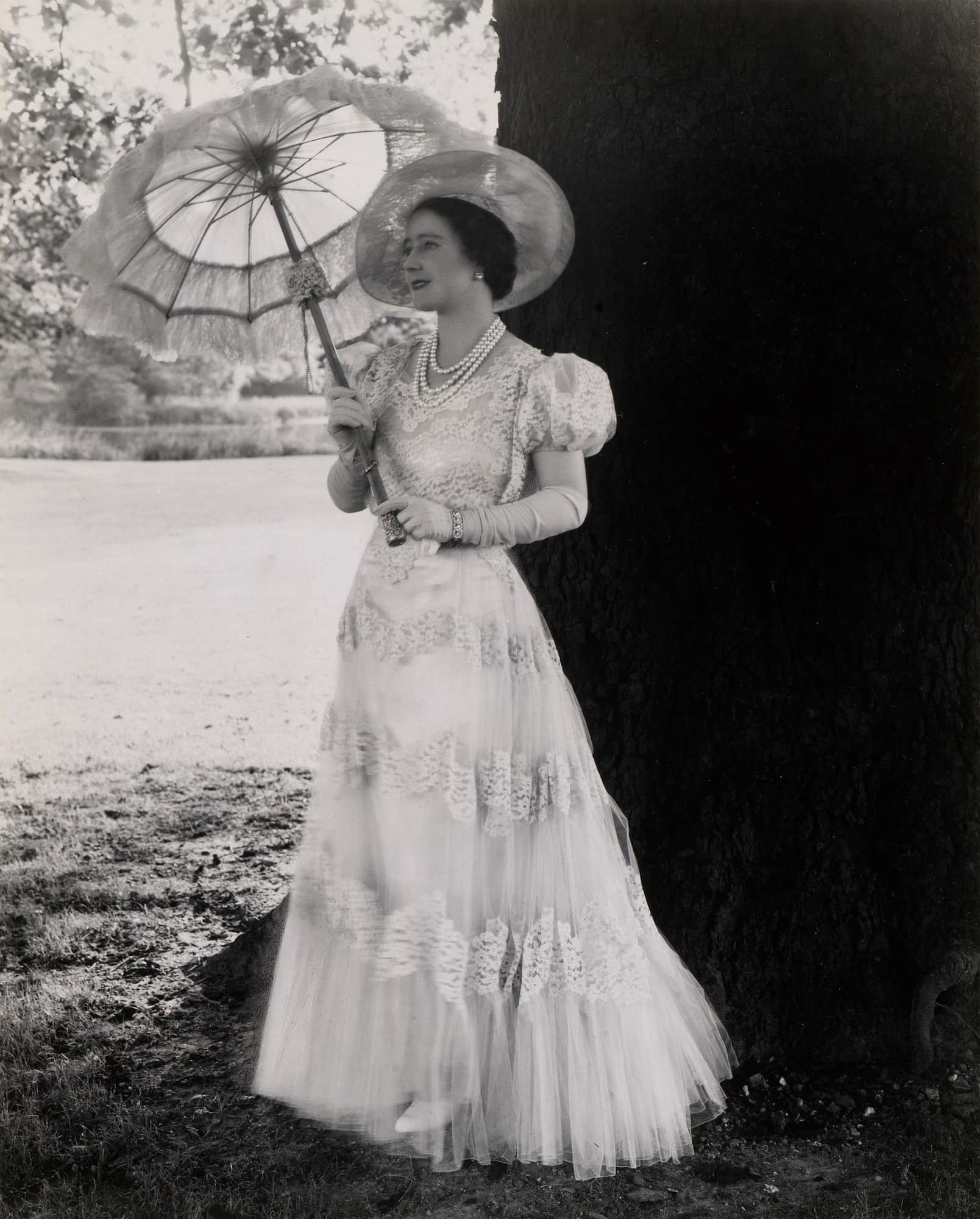 Elizabeth spent much of her…
View original post 642 more words


Recent Comments