How North Korea Made the Perfect Counterfeit $100 Bill
20 Jun 2021 Leave a comment
in defence economics, economic history, economics of crime, law and economics, macroeconomics, monetary economics Tags: North Korea

Simple rules for a complex world – Richard Epstein
19 Jun 2021 Leave a comment
in applied price theory, comparative institutional analysis, constitutional political economy, economic history, law and economics, property rights, Richard Epstein
Ten Minute History – The Fall of Rome
19 Jun 2021 Leave a comment
in defence economics, economic history, war and peace Tags: Roman empire
Where is our world headed? Steven Pinker
19 Jun 2021 Leave a comment
in economics of education, liberalism, Marxist economics Tags: free speech, pessimism bias, political correctness, regressive left, The Great Enrichment
Friedman Fundamentals: Unions And Free Market Labor
18 Jun 2021 Leave a comment
in applied price theory, comparative institutional analysis, labour economics, labour supply, unions Tags: union power
Want to Know Why Wind Power is Causing Blackout in Britain? (It’s called “the Weather”)
18 Jun 2021 Leave a comment

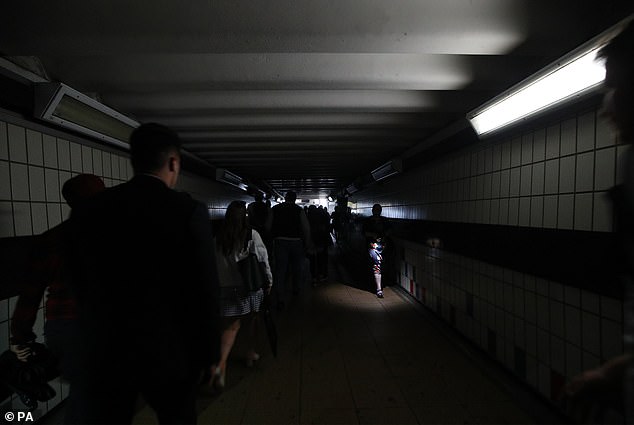
No country has ever powered itself entirely with wind and solar power; no country ever will. In Britain, the threat of blackouts now looms every time the wind drops off, thanks to an overreliance on unreliable wind power.
Back in August 2019 we reported on a mass blackout that struck Britain, when an offshore wind farm decided to down tools: Blackout Nation: Wind Power Output Collapse Leaves Millions of Brits Totally Powerless
To say that Britain’s once reliable power grid is under threat, is mastery in understatement. And, as Paul Homewood reports, things can only get worse from here.
Wind slump risks blackouts as Britain goes ‘green’
Not a Lot of People Know That
Paul Homewood
24 May 2021
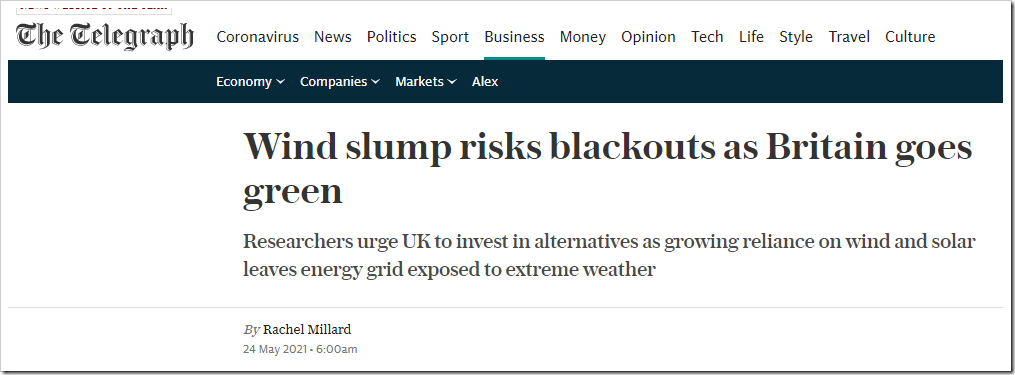
Wind Slumps risks Blackouts as Britain Goes Green
The Telegraph
Rachel Millard
24 May 2021
Prolonged periods of low wind and solar power could trigger blackouts as Britain races to ditch fossil…
View original post 298 more words
Involuntary Unemployment, the Mind-Body Problem, and Rubbernecking
18 Jun 2021 Leave a comment

The term involuntary unemployment was introduced by Keynes in the General Theory as the name he attached to the phenomenon of high cyclical unemployment during the downward phase of business cycle. He didn’t necessarily restrict the term to unemployment at the trough of the business cycle, because he at least entertained the possibility of underemployment equilibrium, presumably to indicate that involuntary unemployment could be a long-lasting, even permanent, phenomenon, unless countered by deliberate policy measures.
Keynes provided an explicit definition of involuntary unemployment in the General Theory, a definition that is far from straightforward, but boils down to the following: if unemployment would not fall as a result of a cut in nominal wages, but would fall as a result of a cut real wages brought about by an increase in the price level, then there is involuntary unemployment. Thus, Keynes explicitly excluded from his definition of involuntary unemployment, unemployment…
View original post 933 more words


Recent Comments