Bigger Government Will Reduce Living Standards According to New CBO Research
24 Mar 2021 Leave a comment

I’ve been warning that the United States should not copy Europe’s fiscal policy, largely because living standards are significantly lower in nations with large welfare states.
That’s true if you look at average levels of consumption in different nations, but the most compelling data 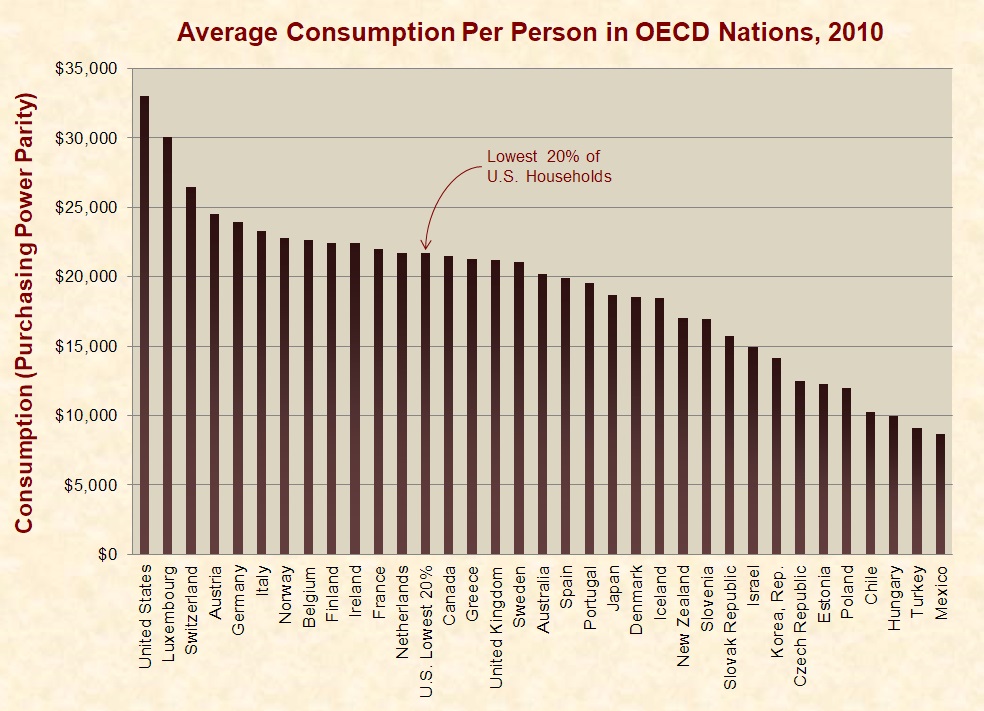 is the fact that lower-income people in the United States generally enjoy living standards that are equal to or even higher than those for middle-class people in most European countries.
A bigger burden of government is not just a theoretical concern. President Biden has already pushed through a $1.9 trillion spending bill that includes some temporary provisions – such as per-child handouts – that, if made permanent, could add several trillion dollars to the burden of government spending.
And the White House has signaled support for $3 trillion of additional spending for items such as infrastructure, green energy, and other boondoggles.
This doesn’t even count the…
View original post 803 more words
’tis a worry when the Trots at @rentersunited @grogersxyz talk more sense than @NZIER
24 Mar 2021 Leave a comment
in applied price theory, applied welfare economics, comparative institutional analysis, economics of bureaucracy, economics of regulation, income redistribution, law and economics, politics - New Zealand, property rights, Public Choice, rentseeking, urban economics Tags: housing affordability, land supply, taxation and investment

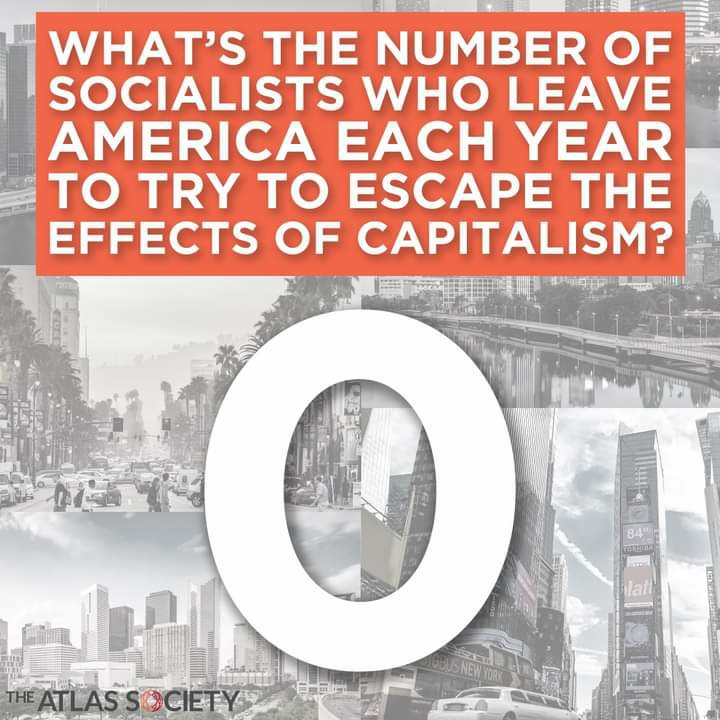
Who flees to Cuba
24 Mar 2021 Leave a comment
in liberalism, libertarianism, Marxist economics, politics - USA
Canada: An elected Senate?
23 Mar 2021 Leave a comment

In a recent comment to the earlier thread on Canada’s dysfunctional electoral system, Wilf Day notes that Prime Minister Stephen Harper has promised that reforms to the Senate will be in place before the next general election. Included in Harper’s plans is a move to an elected Senate.
In many comparative politics texts, Canada is listed among the countries with a weak upper house, but as Wilf notes, technically the Senate is almost as powerful as the lower house. The Senate has not frequently challenged the authority of the lower house and the government that emenates from it, in part because it is an unelected body. I would add that simply being appointed is not enough to render an upper house weak, as the British House of Lords is actually far more influential than is often assumed in many of those same standard comparative politics texts. However, the…
View original post 1,353 more words
Candidacy for prime minister
23 Mar 2021 Leave a comment
In presidential systems, it is clear who is a candidate for the position of heading government–anyone who enters the election as a formal candidate for president. What about in a parliamentary system? This seems like a trick question. I assume it is straightforward: A person who is the leader of a party can be assumed to be a candidate for prime minister.
We might qualify that definition of candidacy for prime minister by saying it only applies to the leaders of parties expected to be among the largest in the election. Perhaps leaders of clearly minor or sectarian parties can be dismissed as candidates for the post as they are deemed as highly unlikely to claim the post. However, in presidential systems, we would define someone on the ballot as “not a candidate” just because he or she was considered unlikely to win the job. Is the standard different in…
View original post 545 more words
Craig Prescott: Modernising the Monarchy: Moving Beyond the 1917 Letters Patent and the “George V Convention”
23 Mar 2021 Leave a comment


In March 2021, Meghan, Duchess of Sussex, gave one of the most extraordinary interviews ever held with a member of the Royal Family. It may have a profound and long-lasting effect on the monarchy, an institution that remains central to the UK’s constitutional arrangements. Already, there are calls for reform. This blog focuses on the section of the interview that discussed the lack of princely status for Archie, the Sussexes’ eldest child.
The aim is not to address the Duchess’s specific points, as the media have scrutinised them in great detail. Instead, the issue of Archie’s status is the key that opens the door to a range of issues that the monarchy faces as a political institution. The fallout from the interview creates the opportunity to reflect on how the titles of prince and princess should be distributed in the future while considering the changing role of the Royal Family…
View original post 2,459 more words
Einstein’s Eclipse
23 Mar 2021 Leave a comment

March 22, 2021: On May 29, 1919, the Moon slid in front of the sun and forever altered our understanding of spacetime. It’s known as “Einstein’s Eclipse.” Using his newly-developed theory of relativity, the young German physicist predicted that the sun’s gravity should bend starlight–an effect which could only be seen during a total eclipse. More than 100 years later, Petr Horálek (ESO Photo Ambassador) and Miloslav Druckmüller (Brno University of Technology) have just released a stunning restoration of the photo that proved Einstein right:

The original picture was taken in May 1919 by astronomers Andrew Crommelin and Charles Rundle Davidson, who traveled from the Greenwich Observatory in London to the path of totality in Sobral, Brazil. They were part of a global expedition organized by Sir Arthur Eddington, who wanted to test Einstein’s strange ideas. Glass photographic plates from the expedition were typical of early 20th century astrophotography, colorless…
View original post 406 more words


Recent Comments