
Neoclassical economists think the economy is freestanding and ignore institutions!
22 Jun 2014 Leave a comment
in Adam Smith, comparative institutional analysis, constitutional political economy, James Buchanan, Ronald Coase Tags: Adam Smith, Douglass North, Elinor Ostrom, James Buchanan, Robert Fogel, The institutional structure of production
The Sveriges Riksbank Prize in Economic Sciences in Memory of Alfred Nobel 1991 was awarded to Ronald H. Coase:
for his discovery and clarification of the significance of transaction costs and property rights for the institutional structure and functioning of the economy
The Royal Swedish Academy of Sciences has decided to award The Sveriges Riksbank Prize in Economic Sciences in Memory of Alfred Nobel for 2009 to
Elinor Ostrom “for her analysis of economic governance, especially the commons” and Oliver E. Williamson “for his analysis of economic governance, especially the boundaries of the firm”
The Royal Swedish Academy of Sciences has decided to award the Bank of Sweden Prize in Economic Sciences in Memory of Alfred Nobel for 1993 jointly to Robert W. Fogel and Douglass C. North
for having renewed research in economic history by applying economic theory and quantitative methods in order to explain economic and institutional change.
The Royal Swedish Academy of Sciences has decided to award the1986 Alfred Nobel Memorial Prize in Economic Sciences to Professor James McGill Buchanan for
his development of the contractual and constitutional bases for the theory of economic and political decision-making.
Adam Smith as a pioneering labour economist
21 Jun 2014 Leave a comment
in Adam Smith, health and safety, history of economic thought, human capital, labour economics, labour supply, occupational choice Tags: Adam Smith, Alfred Marshall, compensating differences, george stigler, human capital, The wealth of nations, wage determination

Adam Smith anticipated much of labour economics by basing it on his principle that individuals invest resources to earn the highest possible return. All uses of a resource must yield an equal rate of return adjusted for relative riskiness for otherwise reallocation would result.
The whole of the advantages and disadvantages of the different employments of labour and stock must, in the same neighbourhood, be either perfectly equal or continually tending to equality.
If in the same neighbourhood, there was any employment evidently either more or less advantageous than the rest, so many people would crowd into it in the one case, and so many would desert it in the other, that its advantages would soon return to the level of other employments.
Smith used this insight on be equality of returns to explain why wage rates differed. Workers care about the whole aspects of the job, not only the cash wage payment: it is the “whole advantages and disadvantages” of the job that is equated across jobs in a competitive market, not wage alone. Smith set out criteria that determined how wages compensated or were discounted for the different characteristics of specific jobs:
- the agreeableness or disagreeableness of the employments themselves: better for more enjoyable working conditions will lead an individual to accept lower wages for their labour. Likewise, unpleasant work will have a higher wage. Wages vary with the ease or hardship, the cleanliness or dirtiness, the honourableness or dishonourableness of a job.
- The easiness and cheapness, or the difficulty and expense of learning them: jobs that are difficult or time-intensive to learn will pay more. Those who invest the time are being compensated for their additional effort with higher wages. The opportunity cost of forgoing the time-spent in training will be compensated for through higher wages. The difference between the wages of skilled labour and common labour is founded upon this principle.
- The constancy or inconstancy of employment: workers who face only partial or inconsistent employment throughout the course of the year, such as seasonal workers of agriculture, must be paid more for their labour. Their wages carry them not only during times of employment, but also during times of unemployment.
- The small or great trust which must be reposed in those who exercise them: individuals who have high levels of responsibility in their jobs will be compensated with higher wages.
- The probability or improbability of success: this is an entrepreneurial element in wages. Employment where the chance of success is high will be paid lower than those who take more risks. If individuals were not compensated for risk, there would lack an incentive to seek employment that may not be successful.
The supply and demand for labour in different industries determines relative wages and the relative numbers of employees in different occupations. Individuals are willing to make a trade-off between less desirable occupations and increased income. Smith spoke of how these five circumstances listed above lead to considerable inequalities in the wages and profits.
George Stigler thought that the second greatest triumph of Adam Smith in his Wealth of Nations was his famous list of cost factors that generate apparent but not real differences in rates of wages and profits because of training, hardships, unemployment, risk and trust. This list was quoted almost verbatim by his successors down to this day and is the direct ancestor of both Alfred Marshall’s famous chapters on wages and of the modern theory of human capital.
The order brought about by the mutual adjustment of many individuals in a market
21 Jun 2014 Leave a comment
in applied price theory, comparative institutional analysis, F.A. Hayek, Milton Friedman Tags: Adam Smith, FA Hayek, Milton Friedman, Pete Boetkke, spontaneous order

Pete Boettke has written extensively about how The Wealth of Nations is about social order among strangers. The market is a social order much larger than our span of moral sympathy.
In civilized society [man] stands at all times in need of the co-operation and assistance of great multitudes, while his whole life is scarce sufficient to gain the friendship of a few persons. In almost every other race of animals each individual, when it is grown up to maturity, is entirely independent, and in its natural state has occasion for the assistance of no other living creature.
But man has almost constant occasion for the help of his brethren, and it is in vain for him to expect it from their benevolence only. He will be more likely to prevail if he can interest their self-love in his favour, and show them that it is for their own advantage to do for him what he requires of them.
Whoever offers to another a bargain of any kind, proposes to do this. Give me that which I want, and you shall have this which you want, is the meaning of every such offer; and it is in this manner that we obtain from one another the far greater part of those good offices which we stand in need of.
To realize this social cooperation, Boettke argues that social institutions must be in place such as private property, keeping promises through contract, and the acceptance of the legitimacy of the transfer of property by consent. The division of labour is the key to the ability of the market system to produce social cooperation among distant and different anonymous actors.
The civilising influence of commerce is well-known as is it as the key to peace. We fear neither Russia nor China because of extensive economic interdependencies makes war pointless for all. The common market ended war in Western Europe.
The co-operation and peace is a spontaneous product of Hayek’s concept of catallaxy which is
the order brought about by the mutual adjustment of many individual economies in a market
The youtube clip is Milton Friedman’s discussion of the famous essay I, Pencil and how strangers cooperated in peace and harmony in the market even though they might hate each other if they ever met. I, Pencil details the complexity of its own creation and the numerous people involved is the absence of a master mind, of anyone dictating or forcibly directing these countless actions. Instead, we find the invisible hand at work.
Capitalism is a system which enables cooperation between millions of strangers so that they may jointly pursue their diverse goals.
Adam Smith on growing grapes in Scotland
27 May 2014 Leave a comment
in applied price theory, industrial organisation Tags: Adam Smith, free trade, industry policy, protectionism
 |
By means of glasses, hotbeds, and hotwalls, very good grapes can be raised in Scotland, and very good wine too can be made of them at about thirty times the expense for which at least equally good can be brought from foreign countries. Would it be a reasonable law to prohibit the importation of all foreign wines, merely to encourage the making of claret and burgundy in Scotland? …As long as the one country has those advantages, and the other wants [lacks] them, it will always be more advantageous for the latter, rather to buy of the former than to make. |
Public policy fallacies and Stigler’s law of scientific epiphany-corrected
28 Mar 2014 3 Comments
in George Stigler, macroeconomics, Thomas M. Humphrey Tags: Adam Smith, intellectual entrepreneurs, Merton's Multiples, Stigler’s law of scientific epiphany
Economics under-supplies new ideas because it spends a lot of time rediscovering old ones.
Under Stephen Stigler’s law of scientific epiphany, the inventor of an idea is not the first to discover it, but the first to make sure that the idea stayed discovered and was not forgotten again and reinvented and recycled as new. Mentioning an under-developed idea in passing is not enough.
Stephen Stigler attributed his law to Robert Merton’s law of multiples, acknowledging that Stigler’s law obeys Stigler’s law.
His father, George Stigler gave his Noble Prize lecture was on how and when new ideas were slowly adopted by the body of knowledge of the economics profession.
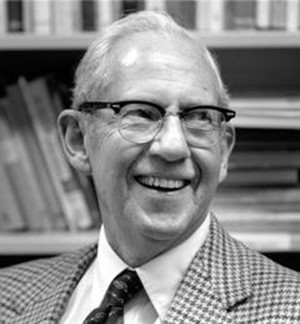
Stigler said that Adam Smith founded economics because:
- A considerable number of economists, and a few considerable economists, have emphasised the fact that Smith had many gifted predecessors and almost all or perhaps exactly all of his ideas are to be found expressed, and sometimes well expressed, by these predecessors.
- Some economists therefore wish to give the title of founder of economics to earlier writers such as Cantillon. This line of argument, in my view, misses the point.
- It was Smith who provided so broad and authoritative an account of the known economic doctrine that, henceforth, it was no longer permissible for any subsequent writer on economics to advance his own ideas while ignoring the state of general knowledge.
Knight’s 1937 scathing review of Keynes’ general theory was:
Many of Mr. Keynes’s own doctrines are, as he would proudly admit, among the notorious fallacies to combat which has been considered a main function of the teaching of economics.
Under Stigler’s rule of scientific epiphany, Keynes still deserves credit because he made sure that these old scattered fallacies stayed discovered, and they certainly did.
Another reason for the lack of new ideas – Stigler argued – is that if the problems of economic life changed frequently and radically, and lacked a large measure of continuity, there could not be a science of economics.
Stigler argued that an essential element of any science is a cumulative growth of knowledge. That cumulative character could not arise, in Stigler’s view, if each generation of economists faced fundamentally new problems that called for new methods of analysis. Stigler concluded that without the base of persistent theory and a set of fundamental and durable problems, there would be no body of slowly evolving knowledge to constitute a science. Without the challenges of unsolved, important problems handed down from economists in the past, the science of economics would become sterile.
An example of Stigler’s law of scientific epiphany is The Early History of the Phillips Curve by Thomas M. Humphrey (1985).
Humphrey found prototypal Phillips curve analysis in the writings of David Hume (1752), Henry Thornton (1801), and John Stuart Mill. Irving Fisher’s 1926 statistical analysis was republished, as I discovered the Phillips curve in 1973. Jan Tinbergen estimated the wage-change version of the Phillips Curve in 1936. Phillips was seen as the discoverer because, Humphrey concluded, he provided:
A ready-made justification for discretionary intervention and activist fine tuning, this interpretation helped make the Phillips curve immensely popular among Keynesian policy advisors.
Thomas Humphrey later wrote an excellent 250-year long literature survey of the rules versus discretion debate in the 1999 Richmond Fed Quarterly. He wanted to know if macroeconomics was a progressive science in the sense that superior new ideas relentlessly supplanted inferior old ones.
Humphrey found that:
- Keynesian ideas about a lack of demand and their many antecedents gain currency when unemployment was the main concern.
- Monetarist ideas tended to reign when price stability was the main problem.
The policy debate keeps being recycled because:
- People forget the lessons of the past; and
- For better or worse, politicians and the public have tended to believe that central banks – the focus of his studies – have the power to boost output, employment, and growth permanently.
Humphrey showed that stable policy rules are popular in good times to contain inflation. And when unemployment was rising, discretionary monetary policies became in vogue, once again.
A key role of economists in public policy is remembering that few policy ideas are new and they were often found wanting in a sufficiently distant past; those who knew these refutations have moved on. Humphrey concluded that:
The doctrinal historian knows that much of what passes for novelty and originality in monetary theory and policy is ancient teaching dressed up in modern guises…
Preoccupied by the pressing problems of the day, [policy-makers and the public] have neither the time, inclination, or training, nor indeed the duty to trace the history of the ideas they employ or endorse.
They have no reason to be aware of earlier policy debates in which sound theories were distinguished from fallacious ones.
The result is that policymakers may subscribe to old theories under the mistaken impression that those theories are new. Worse, they may unwittingly deploy policies whose underlying theory has been challenged and found wanting in earlier policy debates.
Every new idea needs both a market as well as alert intellectual entrepreneurs who seize the right moment to put their ideas forward.
 Utopia, you are standing in it!
Recent Comments