Interesting, non-obvious stuff here. "Inoculating against science denial" theconversation.com/inoculating-ag… http://t.co/U719oys3Pf—
(@pourmecoffee) May 16, 2015
Handy hints for the Antiscience Left
16 May 2015 Leave a comment
in economics of regulation, environmental economics, environmentalism, global warming Tags: anti-intellectualism, antiscience left, climate alarmists, conjecture and refutation, doomsday prophets, logical fallacies, philosophy of science, precautionary principle, propaganda
Behind on my organic farming bashing
15 May 2015 Leave a comment
in environmental economics Tags: agricultural economics, antiscience left, organic farming, quackery
The greatest climate change denial of them all
12 May 2015 Leave a comment
in energy economics, environmental economics, global warming Tags: antiscience left, at nuclear power, atomic energy, climate alarmism, global warming
Pseudoscience bingo
11 May 2015 Leave a comment
in economics of media and culture Tags: antiscience left, conjecture and refutation, quackery
Product disclosure by medical quacks
07 May 2015 Leave a comment
in economics of information, economics of media and culture, health economics Tags: alternative lifestyles, antiscience left, natural medicine, Quacks
Cognitive biases of the anti-vaccination movement and the Antiscience Left
15 Apr 2015 Leave a comment
in environmental economics, environmentalism, health economics Tags: anti-vaccination movement, antiscience left, cognitive biases, cognitive psychology, conjecture and refutation, philosophy of science
Why wasn’t this study about health and the vegetarian lifestyle reported?
13 Apr 2015 Leave a comment
in environmental economics, health economics Tags: antiscience left, meddlesome preferences, nanny state, vegans, vegetarians
As one of a great many who enjoy eating tasty animals, I’m surprised this story about how the vegetarian lifestyle is less healthy wasn’t widely reported:
According to the study, those who abstain from meat are “less healthy (in terms of cancer, allergies, and mental health disorders), have a lower quality of life, and also require more medical treatment.”
Vegetarians were twice as likely to have atopy (allergies), a 50 percent increase in cancer and a 50 percent increase in heart attacks. They also drank less alcohol.
This is not the first time counter-intuitive research has shown the negative effects of consuming a meat-free diet.
In 2010 the WHO published a study where 30,604 people were followed for an average of 8.7 years on their fruit and vegetable consumption. Those who consumed the recommended 5 pieces of fruit and vegetables a day did not have less cancer nor enjoyed better health. They were even forced to conclude the opposite.
“A very small inverse association between intake of total fruits and vegetables and cancer risk was observed in this study.”
This study even concluded that a “..growing body of epidemiological, clinical and experimental evidence suggesting that regular cheese intake may reduce the risk of cardiovascular outcomes.”
More on the horrors of DHMO
11 Apr 2015 Leave a comment
in health economics Tags: antiscience left, DHMO, precautionary principle, risk risk trade-offs
Google University for Dummies
01 Apr 2015 Leave a comment
in health economics Tags: antiscience left, conjecture and refutation, Google, philosophy of science, Quacks
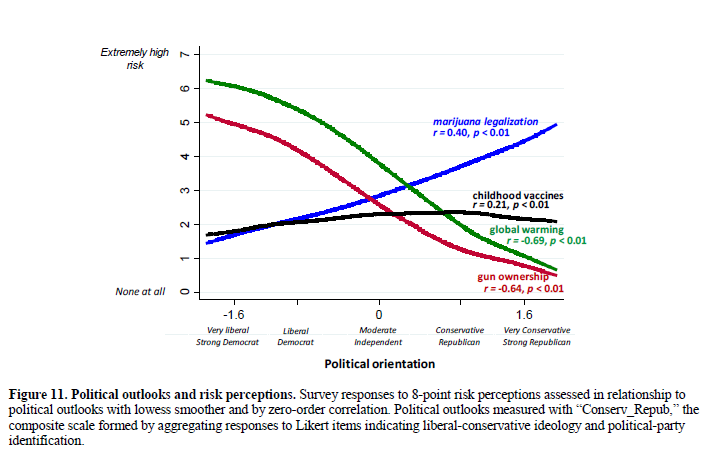
The anti-vaccination movement is drawn equally from across the political spectrum
20 Feb 2015 Leave a comment
in health economics, politics - Australia, politics - New Zealand, politics - USA, Public Choice Tags: anti-vaccination movement, antiscience left, Green Left, opinion polls
Anti-science Left alert: NZ Greens reject scientific consensus on GMOs but not global warming
11 Feb 2015 Leave a comment
in environmental economics, global warming, health economics, politics - USA Tags: antiscience left, argument from authority, climate alarmism, GMOs, green hypocrisy, Green Left, Green Party of New Zealand, Quacks

But I’m not going to focus this speech on the dire consequences of doing nothing on climate change. I’m sure all of us have heard the science; we’ve read about the wicked storms and wildfires and droughts, the risks to agriculture and forestry, the threats posed to our homes and wildlife. We’ve probably even seen some of the changes first hand in our own backyard.
Russel Norman, co-leader, Green Party of New Zealand, 10 February 2015,
But on genetic engineering,the Green Party of New Zealand takes its leave of the scientific consensus, scientific consensus as strong as that on global warming. To quote the policy platform of the Green Party of New Zealand:
GE crops have a huge effect on farmers, scientists and the market, and their development is driven by big agribusiness for big profits.
GE crops and foods have an uncertain effect on our health and the environment.
We have opposed the release of GE into the environment and have worked in parliament to improve legislation covering GE organisms.
The Green Party remains committed to keeping the Aotearoa New Zealand environment free of GE organisms.
GE needs to stay in the lab, releasing it would destroy our clean green image which is so important to our economy
Dosages are quite important for the safety of medicines and other chemicals
07 Feb 2015 Leave a comment
in health economics Tags: antiscience left, Quacks
 Utopia, you are standing in it!
Recent Comments