The Armistice (11:00AM / 11th day / 11th month / 1918 )
11 Nov 2021 Leave a comment
in defence economics, laws of war, war and peace Tags: Armistice Day, World War I
WWI deaths from the British Empire, day by day
11 Nov 2015 Leave a comment
in war and peace Tags: Armistice Day, British empire, World War I
A stunning and frightening #dataviz of WWI deaths from the British Empire, day by day: theguardian.com/news/datablog/… http://t.co/8Neym8zQBQ—
Randy Olson (@randal_olson) June 05, 2015
Watching people fighting, watching people fighting on Armistice Day
11 Nov 2015 Leave a comment
in defence economics, war and peace Tags: Armistice Day, game theory, Treaty of Versailles, World War I
The Midnight Oil song was true. Generals launched attacks on Armistice Day in full knowledge that the 11 a.m. truce had been agreed unofficially up to two days before. The Germans finally signed the armistice at 5:10 a.m. on the morning of the 11th November.
- The records of Commonwealth War Graves Commission shows that 863 Commonwealth soldiers died on 11 November 1918 – this figure includes those who died of wounds received prior to November 11.
- The Americans took 3,300 casualties on the last day of the war.
The last American soldier killed was Private Henry Gunter who was killed at 10.59 a.m. – the last man to die in World War One. His divisional record stated:
Almost as he fell, the gunfire died away and an appalling silence prevailed.
General Pershing supported commanders who wanted to be pro-active in attacking German positions on the last day of the war. Pershing stated at 1919 Congressional hearings that although he knew about the timing of the Armistice, he simply did not trust the Germans to carry out their obligations. Pershing also pointed out that his orders of the Allies Supreme Commander, Marshal Ferdinand Foch, to
pursue the field greys (Germans) until the last minute
Pershing found the idea of an armistice repugnant. He maintained:
Germany’s desire is only to regain time to restore order among her forces, but she must be given no opportunity to recuperate and we must strike harder than ever.
As for terms, Pershing had one response:
There can be no conclusion to this war until Germany is brought to her knees.
Pershing said that conciliation now would lead only to a future war. He wanted Germany’s unconditional surrender. He insisted that Germany must know that it was fully defeated in the field of battle rather than betrayed from within.
When presented with the terms of the 1919 Treaty of Versailles, several German governments resigned. France started to remobilise before Germany finally accepted the Treaty. The Treaty was somewhat harsher than the German Foreign Office anticipated.
A blow by blow account of the six-months of treaty negotiations is in Margaret MacMillan Paris 1919: Six Months That Changed the World 2002 who showed that:
- real defeat was not brought home to the German people,
- the power of the peacemakers was limited,
- they were not responsible for the fragmentation of Europe which was already happening,
- the blockade did not starve Germany,
- neither the Versailles treaty nor France was vindictive,
- reparations were not crushing,
- the treaty was not enforced with any consistency, and it did not seriously restrict German power, and
- The Versailles treaty was not primarily responsible for either the next twenty years or for World War II.
The high-minded efforts of the Paris negotiators were doomed as some of them realised. Lloyd George wrote:
It fills me with despair the way in which I have seen small nations, before they have hardly leapt into the light of freedom, beginning to oppress other races than their own.
How the first world war changed the world
04 Nov 2015 Leave a comment
in politics - Australia, politics - New Zealand, politics - USA, war and peace Tags: Armistice Day, World War I
#Dailychart: How the first world war changed the world econ.st/1rvj6tW http://t.co/OldeGaiJEe—
The Economist (@ECONdailycharts) July 28, 2014
German and French war planners both believed WWI was going to be an offensive one
11 Oct 2015 Leave a comment
in war and peace Tags: Armistice Day, World War I
The demand and supply of war movies
25 Apr 2015 Leave a comment
in economics of natural disasters, movies, war and peace Tags: Anzac Day, Armistice Day, World War I, World War II
A Century of Movies About World War: reddit.com/r/dataisbeauti… #dataviz http://t.co/sGsb0d0s3J—
Randy Olson (@randal_olson) February 24, 2015
Armistice Day: World War I as a bar fight
11 Nov 2014 Leave a comment
in war and peace Tags: Armistice Day, David Friedman, game theory, Thomas Schelling, World War I

Wars are like bar fights. Both are about not backing down. David Friedman explains:
Consider a barroom quarrel that starts with two customers arguing about baseball teams and ends with one dead and the other standing there with a knife in his hand and a dazed expression on his face.
Seen from one standpoint, this is a clear example of irrational and therefore uneconomic behaviour; the killer regrets what he has done as soon as he does it, so he obviously cannot have acted to maximize his own welfare.
Seen from another standpoint, it is the working out of a rational commitment to irrational action–the equivalent, on a small scale, of a doomsday machine going off.
Suppose I am strong, fierce, and known to have a short temper with people who do not do what I want.
I benefit from that reputation; people are careful not to do things that offend me. Actually beating someone up is expensive; he may fight back, and I may get arrested for assault. But if my reputation is bad enough, I may not have to beat anyone up.
To maintain that reputation, I train myself to be short-tempered. I tell myself, and others, that I am a real he-man, and he-men don’t let other people push them around. I gradually expand my definition of “push me around” until it is equivalent to “don’t do what I want.”
We usually describe this as an aggressive personality, but it may make just as much sense to think of it as a deliberate strategy rationally adopted.
Once the strategy is in place, I am no longer free to choose the optimal response in each situation; I have invested too much in my own self-image to be able to back down… Not backing down once deterrence has failed may be irrational, but putting yourself in a situation where you cannot back down is not.
Most of the time I get my own way; once in a while I have to pay for it.
I have no monopoly on my strategy; there are other short-tempered people in the world. I get into a conversation in a bar. The other guy fails to show adequate deference to my opinions. I start pushing. He pushes back. When it is over, one of us is dead.
No-one could back down in 1914. Tom Schelling even said that once a country mobilised for war in 1914, it had no plans at hand on how to stop this mobilisation.
Schelling spent a lot of time on going to war as an emergent process: what a nation does today in a crisis affects what it can be expected to do tomorrow:
A government never knows just how committed it is to action until the occasion when its commitment is challenged.
Schelling argues that nations, like people, are continually engaged in demonstrations of resolve, tests of nerve, and explorations for understandings and many misunderstandings.
That is why there is a genuine risk of major war not from accidents in the military machine but through a diplomatic process of commitment and escalation that is itself unpredictable.
In Schelling’s view, many wars including World War 1 were products of mutual alarm and unpredictable tests of will.
Schelling and others in the 1950s and after studied World War 1 to learn how to not blunder into wars when nuclear weapons now would be used.
When people discuss the futility of World War 1, they under rate the role of unintended consequences and the dark side of human rationality in situations involving collective action.
Wars arise as unintended consequences of mutual alarm and unpredictable tests of will. As such, they are not moral ventures that you can choose to join or not. People blunder into wars.
It is even harder to get out of a war than into one. The problem is credible assurances that the peace is lasting rather than just a chance for the other side to rebuild and come back to attack from a stronger position.
A state would think that another state’s promise not to start another war is credible only if the other state would be better off by keeping such promises not to start another war than by breaking its promise once it has rearmed.
Making sure that Germany and its allies did not restart the war a few years later, fed and rested, is why the peace treaty in 1919 totally disarmed Germany and split-up the other Axis powers.
One side will think that the other’s promise not to re-start a war is credible only if the other state would be better off by keeping its promise not to re-start a war than by breaking its promise.
France fortified its border with Germany in the 1920s because of a lack of trust that the peace would endure. Germany was disarmed after 1918 so that the day which it would be a threat again was well into the future.

An understudied issue is peace feelers in World War 1 such as by the German chancellor in 1916 and the Reichstag peace resolution on 19 July 1917. Pope Benedict XV tried to mediate with his Peace Note of August 1917.
Peace initiatives failed because until the last months of the war, neither side really lost confidence that they could prevail over their opponents.
Both sides suffered from a profound sense of insecurity in an international system characterised by uncertainty, arms races, warfare, and constant intrigue.
Both sides assumed the worst of the other; both trusted in the reduction of their opponents’ military power to keep them safe. As long one side could believe that they had a plausible chance to prevail on the battlefield, they would not abandon their quest to achieve that goal.
From late 1914 to early 1917, the Allies thought the balance of power favoured them because they had access to greater resources than the Central Powers.
German peace feelers when they were winning were based on Germany keeping everything it had conquered up till then. When Germany was in retreat, the German peace feelers were based on going back to the old borders before the war.

With its armies in possession of enemy territory in both the east and west, and the Allies unable to push them out, German leaders saw no reason to offer extensive concessions for peace.
HT: Ross A. Kennedy,
Watching people fighting on Armistice Day
25 Apr 2014 1 Comment
in economics, war and peace Tags: Armistice Day, fatal conceit, General Pershing, Margaret MacMillan, Midnight Oil, Paris 1919, Treaty of Versailles
The Midnight Oil song was true.
Generals launched attacks on Armistice Day in full knowledge that the 11 am. truce had been agreed unofficially up to two days before. The Germans finally signed the armistice at 5:10 a.m. on the morning of the 11th November.
- The records of Commonwealth War Graves Commission shows that 863 Commonwealth soldiers died on 11 November 1918 – this figure includes those who died of wounds received prior to November 11.
- The Americans took 3,300 casualties on the last day of the war.
The last American soldier killed was Private Henry Gunter who was killed at 10.59 a.m. – the last man to die in World War One. His divisional record stated:
Almost as he fell, the gunfire died away and an appalling silence prevailed.
General Pershing supported commanders who wanted to be pro-active in attacking German positions on the last day of the war.
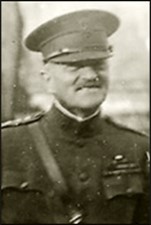
Pershing stated at 1919 Congressional hearings that although he knew about the timing of the Armistice, he simply did not trust the Germans to carry out their obligations.
Pershing also pointed out that his orders of the Allies Supreme Commander, Marshal Ferdinand Foch, to
pursue the field greys (Germans) until the last minute
Pershing found the idea of an armistice repugnant. He maintained:
Germany’s desire is only to regain time to restore order among her forces, but she must be given no opportunity to recuperate and we must strike harder than ever.
As for terms, Pershing had one response:
There can be no conclusion to this war until Germany is brought to her knees.
Pershing said that conciliation now would lead only to a future war. He wanted Germany’s unconditional surrender. He insisted that Germany must know that it was fully defeated in the field of battle rather than betrayed from within.
When presented with the terms of the 1919 Treaty of Versailles, several German governments resigned.
France started to remobilise before Germany finally accepted the Treaty. The Treaty was somewhat harsher than the German Foreign Office anticipated.
A blow by blow account of the six-months of treaty negotiations is in Margaret MacMillan Paris 1919: Six Months That Changed the World 2002 who showed that:
- real defeat was not brought home to the German people,
- the power of the peacemakers was limited,
- they were not responsible for the fragmentation of Europe which was already happening,
- the blockade did not starve Germany,
- neither the Versailles treaty nor France was vindictive,
- reparations were not crushing,
- the treaty was not enforced with any consistency, and it did not seriously restrict German power, and
- The Versailles treaty was not primarily responsible for either the next twenty years or for World War II.
The high-minded efforts of the Paris negotiators were doomed as some of them realised. Lloyd George wrote:
It fills me with despair the way in which I have seen small nations, before they have hardly leapt into the light of freedom, beginning to oppress other races than their own.
 Utopia, you are standing in it!
Recent Comments