Big Game, Big Money: Illegal wildlife trade documentary
30 Dec 2016 Leave a comment
in applied price theory, economics of regulation, environmental economics, industrial organisation, law and economics, property rights Tags: black markets

Law and Order: SVU – Black Market Kidneys
22 Oct 2016 Leave a comment
in applied price theory, applied welfare economics, economics, health economics, television Tags: black markets, organ markets
Seinfeld Economics: The Shower Head (black markets)
07 Sep 2016 Leave a comment
in applied price theory, applied welfare economics, comparative institutional analysis, economics, economics of media and culture, environmental economics, environmentalism, television Tags: black markets, nanny state, offsetting behaviour, Seinfeld, The fatal conceit, water economics
The iron law of prohibition
03 Jul 2016 Leave a comment
in economics of regulation, health economics Tags: alcohol regulation, black markets, economics of prohibition, economics of smoking, marijuana decriminalisation, offsetting behaviour, The fatal conceit, The pretense the knowledge
Repugnant markets and the demand and supply for counterfeit legal ivory
17 Jun 2016 Leave a comment
in applied price theory, economics of crime, entrepreneurship, law and economics, property rights Tags: black markets, counterfeit goods, economics of prohibition, endangered species, offsetting the, unintended consequences
A huge legal sale of ivory in 2008 backfired. Instead of crashing the price of ivory and undermining poaching, poaching exploded in East Africa. It increased by 65%.
The international trade in ivory was banned in 1989. In 2008, China and Japan were allowed to pay $15m for 107 tonnes of ivory from elephants that died naturally in four African nations.

Source: Study finds global legalization trial escalates elephant poaching | Berkeley News.
Hsiang and Sekar this week found that this legal sale of ivory was followed by “an abrupt, significant, permanent, robust and geographically widespread increase” in ivory poaching. They were right to conclude that the legal sale provided a cover for poached ivory.
The economic intuition was that if we allow the sale of some legal ivory in Japan and China, then there would be fewer people left to purchase it illegally. We found that that intuition was incorrect. The black market for ivory responded to the announcement of a legal sale as an opportunity to smuggle even more ivory.
The legal sale of ivory created new demand for ivory in China, where it no longer had the stigma of an illicit product. The presence of legal ivory provided cover for smugglers trying to peddle illegal ivory sourced from poachers.
As illegal ivory can now masquerade as legal ivory in China, transporting and selling illicit ivory has gotten easier and cheaper, which can boost illegal production even though prices are falling.
Ivory is a repugnant market. Many friends will be revolted by you having ivory products.
The presence of legal ivory made it possible for counterfeit legal ivory to be passed off as legal ivory and therefore your friends will not reject you. This is a real and striking example of a unintended consequence. The solution to poaching is property rights.
How #drugs travel the world
13 Jun 2016 Leave a comment
in economics of crime, industrial organisation, international economics, law and economics Tags: black markets, drug decriminalisation, economics of prohibition, marijuana decriminalisation, smuggling
Why Do Black Markets for Marijuana Still Exist in Colorado? @PeterDunneMP
24 Apr 2016 Leave a comment
in applied price theory, economics of regulation, health economics, politics - USA Tags: black markets, economics of prohibition, marijuana decriminalisation, tax evasion
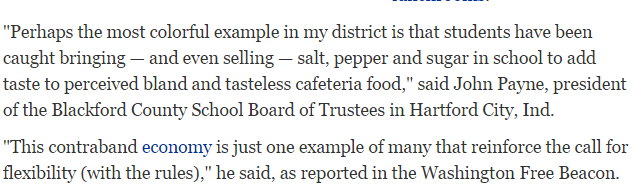
Kids Create Cafeteria Black Market To Bypass Food Nannies
30 Jun 2015 Leave a comment
in economics of crime, economics of education, economics of regulation, entrepreneurship, health economics, industrial organisation, law and economics, survivor principle Tags: black markets, economics of prohibition, entrepreneurial alertness, food, nanny state, police, The fatal conceit, unintended consequences
How drugs move all around the world.
27 Jun 2015 Leave a comment
in economics of crime, industrial organisation Tags: black markets, drug trade, economics of prohibition, maps
These three maps show how drugs move all around the world. bloomberg.com/news/articles/… via @sangwonyoon http://t.co/wIjUBEXyt7—
Bloomberg Markets (@markets) June 26, 2015
What are the prices on the black market for animal parts?
01 May 2015 Leave a comment
in economics of crime, economics of regulation, entrepreneurship, environmentalism, law and economics, property rights Tags: black markets, economics of prohibition, endangered species, offsetting behaviour, or unintended consequences
Animated #Dailychart: Bear bile, rhino horn, tiger bone–how much do animal products cost? econ.st/1nfrFKf http://t.co/oG5HtZvzOL—
The Economist (@ECONdailycharts) July 23, 2014
How much is your body worth?
28 Feb 2015 Leave a comment
in health economics Tags: black markets, market for body organs, organ donation


 Utopia, you are standing in it!
Recent Comments