Brutal Tory Attack Ad Says Labour Soft on ISIS
19 Aug 2016 Leave a comment
in defence economics Tags: British politics
@JeremyCorbyn’s In The Thick of It moment: not knowing pop culture
18 Aug 2016 Leave a comment
in economics, television Tags: British politics, In The Thick of It, pop culture
There is an hilarious skit in The Thick of It where the minister discovers that an actor was the member of the focus group he was relying on for the best views of normal voters. He knew she was an actor because the minister saw her on East Enders. He saw her in the 40 minutes video he gets every week summarising developments in the soapies. He gets that video so he can have conversations with normal people. The actor was bought into the focus group to make up the numbers. I cannot find the actual clip.
Socialism DOES Work | Jeremy Corbyn | Oxford Union
03 Aug 2016 Leave a comment
in applied price theory, economic history, economics, income redistribution, Public Choice, public economics, Rawls and Nozick Tags: British politics, Leftover Left
A far right populist contradicts the median voter theorem
25 Jul 2016 Leave a comment
in constitutional political economy, politics - USA, Public Choice Tags: British politics, left-wing populism, Leftover Left, median voter theorem, right-wing popularism, Twitter left
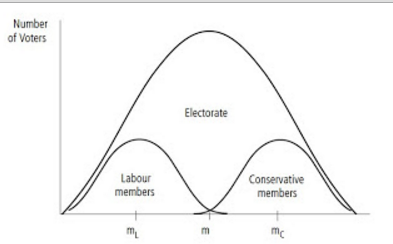
Hanson, Trump, UKIP, Alternative for Germany, Marine Le Pen, and the anti-immigration but pro-welfare state populist parties in northern Europe are all smeared by the media as far right parties but also are described as right-wing populists. Media bias is still constrained by the median voter theorem.
You cannot be on the far right but win lots of votes because the extremes of the political spectrum account for few votes. What do you think left-wingers stay within the Labour Party despite wanting its leader to be tried for war crimes.
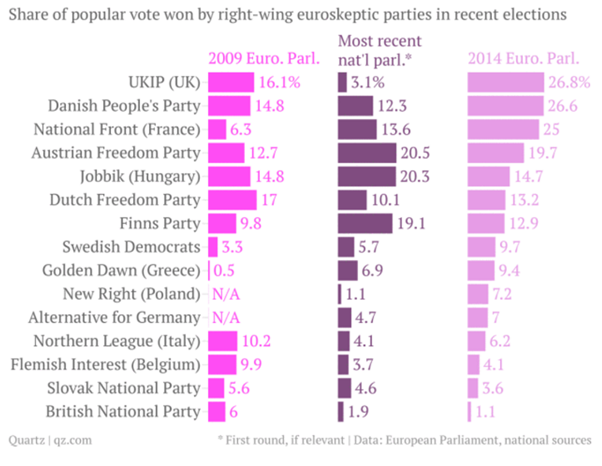
Even in proportional representation systems, few far right and far left party set up on their own two feet and survive because of thresholds to win seats. There are Communist parties in European parliaments but their representation is small except for the Bundestag.
You cannot get into the 2nd round of the French presidential election, come 2nd in 40 British Labour Party seats, win the safest Labour Party seats in Queensland, and be attacked from Ted Cruz from the right and still be a far right winger.
All right-wing populist parties combine that heady brew of nationalism,opposition to immigration and free trade, and staunch support of the welfare state. Not surprisingly, something like 40% of their votes come from the traditional labour parties and social democratic parties.
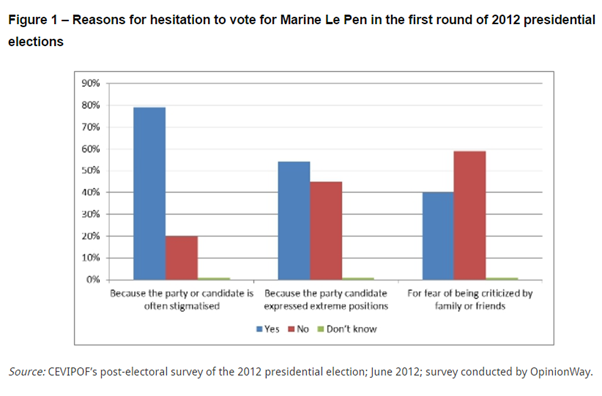
Countering their appeal to the electorate cannot start with saying that anyone who votes for them is weird because the secret ballot allow secret malice.
The left is surprisingly bad at playing catch-up in identity politics. As one UKIP supporter said, I am a white working class Englishmen not on the benefit so Labour does not speak for me.
An inquiry established by Labour’s former policy chief, Jon Cruddas, MP found that Labour needs to
“stop patronising socially conservative Ukip voters and recognise the ways in which Ukip appeals to former Labour voters”, the report says, adding: “Labour is becoming a toxic brand. It is perceived by voters as a party that supports an ‘open door’ approach to immigration, lacks credibility on the economy, and is a ‘soft touch’ on welfare spending.”
At present, the report argues, Labour is “largely a party of progressive, social liberals who value principles such as equality, sustainability, and social justice.
It is losing connection with large parts of the voter population who are either pragmatists in their voting habits or social conservatives who value family, work, fairness and their country.” It adds: “Labour is becoming dangerously out of touch with the electorate and … unwilling to acknowledge this growing estrangement.”
Last PMQ of #Thatcher #Blair #Cameron
22 Jul 2016 Leave a comment
in constitutional political economy, economics Tags: British politics
Diane Abbott: Chairman Mao “on balance did more good than harm”
15 Jul 2016 Leave a comment
in Marxist economics Tags: British politics
Peace activists didn’t use the knockdown argument against 2nd Iraq war
10 Jul 2016 Leave a comment
in defence economics, war and peace Tags: anti-war movements, British politics, game theory, Iraq, Iraq war, Middle-East politics, mutually assured destruction, nuclear deterrence, peace movements, Syrian Civil War
This idea of suing ministers for abuse of public office has appeal given the gap between many left-wing policies and sound economics.
https://twitter.com/_PaulMonaghan/status/751525929613156352
Anti-war MPs such as Jeremy Corbyn should be sued for abuse of public office and crimes against peace for not making the knockdown argument against the 2nd war against Iraq.
Instead, Corbyn said he did not like war without explaining how this was different from appeasement and surrender. The easiest way to stop a war is to surrender. The easiest way to start a war is to look weak to an aggressor.
That knockdown argument against the 2nd Iraq war argument was right under the noses of the peace movement. It was yes, Iraq has weapons of mass destruction.

Source: The Secret Casualties of Iraq’s Abandoned Chemical Weapons – The New York Times
It is madness to invade a country that has weapons of mass destruction because they might use them especially if the objective is regime change. Iraq may not have had nuclear weapons, but the potential for Iraq to have biological and chemical weapons secreted away was real.
No one is mad enough to invade North Korea. They will use chemical and biological weapons on Seoul and Tokyo. Syria has chemical and biological weapons to make sure no one invades it.

From what I read, in the current Civil War, Syria uses chemical and biological weapons when it is on the retreat but does not use them to advance and claim new territory.
The reason why the renegade left could not possibly make this obvious argument against the war in Iraq, which was it could be a massive disaster if these chemical and biological weapons were used in desperation, was these peace activists would have to admit nuclear deterrence works. To stop a war by having to admit that weapons of mass destruction deter war was too much for the peace movement to swallow.
An admission that nuclear deterrence works would invalidate the entire political activism of the peace movements in the Cold War. The practical effect of those peace movements was, of course, to undermine the one factor preventing a nuclear war, which was nuclear deterrence.

Since 1945, at least seven or eight wars have occurred where one side had nuclear weapons. In 1973, Israel had nuclear weapons it could have used.

The reason for the non-use of nuclear weapons in those seven or eight wars including the 1973 Yom Kippur War was none were wars of annihilation. Nuclear weapons were more likely to be used if the suspected intention is to invade or occupy a country.
The Yom Kippur war was launched with a plan by President Sadat to reclaim the Sinai then after a few days agreed to an internationally brokered ceasefire. He was intending on reclaiming lost territory, not invading Israel proper continue and risk nuclear retaliation.
Saddam destroyed his nuclear, biological, and weapons but not his weapons development capability soon after he lost the first Iraq war. Saddam played a double strategy: make sure he was not caught with contraband but play a fine game of bluff making everybody think Iraq still has them so he remains a regional strongman.
Saddam could have produced biological and chemical weapons within weeks if he chose to do so but was probably 5 years away from a nuclear weapon. Chilcot’s recent report concluded:
The ingrained belief that Saddam Hussein’s regime retained chemical and biological warfare capabilities, was determined to preserve and if possible enhance its capabilities, including at some point in the future a nuclear capability, and was pursuing an active policy of deception and concealment, had underpinned UK policy towards Iraq since the Gulf Conflict ended in 1991.
The 2nd Iraq war started because Saddam fooled his enemies into thinking he had chemical, biological and nuclear weapons. He certainly had the Japan option. This is having in place the capability to produce weapons of mass destruction such as chemical and biological weapons quickly if he wanted.
Left of @uklabour to blame for Thatchernomics
06 Jul 2016 Leave a comment
in income redistribution, Public Choice Tags: British economy, British politics, Leftover Left, Margaret Thatcher
Thatcher was able to implement her policies because the Labour Party of the 1980s failed to offer a credible alternative government. In the 1983 general election, Labour ran on policy such as
- leaving the European Economic Community,
- abolishing the House of Lords,
- abandoning the United Kingdom‘s nuclear deterrent by cancelling Trident and removing cruise missiles.
After barely upholding the social democratic alliance in 1983, British labour did slightly better after four more years of Maggie Thatcher. Labour won 30% of the vote in 1987, up from 27%. in 1983 The social democratic alliance drop down from 25% to 22%
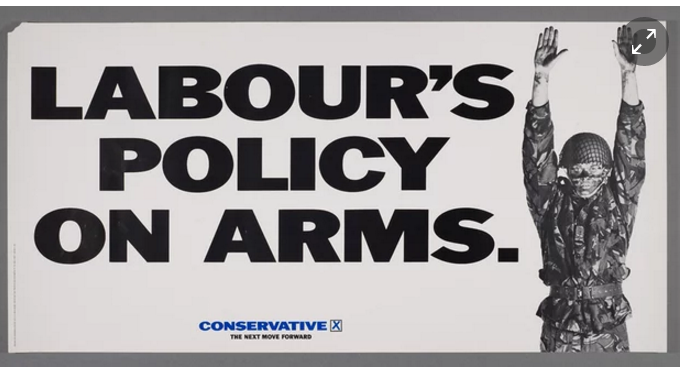
One reason was clever responses are national security in the 1987 election such as this
On 24 May, Kinnock was interviewed by David Frost and claimed that Labour’s alternative defence strategy in the event of a Soviet attack would be “using the resources you’ve got to make any occupation totally untenable”.
In a speech two days later Mrs. Thatcher attacked Labour’s defence policy as a programme for “defeat, surrender, occupation, and finally, prolonged guerrilla fighting… I do not understand how anyone who aspires to Government can treat the defence of our country so lightly.”
In 1992, Labour still lost the election by a landslide despite 13 years of Thatcher good and ended its commitment to unilateral nuclear disarmament, high taxes and old-style nationalisation. Go left, go left so damaged the labour brand that a new generation of leaders was required.
The British electorate had every chance to vote for a hard left Labour in the 1980s. It rejected it resoundingly and almost voted in the social democratic alliance as the main opposition party.
#Tories4Corbyn proud of their man staying stauch
05 Jul 2016 Leave a comment
in economics, Public Choice Tags: British politics, Leftover Left
Corbyn does not explain how he will win back lost votes, much less the confidence of those that work closely every day and who are not impressed.
Corbyn’s new politics is deeply unpopular with swinging voters.
Worst of all, Corbyn chatted with a man immediately after he yelled anti-Semitic abuse at a fellow Labour MP at the public release of the report on the internal investigation into anti-Semitism in the Labour Party. That was his chance to be brave rather than just stubborn.
https://www.youtube.com/watch?v=OvmY4K1h7GM&feature=youtu.be
.@uklabour must split to escape @jeremycorbyn and the fate of Attlee
01 Jul 2016 Leave a comment
in constitutional political economy, Public Choice Tags: British Labour Party, British politics, Leftover Left
Ed Miliband managed to do what 30 years of militant tendency entryism failed to do. He delivered the British Labour Party to the far left.
By allowing anyone to join the Labour Party for £3 to vote for its leader, far left activists were able to join online and vote in a leader and certainly re-elect him in the forthcoming challenge.
Far left control of the National Executive and National Conference means the Left will never have to agree to a less favourable form of electing the leadership. Corbyn plans to remove the parliamentary party from approving developing policy and nominating leadership candidates.
A Labour Party led by Jeremy Corbyn and then John McDonnell and other grumpy old socialists will never win a British general election. They will be massacred in 2020.
John McDonnell is good at saying there is much agreement on domestic policy but some want to go faster. That agreement is to be a more radical government than the Attlee government.
Labour was elected in a landslide in 1945 in the hope of a Better Britain. It was re-elected by 5 seats in 1950 in a time far more forgiving of socialism and the growth of government. Labour lost the 1951 general election and stayed out of office for the next 13 years.
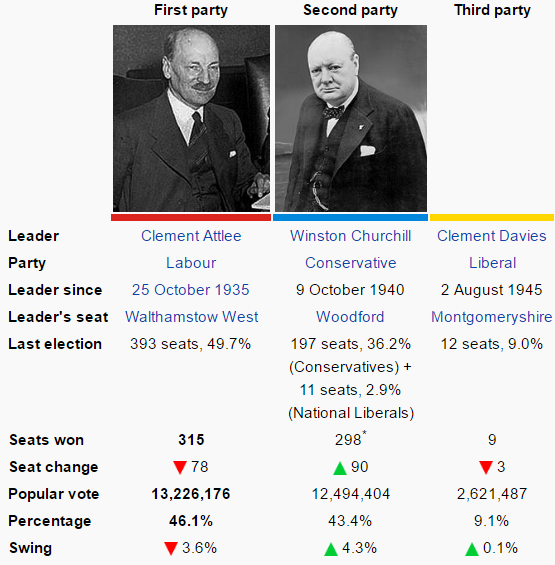
If Labour wants to win a 2020 election in the United Kingdom of England, Wales and Northern Ireland, it must win 6% more of the vote and win England for one of the few times in its history. There will be no Scottish MPs to join in coalition in 2020.
If Labour is ever to be an effective opposition, an opposition that might actually win the next election by winning England outside of London, the party must split, discard the far left and become a social democratic party under a firm control of its MPs.
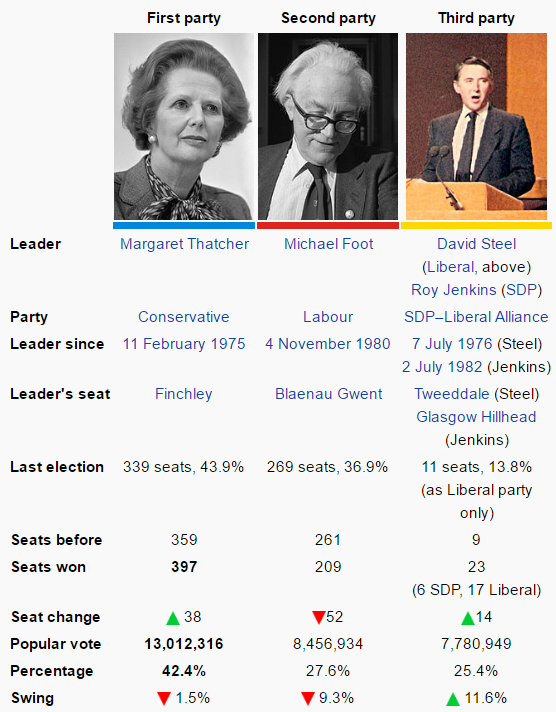
When four leading MPs left in 1981, they were able to cobble together 25% of the popular vote in the 1982 British general election in an alliance with the Liberal Party.
Imagine if 100-150 MPs left to form a new party big enough to be the official opposition now. They would have a real chance of killing off the left-wing rump in 2020 and winning in 2025.
That is better chances that they have now assuming there is no mandatory reselections and mass de-selections of MPs who do not support Corbyn. If Corbyn carries out his plan for mandatory re-selections, they have nothing to lose from forming another party and everything to gain.
The Brexit vote is about the supremacy of Parliament
30 Jun 2016 Leave a comment
in economics, international economic law, international economics, International law Tags: British economy, British politics, Common market, European Union
Why did voters vote to Leave or Remain? @JulieAnneGenter @Income_Equality
28 Jun 2016 Leave a comment
in constitutional political economy, international economic law, international economics, International law, Public Choice Tags: British economy, British politics, Common market, European Union, pessimism bias, single market, Twitter left, voter demographics
There were few difference across the political spectrum as to why voters voted to Remain or Leave. This is according to Lord Ashcroft’s survey on referendum day of over 12,000 voters.

Source: How the United Kingdom voted on Thursday… and why – Lord Ashcroft Polls
Labour and Tory voters voted to leave to regain control over immigration and sovereignty.
Labour and Tory voters who wanted to remain thought the EU and its single market was a good deal not worth putting at risk. It is all about identity politics, not inequality.
Vote Leave voters are a grumpy lot who think things have been getting worse for 30 years:
Leavers see more threats than opportunities to their standard of living from the way the economy and society are changing, by 71% to 29% – more than twice the margin among remainers…
By large majorities, voters who saw multiculturalism, feminism, the Green movement, globalisation and immigration as forces for good voted to remain in the EU; those who saw them as a force for ill voted by even larger majorities to leave.
@JulieAnneGenter @NZGreens @LewisHoldenNZ @DanHannanMEP’s best single case for #Brexit
24 Jun 2016 Leave a comment
in constitutional political economy, economics, industrial organisation, international economic law, International law, liberalism Tags: Brexit, British economy, British politics, Common market, customs unions
Patrick Minford explains #Brexit
22 Jun 2016 Leave a comment
in applied welfare economics, comparative institutional analysis, economics, international economic law, international economics, International law, Public Choice Tags: Brexit, British economy, British politics, Common market, European Union
 Utopia, you are standing in it!
Recent Comments