Capitalism and The Great Fact in China
17 Jul 2015 Leave a comment
in applied price theory, applied welfare economics, comparative institutional analysis, development economics, economic history, economics of education, economics of regulation, entrepreneurship, environmental economics, growth disasters, growth miracles, history of economic thought, industrial organisation, Marxist economics, Public Choice Tags: capitalism and freedom, China, fall of communism, Leftover Left, transitional economies
As China grew freer economically, its poverty rate fell. buff.ly/1KohOxS http://t.co/OpaxOzNdNs—
HumanProgress.org (@humanprogress) June 29, 2015
Poverty lines can lead to results stranger than fiction
15 Jul 2015 Leave a comment
in development economics, growth disasters, growth miracles, income redistribution, labour economics, poverty and inequality Tags: China, measurement errors, poverty lines
@MaxCRoser, rather bizarre that this series puts the poverty rate in the UK as more than double that of China! http://t.co/X9KHzlu54I—
Will L (@wjl2133) June 15, 2015
Beijing by night
14 Jul 2015 Leave a comment
in development economics, economic history, energy economics, growth disasters, growth miracles Tags: Beijing, China
MT @MaxCRoser: #Beijing lights at night. Left: 1992, right: 2009 #China #cities #development #geographyteacher http://t.co/gPbaePQv9b—
Stephen Matthews (@srmdrummer) February 16, 2015
The Great Escape in Chinese life expectancies by age bracket
14 Jul 2015 Leave a comment
in applied welfare economics, development economics, economic history, growth disasters, growth miracles, health economics Tags: capitalism and freedom, China, life expectancies, The Great Escape
Life Expectancy by Age – for all countries in the world: bit.ly/1Ba1R8G
The chart shows progress in #China. http://t.co/z5IpbMkeFW—
Max Roser (@MaxCRoser) March 30, 2015
Creative destruction in Chinese tourism
12 Jul 2015 Leave a comment
in development economics, growth miracles Tags: China, creative destruction, economics of tourism
Astonishing chart: How much money is spent by Chinese tourists each year, via dtxtq4w60xqpw.cloudfront.net/sites/all/file… http://t.co/qfVsavbNsV—
Felix Salmon (@felixsalmon) July 12, 2015
The Great Escape in China, India and Indonesia
12 Jul 2015 Leave a comment
in applied welfare economics, development economics, economic history, growth disasters, growth miracles, health economics Tags: China, India, Indonesia, life expectancies, The Great Escape, The Great Fact
These 4 nations are 50% of mankind. That's 3.5 billion people who are living longer. buff.ly/1Kle6mU #health http://t.co/949oqisMsL—
HumanProgress.org (@humanprogress) June 30, 2015
The Great Fact: the rise of the middle class in developing countries
09 Jul 2015 Leave a comment
China pulled 203m into the middle class from 2001-11; more than half the global gain of 385m pewrsr.ch/1LSs6Wz http://t.co/DiskvneykJ—
Rakesh Kochhar (@RakeshKochhar) July 08, 2015
Real and Pseudo-Financial Crises, the Chinese share market crash and Anna Schwartz
09 Jul 2015 Leave a comment
in economic history, financial economics, fiscal policy, international economics, macroeconomics, monetarism, monetary economics Tags: Anna Schwartz, bank runs, banking panics, China, contagion, evidence-based policy, financial crises, financial stability, inflation targeting, international systemic risk, Michael Bordo, monetary history, pseudo financial crises, pseudo international systemic risk
If we could take time out from the breathless journalism about the Chinese stock market, which some people may have heard of before this week, it’s crash should be seen through the lens that Anna Schwartz developed in 1987 of a pseudo financial crisis and a financial crisis.
This is why so many Chinese companies are suspended bloom.bg/1UA7TbA http://t.co/5awEt6B23u—
Bloomberg Business (@business) July 08, 2015
Her paper is written at the same time as the 1987 stock market crash. On financial crises, Anna Schwartz said:
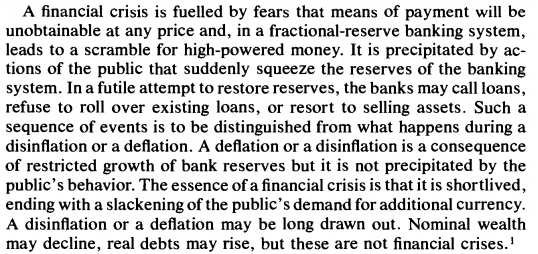
As for those pseudo financial crises, she said:
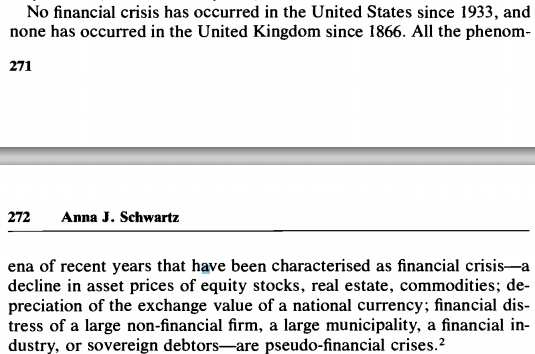
Schwartz’s principal concern with regard to pseudo financial crisis was:
proposals to deal with pseudo-financial crises is the perpetuation of policies that promote inflation and waste of economic resources
As we are talking about the Chinese stock market, Anna Schwartz also wrote about the concepts of real systemic international risk and and pseudo international systemic risk.
Once again, and as with pseudo financial crises and real financial crises, what distinguishes real systemic international risk and pseudo international systemic risk is a threat to the payment system. The threat of bank runs, which can easily be eliminated through lender of last resort facilities:

As always it is about the security of the payments system – of avoiding bank runs, not private losses:
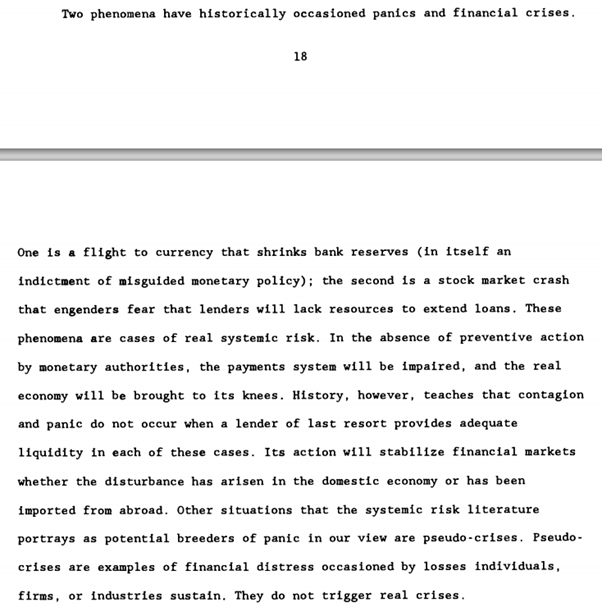
The lesson for the day is that when people start panicking about the economy or the stock market or international markets, don’t go to a macroeconomist for advice, go to a monetary historian. They have seen it all before.

Corruption index for south-east Asia
04 Jul 2015 Leave a comment
in development economics, growth disasters, growth miracles, rentseeking Tags: bribery and corruption, China, Indonesia, Philippines
Corruption in Indonesia: Jokowi’s arduous task in cleaning up the government econ.st/1FJ3sS0 http://t.co/1myuRbwoXK—
The Economist (@EconBizFin) June 11, 2015
The rise of the South
03 Jul 2015 Leave a comment
in development economics, growth disasters, growth miracles Tags: China, India, The Great Fact, undeveloped countries
The GDP of the South doubled to 40% by 2012, w/ China —12% of global GDP: wrld.bg/N9CYe #RisingoftheSouth http://t.co/Yt2LiF9srr—
World Bank Pubs (@WBPubs) May 20, 2015
The Empire of Japan in 1939
03 Jul 2015 Leave a comment
in defence economics, economic history, war and peace Tags: China, colonisation, imperialism, Japan, World War II
The Empire of Japan in 1939, read how it got there brilliantmaps.com/russo-japanese… http://t.co/wop0insgnD—
Brilliant Maps (@BrilliantMaps) January 21, 2015
Who will be the 20 largest economies in 2030?
10 Jun 2015 Leave a comment
in development economics, economic growth, growth miracles, macroeconomics Tags: China, convergence, India, Japan
These will be the world’s 20 largest economies in 2030 bloom.bg/1IzgMhl http://t.co/KADxgakbEj—
Bloomberg VisualData (@BBGVisualData) May 20, 2015
 Utopia, you are standing in it!
Recent Comments