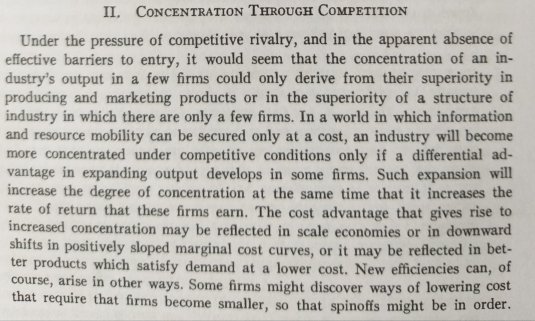
Demsetz is spot on on the drivers of market concentration
13 Feb 2019 Leave a comment
in entrepreneurship, industrial organisation, survivor principle Tags: antitrust economics, competition law, creative destruction
Spot on antitrust economics as academic rentseeking
12 Feb 2019 Leave a comment
in economics of education, industrial organisation, law and economics, politics - USA, Public Choice, rentseeking Tags: antitrust economics, competition law
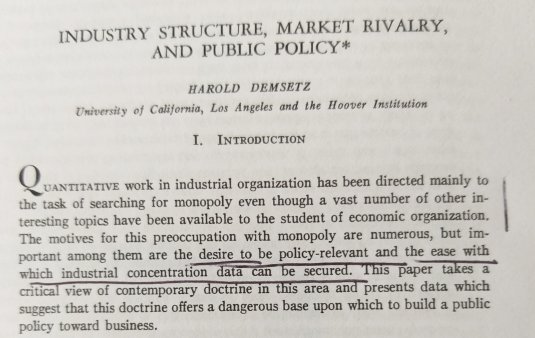
Watching History of the Automobile: no cosy Detroit oligopoly – cutthroat competition over price, radically better new models; rollercoaster of massive profits then ruinous losses
25 Nov 2018 Leave a comment
in Austrian economics, economic history, entrepreneurship, industrial organisation, survivor principle Tags: competition law, creative destruction
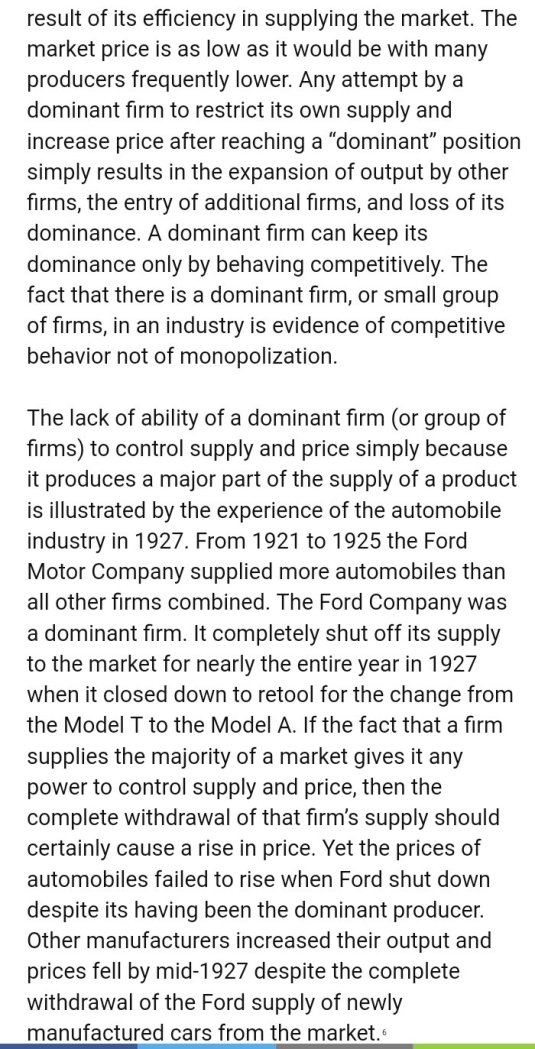
Yale Brozen at http://www.independent.org/publications/article.asp?id=1159
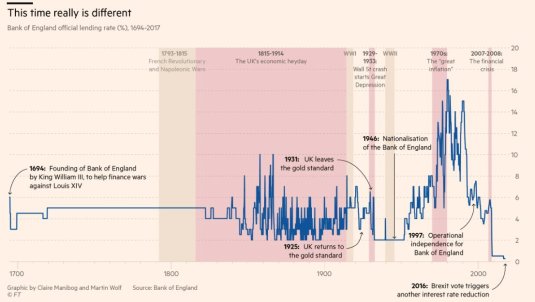
Central banks can’t raise interest rates so what chance of bankers’ cartel fixing interest rates
15 Nov 2018 Leave a comment
Antitrust economists still worry about a lack of new entry into oligopolistic industry that rarely makes a proft
15 Nov 2018 Leave a comment
in Austrian economics, economics of regulation, industrial organisation, law and economics, politics - USA, survivor principle Tags: competition law, pretence to knowledge


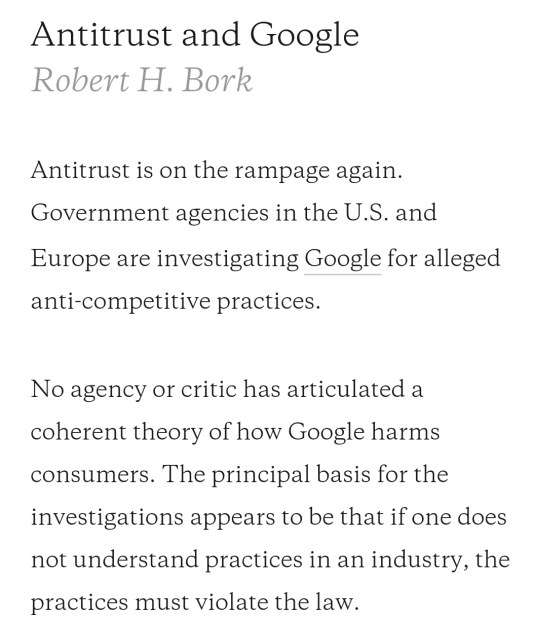
The EU would have sued MySpace, given time
21 Jul 2018 Leave a comment
in applied price theory, entrepreneurship, industrial organisation, law and economics, survivor principle Tags: competition law

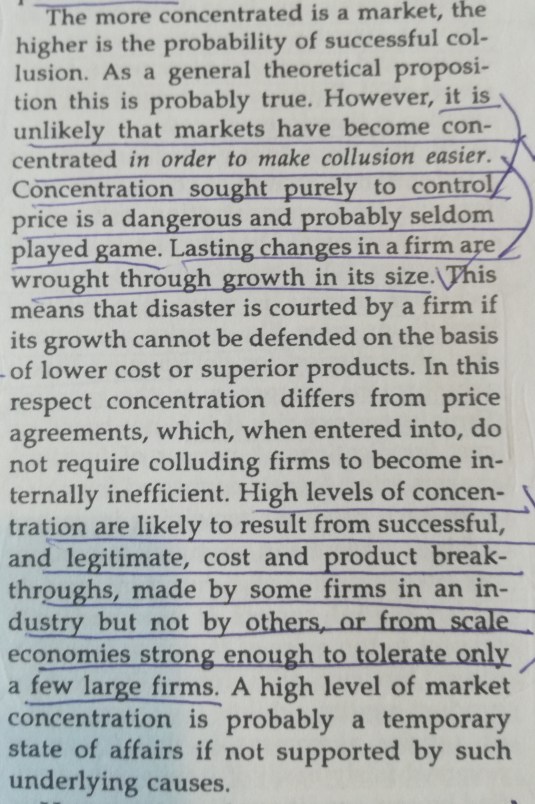
Demsetz on why anti-competitive mergers are rare
10 Jul 2018 Leave a comment
in applied price theory, economics of regulation, entrepreneurship, industrial organisation, law and economics, survivor principle Tags: competition law, Harold Demsetz
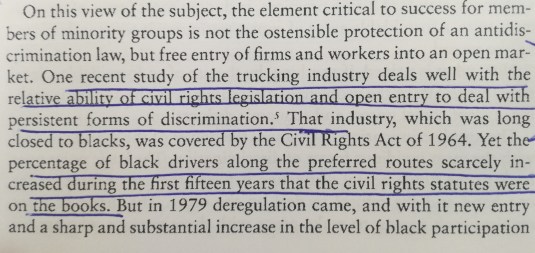
Interesting point by Richard Epstein
02 Jul 2018 Leave a comment
in applied price theory, discrimination, economic history, economics of regulation, gender, labour economics, law and economics, Public Choice, rentseeking, Richard Epstein, transport economics Tags: competition law, creative destruction, racial discrimination
Monopolistic demons of recent yesteryear slayed by the Guardian
26 Jun 2018 Leave a comment
in economic history, industrial organisation, survivor principle Tags: competition law, creative destruction

Net neutrality explained in the spirit of Schumpeter
26 May 2018 Leave a comment
in applied price theory, Austrian economics, economics of regulation, entrepreneurship, industrial organisation, Joseph Schumpeter, law and economics, property rights, Public Choice, rentseeking, survivor principle Tags: antitrust economics, competition law, creative destruction

Remember MySpace?
15 Apr 2018 Leave a comment
in entrepreneurship, industrial organisation, survivor principle Tags: competition law, creative destruction

HT Lorenzo Warby

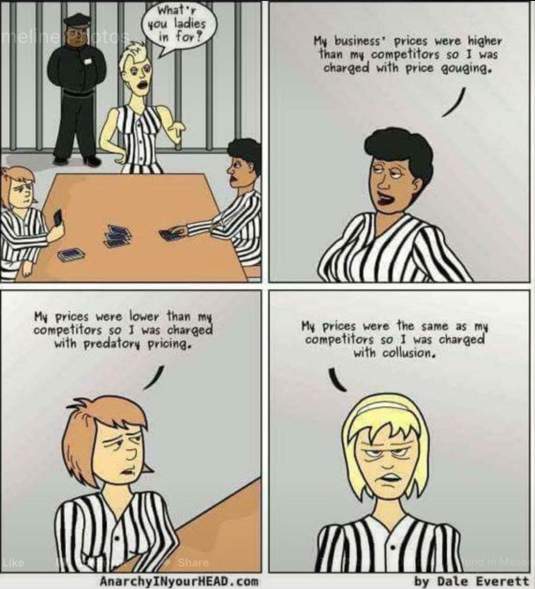
 Utopia, you are standing in it!
Recent Comments