
Celebrating humanity's flourishing through the spread of capitalism and the rule of law
23 May 2015 Leave a comment
in environmental economics, global warming Tags: climate alarmism, conjecture and refutation, Freeman Dyson, global warming, philosophy of science
18 May 2015 Leave a comment
in development economics, health economics Tags: antiscience left, charlatan, conjecture and refutation, pseudoscience, quackery, Quacks, richer is safer, The Great Escape, The Great Fact, wealthier is healthier
17 May 2015 Leave a comment
in health economics Tags: anti-vaccination movement, conjecture and refutation, vaccinations, vaccines
16 May 2015 Leave a comment
in environmental economics, global warming, health economics, history of economic thought Tags: conjecture and refutation, history of science
16 May 2015 Leave a comment
in economics of regulation, environmental economics, environmentalism, global warming Tags: anti-intellectualism, antiscience left, climate alarmists, conjecture and refutation, doomsday prophets, logical fallacies, philosophy of science, precautionary principle, propaganda
Interesting, non-obvious stuff here. "Inoculating against science denial" theconversation.com/inoculating-ag… http://t.co/U719oys3Pf—
(@pourmecoffee) May 16, 2015
15 May 2015 Leave a comment
in environmental economics, global warming, politics - New Zealand Tags: climate alarmism, conjecture and refutation

13 May 2015 Leave a comment
in environmental economics, global warming, Karl Popper Tags: climate alarmism, conjecture and refutation, global warming, Karl Popper, philosophy of science, scientific method

Karl Popper argued that the three golden rules of science were test, test and test. A good hypothesis forbid certain things to occur, and the more it forbids, the better, more scientific the hypothesis is.

That is because if what the hypothesis forbids occurs, the hypothesis is refuted. Science is a set of testable propositions, propositions that can be refuted.
Why climate scientists say things like: "warming in the climate system is unequivocal." vox.com/cards/global-w… http://t.co/COb7v9Z5Er—
Vox Maps (@VoxMaps) May 12, 2015
Looking around for confirmation is an old trick of Marxists and astrologists. Once they read their sacred texts, everything around them was explained except for a few glaring anomalies that actually refuted their hypothesis:
I found that those of my friends who were admirers of Marx, Freud, and Adler, were impressed by a number of points common to these theories, and especially by their apparent explanatory power. These theories appeared to be able to explain practically everything that happened within the fields to which they referred.
The study of any of them seemed to have the effect of an intellectual conversion or revelation, opening your eyes to a new truth hidden from those not yet initiated. Once your eyes were thus opened you saw confirming instances everywhere: the world was full of verifications of the theory.
Whatever happened always confirmed it. Thus its truth appeared manifest; and unbelievers were clearly people who did not want to see the manifest truth; who refused to see it, either because it was against their class interest, or because of their repressions which were still "un-analysed" and crying aloud for treatment.
Marxists and astrologers and other pseudoscientists got around the inconvenience of repeated refutation by specifying a protective belt of axillary hypotheses, which grew with time that explained away these growing anomalies in their basic hypothesis.
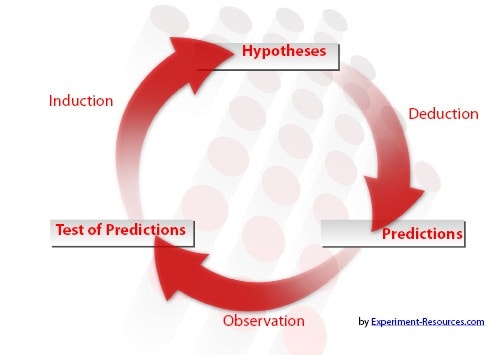
Too much of current public discussion of climate science is about what particular instances confirm rather than contradict. What does the global warming hypothesis strictly forbid?

Popper argued that you look for what contradicts rather than confirm. He developed quite simple rules early in life:
These considerations led me in the winter of 1919-20 to conclusions which I may now reformulate as follows.
(1) It is easy to obtain confirmations, or verifications, for nearly every theory-if we look for confirmations.
(2) Confirmations should count only if they are the result of risky predictions;that is to say, if, unenlightened by the theory in question, we should have expected an event which was incompatible with the theory-an event which would have refuted the theory.
(3) Every "good" scientific theory is a prohibition: it forbids certain things to happen. The more a theory forbids, the better it is.
(4) A theory which is not refutable by any conceivable event is non-scientific. Irrefutability is not a virtue of theory (as people often think) but a vice.
(5) Every genuine test of a theory is an attempt to falsify it, or to refute it. Testability is falsifiability; but there are degrees of testability; some theories are more testable, more exposed to refutation, than others; they take, as it were, greater risks.
(6) Confirming evidence should not count except when it is the result of a genuine test of the theory; and this means that it can be presented as a serious but unsuccessful attempt to falsify the theory. (I now speak in such cases of"corroborating evidence.")
(7) Some genuinely testable theories, when found to be false, are still upheld by their admirers-for example by introducing ad hoc some auxiliary assumption, or by re-interpreting theory ad hoc in such a way that it escapes refutation. Such a procedure is always possible, but it rescues the theory from refutation only at the price of destroying, or at least lowering, its scientific status. (I later described such a rescuing operation as a "conventionalist twist" or a"conventionalist stratagem.")
One can sum up all this by saying that the criterion of the scientific status of a theory is its falsifiability, or refutability, or testability.
When a hypothesis is tested and fails the test because what it forbid to happen actually occurred , for example, new insights into the underlying science are frequently gained. Clinging tenaciously to correct theories leads only to a sterile science. This is the fundamental difference between science and superstition. When the facts contradict, you can learn from that refutation and grow rather than become defensive.
What academics are really saying http://t.co/e5E4H0YRqf—
Conrad Hackett (@conradhackett) February 14, 2015
11 May 2015 Leave a comment
in economics of media and culture Tags: antiscience left, conjecture and refutation, quackery
07 May 2015 1 Comment
in environmental economics, environmentalism, global warming Tags: climate alarmism, conjecture and refutation
The climate alarmists claimed to speak with the authority of science. When they announce deadlines for action, they as responsible scientists must accept the consequences of refuted conjectures.
As all these deadlines is passed, preventative action on climate change must be too late if only because that that’s the only meaningful interpretation of those deadlines. The only sensible course of action is mitigation and adaptation.

Michael Bastasch at TheDailyCaller recently penned an amusing article titled the 25 Years of Predicting The Global Warming ‘Tipping Point’. It’s an enjoyable read, beginning:
View original post 117 more words
06 May 2015 1 Comment
in environmental economics, global warming, health economics Tags: Anti-Science left, anti-vaccination movement, climate alarmism, conjecture and refutation, GMOs, precautionary principle, Twitter left, University of the Internet
05 May 2015 Leave a comment
in economics of media and culture Tags: conjecture and refutation, pseudoscience, quackery
04 May 2015 Leave a comment
in economics of information, economics of media and culture Tags: conjecture and refutation, DNA evolution, evolution
03 May 2015 Leave a comment
in economics of information, economics of media and culture, environmental economics Tags: conjecture and refutation, information overload, infotopia
Celebrating humanity's flourishing through the spread of capitalism and the rule of law
Scholarly commentary on law, economics, and more
Beatrice Cherrier's blog
Celebrating humanity's flourishing through the spread of capitalism and the rule of law
Celebrating humanity's flourishing through the spread of capitalism and the rule of law
Celebrating humanity's flourishing through the spread of capitalism and the rule of law
Why Evolution is True is a blog written by Jerry Coyne, centered on evolution and biology but also dealing with diverse topics like politics, culture, and cats.
Celebrating humanity's flourishing through the spread of capitalism and the rule of law
Celebrating humanity's flourishing through the spread of capitalism and the rule of law
A rural perspective with a blue tint by Ele Ludemann
DPF's Kiwiblog - Fomenting Happy Mischief since 2003
Celebrating humanity's flourishing through the spread of capitalism and the rule of law
The world's most viewed site on global warming and climate change
Tim Harding's writings on rationality, informal logic and skepticism
A window into Doc Freiberger's library
Let's examine hard decisions!
Commentary on monetary policy in the spirit of R. G. Hawtrey
Thoughts on public policy and the media
Celebrating humanity's flourishing through the spread of capitalism and the rule of law
Politics and the economy
A blog (primarily) on Canadian and Commonwealth political history and institutions
Reading between the lines, and underneath the hype.
Economics, and such stuff as dreams are made on
"The British constitution has always been puzzling, and always will be." --Queen Elizabeth II
Celebrating humanity's flourishing through the spread of capitalism and the rule of law
Celebrating humanity's flourishing through the spread of capitalism and the rule of law
WORLD WAR II, MUSIC, HISTORY, HOLOCAUST
Undisciplined scholar, recovering academic
Celebrating humanity's flourishing through the spread of capitalism and the rule of law
Res ipsa loquitur - The thing itself speaks
Celebrating humanity's flourishing through the spread of capitalism and the rule of law
Researching the House of Commons, 1832-1868
Articles and research from the History of Parliament Trust
Reflections on books and art
Posts on the History of Law, Crime, and Justice
Celebrating humanity's flourishing through the spread of capitalism and the rule of law
Exploring the Monarchs of Europe
Cutting edge science you can dice with
Small Steps Toward A Much Better World
“We do not believe any group of men adequate enough or wise enough to operate without scrutiny or without criticism. We know that the only way to avoid error is to detect it, that the only way to detect it is to be free to inquire. We know that in secrecy error undetected will flourish and subvert”. - J Robert Oppenheimer.
The truth about the great wind power fraud - we're not here to debate the wind industry, we're here to destroy it.
Celebrating humanity's flourishing through the spread of capitalism and the rule of law
Celebrating humanity's flourishing through the spread of capitalism and the rule of law
Economics, public policy, monetary policy, financial regulation, with a New Zealand perspective
Celebrating humanity's flourishing through the spread of capitalism and the rule of law
Restraining Government in America and Around the World


 Utopia, you are standing in it!
Recent Comments