Fact check: conspiracy theories aren’t just for conservatives

Respondents were asked whether they agreed with four statements:

  • “Much of our lives are being controlled by plots hatched in secret places,”
  • “Even though we live in a democracy, a few people will always run things anyway,”
  • “The people who really ‘run’ the country are not known to the voters.”
  • “Big events like wars, the current recession, and the outcomes of elections are controlled by small groups of people who are working in secret against the rest of us.”

Source: monkey cage

American conservatives distrust science in part because they identify it with the regulatory state. When science means nuclear weapons, innovation and winning the space race, conservatives love it.  When they associate science with the EPA, regulation, and global institutions, they hate it.

Just as climate science is unpalatable for the Right, the Left is uncomfortable with, for example, genetic modification and nuclear power. Research into risks and benefits of these technologies are met with suspicion by the Left.

I find it bizarre the right wing politics is considered more conspiratorial than the left wing – a left-wing that is currently obsessed with the comings and goings of the top 1%.

A gentleman by the name of Karl Marx had a conspiracy theory of history, that the bosses were conspiring against the workers, there is a ruling class pulling the strings from behind the scenes, and there is an inherent inequality of bargaining power between workers and employers because the bosses plot to keep wages down.

It should be mentioned in this connection that Karl Marx himself was one of the first to emphasize the importance, for the social sciences, of these unintended consequences.

In his more mature utterances, he says that we are all caught in the net of the social system. The capitalist is not a demoniac conspirator, but a man who is forced by circumstances to act as he does; he is no more responsible for the state of affairs than is the proletarian.

This view of Marx’s has been abandoned – perhaps for propagandist reasons, perhaps because people did not understand it – and a Vulgar Marxist Conspiracy theory has very largely replaced it. It is a come-down – the come-down from Marx to Goebbels.

But it is clear that the adoption of the conspiracy theory can hardly be avoided by those who believe that they know how to make heaven on earth. The only explanation for their failure to produce this heaven is the malevolence of the devil who has a vested interest in hell.

Karl Popper

Don’t let me start on how the Left over Left goes on about neoliberal conspiracy with Hayek and Friedman ruling the roost through the truly obscure Mont Pelerin Society.

bookjacketCover: The Road from Mont Pèlerin in HARDCOVER

The IMF, World Trade Organisation and trade negotiations are riddled with conspiracies if I am to believe my friends in the  Left over Left.

Mention multinational corporations to a member of the Left of good standing and conspiracy theories pour fourth.

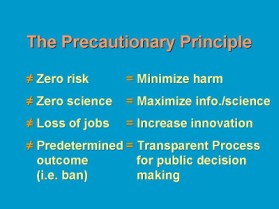
It would be unfair to bring up GMOs to remind the left of how anti-science it is. Don’t kick people when they’re down. The whole point of the precautionary principle is to allow the Left to reject good science.
At bottom, what call the barricades works if it’s not sexed-up with a conspiracy theory?

Conspiracy Theories Debunked: The Moon landing was a hoax?!

If staged in the studio, a 143 minute continuous broadcast of the footage of the Moon approach and the astronauts on the Moon with the recording technology of the time would have required tapes the size of cars if it were pre-recorded in some manner on 5,300 feet of film that is free of scratches and specs of dust. 1969 did not have the technology to fake the landing on video. Slow motion video was truly primitive in 1969: 30 seconds replayed at 90 seconds maximum.

Conspiracy Theories Debunked: The Twin Towers and Building #7 fell because of explosives placed in advance of 9/11

The clip shows the lack of the sounds of the explosions and flashes that occur with planned demolitions.

Conspiracy theories versus unintended consequences

Cass Sunstein defines a conspiracy theory as:

An effort to explain some event or practice by reference to the machinations of powerful people, who have also managed to conceal their role. Of course some conspiracy theories turn out to be true.

He goes on to argue that millions of people hold conspiracy theories: that powerful people work together to withhold the truth about some important practice or terrible event.

Sunstein also argues that many become extremists stem not from irrationality but from having little relevant information and their extremist views are supported by what little they know:

  1. Conspiracy theories generally attribute extraordinary powers to certain agents – to plan, to control others and to maintain secrets.
  2. Conspiracy theories overestimate the competence and discretion of officials and bureaucracies, who are assumed to be able to make and carry out sophisticated secret plans, despite abundant evidence that in open societies that government actions does not usually remain secret for very long.
  3. Conspiracy theories also assume that the nefarious secret plans are easily detected by members of the public such as themselves without the need for special access to the key information or any investigative resources.

Sunstein also argued that a distinctive feature of conspiracy theories is their self-sealing quality. Conspiracy theorists are not likely to be persuaded by an attempt to dispel their theories and look at these attempts as further proof of the conspiracy.

Karl Popper argued that conspiracy theories overlook the pervasive unintended consequences of political and social action. They assume that all consequences must have been intended by someone.

Must everything be the result of a grand plan – a secret conspiracy that ordinary people uncover with little effort? Whatever happened to unintended consequences and stuff-ups?

Vaccination saves children’s lives

Photo: A new meme!

Image

Some on the Left believe the @MontPelerinSoc is the ringmaster of a vast neo-liberal conspiracy

bookjacket Cover: The Road from Mont Pèlerin in HARDCOVER

Few had even heard of the Mont Pelerin Society until the late 1990s and the internet age. The ringmaster of the neoliberal conspiracy still has a very ordinary looking webpage.

Lead conspirator Hayek was so little known at his death in 1992 that finding extensive obituaries of him in newspapers is hard. Some may be behind pay walls. Of those that were found, they weren’t very long and forgot to mention Hayek as the leader of a global cabal that rule the waves  :

When Keynesian thought prevailed and his reputation went into eclipse, Mr. Hayek turned to philosophy and psychology, which he first taught at the University of Chicago, where he wrote what many consider to be a second masterpiece, “The Constitution of Liberty “.

His son’s obituaries in 2006 were longer and more fulsome than his father’s mostly on the back of who his now famous father were:

Lawrence Hayek escaped from the formidable shadow of his father, the great economist-philosopher, Professor F. A. Hayek, into high-level medical research within the NHS, only to spend much of his final decade responding to the worldwide interest in the scholar many regard — along with Milton Friedman — as the father of Thatcherism.

Hayek, the Mont Pelerin Society’s and neoliberal conspiracy’s alleged linchpin wasn’t even able to get a job in the University of Chicago economics department. Along with Mises, their salaries were paid by a private foundation. Neither could get paid university appointments in the United States. Hayek was Keynes’s principal critic in the 1930s, and upon Keynes’s death in 1946, the most famous economist in the world at that time.

Despite being a colony of the vast neo-liberal conspiracy, mentioning Milton Friedman’s name in the 1980s at job interviews in Canberra would have been extremely career limiting. Not much better in the early 1990s.

  • Back in the 1980s, the much less radical Milton Friedman was just graduating from being ‘a wild man in the wings’ to just a suspicious character in policy circles.
  • If you name dropped Hayek in the 1980s and 1990s, any sign of name recognition would have indicated that you were been interviewed by educated people.

How times has changed. The reasons are well summarised by Bruce Caldwell:

But how important were [members of the Mont Pèlerin Society] in the emerging global consensus that began in the 1980s in favour of trade liberalization and privatization?

Were not, for example, the dismal performance of Keynesian demand management policies in the United States, Britain, and elsewhere in the 1970s; the heavy-handed actions of the trade unions in Britain during the “Winter of Discontent”; the sclerotic performance of countries like India who had embraced a modified version of the planning model for their own; and, of course, the patent economic and political failures of the East Bloc, far more important in turning the tide, however briefly, towards globalization?

Was not George Stigler (himself a founding member of the Society) right in his comment about economists that “our influence appears to be powerful only when we support policies ripe for adoption” (Stigler 1987, p. 11)?

see Daniel Stedman Jones (2012). Masters of the Universe: Hayek, Friedman, and the Birth of Neoliberal Politics and P. Mirowski and D. Plehwe, eds. (2009), The Road from Mont Pelerin: The Making of the Neoliberal Thought Collective for the handbook on the cabal leading the vast right-wing conspiracy. For example,

The Road from Mont Pèlerin presents the key debates and conflicts that occurred among neoliberal scholars and their political and corporate allies regarding trade unions, development economics, antitrust policies, and the influence of philanthropy. The book captures the depth and complexity of the neoliberal “thought collective” while examining the numerous ways that neoliberal discourse has come to shape the global economy.

Masters of the Universe traces the ascendancy of neoliberalism from the academy of interwar Europe to supremacy under Reagan and Thatcher and in the decades since. Daniel Stedman Jones argues that there was nothing inevitable about the victory of free-market politics. Far from being the story of the simple triumph of right-wing ideas, the neoliberal breakthrough was contingent on the economic crises of the 1970s and the acceptance of the need for new policies by the political left.

Media conspiracies versus cartel theory

Media conspiracy theories suggest someone is in control; that dark, all-powerful cabals of men in cultish robes control the world. The truth is no one is in control. What about 57 channels, nothing on!

Newspapers, TV and cable, are not a monopoly. A monopoly is a single seller of as product with a legal right to bar new entry. It is an exclusive right to sell something.

At best, newspapers, TV and cable, are a large and unwieldy cartel under pressure from costs and new entry. The Internet makes electronic news competition global.

There are many different Australian news outlets and media types, three national networks, plus many cable news networks and 9 media owners. That is more than enough to destabilise any cartel.

Why is the mass media special? A supply-side model of media ownership suggesting that media outlets weigh the rewards of bias—political influence or personal pleasure—against the cost of bias—lost circulation from providing faulty news.

The mass media is a big business, and they increase readership and revenue by presenting factual and informative news.

The most likely to turn-off are women, and women vote to the Left more often than do men. The media is perhaps pandering to this centre-left marginal buyer.

A news cartel is like any other cartel. All cartels break-down and only some get back together.

Cartels contain seeds of their own destruction. Cartel members are reducing their output below their existing potential production capacity, and once the market price increases, each member of the cartel has the capacity to raise output relatively easily.

All cartels must decide how to allocate the reduction of output that follows the price increases across members with different costs structures and spare capacity.:

  • The tendency is for cartel members to cheat on their production quotas, increasing supply to meet market demand and lowering their price.
  • Most cartel agreements are unstable and at the slightest incentive they will quickly disband, and returning the market to competitive conditions.

One sign of a cartel that was developed by Aaron Director is periods of stable prices, despite cost fluctuations, followed by sudden price changes when the cartel collapses or decide to increase prices.

For a news cartel, this means toeing the line and then periods of truth, and then a sudden return to the party line when the cartel starts-up again.

The exercise of collective market power will not be stable unless sellers agree on prices and production shares; on how to divide the profits; on how to enforce the agreement; on how to deal with cheating; and on how to prevent new entry.

A cartel is in the unenviable position of having to satisfy everyone, for one dissatisfied producer can bring about the feared price competition and the disintegration of the cartel.

Thus a successful cartel must follow a policy of continual compromise. Little wonder that John. S McGee wrote that:

The history of cartels is the history of double crossing

Next Newer Entries

Bassett, Brash & Hide

Celebrating humanity's flourishing through the spread of capitalism and the rule of law

Truth on the Market

Scholarly commentary on law, economics, and more

The Undercover Historian

Beatrice Cherrier's blog

Matua Kahurangi

Celebrating humanity's flourishing through the spread of capitalism and the rule of law

Temple of Sociology

Celebrating humanity's flourishing through the spread of capitalism and the rule of law

Velvet Glove, Iron Fist

Celebrating humanity's flourishing through the spread of capitalism and the rule of law

Why Evolution Is True

Why Evolution is True is a blog written by Jerry Coyne, centered on evolution and biology but also dealing with diverse topics like politics, culture, and cats.

Down to Earth Kiwi

Celebrating humanity's flourishing through the spread of capitalism and the rule of law

NoTricksZone

Celebrating humanity's flourishing through the spread of capitalism and the rule of law

Homepaddock

A rural perspective with a blue tint by Ele Ludemann

Kiwiblog

DPF's Kiwiblog - Fomenting Happy Mischief since 2003

The Dangerous Economist

Celebrating humanity's flourishing through the spread of capitalism and the rule of law

Watts Up With That?

The world's most viewed site on global warming and climate change

The Logical Place

Tim Harding's writings on rationality, informal logic and skepticism

Doc's Books

A window into Doc Freiberger's library

The Risk-Monger

Let's examine hard decisions!

Uneasy Money

Commentary on monetary policy in the spirit of R. G. Hawtrey

Barrie Saunders

Thoughts on public policy and the media

Liberty Scott

Celebrating humanity's flourishing through the spread of capitalism and the rule of law

Point of Order

Politics and the economy

James Bowden's Blog

A blog (primarily) on Canadian and Commonwealth political history and institutions

Science Matters

Reading between the lines, and underneath the hype.

Peter Winsley

Economics, and such stuff as dreams are made on

A Venerable Puzzle

"The British constitution has always been puzzling, and always will be." --Queen Elizabeth II

The Antiplanner

Celebrating humanity's flourishing through the spread of capitalism and the rule of law

Bet On It

Celebrating humanity's flourishing through the spread of capitalism and the rule of law

History of Sorts

WORLD WAR II, MUSIC, HISTORY, HOLOCAUST

Roger Pielke Jr.

Undisciplined scholar, recovering academic

Offsetting Behaviour

Celebrating humanity's flourishing through the spread of capitalism and the rule of law

JONATHAN TURLEY

Res ipsa loquitur - The thing itself speaks

Conversable Economist

Celebrating humanity's flourishing through the spread of capitalism and the rule of law

The Victorian Commons

Researching the House of Commons, 1832-1868

The History of Parliament

Articles and research from the History of Parliament Trust

Books & Boots

Reflections on books and art

Legal History Miscellany

Posts on the History of Law, Crime, and Justice

Sex, Drugs and Economics

Celebrating humanity's flourishing through the spread of capitalism and the rule of law

European Royal History

Exploring the Monarchs of Europe

Tallbloke's Talkshop

Cutting edge science you can dice with

Marginal REVOLUTION

Small Steps Toward A Much Better World

NOT A LOT OF PEOPLE KNOW THAT

“We do not believe any group of men adequate enough or wise enough to operate without scrutiny or without criticism. We know that the only way to avoid error is to detect it, that the only way to detect it is to be free to inquire. We know that in secrecy error undetected will flourish and subvert”. - J Robert Oppenheimer.

STOP THESE THINGS

The truth about the great wind power fraud - we're not here to debate the wind industry, we're here to destroy it.

Lindsay Mitchell

Celebrating humanity's flourishing through the spread of capitalism and the rule of law

Alt-M

Celebrating humanity's flourishing through the spread of capitalism and the rule of law

croaking cassandra

Economics, public policy, monetary policy, financial regulation, with a New Zealand perspective

The Grumpy Economist

Celebrating humanity's flourishing through the spread of capitalism and the rule of law

International Liberty

Restraining Government in America and Around the World