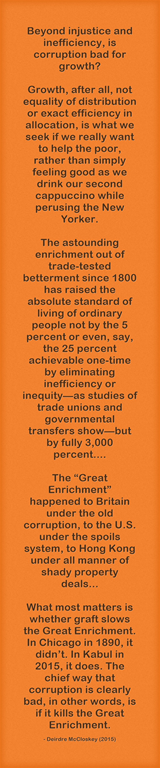
via Book Review: ‘Thieves of State’ by Sarah Chayes & ‘A Republic No More’ by Jay Cost – WSJ.
Celebrating humanity's flourishing through the spread of capitalism and the rule of law
13 Mar 2015 Leave a comment
in applied price theory, applied welfare economics, comparative institutional analysis, development economics, economic history, economics of crime, growth disasters, growth miracles, law and economics, Public Choice, rentseeking Tags: corruption, Deirdre McCloskey, The Industrial Revolution
20 Feb 2015 Leave a comment
in economics of bureaucracy, entrepreneurship, financial economics, politics - New Zealand Tags: active investing, corruption, euro crisis, Index of Economic Freedom, junk bonds, passive investing, Portugal, risk diversification, state owned enterprises
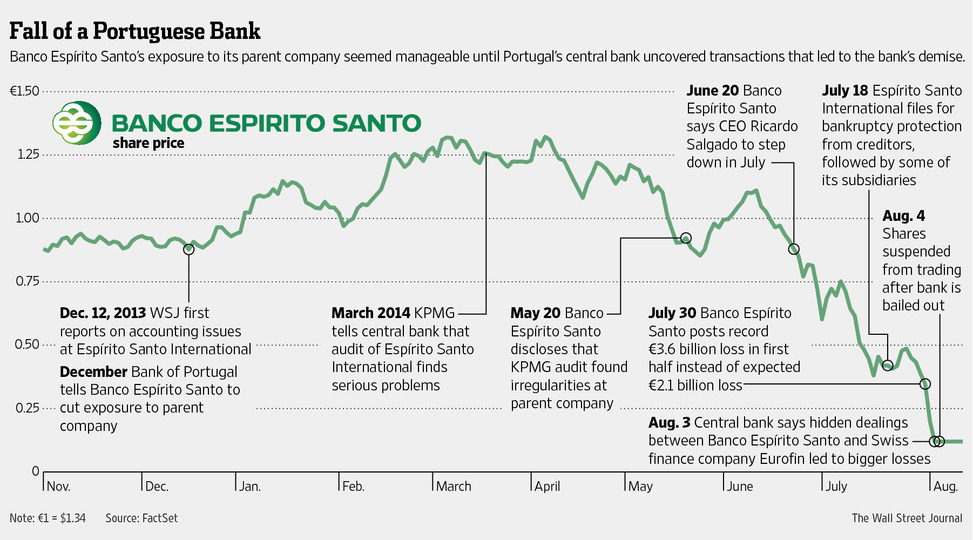
A Portuguese bank on the verge of collapse – what were they thinking?
That would have been the response of many newspaper readers this morning upon learning the New Zealand Superannuation Fund has lost nearly $200 million in taxpayers’ cash on a "risk-free" loan it provided to Lisbon-based Banco Espirito Santo (BES) on July 3.
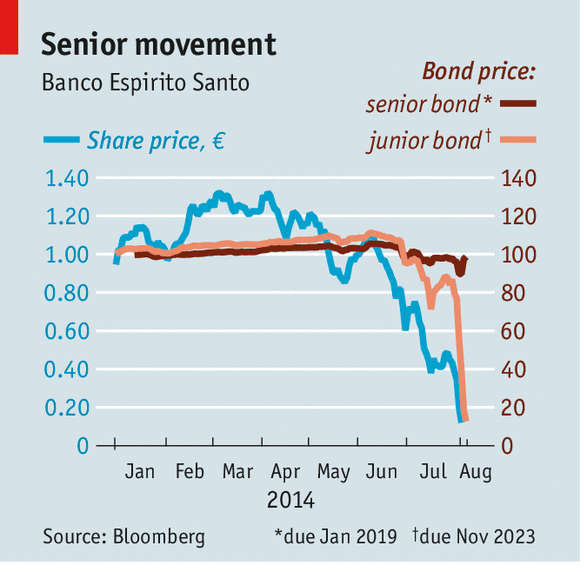
The loan – part of a US$784 million credit package US investment bank Goldman Sachs put together through its Oak Finance vehicle – was made exactly one month before Portugal’s central bank broke up BES and split the country’s biggest lender into two, with one part holding the good assets and the toxic assets placed in the other.
Unfortunately, the Oak Finance loan is now stranded in the so-called "bad bank" following a retrospective law change by the Bank of Portugal.
Christopher Adams: What were they thinking? – Business – NZ Herald News.
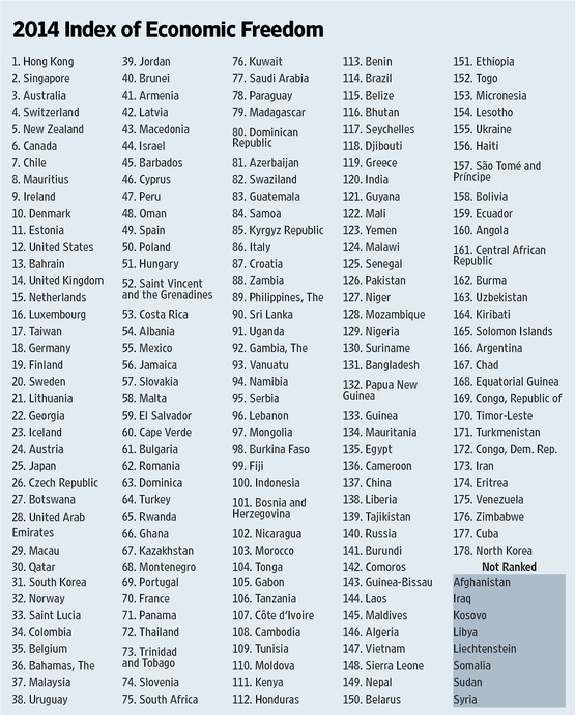
This is what the 2015 index of Economic Freedom has to say about Portugal on the rule of law:
In 2013, the OECD expressed concern over Portugal’s reluctance to crack down on foreign bribery, particularly in regard to its former colonies Brazil, Angola, and Mozambique.
Since 2001, Portugal had officially acknowledged only 15 bribery allegations, and there had been no prosecutions. The judiciary is constitutionally independent, but staff shortages and inefficiency contribute to a considerable backlog of pending trials.
11 Dec 2014 Leave a comment
in applied welfare economics, development economics, economics of natural disasters, growth disasters, growth miracles Tags: corruption, natural disaster relief, Philippines, rent seeking, Tacloban

The good news is that we find that fund allocations do indeed respond to the location and intensity of typhoons and tropical storms.
However, political ties between members of Congress and local mayors, specifically party and clan ties, are also associated with greater funding for a given municipality.
One of the most devastated cities in the aftermath of Typhoon Haiyan is Tacloban City, with a population of 221,174 people.
Our research suggests that for a municipality of this size, a match in party affiliation between the member of Congress and the mayor increases the distribution of funds by PHP 1.74 million ($40,000), while a match in clan affiliation increases this distribution by PHP 6.23 million ($142,000).
The result that clan ties have a much larger effect than party ties on the distribution of per capita reconstruction funds underscores the relative importance of clan loyalty in decision-making by Philippine congressional representatives.
via Politics and disaster aid in the Philippines – The Washington Post.
11 Dec 2014 Leave a comment
in applied welfare economics, development economics, economics of natural disasters, growth disasters, growth miracles Tags: corruption, disaster relief, Philippines, rent seeking

Regrettably, we find no evidence that poverty, vulnerability to disasters, or other objective measures of infrastructure needs are determinants of road construction and repair expenditures at the local level.
Instead, our evidence highlights the importance of political connections and electoral strategies.
Consistent with the story in many other countries in the developing world, we find that mayors divert construction funding to electorally contested areas where they need to win more votes, while congressmen use their discretionary funding to shore up political connections by allocating funding to localities where the mayor is an ally.
via The politics of the Philippines’ vulnerability to natural disasters – The Washington Post.
Celebrating humanity's flourishing through the spread of capitalism and the rule of law
Scholarly commentary on law, economics, and more
Beatrice Cherrier's blog
Celebrating humanity's flourishing through the spread of capitalism and the rule of law
Celebrating humanity's flourishing through the spread of capitalism and the rule of law
Celebrating humanity's flourishing through the spread of capitalism and the rule of law
Why Evolution is True is a blog written by Jerry Coyne, centered on evolution and biology but also dealing with diverse topics like politics, culture, and cats.
Celebrating humanity's flourishing through the spread of capitalism and the rule of law
Celebrating humanity's flourishing through the spread of capitalism and the rule of law
A rural perspective with a blue tint by Ele Ludemann
DPF's Kiwiblog - Fomenting Happy Mischief since 2003
Celebrating humanity's flourishing through the spread of capitalism and the rule of law
The world's most viewed site on global warming and climate change
Tim Harding's writings on rationality, informal logic and skepticism
A window into Doc Freiberger's library
Let's examine hard decisions!
Commentary on monetary policy in the spirit of R. G. Hawtrey
Thoughts on public policy and the media
Celebrating humanity's flourishing through the spread of capitalism and the rule of law
Politics and the economy
A blog (primarily) on Canadian and Commonwealth political history and institutions
Reading between the lines, and underneath the hype.
Economics, and such stuff as dreams are made on
"The British constitution has always been puzzling, and always will be." --Queen Elizabeth II
Celebrating humanity's flourishing through the spread of capitalism and the rule of law
Celebrating humanity's flourishing through the spread of capitalism and the rule of law
WORLD WAR II, MUSIC, HISTORY, HOLOCAUST
Undisciplined scholar, recovering academic
Celebrating humanity's flourishing through the spread of capitalism and the rule of law
Res ipsa loquitur - The thing itself speaks
Celebrating humanity's flourishing through the spread of capitalism and the rule of law
Researching the House of Commons, 1832-1868
Articles and research from the History of Parliament Trust
Reflections on books and art
Posts on the History of Law, Crime, and Justice
Celebrating humanity's flourishing through the spread of capitalism and the rule of law
Exploring the Monarchs of Europe
Cutting edge science you can dice with
Small Steps Toward A Much Better World
“We do not believe any group of men adequate enough or wise enough to operate without scrutiny or without criticism. We know that the only way to avoid error is to detect it, that the only way to detect it is to be free to inquire. We know that in secrecy error undetected will flourish and subvert”. - J Robert Oppenheimer.
The truth about the great wind power fraud - we're not here to debate the wind industry, we're here to destroy it.
Celebrating humanity's flourishing through the spread of capitalism and the rule of law
Celebrating humanity's flourishing through the spread of capitalism and the rule of law
Economics, public policy, monetary policy, financial regulation, with a New Zealand perspective
Celebrating humanity's flourishing through the spread of capitalism and the rule of law
Restraining Government in America and Around the World


 Utopia, you are standing in it!
Recent Comments