Tweet… is from page 103 of Historical Impromptus, a 2020 collection of some of Deirdre McCloskey’s work on economic history; this quotation, specifically, is from McCloskey’s 2000 review, in the Minnesota Journal of Global Trade, of Thomas Friedman’s The Lexus and the Olive Tree and John Gray’s False Dawn [original emphasis]: Globalization encourages the capitalist…
Neither theory, history nor the latest data suggests a recession driven by AI job dislocation is likely By Greg Ip. Excerpts:”Technological advancements always cost some people their jobs—those whose skills can be easily substituted by tech. But their loss is more than offset through three other channels. The new technology enhances the skills of some survivors,…
In our textbook, Modern Principles, Tyler and I write: Imagine how difficult it would be to get a date if every date required marriage? In the same way, it’s more difficult to find a job when every job requires a long-term commitment from the employer. In two new excellent pieces, Brian Albrecht and Pieter Garicano…
Ask anyone in Australia’s competition law community what transformed the economy, and you will hear a familiar story. Australia was once a cartelised, complacent place where businesses divided up markets and consumers paid the price. Then came the Trade Practices Act in 1974, and competition law forced firms to compete. This is not a fringe […]
When thinking about what makes an economy flourish, many of us tend to focus on the success stories of innovation and growth. After all, success stories involve an element of risk, which means a chance of failure. When it’s more expensive to fail, then avoiding the risk of failure–by avoiding innovative but risky business choices–starts…
See Socialists, Knowledge of History and Agency. These are letters to the editor of The WSJ in response to an article about socialism by Joseph Epstein. The one below reminded me of a 1992 article by Robert Samuelson in Newsweek. “Joseph Epstein’s “Socialists Don’t Know History” (op-ed, May 30, 2019) on the abysmal historical knowledge…
Finding out that GLP-1 drugs can help reduce weight has been life changing for many and could stem the social costs of being overweight. Recently, prices have fallen dramatically. I asked ChatGPT to for some summary data for Wegovy & Zepbound which I plot below. Competition matters. Initially, Wegovy was the effective monopolist selling at a list price…
Antitrust has always been a strange regulatory enterprise. Businesses are largely free to engage in various commercial practices involving price, output, product design, distribution, research, and innovation—until they’re not. Outside the paradigmatic examples of explicit agreements among competitors to fix price and output, many business practices live in a gray zone. Whether a particular pricing…
How many times have I heard versions of that claim? Erik Brynjolfsson picks up the telephone in the FT: While initial reports suggested a year of steady labour expansion in the US, the new figures reveal that total payroll growth was revised downward by approximately 403,000 jobs. Crucially, this downward revision occurred while real GDP…
When a truly great new invention appears, people rarely greet it with the reverence that hindsight later bestows. Instead, they squint at it through the lens of the familiar. They ask: What is this like? And because it is not like anything they already know, they underestimate it. History is littered with inventions that, at […]
Sara Frueh interviews David Autor on the subject: “How Is AI Shaping the Future of Work?” (Issues in Science and Technology, January 6, 2026). Here are some snippets that caught my eye, but it’s worth reading the essay and even clicking on some of the suggested additional readings: How broadly are AI tools already being…
HBR: SUMMARY:THE CHALLENGE: Major companies competing in many industries struggle to stay abreast of rapidly changing technologies. ONE MAJOR CAUSE: They are typically organized into business units, each with its own set of functions. Thus the key decision makers—the unit leaders—lack a deep understanding of all the domains that answer to them.THE APPLE MODEL: The company is organized…
There is a new and optimistic paper by Lukas Althoff and Hugo Reichardt: Artificial intelligence is changing which tasks workers do and how they do them. Predicting its labor market consequences requires understanding how technical change affects workers’ productivity across tasks, how workers adapt by changing occupations and acquiring new skills, and how wages adjust…
These people are saying it is there too. Though I am not quite sure what they (or anyone, for that matter) mean by AI: First, we argue that AI can already be seen in productivity statistics for the United States. The production and use effects of software and software R&D (alone) contributed (a) 50 percent…
Why Evolution is True is a blog written by Jerry Coyne, centered on evolution and biology but also dealing with diverse topics like politics, culture, and cats.
“We do not believe any group of men adequate enough or wise enough to operate without scrutiny or without criticism. We know that the only way to avoid error is to detect it, that the only way to detect it is to be free to inquire. We know that in secrecy error undetected will flourish and subvert”. - J Robert Oppenheimer.
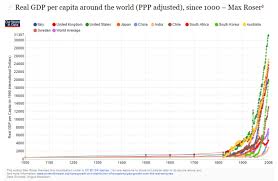

 Utopia, you are standing in it!
Recent Comments