Imperial Europe’s Penal Colonies
09 May 2016 Leave a comment
in economic history, economics of crime, law and economics Tags: age of empires, British empire, crime and punishment, French Empire, Portuguese empire, Spanish Empire
The last convicts were transported in 1953.

<p>Source: <a href="http://www.historytoday.com/dean-nicholas/map-imperial-europes-penal-colonies">Map: Imperial Europe's Penal Colonies | History Today</a>.
More police reduces crime
07 May 2016 Leave a comment
in applied price theory, economics of crime, labour economics, labour supply, law and economics, occupational choice Tags: crime and punishment, criminal deterrence, law and order, police

@jono_naylor only question was why wasn’t this career criminal deported sooner
23 Apr 2016 Leave a comment
in economics of crime, law and economics, occupational choice Tags: Australia, career criminals, crime and punishment, criminal deterrence, deportations, economics of immigration, law and order
When a non-citizen spends 10 of his 40 odd years in Australia behind bars, most recently in 2011, the only question that should be posed is why was not he deported much earlier?

Source: Former criminal deported and separated from family after 40 years in Australia | Stuff.co.nz.
He is a career criminal who deserves no sympathy. He is the author of his own misfortunes in being separated from his family in Australia. Sympathy should go to his many victims, not to him.
More fool him when he spent 9 months in immigration detention because he chose to appeal his deportation. The criterion for automatic cancellation of Australian visas for criminals is accumulating 12 months in prison. That is a low threshold for automatic deportation unless the minister grants a waiver.
With 10 years behind bars, his appeal had no chance of success. He was a career criminal Australia could well be shot off.
Why Thieves Steal Soap
15 Apr 2016 Leave a comment
in applied price theory, economics of crime, labour economics, law and economics, occupational choice Tags: crime and punishment, law and order
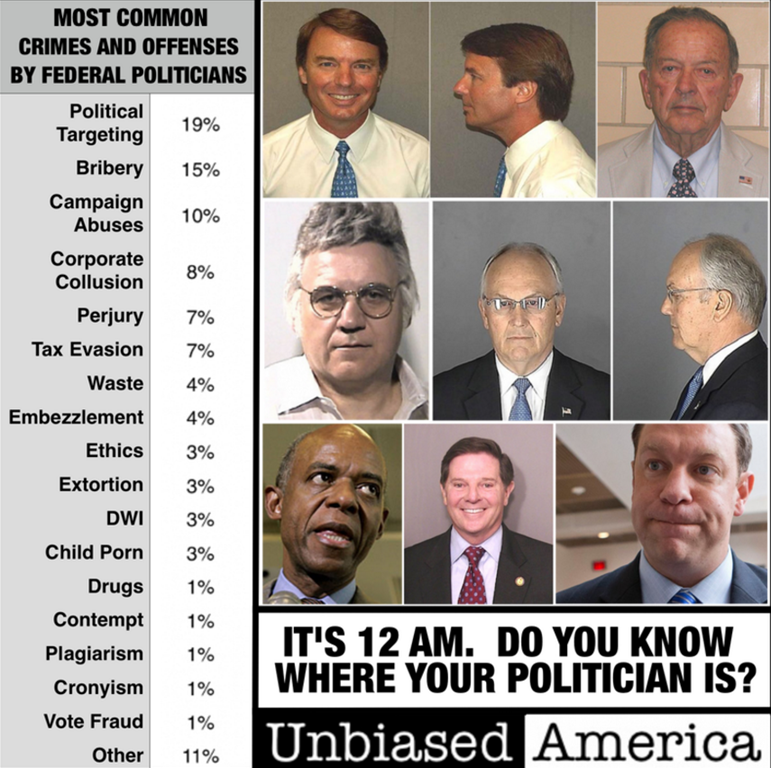
Stealing soap is almost as good as stealing cash.
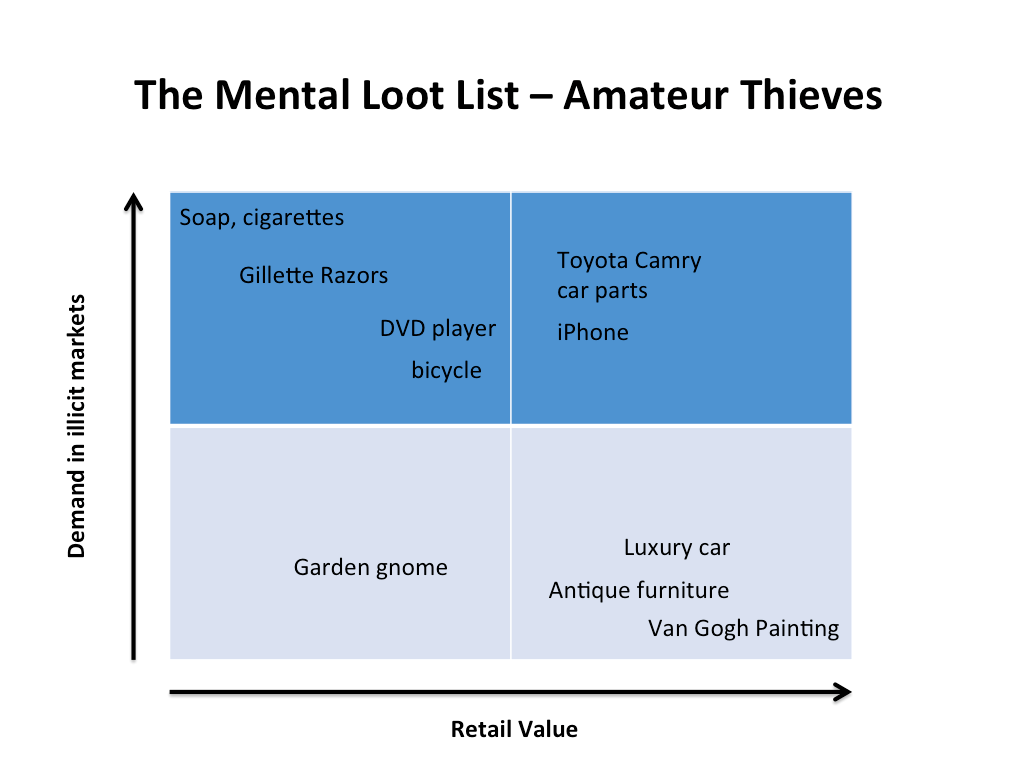
Soap and razor blades are surprisingly valuable to petty thieves because they are easy to offload at the pub or the local market stalls

Source: Why Thieves Steal Soap
@billclinton absolutely nails #blacklivesmatter
09 Apr 2016 Leave a comment
in discrimination, economics of crime, law and economics, politics - USA, poverty and inequality Tags: 2016 presidential election, Bill Clinton, crime and punishment, law and order, police shootings, street gangs
Financial market wrongdoing: Fines vs reputational sanctions
30 Mar 2016 Leave a comment
in economics of crime, economics of education, entrepreneurship, financial economics, industrial organisation, law and economics, survivor principle Tags: crime and punishment, signalling

Mentally ill shot by US police by threat level: January – February 2016
07 Mar 2016 Leave a comment
in economics of crime, health economics, law and economics, politics - USA Tags: crime and punishment, mental illness, police killings, the and order
Unfortunately for all concerned, most of the mentally ill shot this month by police was the result of an impossible dilemma. They were either attacking police or were armed.

Source: Investigation: People shot and killed by police this year – Washington Post.
Blacks shot by US police by threat level: January – February 2016
07 Mar 2016 Leave a comment
in economics of crime, politics - USA Tags: crime and punishment, criminal deterrence, law and order, police killings

Homicide rates across the OECD
12 Jan 2016 Leave a comment
in economics of crime, law and economics Tags: crime and punishment, law and order
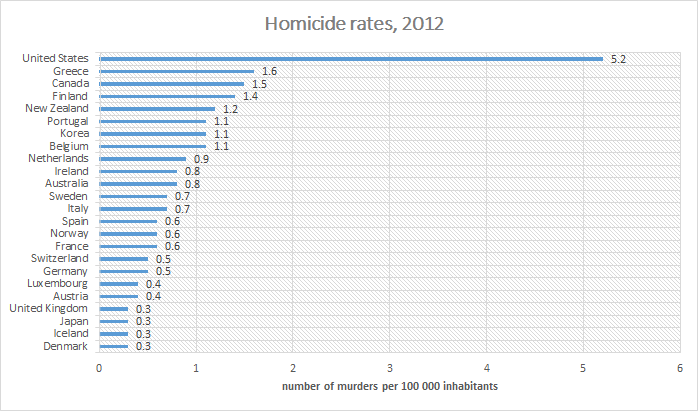
Assault and mugging rates across the OECD
12 Jan 2016 Leave a comment
in economics of crime, law and economics Tags: crime and punishment, law and order
Why are assault rates so low in the USA that they are next to Japan?
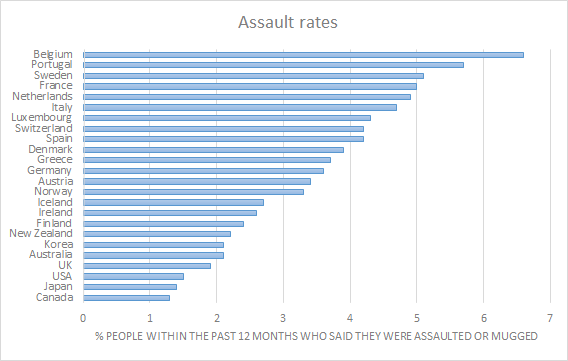
Data extracted on 08 Jan 2016 21:44 UTC (GMT) from OECD.Stat
Deaths by Police Taser in the USA in 2015 by race
08 Jan 2016 Leave a comment
in economics of crime, law and economics, politics - USA Tags: crime and punishment, law and order, tasers

2015 police shootings of unarmed blacks by cause
06 Jan 2016 Leave a comment
in economics of crime, law and economics, politics - USA Tags: crime and punishment, law and order, police shootings
Despite what you see on TV, surprisingly few unarmed people are shot because they are reaching for a weapon. Most unarmed suspects shot by police last year were resisting arrest. A few were killed in crossfire or by mistake. The chart below does not include unarmed Blacks who were attacking police when they were shot and killed according to Washington Post database.


Recent Comments