
Source: Osland v R [1998] HCA 75; 197 CLR 316; 159 ALR 170; 73 ALJR 173 (10 December 1998).
Celebrating humanity's flourishing through the spread of capitalism and the rule of law
18 Nov 2015 Leave a comment
in economics of crime, law and economics, politics - Australia, politics - New Zealand Tags: battered woman's defence, crime and punishment, criminal deterrence, criminal procedure, Justice Michael Kirby, law and order
05 Nov 2015 Leave a comment
in applied price theory, economics of crime, law and economics Tags: crime and punishment, criminal deterrence, criminal psychiatry, economics of personality traits, law and order, psychopaths, sociopaths
Psychopath and sociopath are popular psychology terms to describe violent monsters born of our worst nightmares. Think Hannibal Lecter in Silence of the Lambs (1991), Norman Bates in Psycho (1960) and Annie Wilkes in Misery (1990). In making these characters famous, popular culture has also burned the words used to describe them into our collective consciousness.
Most of us, fortunately, will never meet a Hannibal Lecter, but psychopaths and sociopaths certainly do exist. And they hide among us. Sometimes as the most successful people in society because they’re often ruthless, callous and superficially charming, while having little or no regard for the feelings or needs of others.
These are known as “successful” psychopaths, as they have a tendency to perform premeditated crimes with calculated risk. Or they may manipulate someone else into breaking the law, while keeping themselves safely at a distance. They’re master manipulators of other peoples’ feelings, but are unable to experience emotions themselves.
Sound like someone you know? Well, heads up. You do know one; at least one. Prevalence rates come in somewhere between 0.2% and 3.3% of the population.
If you’re worried about yourself, you can take a quiz to find out, but before you click on that link let me save you some time: you’re not a psychopath or sociopath. If you were, you probably wouldn’t be interested in taking that personality test.
You just wouldn’t be that self-aware or concerned about your character flaws. That’s why both psychopathy and sociopathy are known as anti-social personality disorders, which are long-term mental health conditions.

Although most of us will never meet someone like Hannibal Lecter from Silence of the Lambs, we all know at least one sociopath. from shutterstock.com
Psychopaths and sociopaths share a number of characteristics, including a lack of remorse or empathy for others, a lack of guilt or ability to take responsibility for their actions, a disregard for laws or social conventions, and an inclination to violence. A core feature of both is a deceitful and manipulative nature. But how can we tell them apart?
Sociopaths are normally less emotionally stable and highly impulsive – their behaviour tends to be more erratic than psychopaths. When committing crimes – either violent or non-violent – sociopaths will act more on compulsion. And they will lack patience, giving in much more easily to impulsiveness and lacking detailed planning.
Psychopaths, on the other hand, will plan their crimes down to the smallest detail, taking calculated risks to avoid detection. The smart ones will leave few clues that may lead to being caught. Psychopaths don’t get carried away in the moment and make fewer mistakes as a result.
Both act on a continuum of behaviours, and many psychologists still debate whether the two should be differentiated at all. But for those who do differentiate between the two, one thing is largely agreed upon: psychiatrists use the term psychopathy to illustrate that the cause of the anti-social personality disorder is hereditary. Sociopathy describes behaviours that are the result of a brain injury, or abuse and/or neglect in childhood.
Psychopaths are born and sociopaths are made. In essence, their difference reflects the nature versus nurture debate.
There’s a particularly interesting link between serial killers and psychopaths or sociopaths – although, of course, not all psychopaths and sociopaths become serial killers. And not all serial killers are psychopaths or sociopaths.

Thomas Hemming murdered two people in 2014 just to know what it felt like to kill. Tracey Nearmy/AAP Image
But America’s Federal Bureau of Investigation (FBI) has noted certain traits shared between known serial killers and these anti-social personality disorders. These include predatory behaviour (for instance, Ivan Milat, who hunted and murdered his seven victims); sensation-seeking (think hedonistic killers who murder for excitement or arousal, such as 21-year-old Thomas Hemming who, in 2014, murdered two people just to know what it felt like to kill); lack of remorse; impulsivity; and the need for control or power over others (such as Dennis Rader, an American serial killer who murdered ten people between 1974 and 1991, and became known as the “BTK (bind, torture, kill) killer”).
The Sydney murder of Morgan Huxley by 22-year-old Jack Kelsall, who arguably shows all the hallmarks of a psychopath, highlights the differences between psychopaths and sociopaths.
In 2013, Kelsall followed Huxley home where he indecently assaulted the 31-year-old before stabbing him 28 times. Kelsall showed no remorse for his crime, which was extremely violent and pre-meditated.
There’s no doubt in my mind he’s psychopathic rather than sociopathic because although the murder was frenzied, Kelsall showed patience and planning. He had followed potential victims before and had shared fantasies he had about murdering a stranger with a knife with his psychiatrist a year before he killed Huxley, allegedly for “the thrill of it”.
Whatever Kelsall’s motive, regardless of whether his dysfunction was born or made, the case stands as an example of the worst possible outcome of an anti-social personality disorder: senseless violence perpetrated against a random victim for self-gratification. Throughout his trial and sentencing, Kelsall showed no sign of remorse, no guilt, and gave no apology.
A textbook psychopath, he would, I believe, have gone on to kill again. In my opinion – and that of the police who arrested him – Kelsall was a serial killer in the making.
In the end, does the distinction between a psychopath and sociopath matter? They can both be dangerous and even deadly, the worst wreaking havoc with people’s lives. Or they can spend their life among people who are none the wiser for it.
This article was originally published on The Conversation in July 2015. Read the original article. Republished under the a Creative Commons Attribution No Derivatives licence.
20 Oct 2015 Leave a comment
in economics of crime, politics - USA Tags: crime and punishment, law and order, police, police shootings
The Washington Post also compiles a list of Americans shot dead by their police. The police hate speech host site, The Countered at The Guardian has some competition.

Source: Investigation: Police shootings – Washington Post.
The Washington Post counts 788 police shot dead by police. The Counted counts 922 because it includes deaths in custody, Taser deaths and people collapsing after a struggle. The Countered even included one poor sod who was lost at night-time and accidentally run over by the police cruiser searching for him. He wasn’t on the run. He was just run over at night.

Source: Investigation: Police shootings – Washington Post.
In common with The Counted, the Washington Post does not present the data on police shootings in the simple pie chart graphics to get a handle on how many times police shot armed criminals. That is why I am posting this pie chart today presenting this most basic information necessary for a balanced view.
14 Oct 2015 Leave a comment
in economics of crime, economics of regulation, health economics, law and economics, politics - USA Tags: crime and punishment, marijuana decriminalisation, war on drugs
Marijuana arrests by Presidential administration http://t.co/pJPHVfNaas—
Charts and Maps (@ChartsandMaps) April 04, 2015
13 Oct 2015 Leave a comment
in economic history, economics of crime, law and economics, occupational choice, politics - USA Tags: crime and punishment, crime statistics, criminal deterrence, law and order
Violent crime fell again in 2014. So much for the "Ferguson effect."
washingtonpost.com/news/wonkblog/… http://t.co/h2a6b746qS—
Christopher Ingraham (@_cingraham) September 29, 2015
03 Oct 2015 Leave a comment
in applied price theory, economics of crime, health economics, Jan van Ours, politics - New Zealand, politics - USA Tags: 3-strikes, addiction, crime and punishment, criminal deterrence, economics of personality traits
Warren Brookbanks’ inaugural Greg King Memorial lecture earlier in the week was on “Three strikes, five years on”. Brookbanks is a law lecturer at Auckland Law School who specialises in mental illness.
Blackstone’s ratio and three strikes
The essence of his position was the same as he had when the bill was before Parliament. His reservations were a law designed to give lengthy prison terms to the worst of the worst violent offenders would catch in the net some lower-level offenders.
Brookbanks’ objection is a variation of Blackstone’s ratio. Just as the legal system is premised on let 10 guilty go free rather than one innocent be convicted, to what extent does the criminal justice system weigh the risk of occasionally punishing an offender who is convicted of violent or sexual offences who is not one of the worst of the worst.
Brookebanks’ objections are the classic perfect justice as the enemy of adequate justice. It is doubtful that low-level offenders will be caught up in the three strikes regime simply because anyone who repeatedly commits a serious violent or sexual offence, an offence carrying a sentence of seven years or more, is the worst of the worst. They are repeat violent or sexual offenders designed to be caught by the legislation.
All of the 41 offences included in the three strikes legislation in New Zealand of violent or sexual offences carrying a maximum prison sentence of seven years or more. On the first strike you were warned of the consequences of further offending. On the second strike you receive the same sentence as usual but are not eligible for parole. On the third strike there is a mandatory maximum sentence for the offence concerned. There is also a mandatory life without parole sentence for murder if it is a second strike. Slightly over 90% of all first strike warnings are for assault, robbery or sexual offences.
Three strikes is about the incapacitation of repeat violent offenders
In the Q&A session after the lecture I put my principal objection to his lecture:
Obviously the Californian legislation got off to a false start when it threw away the key on pathetic men who stole pizzas and videotapes as their third strikes. That law was drafted through a citizen initiated referenda rather than the more circumspect process of the state legislature. But there is a lesson there. If parliaments do not act on violent crime, the people will vote in people who are less temperate.
The primary purpose of three strikes legislation and other repeat offender legislation is the incapacitation of repeat serious offenders as Justice Rehnquist explained long ago:
The purpose of a recidivist statute such as that involved here is not to simplify the task of prosecutors, judges, or juries. Its primary goals are to deter repeat offenders and, at some point in the life of one who repeatedly commits criminal offenses serious enough to be punished as felonies, to segregate that person from the rest of society for an extended period of time.
This segregation and its duration are based not merely on that person’s most recent offense but also on the propensities he has demonstrated over a period of time during which he has been convicted of and sentenced for other crimes…. Like the line dividing felony theft from petty larceny, the point at which a recidivist will be deemed to have demonstrated the necessary propensities and the amount of time that the recidivist will be isolated from society are matters largely within the discretion of the punishing jurisdiction.
The purpose of repeat offender laws is to put behind bars people have shown a propensity to commit violent serious crimes frequently. By putting them behind bars for a long time, there are fewer crimes by the simple fact that those hardened violent criminals locked up on their third strike are not in the position to offend against the general public.
The rational for recidivist laws is different from say harsh laws against drug trafficking which is a more opportunistic, business motivated crime. If the current drug traffickers are put behind bars for an extended time, there is usually a good supply of other criminals willing to take their place because of the lucrative rewards.
In the case of serious violent offenders, their crimes of violence and depravity are something to do with personality traits that dispose them towards harming others because they like doing so. The hope behind three strikes laws is that these dangerous people are in limited supply because of the genetic and psychopathic origins of their offending.

There are not that many other petty criminals willing to step into their shoes to commit the same violent offences because these other petty criminals simply do not have the necessary traits in their personalities that dispose them toward such cruelty and abominations. There is not a good supply of petty criminals to take the place of intractable often psychopathic violent offenders covered by three strikes laws.
That was the fundamental flaw are the recent lecture by Brookebanks on the three strikes law in New Zealand. He did not address the incapacitation of criminal psychopaths of various ilks.
That said, it would be good if three strikes delivered on criminal deterrence because it is cheaper than incapacitation. Better that the hardened criminal be deterred in the first instance rather than a third strike be committed and he is locked away for a long time as a way of stopping further crimes. Deterrence is great, but I am happy to live with incapacitation as the main benefit of three strikes.
What is the evidence on three strikes?
There have been a range of studies of sentencing enhancements to see if they deliver on incapacitation and criminal deterrence. As Levitt explains:
Becker’s well-known economic model of crime is based on deterrence: potential criminals alter their behaviour in response to changing incentives.
Empirically, however, it is often difficult to distinguish between deterrence (which is a behavioural response) and incapacitation (in which reductions in crime are attributable solely to criminals being unable to commit crimes because they are locked up). Virtually all of the empirical work that purportedly supports the economic model of crime is equally consistent with incapacitation.
Levitt and Kessler exploited a unique feature of sentence enhancements to isolate deterrence. Proposition 8 in California selectively instituted sentence enhancements for some crimes. If deterrence works, the incidence of these crimes should drop straightaway. If it is only incapacitation that works, crime will not drop until after the base sentence expires and these would-be criminals are kept locked up for longer and therefore not able to commit crimes but for their sentence enhancement. They found an immediate, sharp decline in eligible crimes relative to those that are unaffected by the sentencing enhancement law in Proposition 8 suggesting the importance of deterrence.
There is good evidence to suggest that criminals do not enjoy the prison experience. Levitt investigated this through the impact on prison overcrowding litigation on criminal deterrence. These Civil Liberties union lawsuits reduced state prison populations, but they were otherwise unrelated to crime rates. One reason for this is the cases often take a decade or more to resolve.
In the three years after a final decision was handed down by the courts in those cases, prison populations fell by 14.3 percent compared to the population of the nation as a whole, whereas violent and property crime rates increased 10.2 percent and 5.5 percent respectively… A one-prisoner reduction is associated with an increase of fifteen Index I crimes per year.
Helland and Tabarrok looked at post-sentencing crimes of criminals who were convicted of a strikeable offense with those who were tried for a strikeable offense but convicted of a non-strikeable offense. They found that California’s three-strike legislation significantly reduces felony arrest rates among the class of criminals with two strikes by 17–20 percent. This is a clever strategy because it is based on the assumption that many of the criminals convicted of a non-strike offence but charged with a strikeable offence were not convicted because of a lack of good evidence of their guilt rather than sheer innocence. Helland and Tabarrok found that
California’s three-strike legislation significantly reduces felony arrest rates among the class of criminals with two strikes by 17–20 percent.
Brookbanks’ preferred a 2012 study that showed that three strikes had no impact on criminal offending in California:
Declining crime rates in California and nationwide reflect declines in alcohol consumption, not tough-on-crime policies such as three-strikes laws… Three-strikes has had nothing whatsoever to do with the drop in violent crime.
The paper makes a very definitive conclusion despite ignoring most of the economic literature up until 2012 bar Shepherd (2002). The paper also had a cartoon version of the economic model of crime as perfectly informed rational calculators instead of the proper one as explained by David Friedman.
The economic analysis of crime starts with one simple assumption: Criminals are rational. A mugger is a mugger for the same reason I am a professor-because that profession makes him better off, by his own standards, than any other alternative available to him. Here, as elsewhere in economics, the assumption of rationality does not imply that muggers (or economics professors) calculate the costs and benefits of available alternatives to seventeen decimal places-merely that they tend to choose the one that best achieves their objectives.
If muggers are rational, we do not have to make mugging impossible in order to prevent it, merely unprofitable. If the benefits of a profession decrease or its costs increase, fewer people will enter it-whether the profession is plumbing or burglary. If little old ladies start carrying pistols in their purses, so that one mugging in ten puts the mugger in the hospital or the morgue, the number of muggers will decrease drastically-not because they have all been shot but because most will have switched to safer ways of making a living. If mugging becomes sufficiently unprofitable, nobody will do it.
Criminals respond to incentives in the same way as the rest of us with the same degree of success. Everyone agrees with that as long as you put them on a turf where they have to show their true colours.
Do hardened lifers respond to incentives?
One of the arguments against life without parole put up by those who are soft on crime is criminals sentenced to life without parole will be difficult to manage in the prison system because they have no hope of release. That is unless they have the incentive in the form of a prospective release at some time in their life, they will misbehave. That precisely is the economic model of crime. Crime is an occupational choice most attractive of those with fewer opportunities in legitimate occupations.
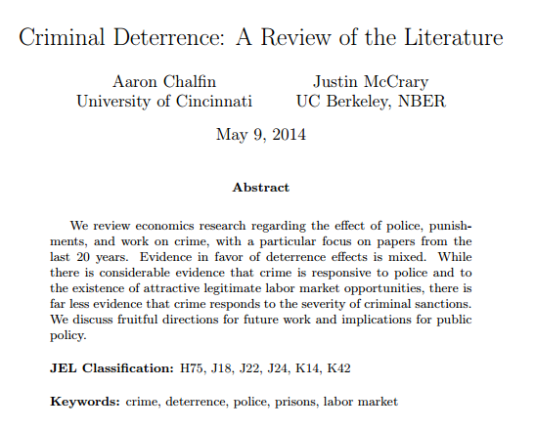
The role of empirical findings in criminal justice policy
The first article in my honours econometrics methodology course was the just published Edward Leamer’s Let’s Take The Con Out Of Econometrics. He used the death penalty debate to illustrate the fragile nature of empirical findings. Leamer showed that the death penalty could be shown to greatly reduce or greatly increase murder rates depending on how you did your econometric modelling and what prior beliefs you bought to the table. I remembered what Leamer said through my entire career.

The main task of econometrics is to measure proven relationships rather than to establish whether they exist at all as Bryan Caplan explains:
Being An Intelligent Consumer of Econometrics
Do not just ride out on the latest empirical study which suits your prior beliefs. Say what those prior beliefs are and base them on well proven understandings of human behaviour. Incentives matter even to criminals.
Does addiction and mental illness dull responses to incentives
Brookbanks is correct that criminals have addictions and mental illness and this contributes to their offending. I found the chapter in Tullock and McKenzie’s book on token economies in mental hospitals to be most enlightening in regard to addictions and mental illness clouding judgement.
The tokens in a token economy were spending money at the hospital canteen and trips to town and other privileges. They were earned by keeping you and your area clean and helping out with chores at the mental asylum.
The first token economies were for chronic, treatment-resistant psychotic inpatients. In 1977, a major study, still considered a landmark, successfully showed the superiority of a token economy compared to the standard treatments of these type of psychotic inpatients.
Experiments which would now be unethical showed that the occupational choices and labour supply of certified lunatics responded to incentives in the normal, predictable way. For example, tokens were withdrawn for helping clean halls and common areas. The changes in occupational choice and reductions in labour supply was immediate and as predicted by standard economics.
Some patients would steal the tokens for other patients, so the tokens were individually marked. The thefts almost stopped. Crime must pay even for criminally insane inpatients. Kagel reported that:
The results have not varied with any identifiable trait or characteristic of the subjects of the token economy – age, IQ, educational level, length of hospitalization, or type of diagnosis.
Most people age out of addiction to drugs or to alcohol. By age 35, half of patients with active alcoholism or addiction diagnoses during their teens and 20s no longer take drugs or drink:
The average cocaine addiction lasts four years, the average marijuana addiction lasts six years, and the average alcohol addiction is resolved within 15 years. Heroin addictions tend to last as long as alcoholism, but prescription opioid problems, on average, last five years. In these large samples, which are drawn from the general population, only a quarter of people who recover have ever sought assistance in doing so (including via 12-step programs). This actually makes addictions the psychiatric disorder with the highest odds of recovery.
Studies of demand elasticity normally find that consumption of hard drugs is quite sensitive to price. Addicts respond to incentives, in particular, to price rises by cutting back on their drug taking.
At the beginning of this century, the Dutch government controlled the opium market in the Dutch East Indies–nowadays Indonesia–for several decades. This state monopoly was called the opiumregie. Using information gathered during the opiumregie, this paper estimates price elasticities of opium consumption. It appears that short-term price elasticities of opium use are about -0.7. Long-term price elasticities are about -1.0.
30 Sep 2015 Leave a comment
in applied price theory, econometerics, economics of crime, occupational choice, politics - New Zealand Tags: 3-strikes, crime and punishment, criminal deterrence
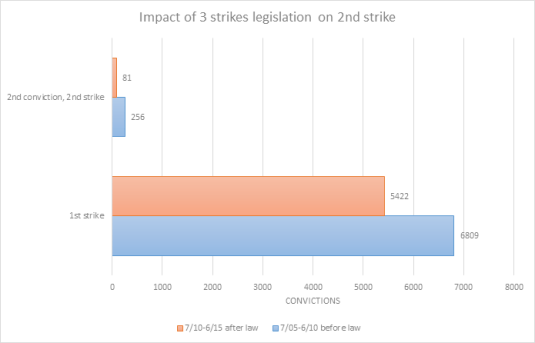
Via Three strikes: some evidence | Stats Chat from Graeme Edgeler.
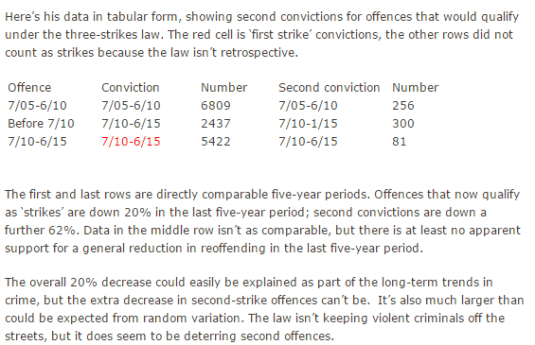
Via Three strikes: some evidence | Stats Chat.
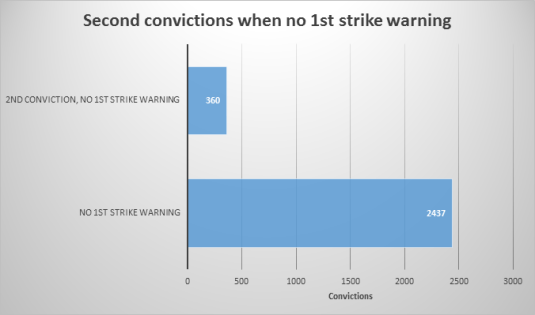
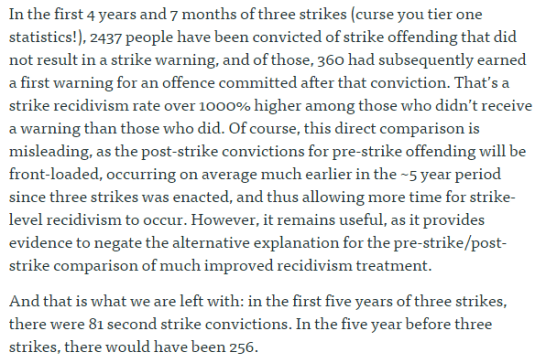
Via Three strikes: some evidence | Stats Chat from Graeme Edgeler.
26 Sep 2015 Leave a comment
in economics of crime, law and economics Tags: car alarms, crime and punishment, criminal deterrence, law and order
Car Alarms are completely f*cking useless.
priceonomics.com/are-car-alarms… http://t.co/tmJDHeIiGp—
Zachary Crockett (@zzcrockett) July 28, 2015
22 Sep 2015 Leave a comment
in economics of crime, law and economics, politics - USA Tags: crime and punishment, law and order, police, police car chases
21 Sep 2015 1 Comment
in economics of crime, law and economics, politics - USA Tags: crime and punishment, law and order, police, police shootings

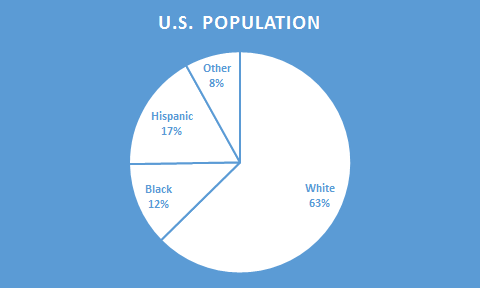
Source: The Counted: people killed by police in the United States in 2015 – interactive | US news | The Guardian accessed 20 September 2015 New Zealand standard time.

Source: The Counted: people killed by police in the United States in 2015 – interactive | US news | The Guardian accessed 20 September 2015 New Zealand standard time.
21 Sep 2015 Leave a comment
in economics of crime, law and economics, politics - New Zealand, television, transport economics, urban economics Tags: crime and punishment, evidence-based policy, law and order, local government, rational ignorance, rational rationality, road safety, Yes Minister
 In responding to demands for police to crack down on windscreen washers, some of whom intimidate motorists to pay, the deputy mayor of Christchurch showed a cultured ignorance of youth courts. She has never read newspaper reports that show that youth court defendants are never named and their convictions are not held against them as adults. Furthermore, she is unaware of the spent convictions law in New Zealand that expunges most convictions after seven years, especially petty convictions.
21 Sep 2015 Leave a comment
in economics of crime, law and economics, politics - USA Tags: crime and punishment, law and order, police, tasers

Source: The Counted: people killed by police in the United States in 2015 – interactive | US news | The Guardian accessed 1:30 p.m. 20 September 2015 New Zealand standard Time.

Source: The Counted: people killed by police in the United States in 2015 – interactive | US news | The Guardian accessed 1:30 p.m. 20 September 2015 New Zealand standard Time.
20 Sep 2015 Leave a comment
in economics of crime, law and economics, politics - USA Tags: crime and punishment, criminal deterrence, law and order, police, police shootings
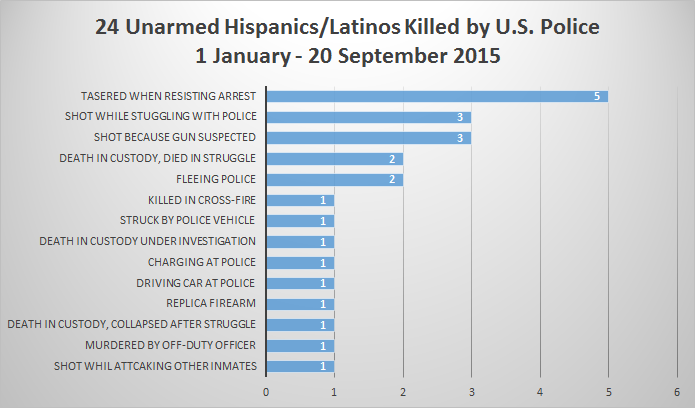
Source: The Counted: people killed by police in the United States in 2015 – interactive | US news | The Guardian accessed 1 p.m. 20 September 2015 New Zealand standard Time.
.
19 Sep 2015 Leave a comment
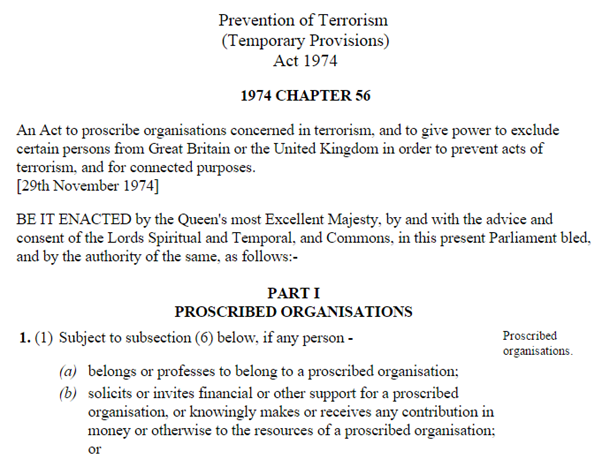
in economics of crime, law and economics, Marxist economics, Public Choice Tags: British Labour Party, British politics, crime and punishment, IRA, law and order, Northern Ireland, war on terror
https://twitter.com/walterolson/status/645089447197962240
Here is the Commons motion slamming Corbyn as a threat when the IRA bomber row broke in 1987: sunnation.co.uk/jeremy-corbyn-… http://t.co/KiOEUkqi9a—
Harry Cole (@MrHarryCole) September 19, 2015
Does Jeremy Corbyn have a hope in hell of winning a general election? i100.io/Acc95PD http://t.co/gMpddm3VtV—
i100 (@thei100) September 19, 2015
18 Sep 2015 1 Comment
in economics of crime, law and economics, politics - USA Tags: crime and punishment, criminal deterrence, law and order, police, police shootings
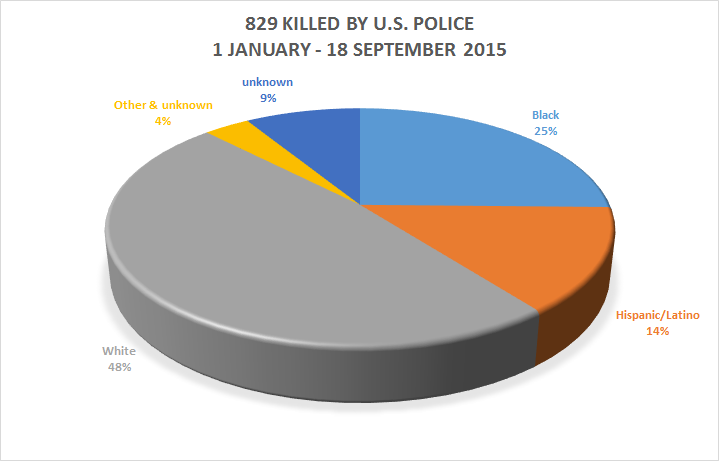
Source: The Counted: people killed by police in the United States in 2015 – interactive | US news | The Guardian Accessed 12.50 a.m. New Zealand standard time, 18th September 2015.
![image_thumb[14]](https://utopiayouarestandinginit.com/wp-content/uploads/2015/09/image_thumb144.png "image_thumb[14]")
Celebrating humanity's flourishing through the spread of capitalism and the rule of law
Scholarly commentary on law, economics, and more
Beatrice Cherrier's blog
Celebrating humanity's flourishing through the spread of capitalism and the rule of law
Celebrating humanity's flourishing through the spread of capitalism and the rule of law
Celebrating humanity's flourishing through the spread of capitalism and the rule of law
Why Evolution is True is a blog written by Jerry Coyne, centered on evolution and biology but also dealing with diverse topics like politics, culture, and cats.
Celebrating humanity's flourishing through the spread of capitalism and the rule of law
Celebrating humanity's flourishing through the spread of capitalism and the rule of law
A rural perspective with a blue tint by Ele Ludemann
DPF's Kiwiblog - Fomenting Happy Mischief since 2003
Celebrating humanity's flourishing through the spread of capitalism and the rule of law
The world's most viewed site on global warming and climate change
Tim Harding's writings on rationality, informal logic and skepticism
A window into Doc Freiberger's library
Let's examine hard decisions!
Commentary on monetary policy in the spirit of R. G. Hawtrey
Thoughts on public policy and the media
Celebrating humanity's flourishing through the spread of capitalism and the rule of law
Politics and the economy
A blog (primarily) on Canadian and Commonwealth political history and institutions
Reading between the lines, and underneath the hype.
Economics, and such stuff as dreams are made on
"The British constitution has always been puzzling, and always will be." --Queen Elizabeth II
Celebrating humanity's flourishing through the spread of capitalism and the rule of law
Celebrating humanity's flourishing through the spread of capitalism and the rule of law
WORLD WAR II, MUSIC, HISTORY, HOLOCAUST
Undisciplined scholar, recovering academic
Celebrating humanity's flourishing through the spread of capitalism and the rule of law
Res ipsa loquitur - The thing itself speaks
Celebrating humanity's flourishing through the spread of capitalism and the rule of law
Researching the House of Commons, 1832-1868
Articles and research from the History of Parliament Trust
Reflections on books and art
Posts on the History of Law, Crime, and Justice
Celebrating humanity's flourishing through the spread of capitalism and the rule of law
Exploring the Monarchs of Europe
Cutting edge science you can dice with
Small Steps Toward A Much Better World
“We do not believe any group of men adequate enough or wise enough to operate without scrutiny or without criticism. We know that the only way to avoid error is to detect it, that the only way to detect it is to be free to inquire. We know that in secrecy error undetected will flourish and subvert”. - J Robert Oppenheimer.
The truth about the great wind power fraud - we're not here to debate the wind industry, we're here to destroy it.
Celebrating humanity's flourishing through the spread of capitalism and the rule of law
Celebrating humanity's flourishing through the spread of capitalism and the rule of law
Economics, public policy, monetary policy, financial regulation, with a New Zealand perspective
Celebrating humanity's flourishing through the spread of capitalism and the rule of law
Restraining Government in America and Around the World

 Utopia, you are standing in it!
Recent Comments