A perspective on the overweening conceit of youth
14 Jul 2015 Leave a comment
in applied welfare economics, behavioural economics, economics of crime, economics of education, labour economics, law and economics Tags: child development, cognitive psychology, economics of personality traits, political psychology
Eight intellectual traits
09 Jul 2015 Leave a comment
in liberalism Tags: economics of personality traits, personality psychology, philosophy of science, sociology of knowledge, sociology of science
Humanities, arts, computing and engineering degrees awarded by gender, USA, UK, Canada, Australia and New Zealand
30 Jun 2015 Leave a comment
in discrimination, economics of education, gender, human capital, labour economics, occupational choice Tags: economics of personality traits, gender wage gap, reversing gender gap
Figure 1: Percentage of tertiary degrees awarded in humanities and arts qualifications by gender, 2012
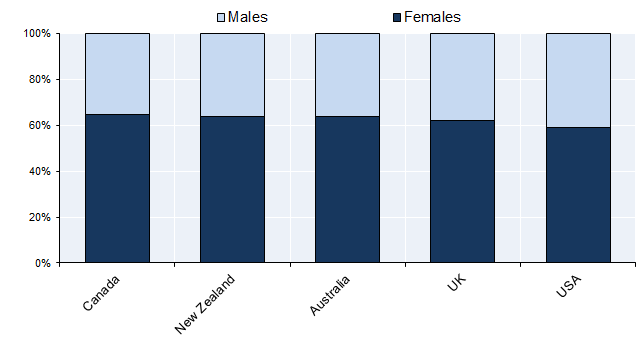
Source: OECD Education Database.
Figure 2: percentage of tertiary degrees awarded in computing qualifications by gender, 2012
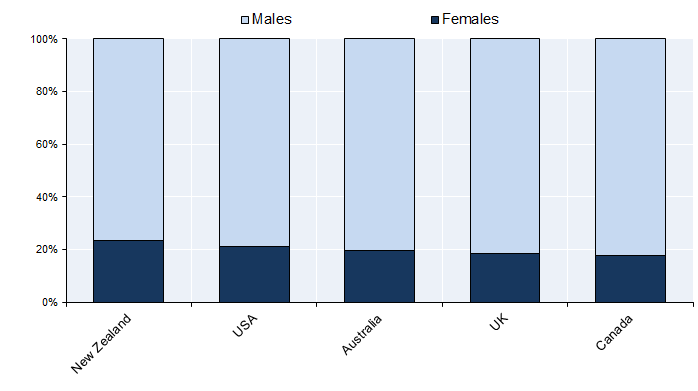
Source: OECD Education Database.
Figure 3: Percentage of tertiary degrees awarded in engineering, manufacturing and construction qualifications by gender, 2012
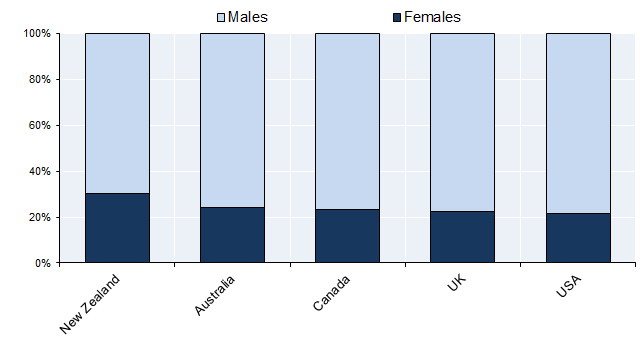
Source: OECD Education Database.
The different types of authoritarian personalities
28 Jun 2015 Leave a comment
in comparative institutional analysis, constitutional political economy, politics - Australia, politics - New Zealand, politics - USA, Public Choice Tags: antiforeign bias, antimarket bias, economics of personality traits, expressive voting, Leftover Left, makework bias, political psychology, rational ignorance, rational irrationality
Gender differences in PISA scores, 2012, UK, USA, New Zealand and Australia
16 Jun 2015 Leave a comment
in economics of education, human capital, labour economics, occupational choice, politics - Australia, politics - New Zealand, politics - USA Tags: economics of personality traits, gender gap, PISA, reversing gender gap
Boys’ dominance just about endures in maths: at age 15 they are, on average, the equivalent of three months’ schooling ahead of girls. In science the results are fairly even.
But in reading, where girls have been ahead for some time, a gulf has appeared. In all 64 countries and economies in the study, girls outperform boys. The average gap is equivalent to an extra year of schooling.
Figure 1: : Gender differences (boys – girls) in student performance in reading, mathematics and science in PISA 2012

Source: OECD family database.
Are you high-brow or low-brow?
21 May 2015 Leave a comment
in economics of media and culture Tags: economics of personality traits, economics of preferences
1949 @LIFE infographic on the hierarchy of tastes (my love of westerns is scoffed-upon) lawyersgunsmoneyblog.com/2014/06/high-b… http://t.co/DytNnBkE6t—
Roseann Cima (@rosiecima) June 18, 2014
Unskilled but Unaware of It
14 May 2015 Leave a comment
in economics of education, human capital, labour economics, labour supply, occupational choice Tags: cognitive psychology, Dunning-Kruger effect, economics of personality traits, educational psychology

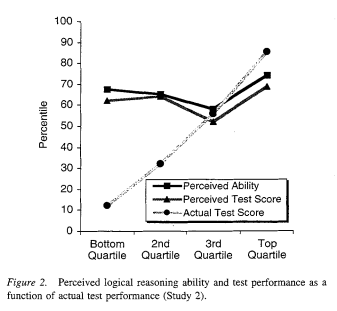
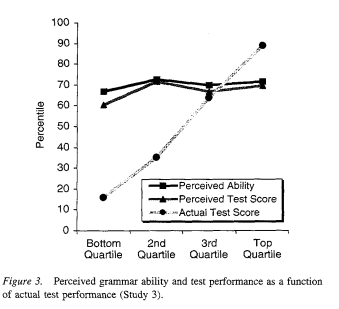

The grammar test is the easiest explanation of the Dunning-Kruger effect. The only way to know you have bad grammar is to have good ground but as you don’t have good grammar you think you have good grammar because you don’t know you have bad grammar because you have no way of self-assessing your bad grammar because you don’t have good grammar.
Being defensive pie-chartered psychologically
24 Apr 2015 Leave a comment
in economics of media and culture Tags: economics of personality traits
Should everybody go to college? Could everybody go to college?
22 Apr 2015 Leave a comment
in economics of education, human capital, labour economics, labour supply, occupational choice Tags: College premium, economics of personality traits, education premium, IQ
But why would girls want to sit in a corner playing chess?
20 Apr 2015 Leave a comment
in economics of education, human capital, labour economics, occupational choice Tags: chess, economics of personality traits, lost boys, reversing gender gap
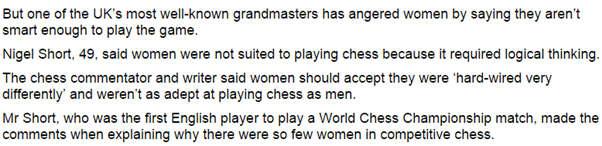
For a logical thinker, chess grandmaster Nigel Short missed the obvious move. Teenage girls have better things to do with their talents and in particular their superior reading skills than gaze over a chess board.
The 30 point advantage that 15-year-old girls have in reading scores in the PISA test – see the chart below – is equal to an extra six months schooling. Six months extra schooling explains many a gender and ethnic wage gap.

Having being a member of a few chess clubs, and run chess clubs and large chess tournaments, there are an unusual number of oddballs, eccentrics and mentally ill people who play chess.

The systematic evidence of a greater incidence of learning disorders, Asperger’s syndrome as well is bipolar disorders among teenage boys all encourage teenage boys to focus on chess if only to give an outlet to their obsessive behaviours.

It is for the same reason that socially awkward teenage boys may be attracted to computer programming if they have various obsessional disorders.
Who-d a-Thunk It? The new OECD Report on 15-Year Olds in 60+ Countries Finds Significant Gender Differences? http://t.co/X2rGVygPwF—
Mark J. Perry (@Mark_J_Perry) March 11, 2015
 Utopia, you are standing in it!

Recent Comments