
@World_Wildlife on the cost of moving to a low carbon economy @jamespeshaw @GreenpeaceNZ @NZGreens
01 Oct 2015 Leave a comment
in applied price theory, environmental economics, global warming, Public Choice, rentseeking Tags: climate alarmism, evidence-based policy, expressive voting, global warming, green rent seeking, low carbon economy, rational ignorance, rational rationality


The impact of economic theory on political belief
28 Sep 2015 Leave a comment
in applied price theory, comparative institutional analysis, economics of education, Marxist economics Tags: conjecture and refutation, evidence-based policy, methodology of economics, overweening conceit of view, philosophy of the social sciences

…

@ChristchurchCC Deputy Mayor is clueless about the criminal justice system
21 Sep 2015 Leave a comment
in economics of crime, law and economics, politics - New Zealand, television, transport economics, urban economics Tags: crime and punishment, evidence-based policy, law and order, local government, rational ignorance, rational rationality, road safety, Yes Minister
 In responding to demands for police to crack down on windscreen washers, some of whom intimidate motorists to pay, the deputy mayor of Christchurch showed a cultured ignorance of youth courts. She has never read newspaper reports that show that youth court defendants are never named and their convictions are not held against them as adults. Furthermore, she is unaware of the spent convictions law in New Zealand that expunges most convictions after seven years, especially petty convictions.
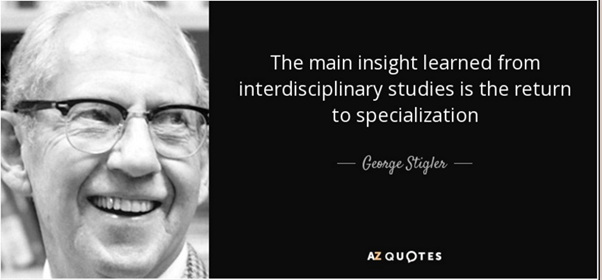
Stigler on economics as a big tent @RusselNorman @NZGreens @GreenpeaceNZ @Mark_J_Perry
21 Sep 2015 1 Comment


Is sociology really irrelevant in policy debates?
03 Sep 2015 Leave a comment
in applied price theory, applied welfare economics, comparative institutional analysis, constitutional political economy, economics of bureaucracy, economics of media and culture, income redistribution, labour economics, occupational choice, Public Choice, rentseeking Tags: compensating differentials, evidence-based policy, media bias, offsetting behaviour, public intellectuals, sociology, The fatal conceit, The pretence to knowledge, unintended consequences
Is sociology really irrelevant in policy debates? @familyunequal does a better job with the #s blog.contexts.org/2015/01/25/soc… http://t.co/c4E25DTCmm—
(@SocImages) February 04, 2015
Why do unilateral actions to combat global warming fail in Congress?
21 Aug 2015 Leave a comment
in economics of regulation, energy economics, environmental economics, global warming, politics - USA Tags: climate alarmism, evidence-based policy, expressive politics, expressive voting, global warming, rational irrationality
Does the minimum wage increase unemployment?
20 Aug 2015 Leave a comment
in labour economics, minimum wage, unemployment Tags: College premium, compensating differentials, education premium, evidence-based policy, offsetting behaviour, The fatal conceit, The pretence to knowledge, unintended consequences
https://twitter.com/MiltonFriedmanS/status/630956276554444800/photo/1
#Australia:highest minimum wage in OECD relative to purchasing power. Increases #youthunemployment #auspol #jobsearch http://t.co/HML9l2rD7R—
Bob Day (@senatorbobday) August 11, 2015

Labour is incoherent & self-defeating in its opposition to private prisons
21 Jul 2015 Leave a comment
in economics of crime, industrial organisation, law and economics, managerial economics, organisational economics, personnel economics, politics - New Zealand, politics - USA, survivor principle Tags: creative destruction, entrepreneurial alertness, evidence-based policy, Leftover Left, New Zealand Labour Party, prison privatisation, private ownership, private prisons, privatisation, state ownership, Tony Blair
The New Zealand Labour Party would make a lot more progress in its opposition to private prisons if it would drop its ideologically blinkered opposition to privatisation. If it was to do that, it would have a much stronger case against private prisons.
That case would be based on the modern economics of industrial organisation and state and private ownership. In particular, the make or buy decision that any organisation, be they public or private must face when deciding whether to make a particular production input in-house or source it externally.
Labour’s current case against private prisons is a bunch of ideological clichés as it illustrated today in a post on Facebook by Jacinda Ardern. Her post was based on her speech in the House of Representatives:
Yes, part of that opposition is my view that no one should make a profit from incarceration, but it’s also about the complete fallacy that somehow a company like SERCO will do the job better.
The notion that no one should make a profit from incarceration is farcical. There are a whole range of private profit making suppliers of goods and services to prisons and prison officers draw a wage.
The case was state ownership, as well stated by Andrei Shleifer is no different than any other ownership decision taken by an organisation facing the inability to contract fully over hard to measure quality issues with the goods or services supplied to it.
Shleifer in “State versus Private Ownership” argues that you make in-house rather than buy in the market under the following conditions:
- opportunities for cost reductions that lead to non-contractible deterioration of quality are significant;
- innovation is relatively unimportant;
- competition is weak and consumer choice is ineffective; and,
- reputational mechanisms are also weak.
What particularly should focus Labour’s attention on Andrei Shleifer’s State versus Private Ownership is it is a simplified version of Hart, Oliver, Andrei Shleifer, and Robert W Vishny. 1997. “The Proper Scope of Government: Theory and an Application to Prisons.” Quarterly Journal of Economics. The abstract to that longer paper says the following:
When should a government provide a service in-house, and when should it contract out provision? We develop a model in which the provider can invest in improving the quality of service or reducing cost.
If contracts are incomplete, the private provider has a stronger incentive to engage in both quality improvement and cost reduction than a government employee has. However, the private contractor’s incentive to engage in cost reduction is typically too strong because he ignores the adverse effect on non-contractible quality. The model is applied to understanding the costs and benefits of prison privatization.
The privatisation of prisons is at the margin of the case was state versus private provision of a good or service.
Labour forecloses this entire literature to itself and bases its arguments on ideology. Any other argument Labour makes are just talking points to a fixed ideological position.There is no give-and-take. When one argument is knocked down, Labour just looks for other arguments to defend the same fixed position.
The reason Labour forecloses this large economic literature on state versus private ownership and its application to private versus public prisons is embracing that literature would mean admitting that same literature makes a strong case for the privatisation of a number of other government services and state-owned enterprises. As Shleifer says in State versus Private Ownership:
Private ownership should generally be preferred to public ownership when the incentives to innovate and to contain costs must be strong.
The main argument, the best argument, against the privatisation of publicly provided services and state-owned enterprises is the dilution of quality once it is supplied privately. This risk of compromises and quality to enhance profits is higher when the privatisation is contracting back to government. Detailed contracts must be written to assure quality. As Hart, Shleifer and Vishny say:
Critics of private schools fear that such schools, even if paid for by the government (e.g., through vouchers), would find ways to reject expensive-to-educate children, who have learning or behavioural problems, without violating the letter of their contracts. Critics also worry that private schools would replace expensive teachers with cheaper teachers’ aides, thereby jeopardizing the quality of education.
In the discussion of public versus private health care, the pervasive concern is that private hospitals would find ways to save money by shirking on the quality of care or rejecting the extremely sick and expensive-to-treat patients. In the case of prisons, concern that private providers hire unqualified guards to save costs, thereby undermining safety and security of prisoners, is a key objection to privatization.
Our model tries to explain both why private contracting is generally cheaper, and why in some cases it may deliver a higher, while in others a lower, quality level than in-house provision by the government.
By basing the argument on the strengths and weaknesses of contracting over quality for specific services, Labour would have to drop its straight ideological opposition to privatisation and run on a case-by-case basis over the ability to successfully contract to assure quality.
That sounds far too much like becoming a Blairite – the horror, the horror if you are a Labour Party member in the 21st century concerned more about ideological purity than winning office and improving the lot of the people claim to you represent.
If it were to embrace the modern economics of state versus private ownership, Labour would have to agree with Hart, Shleifer and Vishny when they say:
the case for privatization is stronger when quality reducing cost reductions can be controlled through contract or competition, when quality innovations are important, and when patronage and powerful unions are a severe problem inside the government.
When the government cannot fully anticipate, describe, stipulate, regulate and enforce exactly what it wants and prisons are a good case this and has difficulty enforce in any contract with regard to quality assurance, it’s better to make it in-house as Hart, Shleifer and Vishny show.
A call to the barricades is not be very uplifting if based on incomplete contracting over service quality rather than the evils of capitalist profit. It is unfortunate that the Labour Party sacrifice the interests of those incarcerated in the prison system to its unwillingness to be denounced as a Blairite.
The case for private prisons is based on public prisons may have fewer incentives to keep costs down, including keeping costs down by skimming on quality to increase profits as Andre Shleifer explains:
Ironically, the government sometimes becomes the efficient producer precisely because its employees are not motivated to find ways of holding costs down.
The modern case for government ownership can often be seen from precisely this perspective. Advocates of such ownership want to have state prisons so as to avoid untrained low-wage guards, state water utilities to force investment in purification, and state car makers to make them invest in environmentally friendly products.
As it turns out, however, this case for state ownership must be made carefully, and even in most of the situations where cost reduction has adverse consequences for non-contractible quality, private ownership is still superior.
That is the twist in the tale for Labour. The case against privatisation is merely a balancing act requiring detailed scrutiny of the potential to successfully enforce contracts with private providers over quality assurance.
The case against prison privatisation is simply for the public sector as fewer incentives to weaken quality because this increases the bottom line of the contractor or salaries of management. It’s a trade-off between cost control and quality dilution. Publicly run prisons have fewer incentives to control costs, but they also have fewer incentives to deliberately cut corners on quality to increase dividends or managerial salaries .
There’s nothing new about the non-profit provision of goods and services in the marketplace. A whole range of non-profit firms emerged through market competition in situations where contracting over quality or trust was costly.
Most life insurance companies were initially mutually owned by customers. Because they were a non-profit firm, there were fewer avenues to run off with the premiums through excessive dividends.
Many private universities and private schools are run by charitable trusts as a way of quality assurance. Another way of quality assurance is heavy involvement of alumni through giving and sports to police the reputation of the university or school they once attended or want their children to attend.
An arguable case can be made against prison privatisation, based on sound economic principles as long as you’re willing to admit that in many cases privatisation is a good idea based on the same economic principles. That’s a bridge too far from the Labour Party in New Zealand.
Maybe the reason is Labour knows that although they may be able to make an arguable case against prisons privatisation, they may still lose to better arguments and, in particular, successful experiments in prison privatisation at home and abroad. Better to keep the debate away from evidence-based policy. This awkwardness in seeking out the best argument is due to the proclivity of Labour in opposition to repudiate the successes of its last time in office and look for reasons to make themselves even less electable by going left rather than going back into the centre.
 Utopia, you are standing in it!

Recent Comments