Red Ed has given up on fighting climate change and introducing a carbon tax
11 Mar 2015 Leave a comment
in energy economics, environmental economics, global warming, public economics Tags: carbon tax, climate alarmism, expressive voting, left-wing popularism, rational ignorance, rational irrationality, UK politics
I am starting to warm to Red Ed. His freeze on energy bills rules out any carbon tax was he cannot introduce a carbon tax while freezing energy bills.
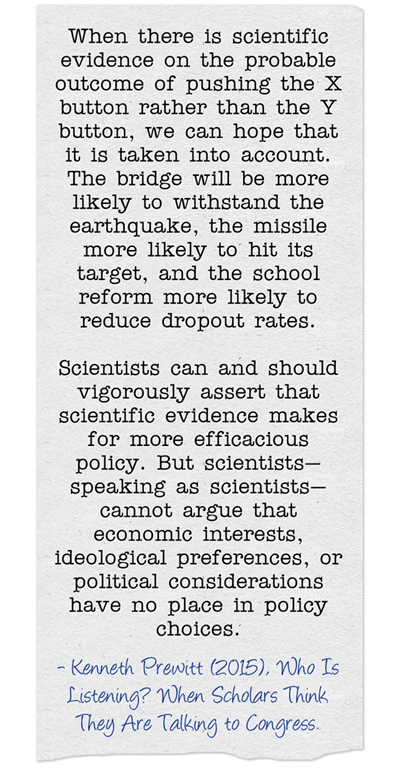
The weight of science in contentious social issues
07 Mar 2015 Leave a comment
in comparative institutional analysis, politics - Australia, politics - New Zealand, politics - USA, Public Choice Tags: evidence-based policy, expressive voting, rational ignorance, rational irrationality, science and public policy
Will a global climate change treaty be signed this year?
27 Feb 2015 Leave a comment
in environmental economics, global warming, politics - USA Tags: climate alarmism, expressive voting, global warming, international public goods, rational ignorance, rational irrationality

George Stigler and that peculiar requirement to dumb down economics for politicians and the public
20 Feb 2015 Leave a comment

Few UK green party voters are green: Green Party voters look like Lib Dems, think like Labour voters
19 Feb 2015 Leave a comment
in politics - Australia, politics - New Zealand, Public Choice Tags: expressive voting, protest voters, Uk Greens, UK politics, voter demographics
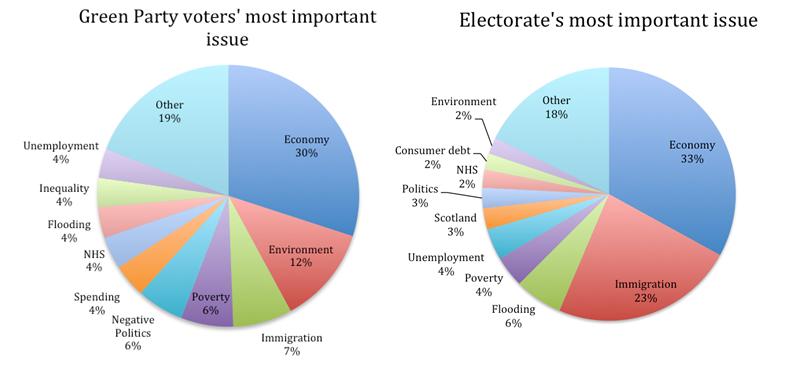
Fewer the mushrooming green party vote in the UK too much at all about the environment. It certainly not the major reason for going green.
Green voters are not radically left-wing on economic issues nor are they primarily driven by environmental concerns. How, therefore, can we explain their decision to vote for a party with a far-left, environmentalist agenda?
One way is to look at who prospective Green voters turned to in previous elections…. Around half voted for the Liberal Democrats in 2010 and around a third voted for the junior coalition partner in both 2005 and 2010. There are a number of ways of interpreting this.
First, Liberal Democrats and Green voters traditionally hold similar socio-demographic profiles. Both are likely to be university educated and to work in professional or managerial jobs.
Second, the Lib Dems were, until the 2010 election, the protest vote of many on the left. Since entering government, they have lost this niche and, subsequently, have seen their poll ratings plummet.
Third, the Greens now have a monopoly on certain policies that they once shared with Nick Clegg’s party – for example, ending university tuition fees.
.
The working class is missing from US political discourse
14 Feb 2015 Leave a comment
in income redistribution, politics - USA, Public Choice Tags: 2008 presidential election, Director's Law, expressive voting, median voter theorem, voter demographics, Withering away of the proletariat
One of the things I noticed in the 2008 US presidential campaign was everyone was appealing for the middle class vote. Presidential primary and general election debates were about how things were getting harder for the middle-class and the Republican or Democratic candidate who happen to be pitching for votes would stand up for the middle-class better than their competition in the presidential primary or general election at hand.
Another big feature in the 2008 presidential campaign was Joe the plumber. This was the small businessman who asked then candidate Obama at a rope line three days before the final presidential debate about his plans to put up taxes. Obama replied he wanted to spread the wealth around. Obama’s response was
It’s not that I want to punish your success. I just want to make sure that everybody who is behind you, that they’ve got a chance at success, too… My attitude is that if the economy’s good for folks from the bottom up, it’s gonna be good for everybody.
If you’ve got a plumbing business, you’re gonna be better off… if you’ve got a whole bunch of customers who can afford to hire you, and right now everybody’s so pinched that business is bad for everybody and I think when you spread the wealth around, it’s good for everybody
Andrew Cherlin did the service counting up references to the working class in State of the Union addresses since President Obama was elected.
In his State of the Union addresses, Obama has used the term middle class 28 times. But he has never said “working class” except in 2011, when he described Vice President Biden, who was seated behind him, as “a working-class kid from Scranton.”
This dearth of references to the working class is no surprise in light of Director’s Law and the median voter theorem. Politicians who do not pitch to the American middle class will not win elections unless there is a lot of expressive voting by the educated middle class. In general social surveys of Americans, 44% identify as working class and 44% identify as middle class.

Republicans consistently win voters making $50,000 or more – the U.S. median income. The margin doesn’t vary much: In 2012, Mitt Romney got 53% of this group’s vote; in 2010, Republican House candidates got 55%.
The margin by which the Republicans win income brackets above 50,000 doesn’t vary much if you just look at those earning above $100,000 or those earning between $50,000 and $75,000. These margins only matter in a close election, a very close election.
Democrats consistently win voters making less than the median but the margin varies. Whether the Democrats win these voters earning less than $50,000 by a 10-point or a 20-point margin tells you who won every national election for the past decade.

The Democrats would also do well among the college educated vote. Obama won this over Romney and 2012 by 10 percentage points. This may explain why the Democrats are slightly conflicting: they must win the working class vote as well as the college educated vote to win.
Andrew Cherlin didn’t give many reasons for the disappearance of working class from modern American political discourse, but he showed some insight into expressive politics when he observed that:
Politicians may prefer to call working-class families by the class position they aspire to rather than the one they hold.

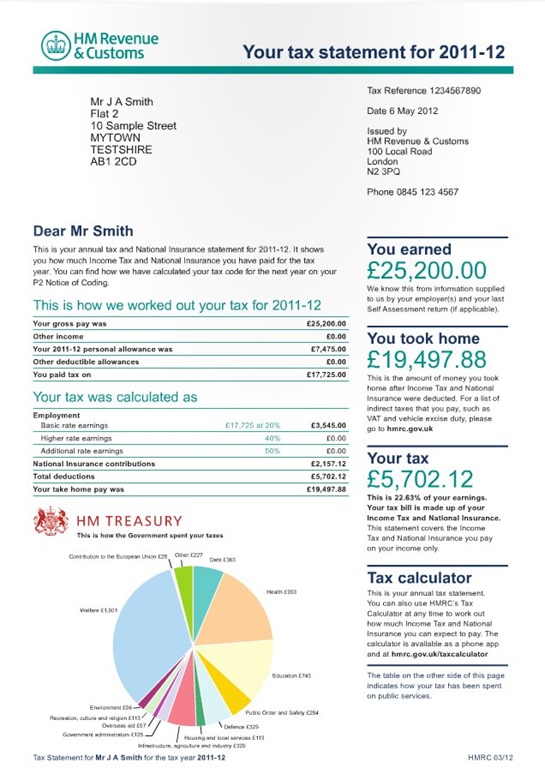
Every national and local government should include this pie chart with tax assessments
11 Feb 2015 Leave a comment
Competing visions of success – left and right
06 Feb 2015 Leave a comment
in applied welfare economics, entrepreneurship, human capital, labour economics, occupational choice, politics - New Zealand, politics - USA Tags: activists, distributive justice, do gooders, expressive voting, Leftover Left, poverty and inequality, rational ignorance, rational irrationality, top 1%
Why popularist politics work: People Are Terrible at Estimating Income Inequality
05 Feb 2015 Leave a comment
in economics of information, politics - Australia, politics - New Zealand, politics - USA, Public Choice Tags: expressive voting, poverty and inequality, rational ignorance, rational irrationality, the top 1%, urban myths


Does global warming denial and the anti-vaccination movement march to the same anti-science step?
03 Feb 2015 Leave a comment
in climate change, economics of information, economics of media and culture, environmental economics, global warming, health economics, politics - Australia, politics - New Zealand, politics - USA, Public Choice Tags: anti-vaccination movement, climate alarmists, expressive politics, expressive voting, psychology of persuasion

In the last post, I presented evidence, collected as part of the CCP Vaccine Risk Perception study, that showed that the trope has no meaningful connection to fact.
Those who accept and reject human evolution, those who believe in and those who are skeptical about climate change, all overwhelmingly agree that vaccine risks are low and vaccine benefits high.
The idea that either climate change skepticism or disbelief in evolution denotes hostility to science or lack of comprehension of science is false, too. That’s something that a large number of social science studies show. The CCP Vaccine Risk study doesn’t add anything to that body of evidence.
Vaccination rates are a serious issue. Do those that are trying to lift vaccination rates think they going to get anywhere by calling people stupid, corrupt and in the pay of a multinational.
Of course not. This matter is serious. It’s a real public health risk.
People are persuaded to vaccinate through gentle messages providing facts in a way they can understand that also respects their knowledge, their intellect, and their concerns for the safety of the children. You don’t win people over by insulting them.
The climate alarmists are so insulting because they have no interest in persuading the people that are actually talking to. They are reaching out to members on the audience were are on the margin, and appealing to their political base, including the fundraising base by showing how staunch they are in slaying the Dragon.
Evidence of mass kidnappings of Occupy protesters
03 Feb 2015 Leave a comment
in economics of media and culture, politics - Australia, politics - New Zealand, politics - USA Tags: activists, do gooders, expressive voting, Left-wing hypocrisy, occupy movement, superstar effect

Because the most-popular songs now stay on the charts for months, the relative value of a hit has exploded.
The top 1 percent of bands and solo artists now earn 77 percent of all revenue from recorded music, media researchers report. And even though the amount of digital music sold has surged, the 10 best-selling tracks command 82 percent more of the market than they did a decade ago.
The advent of do-it-yourself artists in the digital age may have grown music’s long tail, but its fat head keeps getting fatter.
The only explanation for the failure of the Twitter Left to protest against this concentration or of wealth and massive rise in ticket prices to the downtrodden young public that go to concerts is a mass kidnapping of the protesters in the Occupy Wall Street movement.

Profits Are So High, Why Don’t More Farmers Switch To Organic?
02 Feb 2015 Leave a comment
in economics of information, economics of religion, health economics, occupational regulation Tags: compensating differentials, consumer fraud, entrepreneurial alertness, expressive voting, food snobs, organic farming, reputational capital, social norms

HT: Yet Again, Organic Ag Proves Just as Productive as Chemical Ag | Mother Jones.
The increase is partly because more farmers are taking advantage of the healthier profit margins and partly because organic marketing groups sell a health food mythology where cost is not a factor, so costs can rise along with more product. It is a miracle of capitalism.
But given a consumer-base that is wealthy and that is educated by advertising so completely, why don’t all farmers switch?It just takes paying for a sticker and promising to use an organic toxic chemical rather than a synthetic one, there is no testing of organic food, so it would be easy to just make more money.
The reason more don’t move to organic, according to a paper in the Journal of Marketing, is because conventional farmers know in their hearts and minds they are deceiving the public if they switch – making that change is like switching belief systems.
via “Chemical Farmers”: Profits Are So High, Why Don’t More Farmers Switch To Organic?.
Adam Smith wrote about religion in the Wealth of Nations in part because how it infused moral fibre into market dealings. Smith offered a theory explaining the participation of individuals in religion based on his theory of human capital.
In particular, businessmen want to signal to customers that they were moral upstanding people who will not cheat them because that would be against their own moral code and sense of self-respect.
For this reason, Adam Smith suggested that religious sects proliferating in cities because people wanted to join them as a way of signalling they were morally upstanding people. These sects were demanding and rigourously policed the morals of their membership and expelled those who fell in any way short.
A reputation for honesty is both an entrepreneurial investment as well as a way of living a decent life.
People value their reputations and self-respect for being a good and decent man or woman, but some do so more than others. This is why the wage premium under the theory of compensating differentials is large enough only for the trailing edge of the business community. What is that premium?
In 2011, [the] organic premium for a bushel of wheat was 52.2% after factoring in reduced yield per acre of organic production versus total [chemical] average yield per acre. In other terms, [chemical] wheat would have had to have yielded over 53 bushels [a two-thirds increase] per acre to match organic return per acre. (Ted Craig, Wyoming Department of Agriculture, personal communication)
Being an organic farmer is somewhat trendy these days and raises you in the eyes of many but not all. As such, self-respect rather than reputation would be the bigger driver of how large the compensating differential must be before more move to organic farming.
 Utopia, you are standing in it!
Recent Comments