What are we going to do about this lack of diversity in Silicon Valley? http://t.co/IlSyt3ufMr pic.twitter.com/Vyvlptrun3
— Ninja Economics (@NinjaEconomics) October 5, 2015
Why are so many Silicon Valley start-up founders libertarian Democrats?
03 Nov 2015 Leave a comment
in economics of media and culture, entrepreneurship, income redistribution, industrial organisation, politics - USA, Public Choice, rentseeking, survivor principle Tags: creative destruction, entrepreneurial alertness, expressive voting, rational ignorance, Silicon Valley, start-ups, voter demographics
@GreenpeaceNZ @RusselNorman Can We Rely on Wind and Solar Energy? @NZGreens
02 Nov 2015 Leave a comment
in energy economics, environmental economics, global warming, politics - Australia, politics - New Zealand, politics - USA Tags: Big Solar, Big Wind, bootleggers and baptists, expressive voting, green rent seeking, rational irrationality, renewable energy, solar power, wind power
At least the good old days didn’t have the precautionary principle
31 Oct 2015 Leave a comment
in economics of media and culture, economics of regulation, energy economics, environmental economics, health economics Tags: expressive voting, precautionary principle, rational ignorance, rational irrationality, risk risk trade-offs
The low skilled won’t be hired for living wage jobs @nmjyoung @EtuUnion @WellingtonMayor @FIRST_Union
30 Oct 2015 3 Comments
in applied price theory, human capital, labour economics, minimum wage, personnel economics, politics - New Zealand, rentseeking Tags: entrepreneurial alertness, expressive voting, living wage
The upshot of the Wellington City Council paying a living wage to employees and including those of sub-contractors is over time the composition of their low skilled labour force will change. The Council will recruit people who can earn in other jobs $19.25. Workers who don’t have the capability of producing at that level of productivity will never be interviewed.
The Council is required by law to recruit on merit and to be a good employer. Workers who would never have previously applied for Wellington City Council jobs covered by the living wage decision because they can earn better pay elsewhere will now do so because of the higher pay of these council jobs.
These higher skilled workers will crowd out the lower skilled workers that currently apply for the low paid jobs covered by the upcoming living wage increase. The workers with the type of skills that currently win those jobs covered by the living wage increase will not be shortlisted because the quality of the recruitment pool will increase because of the living wage. There will be an influx of more skilled workers attracted by the higher wages for council jobs because of the living wage policy. They will go to the head of the queue and displaced workers who currently apply for and win those council jobs.
A living wage is an exclusionary policy where ordinary workers, often with families who are not productive enough to produce $19.25 per hour plus overheads will never be interviewed by the Wellington City Council or council subcontractors for a job covered by the living wage increase.
In a cruel twist of fate, because the council is implementing its living wage on 1 July 2016, higher quality workers will start applying for jobs covered by the living wage increase now. This will further reduce the number of initial beneficiaries of the living wage increase. Council workers recruited between now on 1 July 2016 will be applying in anticipation of that increase.
The living wage adopted by the Wellington City Council is a classic case of rent capitalisation. With the council paying over the odds for a job, workers will have every incentive to compete for the higher wages. The most obvious way of winning that race for these limited number of higher paying jobs is to be a more productive worker than the other job applicants.
The living wage jobs will attract a higher quality pool of job applicants. These higher quality job applicants who would not otherwise applied but for the living wage will outcompete existing low skilled low paid workers who would otherwise benefited from the living wage increase. In some cases, these higher quality, more skilled recruits will be taking a job at the Council or its contractors covered by the living wage increase on much the same pay as they command anywhere else in the labour market. As such, ratepayers are paying about 20% more for no reduction in poverty.
The existing employees of the Wellington City Council and its subcontractors will be locked into golden handcuffs. Workers who lack the labour productivity to command a wage equivalent of the living wage elsewhere in the job market will never quit. Wellington City Council employees covered by the living wage will also have a much reduced incentive to up-skill will seek promotion. There will be no internal reward for undertaking additional training or job responsibilities among low skilled is because the living wage will mean they will not get a wage rise at the Council.
The windfall gains to the current low paid council employees but no future council employees illustrate the folly of a living wage policy at the Wellington City Council. Some of these existing Wellington City Council employees will have children so child poverty rates may improve. That is all that will be gained for a permanent increase of about 20% in the price paid for council services.
Because of the change in the recruitment pool for all future vacancies, the impact on the poverty rates among future council employees will be minimal. These recruits to future council vacancies covered by the living wage increase will be recruited from other jobs where they already earn a similar pay to the living wage paid at the Council. Ratepayers will pay about 20% more for services in return for a small reduction in child poverty among its existing council employees.
As these existing employees move on, and they will one day, ratepayers will continue to pay about 20% more until either the Council sees the errors of its ways or the policy is overturning on judicial review. There will be no reduction in family poverty because new recruits are switching to the Council for the usual wage premium from moving to one job to another and that’s it. As the existing council employees leave, any child poverty reduction from the living wage policy will fade to zero.
As mentioned, potential recruits who are productive enough to earn a competitive market wage equal to the living wage level in their existing jobs will be the most qualified applicants. The best of these higher quality applicants will fill future council vacancies covered by the living wage policy. Workers who are not productive enough to earn the living wage in other jobs simply won’t be shortlisted for council jobs. The Council must by law hire the best qualified applicant for any vacancy.
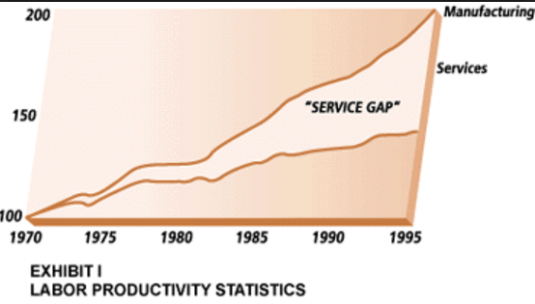
Source: Peter Kolesar, Garrett van Rysin and Wayne Cutler.
Any extra labour productivity from a living wage at the Wellington City Council is in doubt because low skilled service sectors are notorious for their low potential for productivity gains. They are the bread-and-butter of Baumol’s disease.

Source: Chris Rauchle.
It’s kicking the Wellington City Council when it is down to mention that low paid workers with families will lose a considerable part of the living wage increase because of reductions in their family tax credits – reductions in the Working for Families in-work tax credit. Any living wage increase at the Wellington City Council is the subject of multiple clawbacks by IRD. There is income tax, a 25% abatement rate on Working for Families tax credits on any family income above about $36,000 and 15% GST. All in all, the transfer out of the pockets of ratepayers to IRD would be at least one-third.
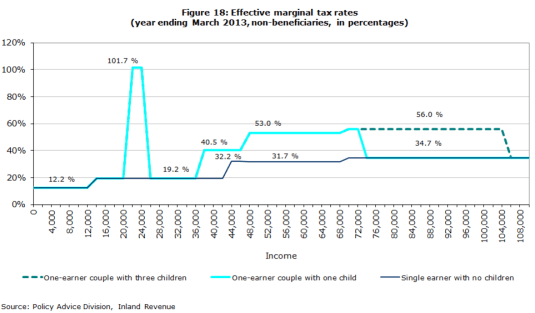
I have not included any accommodation supplement, childcare subsidy or community services card the low paid worker is receiving from WINZ. The winding back of these social benefits to the low paid worker and his or her family is a pointless transfer from Wellington City ratepayers to the national taxpayer.
It will be kicking Wellington City Council even further to remind of the enforcement and compliance costs of living wage ordinances in the USA at the city level.
The Wellington City Council this week acted against legal advice to require contractors under joint services agreements with other councils in the Wellington region to pay employees who work within the boundaries of Wellington city the living wage. The American cities had to define the minimum number of hours in a day that minimum wage workers who are mobile for their jobs had to spend within their city limits before their employer was subject to their living wage ordinance.
It is standard to put forward an efficiency wage argument for a living wage. The higher wage paid as result of the introduction of the living wage will motivate workers to work harder and cheer each other on.

Source: John Horton.
These workers paid the efficiency wage will require less supervision because under an efficiency wage, a rate of pay that is more than the going rate for their skills and experience with other employers and in other industries and occupations, these workers paid the efficiency wage have more to lose if disciplined or dismissed. By the way, the theory of the efficiency wages is an American theory where there is employment at will.
This additional effort and greater motivation from the efficiency wage, from the above market rate of pay, will reduce the costs of supervision to the employer of teams of employees as well as increase output per worker. This is supposed to offset some of the costs of the living wage increase.
At bottom, this efficiency wage hypothesis is entrepreneurs are unaware of the higher quality and greater self-motivation of better paid recruits for vacancies but wise bureaucrats and farsighted politicians notice these gaps in the market. Bureaucrats and politicians notice these gaps in the market before those who gain from superior entrepreneur alertness to hitherto untapped opportunities for profit do so and instead leave that money on the table.
I won’t mention that many of the modern theories of the firm focus, in part or in full on reducing opportunistic behaviour, cheating and fraud in employment relationships. The cost of discovering prices and making and enforcing contracts and getting what you pay for are central to the Coase’s theory of the firm put forward in 1937.
In Barzel’s (1982) theory of the firm, measurement costs drive the emergence and organisation of the firm. The firm arose to minimising the cost of measuring what is to be exchanged by bringing some of those measuring tasks in-house. Much of the organisation of the firm, including the degree of vertical and horizontal integration and many different forms of contracting are driven by ensuring owners and managers get what they pay for and are not overcharged through manipulation or cheating.
Alchian and Demsetz’s (1972) theory of the firm focused on moral hazard in team production. As they explain
Two key demands are placed on an economic organization-metering input productivity and metering rewards.
The main rationale in personnel economics from everything ranging from employer funding of retirement pensions to the structure of promotions and executive pay including stock options is around better rewarding self-motivating employees and reducing the costs of monitoring employee effort.

Source: Department of Labour (2009).
The profits of entrepreneurs for running a firm is directly linked from their successful policing of the efforts of employees and sub-contractors to ensure the team and each member perform as promised and individual rewards matched individual contributions (Alchian and Demsetz 1972; Barzel 1987). The entrepreneur is a residual claimant to the revenues of the firm net of paying all other inputs. Entrepreneurs must successfully police the contributions of their employers and contractors if they are to survive in competition. The better they are at this, the more the alert entrepreneur profits.
Every profit minded entrepreneur seeks to hire the group of workers with the lowest cost per unit of output produced by them. Those that do not will not survive in competition with more alert rivals. The trade-off between worker quality and wages in setting hiring standards is a routine entrepreneurial decision in every firm when recruiting:
Managers often say that their goal in hiring is to obtain the best quality workers. It sounds like a good idea, but is it? The most productive workers are also likely to be the most expensive. Should the goal instead be to hire the least expensive workers? …The best worker is not the cheapest, nor the most productive, but the one with the highest ratio of productivity to cost. We should hire as long as the marginal productivity of the last worker hired is greater than or equal to the cost of the worker.
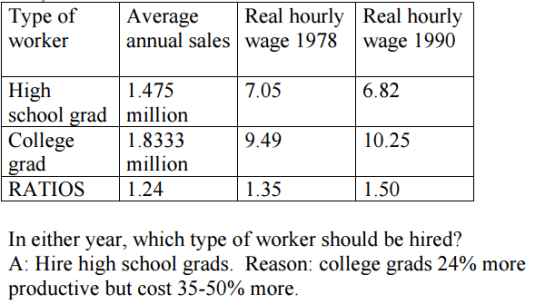
Source: Lazear and Gibbs.
@Noahpinion wants to use teenagers for policy experiments @arindube
28 Oct 2015 1 Comment
in applied price theory, labour economics, minimum wage, politics - USA, public economics Tags: expressive voting, Leftover Left, rational ignorance, rational irrationality
Noah Smith is OK with local experiments with higher minimum wages such as a $15 minimum wage in San Francisco. At least half of these workers sold out for minimum wage policy experiments will be teenagers and young adults.

Source: Finally, an Answer to the Minimum Wage Question – Noah Smith.
My most grating experience in the public service was reversing the slope of the demand curve for labour and education and training to argue that a minimum wage would increase opportunities for the low paid.
I drafted a briefing to the minister pointing out that minimum wage increases make investments in training less attractive to lower skilled workers. This is because the minimum wage increase increases the opportunity cost of training and reduces the rewards in terms of the wage increase. The would be trainee must give up a higher minimum wage in return for a smaller wage increase because the minimum wage increase swallows part of the wage premium from the now an increasingly pointless investment in training. There is only a small literature on the impact of the minimum wage on investment in human capital.
My manager told me to argue that increases in the minimum wage will make low skilled workers more likely to seek training. That conclusion was based on a consultant’s machine-gun econometrics research showing that the confidence interval was plus or minus regarding the minimum wage and employment training. This study contradicted everything known about the minimum wage and the incentive to invest in human capital. You do not increase of demand for human capital by reducing the rewards for investments in human capital.
Does a higher minimum wage really reduce employment? econ.st/1gp4Jbs http://t.co/WGMZGLKHmI—
The Economist (@EconBizFin) July 30, 2015
Back to Noah Smith. He admits freely that increases in the minimum wage reduce employment. He tries to ride out on the conclusion that that increase in unemployment after a small minimum wage increase isn’t much.

Source: Finally, an Answer to the Minimum Wage Question – Noah Smith.
Obviously the teenagers and adults thrown onto the scrapheap of society by the increased minimum wage don’t count in the brutal utilitarian calculus Noah Smith employs.
It's pretty simple: Minimum Wage = Compulsory Unemployment http://t.co/6xiX6YCp9Z—
Mark J. Perry (@Mark_J_Perry) July 25, 2015
Fortunately, many economists prefer Pareto improvements. This is where after a policy change at least one person gains and no one loses or at least the winners compensates the losers for their losses. Not so bad and isn’t much as suggested by Noah Smith for the welfare consequences of a minimum wage increase on unemployment are not good enough from an applied welfare economics perspective.
Most of the Left over Left are of the same view about the priority of losers and the need to compensate them whenever those evil neoliberals want to deregulate or remove the tariff. The Left over Left are completely preoccupied the fate of the workers who have lost their privileges from regulation or tariff protection rather than the consumers who are now richer. Without missing a beat, the Left over Left changes sides and become brutal utilitarians when it comes to the minimum wage and unemployment and investment in human capital.
Minimum wage advocates fail to take seriously that low paid workers who lose their jobs because of minimum wage increases are real living people who suffer when their interests are traded off for the greater good of their fellow low paid workers, some of whom come from much wealthier households. As Rawls pointed out, a general problem that throws utilitarianism into question is some people’s interests, or even lives, can be sacrificed if doing so will maximize total satisfaction. As Rawls says:
[ utilitarianism] adopt[s] for society as a whole the principle of choice for one man… there is a sense in which classical utilitarianism fails to take seriously the distinction between persons.
What is underplayed in the minimum wage debate is Noah Smith, Arindrajit Dube and other scholars are careful in what they say but politicians and living wage lobbyists don’t listen to those careful qualifications.
The key qualification of these academics is there are policy trade-offs that cannot be avoided when the minimum wage is increased. Some jobs will be lost if the minimum wage increases. Some say this effect is small, others say this effect is large, hardly anyone says it’s zero.

The claims that the minimum wage can be lifted without hurting employment are a long bow from what Andrajit Dube said about small changes in the minimum wage having small adverse effects on unemployment. What Andrajit Dube said is not much different from everyone else on the minimum wage – Nuemark is an example:
a 10 per cent increase in the minimum wage could reduce young adult employment by up to 2 per cent
David Card was always very careful amount about how his pioneering research was about how small increases in the minimum wage not reducing employment in the presence of search and matching costs:
From the perspective of a search paradigm, these policies make sense, but they also mean that each employer has a tiny bit of monopoly power over his or her workforce. As a result, if you raise the minimum wage a little—not a huge amount, but a little—you won’t necessarily cause a big employment reduction. In some cases, you could get an employment increase.
Noah Smith is wrong. We do know what will happen if the minimum wage is raised $15 per hour. Some people will lose their jobs. More importantly, there is a reduced incentive for the low paid to invest in skills to improve their earning power because the minimum wage is already delivered that assuming they still have a job.
In 1965 an editor at Look asked an MIT economist why "liberal" economists hadn't signed an anti-minimum wage letter. http://t.co/ONuQKIWhG7—
Garett Jones (@GarettJones) December 02, 2014
How you handle these casualties of policy changes such as minimum wage increases is a central dilemma of applied welfare economics. This dilemma is usually solved by pointing out that it’s far less risky in terms of employment and welfare improvements and losses to increase the Earned Income Tax Credit (EITC) because that places no jobs at risk.
Now along comes Steve Landsburg to point out that the incidence of an Earned Income Tax Credit (EITC) changes when there is a minimum wage, when there is a price floor. Remember everyone agrees that when there is an earned income tax credit, some of the benefits go to the employer. When you raise the EITC, more people enter the labour market. This increase in the supply of labour drives wages down, which transfers some of the benefit of the tax credit from the workers you intended to help to the employers but not all of the benefits of the tax credit.
Steve Landsburg shows that in any labour market where the minimum wage is above the wage that would prevail but for the minimum wage law, the minimum wage cannot fall to cope with the increase in labour supply induced by the earned income tax credit. For that reason, all of the benefits of the earned income tax credit go to employers. Employers can hire more people without having to increase the wage they offer above the minimum wage. As long as the minimum wage is above the market clearing wage, more people get a job as a result of the tax credit, but no one takes home pay that is higher than the minimum wage.
One of the purposes of applied price theory, the study of economic history and even labour econometrics is to spare us policy experiments that we already know that they will not turn out well.
Malcolm Turnbull sure is popular
27 Oct 2015 Leave a comment
in politics - New Zealand, Public Choice Tags: Australia, expressive voting, opinion polls, rational ignorance, rational irrationality, voter demographics
https://twitter.com/Mark_Graph/status/658769666748346368/photo/1
All the bookies I follow now giving the Coalition >80% #auspol bit.ly/1GwJgc4 https://t.co/2y3iPBnnnn—
Mark the Graph (@Mark_Graph) October 23, 2015
@NaomiAKlein agrees with #MiltonFriedman on Mancur Olson’s theory of how nations escape institutional sclerosis
25 Oct 2015 Leave a comment
in comparative institutional analysis, constitutional political economy, development economics, economic history, economics of bureaucracy, income redistribution, Marxist economics, Milton Friedman, Public Choice, rentseeking, technological progress Tags: expressive voting, interest groups, Leftover Left, logic of collective action, Mancur Olson, Naomi Klein, pressure groups, rational ignorance, rational irrationality, rise and decline of nations, Twitter left

Source: quoted by Naomi Klein in “The Shock Doctrine”.
LA premiere tonight @NaomiAKlein @avilewis @mrdannyglover in person Q&A 7.30pm sundancecinemas.com http://t.co/wRkPFbnUHu—
Changes Everything (@thischanges) October 16, 2015
1. There will be no countries that attain symmetrical organization of all groups with a common interest and thereby attain optimal outcomes through comprehensive bargaining.
2. Stable societies with unchanged boundaries tend to accumulate more collusions and organizations for collective action over time.
3. Members of “small” groups have disproportionate organizational power for collective action, and this disproportion diminishes but does not disappear over time in stable societies.
4. On balance, special-interest organizations and collusions reduce efficiency and aggregate income in the societies in which they operate and make political life more divisive.
5. Encompassing organizations have some incentive to make the society in which they operate more prosperous, and an incentive to redistribute income to their members with as little excess burden as possible, and to cease such redistribution unless the amount redistributed is substantial in relation to the social cost of the redistribution.
6. Distributional coalitions make decisions more slowly than the individuals and firms of which they are comprised, tend to have crowded agendas and bargaining tables, and more often fix prices than quantities.
7. Distributional coalitions slow down a society’s capacity to adopt new technologies and to reallocate resources in response to changing conditions, and thereby to reduce the rate of economic growth.
8. Distributional coalitions, once big enough to succeed, are exclusive, and seek to limit the diversity of incomes and values of their membership.
9. The accumulation of distributional coalitions increases the complexity of regulation, the role of government, and the complexity of understandings, and changes the direction of social evolution.
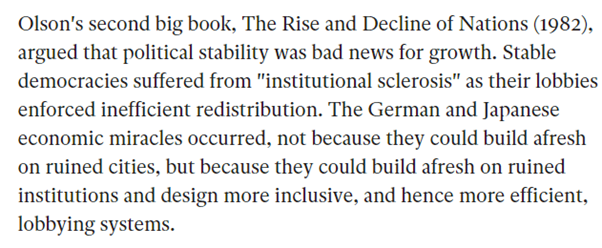
Source: Obituary: Professor Mancur Olson | Obituaries | News | The Independent
The truth about gun free zones
25 Oct 2015 Leave a comment
in applied price theory, economics of crime, economics of regulation, law and economics Tags: expressive voting, gun control, gun free zones, meddlesome preferences, nanny state, offsetting behaviour, rational rationality, unintended consequences
@CarlyFiorina says it all on action to fight global warming @jamespeshaw @AndrewLittleMP @garethmorgannz
24 Oct 2015 Leave a comment
in applied price theory, comparative institutional analysis, energy economics, environmental economics, global warming, Public Choice, rentseeking Tags: 2016 presidential election, climate alarmists, expressive voting, free riding, game theory, global warming, international public goods, rational ignorance, rational irrationality
@SeumasMilne could @jeremycorbyn win?
23 Oct 2015 Leave a comment
in constitutional political economy, Joseph Schumpeter, Public Choice Tags: British Labour Party, British politics, expressive voting, Leftover Left, rational ignorance, rational irrationality, Twitter left, voter demographics
Catch-Up Service: the popularity and unpopularity of Jeremy Corbyn's policies @IndyVoices independent.co.uk/voices/comment… http://t.co/9c9gmHzKFg—
John Rentoul (@JohnRentoul) October 16, 2015
While standard British Labour Party populist policies resonate with the electorate, all the policies that Jeremy Corbyn brings as a socialist, peacenik and renegade Liberal are deeply unpopular and will be used against him as wedge issues by the Tories.
The popularity of individual policies in the Labour Party manifesto didn’t do them any good at the 2015 general election.
Public don't think Corbyn will succeed – y-g.co/1MspFMb http://t.co/4jjHbfsktC—
(@YouGov) September 17, 2015
What matters to the voters at the last British general election was that brand Labour was down on the nose. It was not a credible alternative government.
Peter Kellner: Measuring the gap between Corbyn’s supporters and Labour’s target voters – y-g.co/1izSpph http://t.co/f1NaNL4xgt—
(@YouGov) September 25, 2015
Jeremy Corbyn makes that gap into a chasm because of the vast difference between what his supporters on the left of the Labour Party want and what the voters who must be persuaded to switch their vote for Labour to win in 2020 want as government policies.
Jeremy Corbyn 'twice as left-wing' as Ed Miliband – y-g.co/1LLWUsG http://t.co/no9euWcM2X—
(@YouGov) September 29, 2015
Jeremy Corbyn is much further to the left than Ed Miliband, who lost the election in 2015 rather badly because he was too far to the left for the taste of the British electorate.
Fascinating. Yawning chasm between why Labour members think they lost and why voters think they did. From @thetimes http://t.co/MvhZYI2CTr—
Joe Watts (@JoeWatts_) July 23, 2015
Ed Miliband was rejected in the 2015 British election because he was not a fiscal conservative nor a credible economic manager. The anti-austerity message loses votes.
The heaviest suicide note in history http://t.co/1xDQlnnWU7—
Phil Rodgers (@PhilRodgers) May 03, 2015
There is a yawning chasm between the reasons why the left of the Labour Party thinks their party lost the 2015 British general election and why Labour voters thought they lost the election.
Peter Mandelson in the New York Times on why Labour lost: nytimes.com/2015/05/20/opi… http://t.co/pzbIXOmwpX—
Alex Wickham (@WikiGuido) May 19, 2015
The anti-austerity message was one of the reasons why Labour lost in the eyes of its own voters and would-be voters in the centre of politics
Peter Kellner on Jeremy Corbyn as Britain’s least popular new opposition leader – y-g.co/1LdnNoP http://t.co/Ygyo8gV1uZ—
(@YouGov) October 05, 2015
The deep unpopularity of Jeremy Corbyn cannot be understated as a barrier to British Labour winning the next election.
That deep unpopularity of Jeremy Corbyn sacrifices the one winning advantage that British Labour has under Jeremy Corbyn. That advantage is governments tend to lose elections rather than oppositions win them.
Schumpeter disputed the widely held view that democracy was a process by which the electorate identified the common good, and a particular party was then elected by the voters because it was the most suited to carrying out this agreed common good:
- The people’s ignorance and superficiality meant that they were manipulated by politicians who set the agenda.
- Although periodic votes legitimise governments and keep them accountable, their policy programmes are very much seen as their own and not that of the people, and the participatory role for individuals is limited.
Schumpeter’s theory of democratic participation is voters have the ability to replace political leaders through periodic elections.
Citizens do have sufficient knowledge and sophistication to vote out leaders who are performing poorly or contrary to their wishes. The power of the electorate to turn elected officials out of office at the next election gives elected officials an incentive to adopt policies that do not outrage public opinion and administer the policies with some minimum honesty and competence.
Denis Healey's speech to Labour conference after 1959 defeat. http://t.co/BTdbfJj147—
Stephen Bush (@stephenkb) October 03, 2015
Power rotates in the Schumpeterian sense. Governments were voted out when they disappointed voters with the replacement not necessarily having very different policies.
Here is the Commons motion slamming Corbyn as a threat when the IRA bomber row broke in 1987: sunnation.co.uk/jeremy-corbyn-… http://t.co/KiOEUkqi9a—
Harry Cole (@MrHarryCole) September 19, 2015
The challenge for British Labour is Corbyn cannot win unless he projects minimal competence and stops having policies on defence, foreign affairs and terrorism that outrage public opinion.
Jeremy Corbyn has plenty of outrageous opinions and is yet to show even the most basic competence in running the office of opposition leader, working 24/7 as opposition leader, and showing some ability to win support from members of the Parliamentary Labour Party. If Jeremy Corbyn cannot win votes of his own MPs, what chance do he have with the British people whose interests he claims to champion.

@oxfamnz @GreenpeaceNZ Further evidence of mass kidnappings of principled environmentalists – indoor pollution version
23 Oct 2015 Leave a comment
in applied price theory, applied welfare economics, development economics, economics of regulation, environmental economics, health economics Tags: expressive voting, indoor air pollution
4.3 million die every year. Indoor air pollution is the least reported problem of the world. bit.ly/1BfMiZg https://t.co/yZRcl9vWoa—
Max Roser (@MaxCRoser) October 22, 2015

The deadliest environmental problem today is indoor air pollution — killing 4 million a year. vox.com/2014/9/15/6150…http://t.co/xtwLRfkVF2—
Vox Maps (@VoxMaps) June 11, 2015
Imagine if @HillaryClinton had a serious opponent, not @BernieSanders
19 Oct 2015 Leave a comment
in politics - USA Tags: 2016 presidential election, expressive voting, Leftover Left, rational ignorance, rational rationality, Twitter left
Hillary Clinton's drop in the polls is precipitous, but it may not be fatal. Here's why: bloom.bg/1L1ahTD http://t.co/WpCL0JT2Kj—
Bloomberg Politics (@bpolitics) October 18, 2015
What Upshot would have said if Joe Biden had decided to run. nyti.ms/1ZYvTbk https://t.co/Bd2VS4wb50—
The Upshot (@UpshotNYT) October 22, 2015
@GreenpeaceNZ @jamespeshaw The Futility and Farce of Global Climate Negotiations @RichardTol
18 Oct 2015 Leave a comment
in constitutional political economy, development economics, economics of bureaucracy, environmental economics, environmentalism, global warming, growth disasters, growth miracles, international economics, politics - Australia, politics - New Zealand, politics - USA, Public Choice, rentseeking Tags: bootleggers and baptists, climate alarmism, expressive voting, free-riders, global warming, green tariffs, international public goods, Leftover Left, New Zealand Greens, Twitter left
It is time for the environmental movement to face up to the fact that there never will be an international treaty to restrain carbon emissions. The practical way to respond to global warming is healthier is wealthier, richer is safer. Faster economic growth creates more resources for resilience and adaptation to a changing environment.
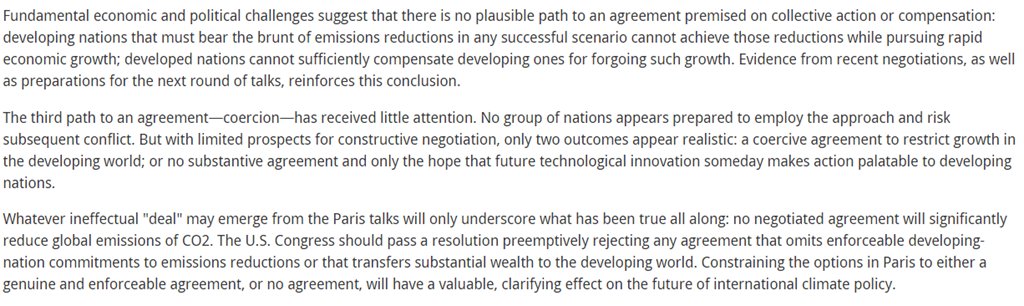
NEW REPORT: The Futility and Farce of Global Climate Negotiations bit.ly/1LvFFv3 http://t.co/TwbFUwaPlm—
Manhattan Institute (@ManhattanInst) October 17, 2015
India's target compared to its recent history http://t.co/pIvwhoSTpL—
Richard Tol (@RichardTol) October 02, 2015
@BernieSanders are the rich getting richer & poor getting poorer or are just men getting their comeuppance?
16 Oct 2015 Leave a comment
in applied welfare economics, economic history, politics - USA Tags: 2016 presidential election, expressive voting, gender wage gap, Leftover Left, middle class stagnation, reversing gender gap, top 1%, Twitter left, wage stagnation
The Typical Male U.S. Worker Earned Less in 2014 Than in 1973: blogs.wsj.com/washwire/2015/… http://t.co/PmTmmfsfbE—
Demos Action (@DemosAction) September 21, 2015
For the first time ever, women are more likely to have bachelor's degrees than men. vox.com/2015/10/13/951… http://t.co/ffK7iiU2Kq—
Demos (@Demos_Org) October 14, 2015
An American President on what @nzlabour @NZGreens have become (on housing affordability and trade and investment)
15 Oct 2015 Leave a comment
in politics - New Zealand, Public Choice, rentseeking Tags: American President, expressive voting, New Zealand Greens, New Zealand Labour, rational ignorance, rational irrationality
 Utopia, you are standing in it!
Recent Comments