The paleo diet explained
15 Oct 2015 Leave a comment
in economics of media and culture Tags: dietary fads, food snobs
It was not a sell-out for me to buy organic pumpkin soup tonight
01 Oct 2015 Leave a comment
in economics of media and culture, environmental economics, health economics Tags: carbon footprint, food prices economics of agriculture, food snobs, green rent seeking, organic food, The meaning of competition
It just happen to be cheaper tonight otherwise I would never go over to the dark side. Organic has a worse carbon footprint and uses DHMO, but I do not care either way for this crime against the climate I just committed.

The Paleo diet is absurd, science says
15 Aug 2015 Leave a comment
in economics Tags: food snobs, quackery, Quacks
I’m worried! I’m sympathising with organic farmers over a land use conflict!
06 Aug 2015 1 Comment
in applied price theory, applied welfare economics, economics of regulation, industrial organisation, law and economics, politics - New Zealand, property rights, Public Choice, rentseeking, Richard Epstein, survivor principle Tags: common law, economics of agriculture, food snobs, green rent seeking, land use conflicts, land use planning, law of nuisance, noise pollution, nuisance, old common law, organic farming, Richard Epstein, William Blackstone, zoning
Writing this blog of sound mind and sober disposition, I still have considerable sympathy with two organic farmers over a land use conflict they have with the neighbouring gun range.

Local land use regulations allows a gun club to set up 600 m away with competitive shooting days all day for 88 days a year. That is a voluntary self restraint. They could hold shooting competitions every day of the year. The local land use regulations allow the use of guns on rural land. The gun club used this absence of a prohibition on the use of guns in the frequency of use to set up a gun range to fire guns all day long on rural land.

Now here is the rub. There something wrong with the concept of quiet enjoyment of your land if a neighbour can fire off a large amount of noises continuously. The occasional noise, the occasional gunshot yes, but all day? I live near the airport, but I knew it was there when we bought the property and the lands was a little cheaper because of that.
The organic farmers are unusually pristine and prissy about what they want by neighbours to protect the sacredness of their more expensive snob food. I’m not too sure whether they would want to grant their neighbours an equal right to unusual land uses such as opening a gun range. That said, the organic farmers do have a point about a very noisy neighbouring land use that can be heard some distance away.
The organic farmers, of course, could have negotiated with their neighbours for covenants to restrict land use that undermine there are unusually pristine requirements for quiet enjoyment of their land and their neighbours land too. Easy to do when the land is first unused, but once economic activity accumulates, not so easy in terms of transaction costs and hold-outs.

Is organic farming sustainable farming?
16 Jul 2015 Leave a comment
in environmental economics, environmentalism Tags: agricultural economics, food snobs, organic farming, The Great Escape, The Great Fact
Is a Paleo Diet Healthy?
24 Jun 2015 Leave a comment
in health economics Tags: fads, food snobs, Paleo Diet
I've eaten paleo since before it was named "Is a Paleo Diet Healthy?" -@WSJ on.wsj.com/1ECneNM @waldemaringdahl http://t.co/HIqLNzg7DN—
Old Whig (@aClassicLiberal) March 23, 2015
Yield of organic crops as percentage of conventional crops
16 Jun 2015 Leave a comment
in environmental economics, environmentalism, health economics, politics - Australia, politics - New Zealand, politics - USA Tags: agricultural economics, food snobs, organic farming
Yield of organic row crops as percentage of conventional
ganaderiayagro.blogspot.com/2015/05/organi… http://t.co/pjdbNEhvSH—
C. S. Prakash (@AgBioWorld) June 01, 2015
Why organic food costs more? -relative yield vs. conventional
ganaderiayagro.blogspot.com/2015/05/organi… http://t.co/xWcQiJoZ6K—
C. S. Prakash (@AgBioWorld) June 01, 2015
Profits Are So High, Why Don’t More Farmers Switch To Organic?
02 Feb 2015 Leave a comment
in economics of information, economics of religion, health economics, occupational regulation Tags: compensating differentials, consumer fraud, entrepreneurial alertness, expressive voting, food snobs, organic farming, reputational capital, social norms

HT: Yet Again, Organic Ag Proves Just as Productive as Chemical Ag | Mother Jones.
The increase is partly because more farmers are taking advantage of the healthier profit margins and partly because organic marketing groups sell a health food mythology where cost is not a factor, so costs can rise along with more product. It is a miracle of capitalism.
But given a consumer-base that is wealthy and that is educated by advertising so completely, why don’t all farmers switch?It just takes paying for a sticker and promising to use an organic toxic chemical rather than a synthetic one, there is no testing of organic food, so it would be easy to just make more money.
The reason more don’t move to organic, according to a paper in the Journal of Marketing, is because conventional farmers know in their hearts and minds they are deceiving the public if they switch – making that change is like switching belief systems.
via “Chemical Farmers”: Profits Are So High, Why Don’t More Farmers Switch To Organic?.
Adam Smith wrote about religion in the Wealth of Nations in part because how it infused moral fibre into market dealings. Smith offered a theory explaining the participation of individuals in religion based on his theory of human capital.
In particular, businessmen want to signal to customers that they were moral upstanding people who will not cheat them because that would be against their own moral code and sense of self-respect.
For this reason, Adam Smith suggested that religious sects proliferating in cities because people wanted to join them as a way of signalling they were morally upstanding people. These sects were demanding and rigourously policed the morals of their membership and expelled those who fell in any way short.
A reputation for honesty is both an entrepreneurial investment as well as a way of living a decent life.
People value their reputations and self-respect for being a good and decent man or woman, but some do so more than others. This is why the wage premium under the theory of compensating differentials is large enough only for the trailing edge of the business community. What is that premium?
In 2011, [the] organic premium for a bushel of wheat was 52.2% after factoring in reduced yield per acre of organic production versus total [chemical] average yield per acre. In other terms, [chemical] wheat would have had to have yielded over 53 bushels [a two-thirds increase] per acre to match organic return per acre. (Ted Craig, Wyoming Department of Agriculture, personal communication)
Being an organic farmer is somewhat trendy these days and raises you in the eyes of many but not all. As such, self-respect rather than reputation would be the bigger driver of how large the compensating differential must be before more move to organic farming.
Organic yield gap shrinking? Study actually shows it’s less sustainable than conventional agriculture
22 Jan 2015 Leave a comment
in applied price theory, applied welfare economics, health economics, industrial organisation, survivor principle Tags: activists, Anti-Science left, food snobs, Leftover Left, organic farming, Quacks

Who chooses to be a vegetarian?
06 Dec 2014 Leave a comment
in applied welfare economics, development economics, economics of media and culture, growth disasters, growth miracles, population economics, technological progress Tags: food snobs, growth disasters, growth miracles, The Great Escape, The Great Fact
How to sell a toxic pesticide the smart way–call it organic | Genetic Literacy Project
29 Oct 2014 Leave a comment
in economics of regulation, environmental economics, health economics Tags: food safety, food snobs, Quacks

If you are a pesticide company wondering how you can sell a product without being caught in a cultural crossfire, I have good news.
There is a template for marketing success you can use free of charge, courtesy ofMcLaughlin Gormley King Company (MGK) and Valent, which recently announced a sales partnership: Make a toxic chemical cocktail that meets National Organic Program standards and then have the product sold by a subsidiary to foster the perception that it’s a family-run organic companies and not part of the same multinational chemical conglomerate.
via How to sell a toxic pesticide the smart way–call it organic | Genetic Literacy Project.


Food snobs alert: organic food discriminates against diabetics
27 Aug 2014 Leave a comment
in health economics, liberalism Tags: diabetes, food snobs, killer green technologies, organic cola, organic food
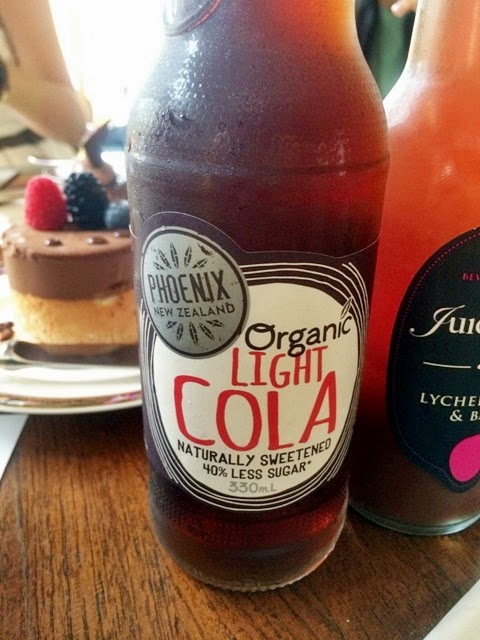
I arrived at an isolated Auckland cafe on Monday, thirsty as can be, and discovered much to my horror that it only sold organic food. This meant no Diet Coke, no Coke Zero, to quench my thirst quickly.
There was was only a light organic cola that was 40% less sugar. For diabetics such as me that is 60% too much sugar.
To add fuel the fire, the common symptom of diabetes, you can be thirsty all the time.
Organic food is not healthy if is unhealthy for people with chronic illnesses to eat or drink it for most basic functions of life such as quenching your thirst.
With diabetes, it is not wise to drink sweet things on a one-off basis such as this because you might remember how nice they are to drinking and lose discipline in your diet.
Out of 4.3 million New Zealanders, about 210, 000 people are affected with diabetes.

 Utopia, you are standing in it!
Recent Comments