Steven Pinker: 5 Main Sex Differences in Cognitive Abilities
22 Dec 2017 Leave a comment
in economics of education, gender, human capital, labour economics, occupational choice Tags: gender gap
Another gender gap that dare not speak its name
10 Nov 2017 2 Comments
in economic history, gender Tags: gender gap
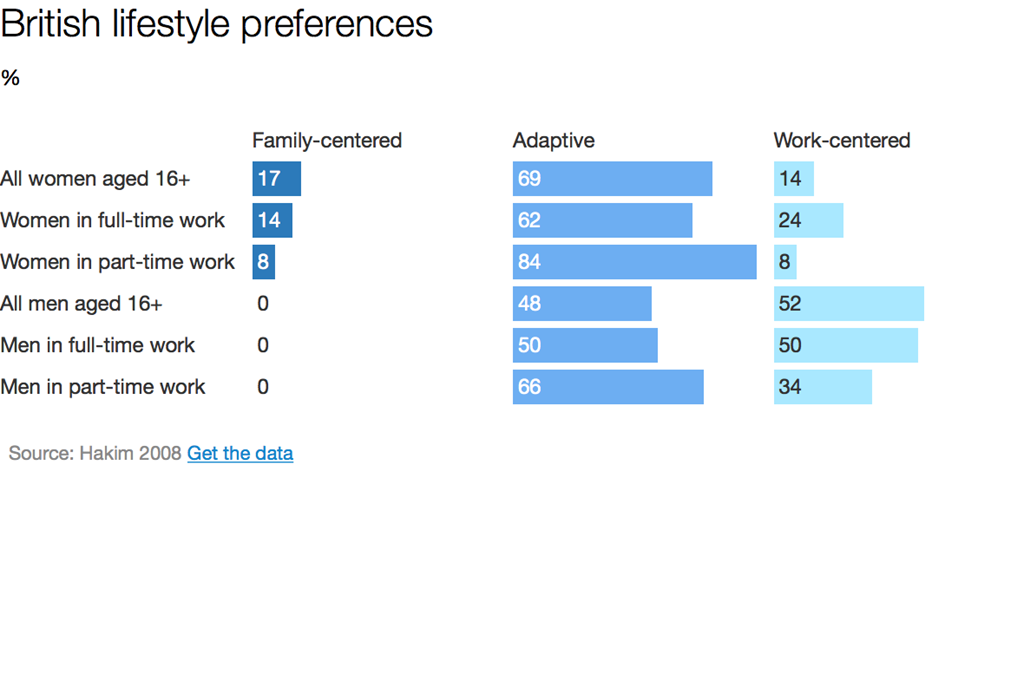
Another way of saying that the superior reading and verbal skills of women directs them towards interactive occupations
10 Nov 2017 Leave a comment
in discrimination, economics of education, gender, human capital, labour economics, labour supply, occupational choice Tags: gender gap
A gendered division of labour and household effort
30 Apr 2017 Leave a comment
in discrimination, economics of love and marriage, gender, labour economics, labour supply Tags: gender gap, gender wage gap, household production, housework, leisure time, marriage and divorce
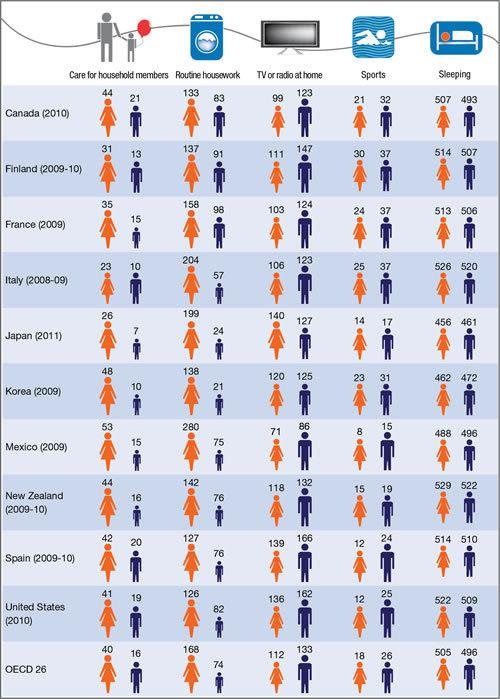
A major factor driving the gendered division of labour and household effort is technology. Tiny differences in comparative advantage such as in child rearing immediately after birth can lead to large differences in specialisation in the market work and in market-related human capital and home production related work and household human capital (Becker 1985, 1993).
These specialisations are reinforced by learning by doing where large differences in market and household human capital emerge despite tiny differences at the outset (Becker 1985, 1993). This gendered division of labour and household effort is hard to change because large payments must be made to influence choices about care giving by highly specialised people with large but different accumulations of market and household human capital.
From a luck egalitarian perspective, many of the differences in earnings and occupations flow accidents of birth in deciding gender and who parents might be. Social inequalities that flow from brute bad luck call for interventions to put them right, if they work.
Many laws already make up for brute bad luck such as job protections while on maternity leave, and government funded parental leave pay and child care subsidies. Employers can do little to redress these accidents of birth nor do they have sufficient resources to put them right. For this reason, for example, parental leave pay is usually taxpayer funded rather than employer funded.
…
More on who is winning the battle of the sexes
09 Feb 2017 Leave a comment
in discrimination, economics of education, gender, human capital, labour economics Tags: behavioural genetics, educational psychology, gender gap, gender wage gap, reversing gender gap

Speaking of the equality of the sexes
06 Feb 2017 Leave a comment
in discrimination, economics of education, gender, labour economics, labour supply, occupational choice Tags: behavioural genetics, compensating differentials, educational psychology, gender gap, reversing gender gap
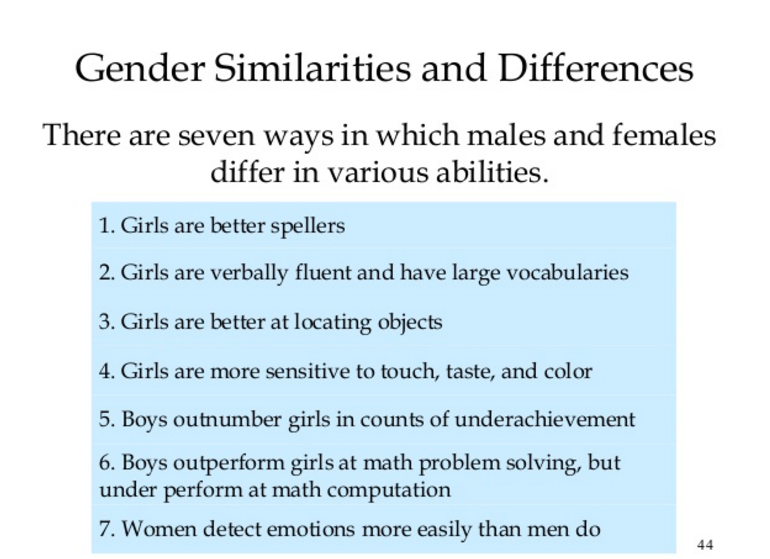
Steven Pinker on the biology of sex differences
24 Dec 2016 Leave a comment
in applied price theory, discrimination, gender, labour economics Tags: gender gap, political correctness
Women Working: What’s the Pill Got to Do With It?
01 Dec 2016 Leave a comment
in applied price theory, discrimination, economic history, economics of education, gender, health economics, human capital, labour economics, labour supply, occupational choice Tags: contraception, gender gap, gender wage gap
Almost all men are stronger than almost all women
30 Aug 2016 Leave a comment
in gender, health economics, labour economics Tags: economics of physiology, gender gap

The gender commuting gap between mothers and fathers
28 Aug 2016 Leave a comment
in discrimination, economics of love and marriage, gender, human capital, labour economics, labour supply, occupational choice, poverty and inequality, transport economics Tags: asymmetric marriage premium, commuting times, compensating differentials, female labour force participation, gender gap, gender wage gap
The first three bars in each cluster of bars are for men. in almost all countries mothers with dependent children spend less time commuting than childless women. This might suggest that working mothers have found workplaces closer to home than women without children. The gender gap in commuting where it is present in the country is larger than the gap between mothers and other women in their commuting time.
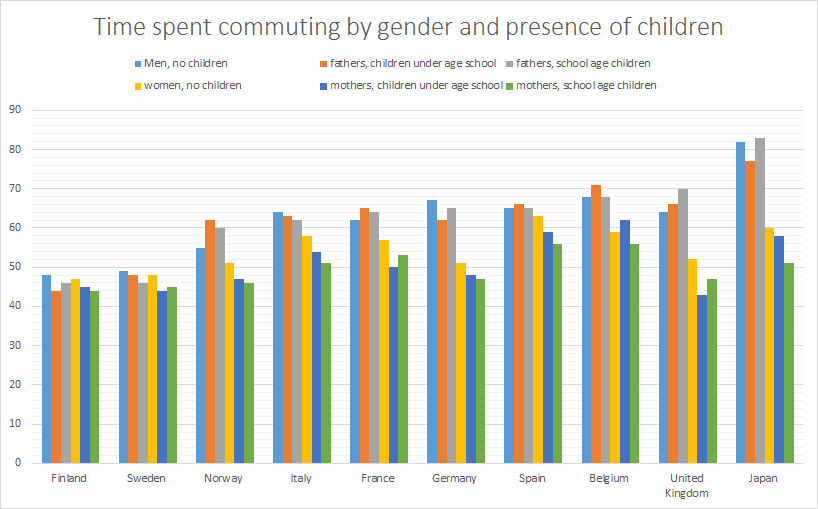
Source: OECD Family Database – OECD, Table LMF2.6.A.
Is it merchandising that drives gender bias in Hollywood casting?
17 May 2016 Leave a comment
in discrimination, economics of media and culture, gender, industrial organisation, labour economics, labour supply, occupational choice, survivor principle Tags: entrepreneurial alertness, gender gap, gender wage gap, Hollywood economics

Iron Man 3 changed the gender of the film’s villain from female to male after pressure from the production company Marvel, which feared toy merchandise would not sell as well.
This is a rather frank admission of what drives gender bias in Hollywood casting decisions. Its customer preferences – customer discrimination. It was not nasty producers and directors choosing not to hire women.
It was producers and directors casting a movie that might sell at the box office given what the box office wants. The great majority of box office sales is outside of the USA and US cultural values, interests and concepts of humour.

Hollywood is a cutthroat market where producers and directors do do whatever it takes to make their movie sell at the box office. But would not last very long if they indulge their personal preferences at the expense of the box office.
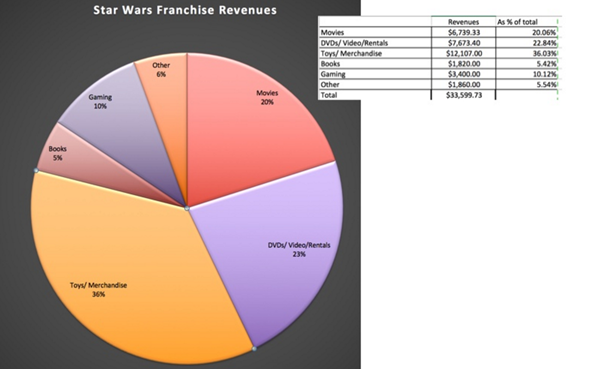
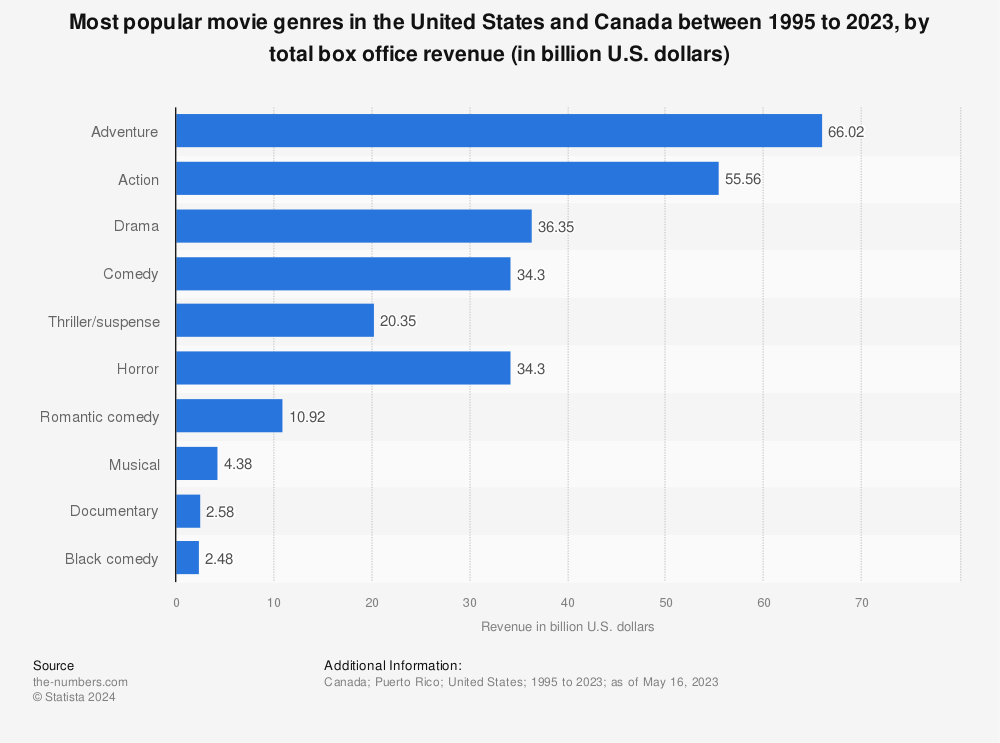
Not every movie has the merchandising potential of action films but they still have to pay careful attention to what audiences want to avoid having produced a run of flops and never get financing again.
That is not made any easier by the first law of Hollywood economics, which is nobody knows nothing. Audiences have a constant demand for novelty but they do not know what they want delay see it.
 Utopia, you are standing in it!
Recent Comments