@GreenpeaceNZ @RusselNorman Can We Rely on Wind and Solar Energy? @NZGreens
02 Nov 2015 Leave a comment
in energy economics, environmental economics, global warming, politics - Australia, politics - New Zealand, politics - USA Tags: Big Solar, Big Wind, bootleggers and baptists, expressive voting, green rent seeking, rational irrationality, renewable energy, solar power, wind power
Range anxiety is the least of Tesla’s problems – check out the price!
19 Oct 2015 Leave a comment
in politics - USA, transport economics Tags: electric cars, green rent seeking, Tesla
Tesla destroys the competition when it comes to how far its cars go on one charge buff.ly/1LphuLg http://t.co/UhIAECZIFp—
Business Insider (@businessinsider) October 17, 2015
Leaked letter shows how @Oxfam @sierraclub lobbied to block cheap energy for poor nations @GreenpeaceNZ @oxfamnz
12 Oct 2015 Leave a comment
in development economics, energy economics, entrepreneurship, environmental economics, environmentalism, growth disasters, growth miracles Tags: energy poverty, expressive voting, global poverty, green rent seeking, Leftover Left, Oxfam, rational ignorance, rational irrationality, stream poverty, The Great Escape
https://twitter.com/MichaelBTI/status/651503672002785281
Outrageous & Orwellian for @Oxfam to lobby to deny cheap energy to poorest people in world. #ElectrifyAfrica http://t.co/b2P09Gn7rP—
Mike Shellenberger (@MichaelBTI) October 06, 2015
Oxfam world HQ looks like such a pleasant place to work. Grid electricity. Effective security. Ample parking. http://t.co/lsxTf2DN6b—
Mike Shellenberger (@MichaelBTI) October 06, 2015
Here's @Oxfam's luxury office building in UK. Were its steel & glass components constructed with solar panels? http://t.co/642mm2zB4B—
Mike Shellenberger (@MichaelBTI) October 06, 2015
https://twitter.com/MichaelBTI/status/651458416569909248
https://twitter.com/VoxMaps/status/608411758022291456/photo/1?ref_src=twsrc%5Etfw
Energy poverty and Euro inflation rates
04 Oct 2015 Leave a comment
in energy economics, environmental economics, global warming Tags: climate alarmism, energy poverty, energy prices, EU, green rent seeking, power prices
I wonder what caused that negative inflation print? ec.europa.eu/eurostat/docum… http://t.co/rYI5VnZOzI—
Lorcan Roche Kelly (@LorcanRK) September 30, 2015
@World_Wildlife on the cost of moving to a low carbon economy @jamespeshaw @GreenpeaceNZ @NZGreens
01 Oct 2015 Leave a comment
in applied price theory, environmental economics, global warming, Public Choice, rentseeking Tags: climate alarmism, evidence-based policy, expressive voting, global warming, green rent seeking, low carbon economy, rational ignorance, rational rationality

It was not a sell-out for me to buy organic pumpkin soup tonight
01 Oct 2015 Leave a comment
in economics of media and culture, environmental economics, health economics Tags: carbon footprint, food prices economics of agriculture, food snobs, green rent seeking, organic food, The meaning of competition
It just happen to be cheaper tonight otherwise I would never go over to the dark side. Organic has a worse carbon footprint and uses DHMO, but I do not care either way for this crime against the climate I just committed.

Who profits from #climatechange alarmism #COP21 and #roadtoparis
23 Aug 2015 Leave a comment
in applied price theory, environmental economics, environmentalism, global warming, labour economics, occupational choice, personnel economics, Public Choice, rentseeking Tags: bribery and corruption, conjecture and refutation, consultants, green hypocrisy, green rent seeking, Left-wing hypocrisy, public intellectuals
https://twitter.com/RogerAPielkeSr/status/627888796562927616/photo/1
A schematic of climate system from nap.edu/openbook.php?r… Changes are much more than changes in CO2 concentrations http://t.co/g8gs44UnN8—
Roger A. Pielke Sr (@RogerAPielkeSr) August 05, 2015
@NZGreens @TransportBlog cars rule in Auckland! Auckland commuting times by transport mode
21 Aug 2015 1 Comment
in job search and matching, labour economics, occupational choice, politics - New Zealand, transport economics, urban economics Tags: Auckland, bicycles, commuting times, compensating differentials, expressive voting, green rent seeking, Inner-city Left, New Zealand Greens, public transport, rational irrationality, search and matching, The fatal conceit, The pretense to knowledge
I am not surprised only 7% of Auckland’s take public transport to work considering it takes much longer than any other form of commuting.
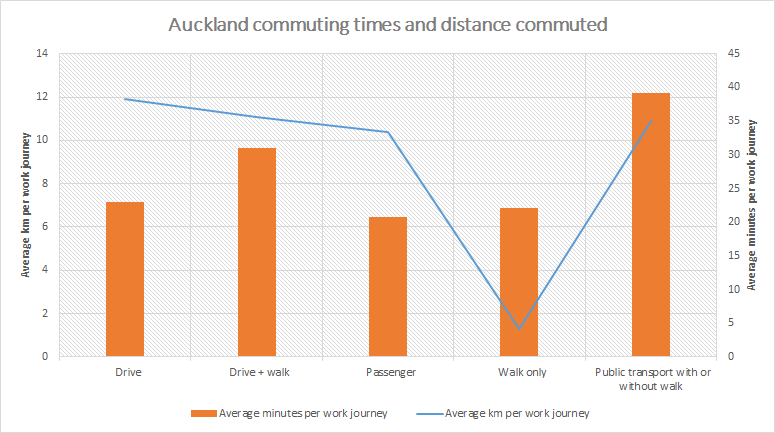
The average commute by public transport is 40 minutes as compared to less than 25 in a car. 74% of Aucklanders drive to work and another 9% are a passenger in a car.
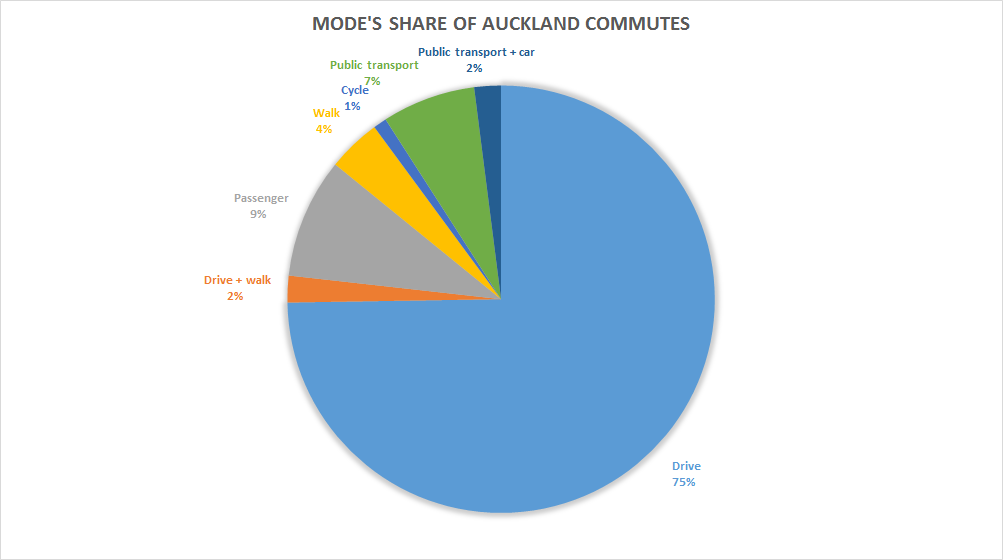
No information was available on those who bike to work because only 1% of Aucklanders bike to work. Only 2% of all New Zealanders take a bike to work. The sample size was therefore too small. Yet another reason to ban bikes at night. Few commute on this mode of transport in Auckland.
The near identical commuting distances irrespective of the mode of transport except walking is further evidence that people are quite discerning in balancing commuting times and job selection as per the theory of compensating differentials. Indeed, average commuting times in Auckland are much the same as the average commuting time in America.

The Auckland transport data showing people commute much the same distance by any mode of transport bar walking also validates Anthony Downs’ theory of triple convergence.

Improving the commuting times in one mode of transport will mean people simply take the mode of peak hour transport that is suddenly become less congested while others who were not going to commute at peak times or start commuting at peak times as Anthony Downs explains:
If that expressway’s capacity were doubled overnight, the next day’s traffic would flow rapidly because the same number of drivers would have twice as much road space.
But soon word would spread that this particular highway was no longer congested. Drivers who had once used that road before and after the peak hour to avoid congestion would shift back into the peak period. Other drivers who had been using alternative routes would shift onto this more convenient expressway. Even some commuters who had been using the subway or trains would start driving on this road during peak periods.
Within a short time, this triple convergence onto the expanded road during peak hours would make the road as congested as it was before its expansion.
Henry Hazlett on why economics is so difficult
20 Aug 2015 Leave a comment
in applied price theory, applied welfare economics, comparative institutional analysis, constitutional political economy, economics of bureaucracy, income redistribution, Public Choice, rentseeking Tags: antiforeign bias, antimarket bias, bootleggers and baptists, green rent seeking, Henry Hazlett, makework bias, methodology of economics, philosophy of economics
The track record on banking on solar energy innovation becoming cost competitive
18 Aug 2015 Leave a comment
in economic history, energy economics, entrepreneurship, environmental economics, global warming, politics - USA, Public Choice, rentseeking Tags: Big Solar, creative destruction, green rent seeking, renewable energy, renewable resources, solar energy
@metiria @NZGreens child poverty is driven by housing unaffordability – by Green opposition to RMA reform
13 Aug 2015 1 Comment
in applied welfare economics, economic history, economics of regulation, labour economics, politics - New Zealand, poverty and inequality, urban economics Tags: antimarket bias, child poverty, expressive voting, family poverty, green rent seeking, housing affordability, land use planning, Leftover Left, New Zealand Greens, NIMBYs, rational ignorance, rational irrationality, RMA, zoning
#moreinclusivenz @povertymonitor Killer graphs & #infographics by NZ Children's Commissioner. Shameful content, NZ http://t.co/mG987C5kh0—
Isabella Cawthorn (@fixiebelle) July 26, 2015
Nothing much has happening to child poverty before housing costs in New Zealand since the early 1980s. It is after housing costs poverty that is crucifying the children in New Zealand.
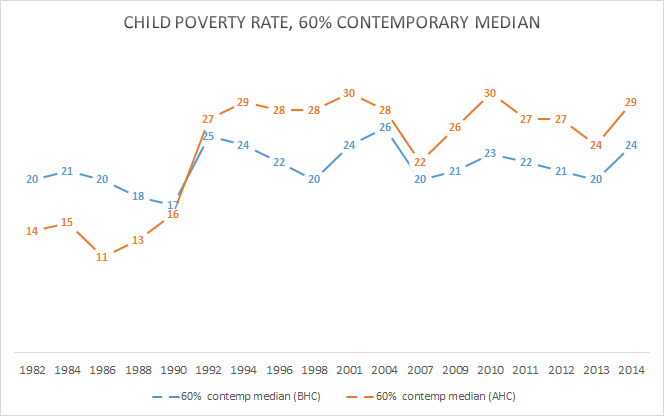
Source: Bryan Perry, Household Incomes in New Zealand: trends in indicators of inequality and hardship 1982 to 2014 – Ministry of Social Development, Wellington (August 2015), Table F6 and table F7.
An economy that is not working for all of us, is simply not working. http://t.co/zZu0LOy7ED—
Green Party NZ (@NZGreens) August 13, 2015
From HES 2013 to HES 2014 median household income rose 5% in real terms (5% above the CPI inflation rate)…
On the AHC moving line measures, child poverty rates in HES 2014 are around the same as their peak after the GFC. A good amount of the rise from HES 2013 to HES 2014 is due to the large rise in the BHC median, as noted above, rather than a change in the numbers in low income per se.
The parties that oppose measures to increase the supply of land and reduce the cost of housing through reform of the Resource Management Act and its many restraints on the supply of land are the New Zealand Labour Party and New Zealand Greens.
Children's views on poverty #childpovertynz occ.org.nz/assets/Uploads… http://t.co/wZHJ19QcpN—
Child Poverty NZ (@povertymonitor) September 08, 2015
Liberal voting cities markets have higher income inequality and worse affordability
12 Aug 2015 Leave a comment
in politics - New Zealand, politics - USA, Public Choice, rentseeking, urban economics Tags: Director's Law, expressive boating, green rent seeking, housing affordability, land supply, land use planning, Left-wing hypocrisy, NIMBYs, rational ignorance, rational irrationality, zoning
All homeowners have an incentive to stop new housing because if developers build too many homes, prices fall, and housing is many families’ main asset. But in cities with many Democrats and Green Party members, environmental concerns might also be a factor. The movement might be too eager to preserve the past.

via Why Middle-Class Americans Can’t Afford to Live in Liberal Cities – The Atlantic.
@GreenpeaceNZ is the zenith of the Anti-science Left in New Zealand
09 Aug 2015 Leave a comment
in economics of regulation, environmental economics, environmentalism, health economics, Public Choice, rentseeking Tags: antiscience left, expressive voting, GMOs, green rent seeking, Greenpeace, Left-wing hypocrisy, precautionary principle, rational ignorance, rational irrationality
US researchers: the idea that global warming has slowed is "no longer valid" grnpc.org/IgDMn via @BBCWorld http://t.co/bIDhaWPV3r—
(@Greenpeace) June 05, 2015
Brace yourself. Global warming is 'set to speed up to rates not seen for 1,000 years.' bit.ly/1x8TnKd http://t.co/pLTprLEiIm—
Greenpeace USA (@greenpeaceusa) March 09, 2015
Are we doomed? Global temperatures hit critical point, scientists warn. bit.ly/1DWkJq7 via @EcoWatch http://t.co/VRT7DH3stN—
Greenpeace USA (@greenpeaceusa) August 01, 2015
Analysing environmental benefits from driving electric vehicles
09 Aug 2015 Leave a comment
in applied welfare economics, energy economics, environmental economics, global warming, politics - USA, Public Choice, rentseeking Tags: coal power, electric cars, green rent seeking, hydroelectric power, nuclear energy, nuclear power, offsetting behaviour, The fatal conceit, The pretense to knowledge, unintended consequences
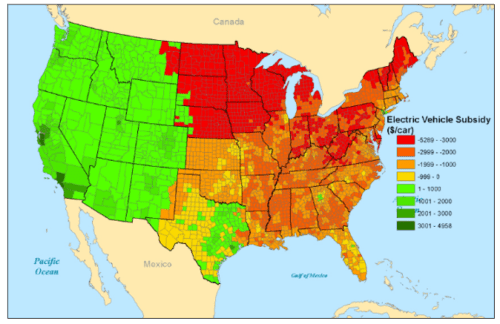
- The benefit is large and positive in many places in the west because the western electricity grid is relatively clean – primarily a mix of hydro, nuclear, and natural gas.
- The benefit is large and negative in many places in the east because the eastern electricity grid primarily relies more heavily on coal and natural gas.
via Economist’s View.
The case for organic farming
08 Aug 2015 Leave a comment
in economics of media and culture, environmental economics, health economics, industrial organisation, survivor principle Tags: agricultural economics, cranks, green rent seeking, organic farming, quackery
Which countries devote the most land to organic #agriculture? wef.ch/1P42qpv http://t.co/q1YstjyrSu—
World Economic Forum (@wef) August 05, 2015
 Utopia, you are standing in it!

Recent Comments