
Real housing prices since 1975
04 Apr 2017 Leave a comment
in economic history, economics of regulation, politics - Australia, politics - New Zealand, politics - USA, urban economics Tags: housing affordability, land affordability, land supply, zoning

.


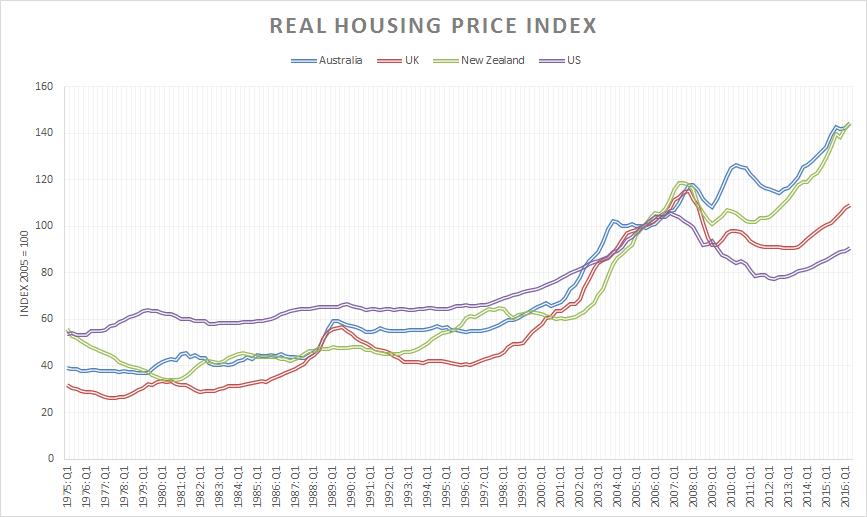
US, Australian and NZ real house prices, March 1975 to June 2016
08 Nov 2016 Leave a comment
in economic history, politics - Australia, politics - New Zealand, politics - USA, urban economics Tags: Australia, housing affordability
More on the emergence of Generation Rent in New Zealand
28 Sep 2016 Leave a comment
in applied welfare economics, economic history, politics - New Zealand, urban economics Tags: Generation Rent, housing affordability

When did a house become an investment? 40% price crash has happened before!
26 Sep 2016 Leave a comment
in economic history, urban economics Tags: housing affordability, housing prices, land supply, RMA, zoning
The Resource Management Act was passed in 1993.
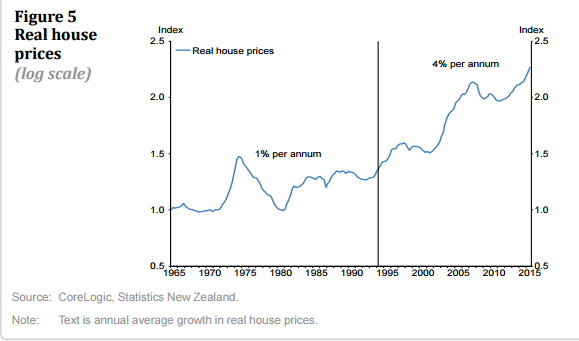
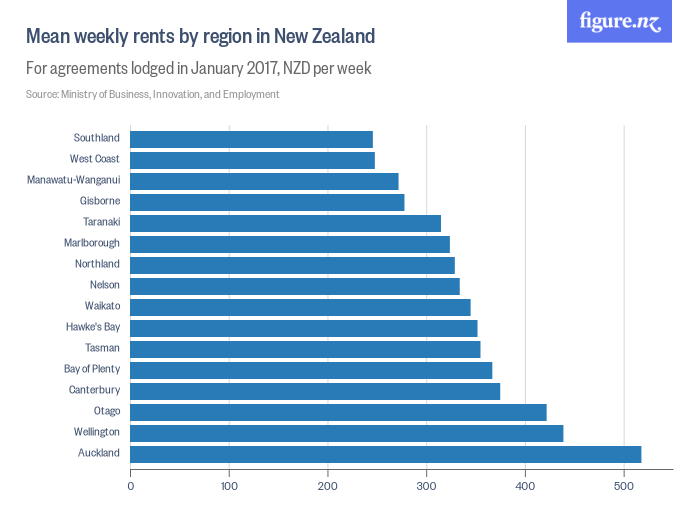
Note that there is considerable regional variation in housing prices in New Zealand.

Source: Property Prices in New Zealand | New Zealand Real Estate Prices.
Spot Generation Rent in New Zealand
25 Sep 2016 Leave a comment
in economic history, politics - New Zealand, urban economics Tags: Generation Rent, housing affordability

Source: Housing affordability: The Social Report 2016 – Te pūrongo oranga tangata from Perry (2015), Ministry of Social Development, using data from Statistics New Zealand’s Household Economic Survey.
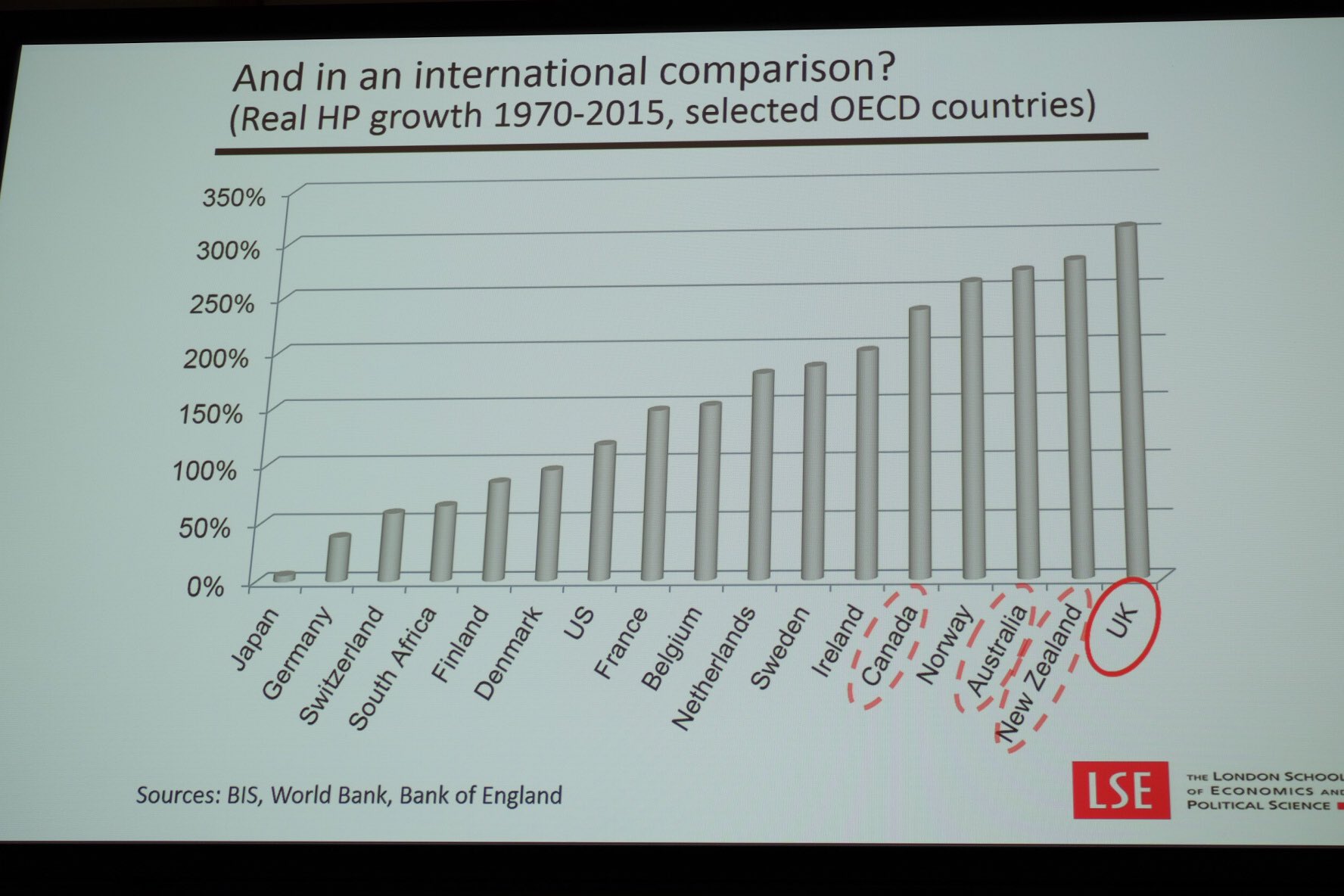
New Zealand leads house price to income ratio across the OECD
31 Aug 2016 Leave a comment
in politics - New Zealand, urban economics Tags: housing affordability, land supply, RMA, zoning
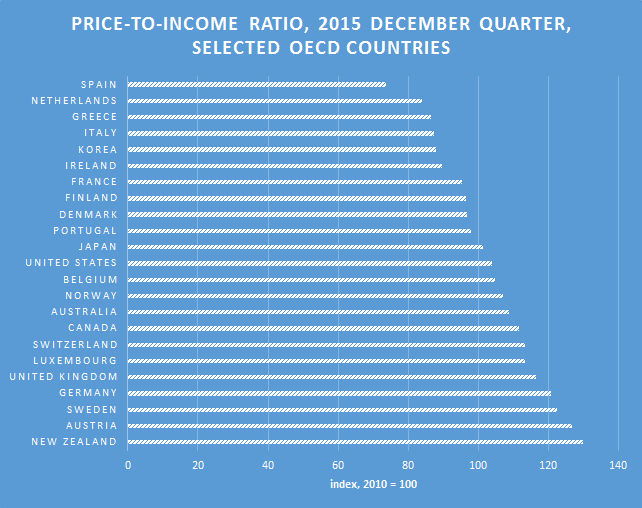
Source: IMF Global Housing Watch
How will @nzlabour @NZGreens ration their 100,000 affordable homes?
27 Aug 2016 Leave a comment
in applied price theory, politics - New Zealand, urban economics Tags: affordable housing, housing affordability, land supply, New Zealand Greens, New Zealand Labour Party, price controls
The Labour Party (and Greens) both plan to build 100,000 affordable homes and sell them within a specific price range. In Auckland, where houses cost in excess of $800,000 on average, they hope to enter the market at the $550,000 point with still quite reasonable housing.
What I ask you is how will Labour and the Greens make sure the affordable houses both are proposing are not snapped up by well-to-do buyers rather than families currently locked out of the market? What will the rationing mechanism be?
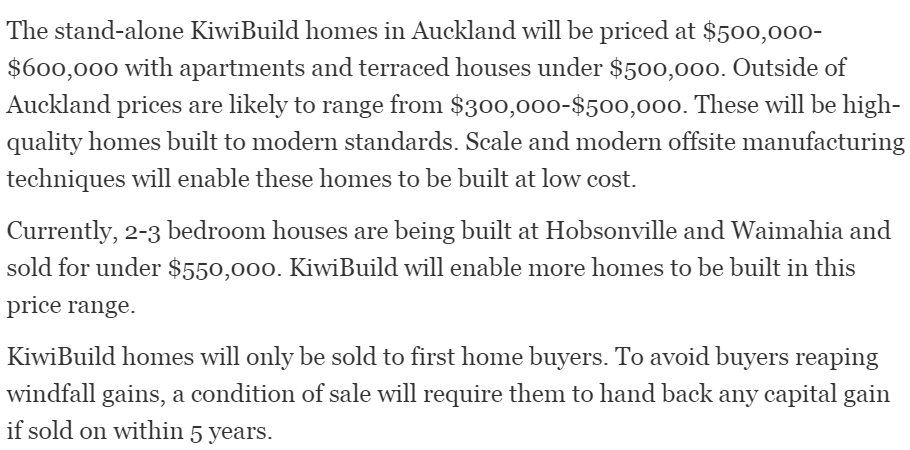
Source: KiwiBuild – New Zealand Labour Party.
How will Labour and the Greens ration these desirable houses given that they are priced well below the competition? If two buyers both offer $550,000 for the house, which bid will be accepted?
If the next best available house in Auckland is worth more than that because it is not sold by the proposed Housing Affordability Authority, the first bid for these houses will be $550,000 which is the maximum the government under a Labour Party is willing to accept? What happens then?
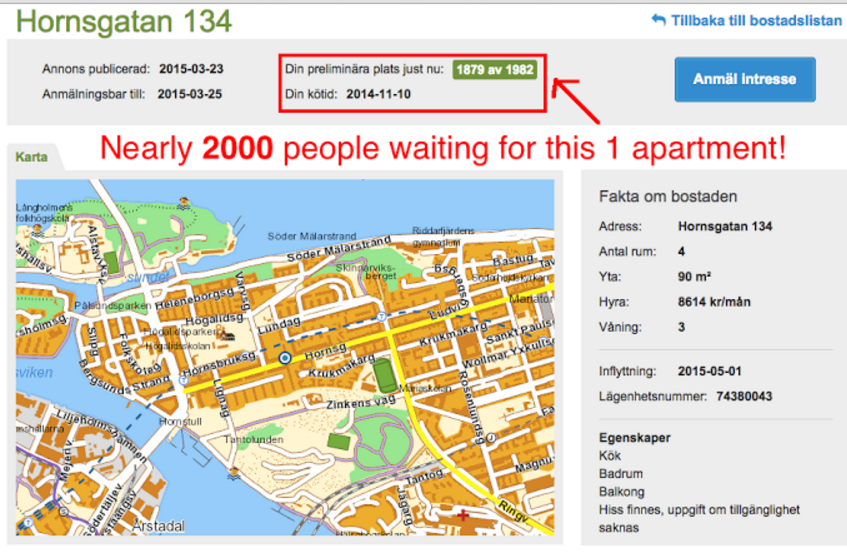
It is basic economics that if you price at less than the market clearing rate which in Auckland is somewhere near $800,000, people will queue to buy what you have unless you raise the price. The exercise of building 100,000 affordable houses makes no sense unless the purpose is to undercut what the market currently supplies.
As the houses are to be sold by a government agency, there can be no black market nor dilution of quality to even up supply with demand. How will a deadlock in price bids be resolved if the maximum bid for an affordable house starts at $550,000?
Labour acknowledges the possibility of flipping by restricting resale for 5 years. But what stops investors just waiting 5 years as there is any significant price gap between these affordable houses and the private market alternatives.
What stops more affluent buyers living in these houses because they so much cheaper than the competing options in Auckland? If you miss out in bidding on one affordable home, do you go back to the end of the queue for the next that is built or get some priority?
But @EleanorAingeRoy child poverty has not changed much in 20 years
16 Aug 2016 Leave a comment
in applied welfare economics, labour economics, labour supply, politics - New Zealand, poverty and inequality, urban economics, welfare reform Tags: child poverty, family poverty, housing affordability, RMA
Today in the Guardian writing on trends in family poverty New Zealand, Eleanor Roy said that
The fact that twice as many children now live below the poverty line than did in 1984 has become New Zealand’s most shameful statistic.
Roy goes back to the 1980s as her base because child poverty has not gone up or down by that much since that sharp rise in the late 1980s.
Child poverty among single-parent households has doubled since 1990 and tripled since 1988. Poverty in families with two parents present is not much higher now than it was in 1988.

Source: Bryan Perry, Household Incomes in New Zealand: trends in indicators of inequality and hardship 1982 to 2014 – Ministry of Social Development, Wellington (August 2015), Table H.4.
Child poverty rates among single-parent families that live with other adults is one-quarter that of single-parent families who live alone. The reasons behind that should be explored more by those concerned with child poverty.

Source: Bryan Perry, Household Incomes in New Zealand: trends in indicators of inequality and hardship 1982 to 2013 – Ministry of Social Development, Wellington (2014), Tables F.6 and F.7.
The evidence is overwhelming that the main driver of the increases in the child poverty since the 1980s is rising housing costs.
In the longer run, after housing costs child poverty rates in 2013 were close to double what they were in the late 1980s mainly because housing costs in 2013 were much higher relative to income than they were in the late 1980s.
– Bryan Perry, 2014 Household Incomes Report – Key Findings. Ministry of Social Development (July 2014).
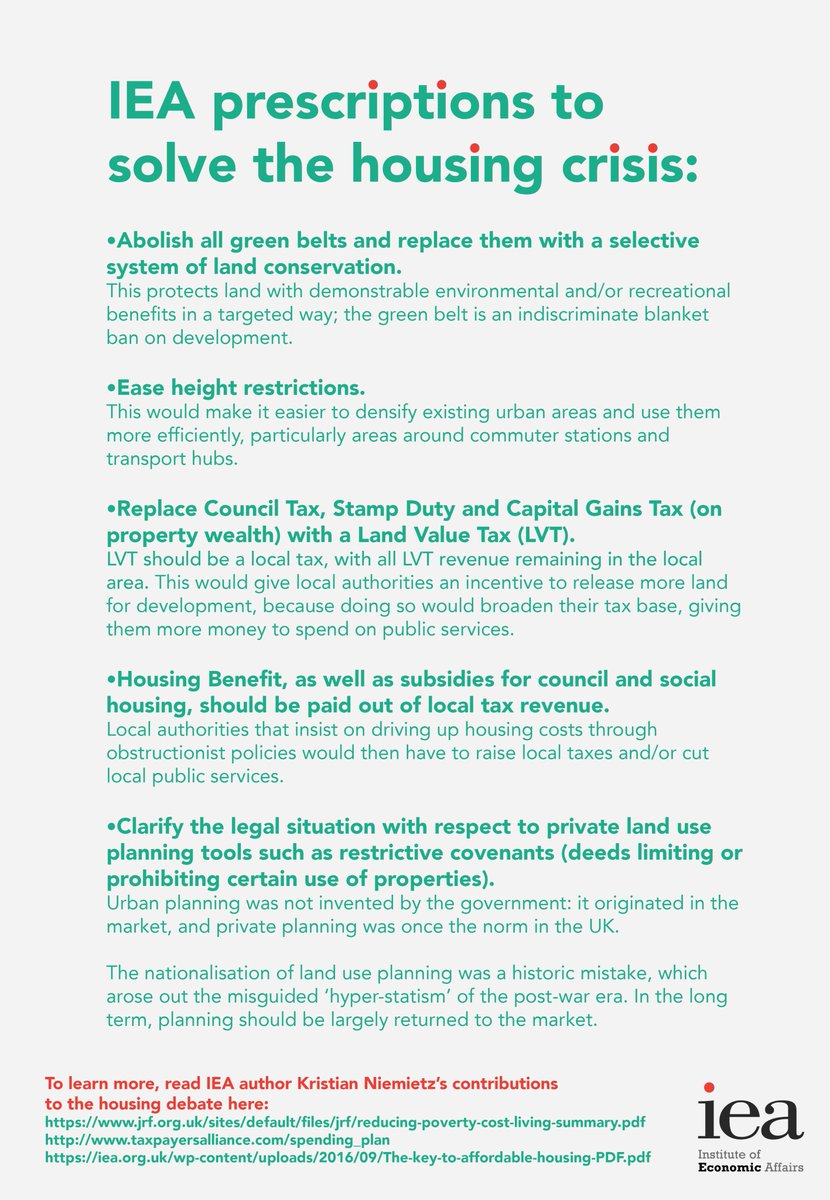
Any policy to reduce child poverty must increase the supply of houses by reducing regulatory restrictions on the supply of land.
Rather than blame the callousness of government in accepting higher rates of child poverty, Roy should blame its inability to take on the restrictions on land supply in the Resource Management Act that drive up housing costs for the poor. Increased child poverty in New Zealand is a by-product of housing unaffordability.
Where will land come from 4 @NZGreens housing plan? @GarethMP
05 Aug 2016 Leave a comment
in applied price theory, economics of regulation, politics - New Zealand, urban economics Tags: Auckland, housing affordability, land supply, New Zealand Greens, RMA, The fatal conceit, zoning
The Greens are at it again proposing to build 100,000 affordable houses without ever explaining where the additional new land will come from.

There would have to be an amendment to the proposed Auckland unitary plan to free up more land for there to be a net increase in the supply of land in Auckland.
Unless there is that such amendment, a government plan to build 100,000 affordable houses in Auckland and elsewhere will simply be competing for the same fixed supply of land. If the supply of land is constrained from expanding by much, the only thing that will happen is that the price will go up with more money chasing the same amount of land and housing.
 Utopia, you are standing in it!
Recent Comments