Did Bush Lie About Iraq?
02 Mar 2024 Leave a comment
in defence economics, politics - USA, war and peace Tags: Atomic weapons, Iraq
ISIS: The State of Terror by Jessica Stern and J.M. Berger (2015)
02 Nov 2023 Leave a comment
in defence economics, economics of crime, energy economics, law and economics, laws of war, war and peace Tags: Iraq, Middle-East politics, war against terror
Asymmetrical warfare is defined by asymmetry. Any terrorist ideology that can attract five recruits and the contents of their bank accounts can make headlines for months. A terrorist group with twenty recruits and half a million dollars can make headlines for years. (ISIS: State of Terror, page 191) ISIS is the crack cocaine of violent […]
ISIS: The State of Terror by Jessica Stern and J.M. Berger (2015)
Losing Small Wars: British Military Failure in the 9/11 Wars by Frank Ledwidge, second edition (2017)
14 Oct 2023 Leave a comment
in defence economics, laws of war, war and peace Tags: Afghanistan, Iraq
‘You have the watches, but we have the time.’ (Taliban saying, possibly apocryphal, page 93) Summary This is a quite mind-blowing, jaw-dropping analysis of the incompetence, ignorance, narrow-mindedness, bad planning, profligacy, bureaucratic in-fighting, politicking, terrible leadership, lack of strategy, appalling mismanagement and ineptitude which characterised the British Army campaigns in Iraq (2003 to 2009) and […]
Losing Small Wars: British Military Failure in the 9/11 Wars by Frank Ledwidge, second edition (2017)
The Middle East’s cold war, explained 2017
06 Aug 2019 Leave a comment
in defence economics, development economics, economic history, economics of religion, international economics, International law, law and economics, politics - USA, Public Choice, war and peace Tags: Iran, Iraq, Middle-East politics
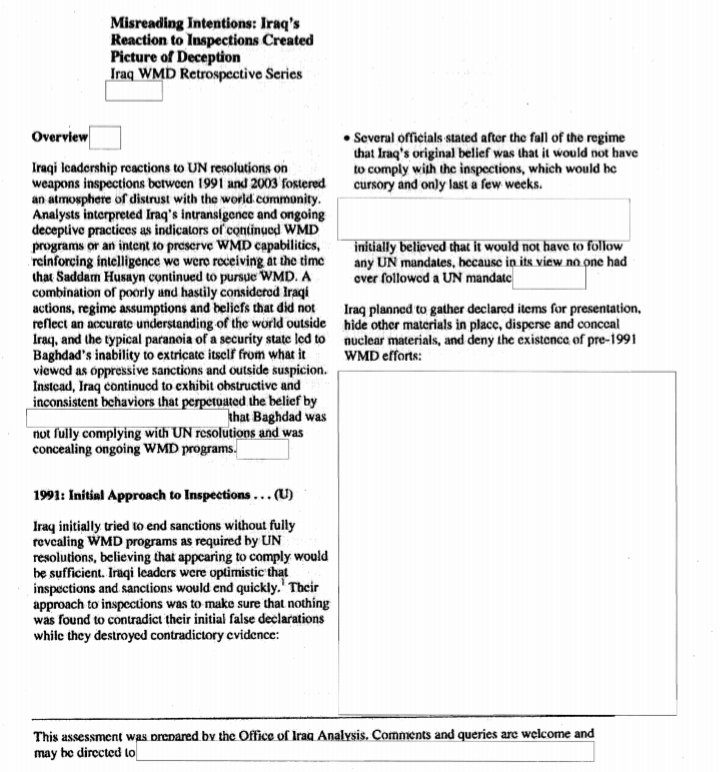
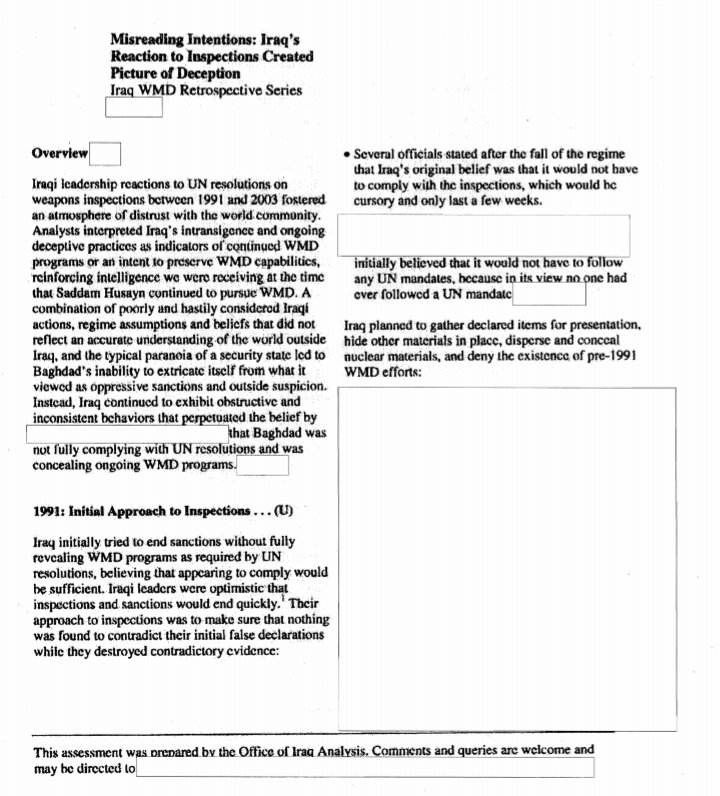
Saddam thought the first Gulf War weapons inspections would be cursory and soon go away but then was soon trapped forever in his own web of lies
05 Mar 2019 Leave a comment
in defence economics, war and peace Tags: Atomic weapons, Gulf war, Iraq
Iraq’s Post-ISIS Campaign of Revenge | The Backstory | The New Yorker
14 Feb 2019 Leave a comment
in defence economics, development economics, economics of crime, law and economics, laws of war, war and peace Tags: Iraq, war against terror
In the first of many miscalculations, Saddam expected the weapons inspections to be cursory and short lived
02 Feb 2019 Leave a comment
in defence economics, International law, law and economics, war and peace Tags: arms control, Gulf war, Iraq, nuclear proliferation, nuclear weapons
This Is Mosul 18 Months After ISIS Was Driven Out (HBO)
09 Dec 2018 Leave a comment
in defence economics, development economics, growth disasters, laws of war, war and peace Tags: Iraq, war against terror
The Iraqi Civil War, every day to December 27
03 Apr 2018 Leave a comment
in defence economics, war and peace Tags: Iraq
Peace activists didn’t use the knockdown argument against 2nd Iraq war
10 Jul 2016 Leave a comment
in defence economics, war and peace Tags: anti-war movements, British politics, game theory, Iraq, Iraq war, Middle-East politics, mutually assured destruction, nuclear deterrence, peace movements, Syrian Civil War
This idea of suing ministers for abuse of public office has appeal given the gap between many left-wing policies and sound economics.
https://twitter.com/_PaulMonaghan/status/751525929613156352
Anti-war MPs such as Jeremy Corbyn should be sued for abuse of public office and crimes against peace for not making the knockdown argument against the 2nd war against Iraq.
Instead, Corbyn said he did not like war without explaining how this was different from appeasement and surrender. The easiest way to stop a war is to surrender. The easiest way to start a war is to look weak to an aggressor.
That knockdown argument against the 2nd Iraq war argument was right under the noses of the peace movement. It was yes, Iraq has weapons of mass destruction.
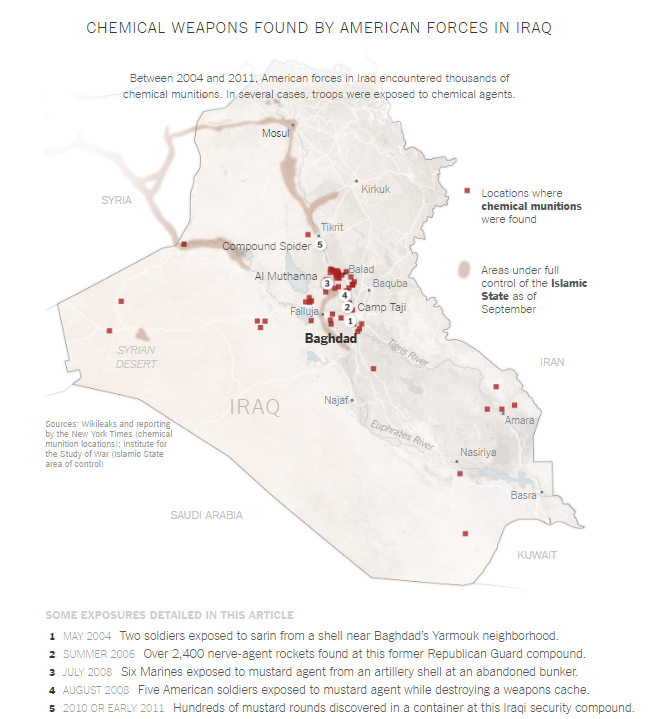
Source: The Secret Casualties of Iraq’s Abandoned Chemical Weapons – The New York Times
It is madness to invade a country that has weapons of mass destruction because they might use them especially if the objective is regime change. Iraq may not have had nuclear weapons, but the potential for Iraq to have biological and chemical weapons secreted away was real.
No one is mad enough to invade North Korea. They will use chemical and biological weapons on Seoul and Tokyo. Syria has chemical and biological weapons to make sure no one invades it.

From what I read, in the current Civil War, Syria uses chemical and biological weapons when it is on the retreat but does not use them to advance and claim new territory.
The reason why the renegade left could not possibly make this obvious argument against the war in Iraq, which was it could be a massive disaster if these chemical and biological weapons were used in desperation, was these peace activists would have to admit nuclear deterrence works. To stop a war by having to admit that weapons of mass destruction deter war was too much for the peace movement to swallow.
An admission that nuclear deterrence works would invalidate the entire political activism of the peace movements in the Cold War. The practical effect of those peace movements was, of course, to undermine the one factor preventing a nuclear war, which was nuclear deterrence.

Since 1945, at least seven or eight wars have occurred where one side had nuclear weapons. In 1973, Israel had nuclear weapons it could have used.

The reason for the non-use of nuclear weapons in those seven or eight wars including the 1973 Yom Kippur War was none were wars of annihilation. Nuclear weapons were more likely to be used if the suspected intention is to invade or occupy a country.
The Yom Kippur war was launched with a plan by President Sadat to reclaim the Sinai then after a few days agreed to an internationally brokered ceasefire. He was intending on reclaiming lost territory, not invading Israel proper continue and risk nuclear retaliation.
Saddam destroyed his nuclear, biological, and weapons but not his weapons development capability soon after he lost the first Iraq war. Saddam played a double strategy: make sure he was not caught with contraband but play a fine game of bluff making everybody think Iraq still has them so he remains a regional strongman.
Saddam could have produced biological and chemical weapons within weeks if he chose to do so but was probably 5 years away from a nuclear weapon. Chilcot’s recent report concluded:
The ingrained belief that Saddam Hussein’s regime retained chemical and biological warfare capabilities, was determined to preserve and if possible enhance its capabilities, including at some point in the future a nuclear capability, and was pursuing an active policy of deception and concealment, had underpinned UK policy towards Iraq since the Gulf Conflict ended in 1991.
The 2nd Iraq war started because Saddam fooled his enemies into thinking he had chemical, biological and nuclear weapons. He certainly had the Japan option. This is having in place the capability to produce weapons of mass destruction such as chemical and biological weapons quickly if he wanted.
#YesPrimeMinister approach of @jamespeshaw 2 fighting #ISIS
23 Jun 2016 Leave a comment
in defence economics, economics, politics - USA, war and peace Tags: foreign policy, Iraq, ISIS, New Zealand Greens, Syrian Civil War, war on terror
The Greens this week has decided to offer every support short of real help to those being massacred and brutalised by ISIS
“The NZDF deployment to Iraq does not make us safer, but puts New Zealand troops at risk and makes New Zealanders unnecessary targets of ISIL.
“We condemn the horrific violence of ISIL. New Zealand should be using its leverage as a member of the UN Security Council to curb ISIL’s access to funding and arms, not keeping our troops in danger for another year and a half,” said Mr Shaw.
This is straight out of the Yes Prime Minister episode on how the Foreign & Commonwealth Office explains how it helps foreign nations in trouble from invasion and tyranny. A 4 stage plan on how to do nothing.
In his recent speech before the House of Commons on further assistance to those fighting ISIS since Syria, Labour Party foreign office spokesman Hilary Benn described this as walking to the other side of the road.
Who is fighting who in Syria?
05 Oct 2015 Leave a comment
in war and peace Tags: Iraq, Middle-East politics, Syria, war and terror
https://twitter.com/thei100/status/650435182923681792/photo/1
Where are the Russians bombing?
Not ISIS held areas. http://t.co/YkVk2IWmtM—
ian bremmer (@ianbremmer) October 04, 2015
Six @CNN graphics to explain #Syria's war. Spoiler alert: 3 are from ISW. cnn.it/1PcfLOu http://t.co/9V4TeyiHW2—
ISW (@TheStudyofWar) October 04, 2015
The situation in the Syrian Civil War, present and past
03 Oct 2015 Leave a comment
in war and peace Tags: Iraq, Middle-East politics, Syria
Control of Syria has become increasingly fractured in the past year. nyti.ms/1VpkqBN http://t.co/vqMkIAPxdE—
NYT Graphics (@nytgraphics) October 02, 2015
Day 3 of Russian airstrikes in Syria mainly target rebels, 2 strikes hit ISIS strongholds. nyti.ms/1VpkqBN http://t.co/5TdGcXIDbX—
NYT Graphics (@nytgraphics) October 02, 2015
Oil and ISIS
02 Oct 2015 Leave a comment
in energy economics, war and peace Tags: Iraq, Iraqi civil war, ISIS, Middle-East politics, Oil prices, Syria, Syrian Civil War
This map shows where ISIS overlaps with major oil refineries rightrelevance.com/search/article… http://t.co/gDDzKVNAI8—
Cartography & Maps (@CartogRRaphy) September 29, 2015
Where do ISIL fighters come from?
28 Sep 2015 Leave a comment
in war and peace Tags: Iran, Iraq, ISIS, Middle-East politics, Saudi Arabia, Syria, war against terror
Where do ISIL fighters come from? http://t.co/Euh7eySwoX—
Amazing Maps (@Amazing_Maps) June 09, 2015
 Utopia, you are standing in it!
Recent Comments