Is there any better – or should that be worse? – example of how the consenting process sabotages productivity than the current hearings on McDonalds’ application to open in Wanaka? Public submissions were sought, and of the 366 made, 339 were opposed, 21 in support and six wanted changes to the plan. Among the submissions […]
Sabotaging productivity
Sabotaging productivity
03 Dec 2024 Leave a comment
in applied price theory, economics of bureaucracy, economics of regulation, health economics, law and economics, politics - New Zealand, property rights, Public Choice, rentseeking, urban economics Tags: land supply, nanny state, zoning
Addressing the Housing Crisis
10 Oct 2024 Leave a comment
in applied price theory, economics of bureaucracy, economics of regulation, income redistribution, law and economics, politics - New Zealand, politics - USA, property rights, Public Choice, rentseeking, urban economics Tags: affordable housing, land supply, regressive left
Japan’s population is roughly equal to the five most-populous states of the U.S. — California, Florida, New York, Pennsylvania, and Texas — concentrated in a nation that has approximately the land area of Montana, which is only about a fourth as large as those five most-populous states. Moreover, well over … Continue reading →
Addressing the Housing Crisis
After 30 years, there is hope
27 Sep 2024 Leave a comment
in applied price theory, economics of bureaucracy, economics of regulation, environmental economics, environmentalism, income redistribution, law and economics, politics - New Zealand, property rights, Public Choice, rentseeking, transport economics, urban economics Tags: housing affordability, land supply, zoning
Chris Bishop and Simon Court announced: Two new laws will be developed to replace the Resource Management Act (RMA), with the enjoyment of property rights as their guiding principle, RMA Reform Minister Chris Bishop and Parliamentary Under-Secretary Simon Court say. “The RMA was passed with good intentions in 1991 but has proved a failure in […]
After 30 years, there is hope
Please legalise new supermarkets
11 Sep 2024 Leave a comment
in applied price theory, economics of regulation, environmental economics, politics - New Zealand, transport economics, urban economics Tags: land supply, zoning
Jaw-dropping bit from the Grocery Regulator, in interview at Interest.co.nz:“What we’ve been told by these players is when they come and they want to open up a large store in New Zealand, the cost to get a spade in the ground is double that of Australia,” he says in a new episode of the Of…
Please legalise new supermarkets
Fast Takes on *Build, Baby, Build*: David Schleicher
07 Aug 2024 Leave a comment
in comparative institutional analysis, constitutional political economy, economics of bureaucracy, economics of regulation, income redistribution, law and economics, politics - USA, property rights, Public Choice, rentseeking, urban economics Tags: housing affordability, land supply
I met Yale Law’s David Schleicher when he was still a law professor at GMU. Back then, we argued about the best model of non-rigged one-party democracy, often seen in major cities… and Singapore. Since then, David’s become a powerful academic voice for YIMBY. Last month, David joined me for another Fast Take on Build,…
Fast Takes on *Build, Baby, Build*: David Schleicher
Talking BBB with Veronique de Rugy
03 Aug 2024 Leave a comment
in applied price theory, comparative institutional analysis, economic history, economics of bureaucracy, economics of regulation, income redistribution, law and economics, politics - USA, property rights, Public Choice, public economics, rentseeking, urban economics Tags: housing affordability, land supply
Here’s a lively AIER podcast on Build, Baby, Build with the one and only Veronique de Rugy. Best French libertarian since Bastiat? Décider vous-même!P.S. Capla-Con 2024 starts two weeks from tomorrow in Fairfax, Virginia. You’re all invited! Feel free to coordinate ride-sharing in the comments.
Talking BBB with Veronique de Rugy
Rent Control Reduces New Development: Bug or Feature?
30 Jul 2024 Leave a comment
in applied price theory, comparative institutional analysis, income redistribution, law and economics, politics - USA, property rights, Public Choice, rentseeking, urban economics Tags: housing affordability, land supply, regressive left, rent control
The minimum wage will tend to increase unemployment among low-skill workers, often minorities. To many people that’s an argument against the minimum wage. But to progressives at the opening of the 20th century that was an argument for the minimum wage–progressive’s demanded minimum wages to get women and racial minorities out of the work force. […]
Rent Control Reduces New Development: Bug or Feature?
Fast Takes on *Build, Baby, Build*: Ed Glaeser
27 Jul 2024 Leave a comment
in applied price theory, economics of bureaucracy, economics of regulation, income redistribution, politics - New Zealand, politics - USA, Public Choice, regulation, rentseeking, urban economics Tags: housing affordability, land supply

Ed Glaeser is the chairman of Harvard’s Department of Economics. He’s also widely credited with reviving the entire field of Urban Economics. His 2018 “The Economics of Housing Supply” (with Joe Gyourko) in the Journal of Economic Perspectives was a major inspiration for my Build, Baby, Build. So in the latest “Fast Takes” interview, I…
Fast Takes on *Build, Baby, Build*: Ed Glaeser
Flooding Housing Policy
22 Jul 2024 Leave a comment
in applied price theory, economics of regulation, law and economics, macroeconomics, monetary economics, politics - New Zealand, property rights, urban economics Tags: housing affordability, land supply, monetary policy
The Minister of Housing’s ambition is to reduce markedly the ratio of house prices to household incomes. If his strategy works it would transform the housing market, dramatically changing the prospects of housing as an investment. Brian Easton writes – Leaving aside the Minister’s metaphor of ‘flooding the market’ I do not see how the […]
Flooding Housing Policy
BBB in the NYT
15 Jul 2024 Leave a comment
in applied price theory, applied welfare economics, comparative institutional analysis, economic history, economics of bureaucracy, economics of regulation, income redistribution, law and economics, politics - USA, property rights, Public Choice, rentseeking, urban economics Tags: housing affordability, land supply, zoning
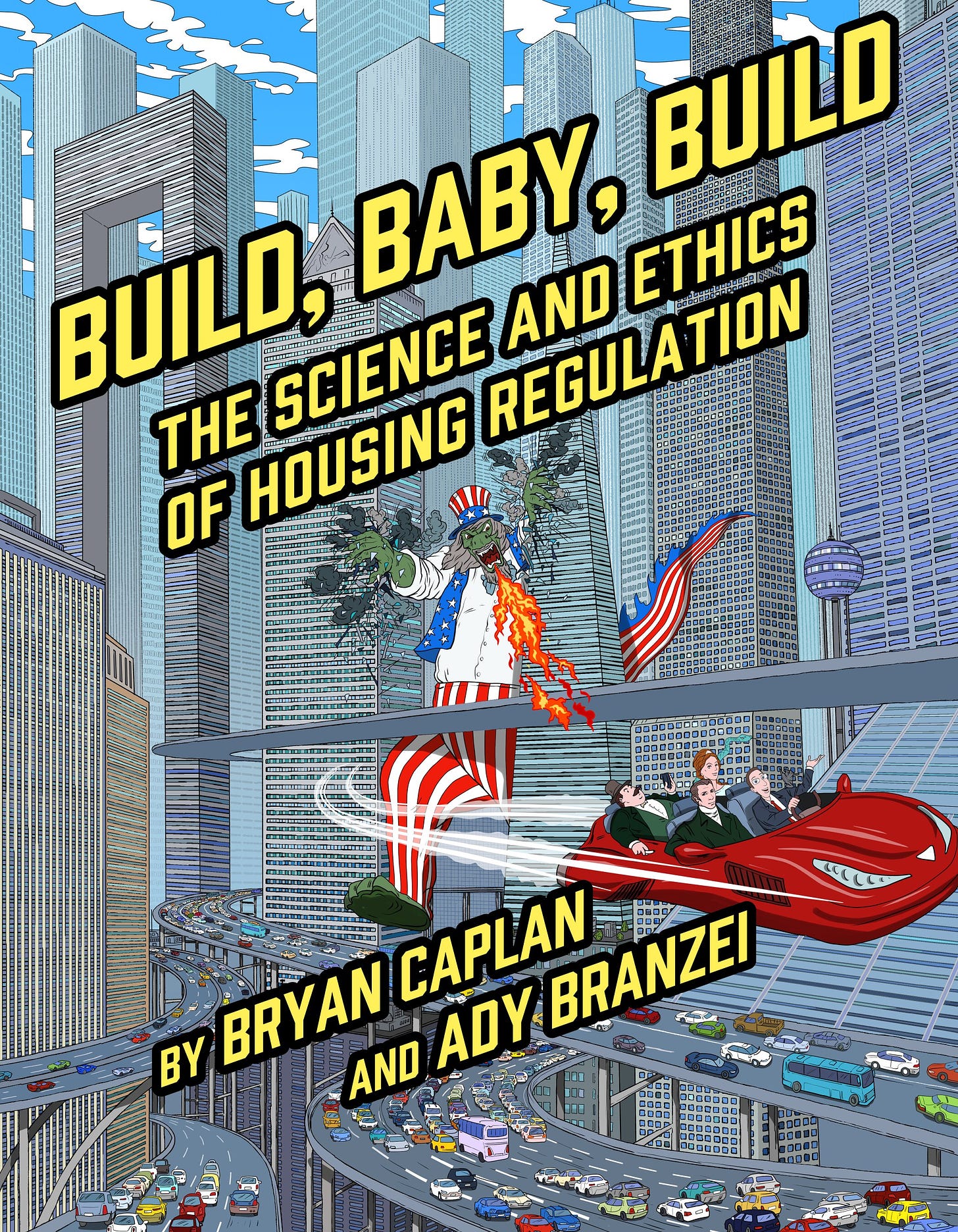
I pitch Build, Baby, Build in today’s New York Times. No illustrations, but a bunch of cool graphs cooked up by Sara Chodosh of the NYT data analytics team. The original title was “The Panacea Policy,” but now it’s “Yes in My Backyard: The Case For Housing Deregulation.” And for you, dear readers, it’s ungated!…
BBB in the NYT
DON BRASH: ANOTHER OUTSTANDING SPEECH FROM CHRIS BISHOP
13 Jul 2024 Leave a comment
in applied price theory, economics of regulation, income redistribution, law and economics, politics - New Zealand, property rights, Public Choice, rentseeking, urban economics Tags: housing affordability, land supply, zoning
Four months ago, I described a speech by Chris Bishop in his capacity as Minister of Housing as perhaps the most important speech given by any Government minister since the election last year. He’s just given another, arguably even more important, laying out in words of one syllable what the Government plans to do…
DON BRASH: ANOTHER OUTSTANDING SPEECH FROM CHRIS BISHOP
Bryan Caplan on YIMBY in the NYT
12 Jul 2024 Leave a comment
in applied price theory, applied welfare economics, comparative institutional analysis, economic history, economics of regulation, income redistribution, law and economics, politics - USA, property rights, Public Choice, regulation, rentseeking, urban economics Tags: housing affordability, land supply, zoning
Here is one excerpt: What few appreciate is that the overregulation of housing has blocked a classic American path: moving to a higher-wage part of the country to secure a better life. A paper by the economists Peter Ganong and Daniel Shoag shows that housing costs now routinely outweigh wage gains: While janitors and waiters do indeed […]
Bryan Caplan on YIMBY in the NYT
Zoning Matters for Rising Housing Costs, Especially After 1980
11 Jul 2024 Leave a comment
in applied price theory, econometerics, economic history, economics of regulation, environmental economics, income redistribution, Public Choice, rentseeking, urban economics Tags: housing affordability, land supply, zoning
From a new working paper “The Price of Housing in the United States, 1890-2006” by Ronan C. Lyons, Allison Shertzer, Rowena Gray & David N. Agorastos (emphasis added): “Zoning was adopted by almost every city in our sample during the 1920s. We see a slightly steeper gradient over the next two periods (coefficients of .48 […]
Zoning Matters for Rising Housing Costs, Especially After 1980
Finally a great housing package
05 Jul 2024 Leave a comment
in economics of bureaucracy, economics of regulation, law and economics, politics - New Zealand, property rights, Public Choice, rentseeking, transport economics, urban economics Tags: housing affordability, land supply, zoning
Chris Bishop has announced changes to housing laws which will make a huge difference to housing affordability. Almost every expert has said that to reduce pressure on house prices you need to both build up and build out. The NIMBYs oppose building up and the Greenies opposes building out. Phil Rayford in 2017 had some […]
Finally a great housing package
The Great Post-Pandemic Population Shift
26 May 2024 Leave a comment
in labour economics, labour supply, law and economics, population economics, transport economics, urban economics Tags: land supply
A little more than half of America’s incorporated cities collectively lost 2.7 million residents between 2020 and 2023, according to estimates released by the Census Bureau earlier this week. New York City alone lost almost 500,000 residents, or 5.5 percent of its population, while the next 20 biggest losers together … Continue reading →
The Great Post-Pandemic Population Shift
 Utopia, you are standing in it!
Recent Comments