When will the New Zealand living wage exceed the median wage?

The Left over Left have increased the living wage in New Zealand to $19.25 per hour for 2015. This increase was after a living wage of $18.80 for 2014 and $18.40 for 2013.

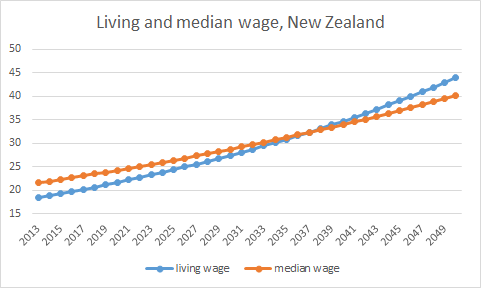
This latest increase increases the living wage by 2.39%, which is faster than the 1.7% increase in the median wage last year. This means sooner or later the living wage will grow to exceed the median wage in New Zealand.

image

Sources: New Zealand Income Survey 2014 and Living Wage Movement.

If both the median and living wage is continuing to increase at the most recent year’s rates, as shown in the above  graph, the overtaking point will be 2037.

According to the calculations of the Living Wage movement, earning the living wage in a full-time job in New Zealand with a second earner in the household working only 20 hours affords their two children, including a teenager, Sky TV, pets, international travel, video games and 10 hours childcare.

What if McDonald’s workers were paid $15 per hour

More on union hypocrisy and the living wage

The first Paul Krugman on efficiency wage arguments for a higher minimum wage

HT: economistsview

How to argue against the minimum wage when genuinely trying to argue for it – OECD edition

The 2014 OECD employment outlook argued for modest minimum wage increases while at the same time setting out all the steps necessary to manage the unintended consequences of minimum wage regulation:

Mandatory minimum wages, which now exist – or are being implemented – in 26 OECD countries and a number of emerging economies, can help underpin the wages of low-paid workers.

Evidence suggests that, when set at an appropriate level, minimum wages tend to have only a small adverse effect on employment.

Sensible minimum-wage design includes: taking account of differences by region according to the average income level, as well as by age in experience and productivity; ensuring that the level and adjustments of the minimum wage involve independent commissions; and reducing social security contributions to lower non-wage labour costs at the minimum wage (Emphasis mine).

George Stigler made very similar criticisms of the impracticality of a single minimum wage in 1946:

If an employer has a significant degree of control over the wage rate he pays for a given quality of labour, a skilfully-set minimum wage may increase his employment and wage rate and, because the wage is brought closer to the value of the marginal product, at the same time increase aggregate output…

This arithmetic is quite valid but it is not very relevant to the question of a national minimum wage. The minimum wage which achieves these desirable ends has several requisites:

1. It must be chosen correctly… the optimum minimum wage can be set only if the demand and supply schedules are known over a considerable range…

2. The optimum wage varies with occupation (and, within an occupation, with the quality of worker).

3. The optimum wage varies among firms (and plants).

4. The optimum wage varies, often rapidly, through time.

A uniform national minimum wage, infrequently changed, is wholly unsuited to these diversities of conditions

Modest minimum wage increases must varying in their modesty by individual worker quality,  occupation, region, firm and plant and the extent to which this modesty can be excessively immodest can change rapidly through time. Little wonder that the OECD refers to minimum wage regulation as a careful balancing act.

In sum, to avoid throwing a good number of low paid, low skilled workers onto the scrapheap of society for the sake of their more employable co-workers, the minimum wage pretty much be set separately for each individual worker. The labour market does that now.
The Best Minimum Wage Story Of The Day, Or, Yes, Wage Rises Really Do Kill Jobs

via http://www.forbes.com/sites/timworstall/2014/10/28/the-best-minimum-wage-story-of-the-day-or-yes-wage-rises-really-do-kill-jobs/?utm_source=twitterfeed&utm_medium=twitter

Coalition Celebrating Equal Pay Case Outcome

I wonder who will pay for this? Caregiver wages are funded out of a fixed budget allocated by the government.

A higher wage will change the type of worker that the caregiving sector will seek to recruit, as happened after increases in the teenage went minimum wage.

When the teenage minimum wage went up in New Zealand, employment of 17 and 18-year-olds fell, while the employment of 18 to 19-year-olds increased because the latter were more mature and reliable than the younger contemporaries.

Eileen Brown's avatarPay Equity Challenge Coalition

Media release: Pay Equity Challenge Coalition

28 October 2014

Coalition Celebrating Equal Pay Case Outcome

“The Court of Appeal’s decision declining the employers’ appeal in the Kristine Bartlett case is a huge victory for women workers” said Pay Equity Coalition Challenge spokesperson Angela McLeod.

“The Courts’ decision that equal pay may be determined across industries in female-dominated occupations revitalises the Equal Pay Act 1972 and will be a major factor in closing New Zealand’s stubborn 14 percent gender pay gap”.

The judgement by the Court of Appeal upholding the Employment Court decision again validates the work of caregivers and that they are underpaid, she said.

“We commend the Service and Food Workers Union Nga Ringa Tota in taking this case and exposing the underpayment and undervaluation of aged care workers. And the decision is a victory for all the women’s organisations who have never given up fighting for equal pay,”…

View original post 92 more words

Henry Hazlitt on the living wage

Image

The labour demographics of a NZ living wage

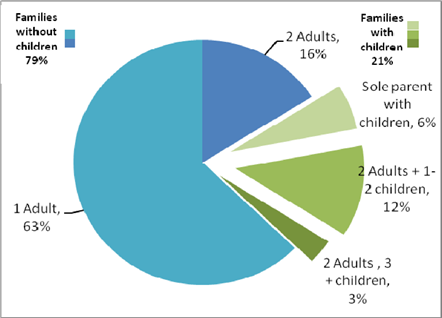
Distribution of families earning below the Living Wage

image

Source: Taxwell

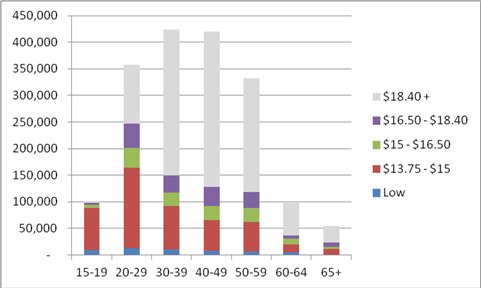
The wage rates of people of different ages

image

Source: Taxwell

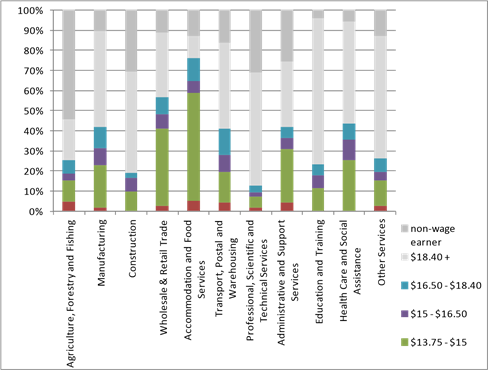
The distribution of wages by industry

image

Non-wage earners is mainly self employed. Source: Taxwell

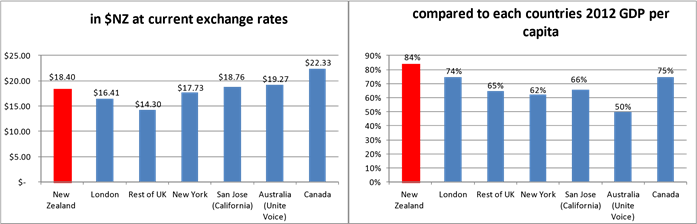
NZ’s proposed Living Wage compared to other Living Wage proposals

image

Source: Living Wage campaign websites, and exchange rates as at 20 September 2013

  1. The Living Wage proposal is an ineffective way to help families with low incomes, because:
      • Many low income earners are people below the age of 30 who are single or part of a childless couple;
      • The extra earnings by parents would result in reduced tax credits or benefit payments (as they abate with higher income).
      1. If adopted as a minimum wage, New Zealand would be out of line with other countries, and it is likely to reduce employment, particularly of younger people trying to enter the labour market.
      2. The overall impact on poverty levels is likely to be small, but it would represent a change of focus from supporting families with children towards supporting young, single people.

      General source: The Treasury Living Wage Information Release

      The living wage

      Why not just increase the family tax credit? That would increase the incomes of poor families without putting their jobs at particular greater risk.

      The local calculation of the living wage includes cable TV and an overseas holiday.

      Milton Friedman provides some critical truths on the living wage:

      Do-Gooders believe passing a law saying nobody shall get less than [a minimum wage] is helping poor people (who need the money).

      You’re doing nothing of the kind.

      What you’re doing is to ensure that people whose skills do not justify that wage will be unemployed.

      Next Newer Entries

      Bassett, Brash & Hide

      Celebrating humanity's flourishing through the spread of capitalism and the rule of law

      Truth on the Market

      Scholarly commentary on law, economics, and more

      The Undercover Historian

      Beatrice Cherrier's blog

      Matua Kahurangi

      Celebrating humanity's flourishing through the spread of capitalism and the rule of law

      Temple of Sociology

      Celebrating humanity's flourishing through the spread of capitalism and the rule of law

      Velvet Glove, Iron Fist

      Celebrating humanity's flourishing through the spread of capitalism and the rule of law

      Why Evolution Is True

      Why Evolution is True is a blog written by Jerry Coyne, centered on evolution and biology but also dealing with diverse topics like politics, culture, and cats.

      Down to Earth Kiwi

      Celebrating humanity's flourishing through the spread of capitalism and the rule of law

      NoTricksZone

      Celebrating humanity's flourishing through the spread of capitalism and the rule of law

      Homepaddock

      A rural perspective with a blue tint by Ele Ludemann

      Kiwiblog

      DPF's Kiwiblog - Fomenting Happy Mischief since 2003

      The Dangerous Economist

      Celebrating humanity's flourishing through the spread of capitalism and the rule of law

      Watts Up With That?

      The world's most viewed site on global warming and climate change

      The Logical Place

      Tim Harding's writings on rationality, informal logic and skepticism

      Doc's Books

      A window into Doc Freiberger's library

      The Risk-Monger

      Let's examine hard decisions!

      Uneasy Money

      Commentary on monetary policy in the spirit of R. G. Hawtrey

      Barrie Saunders

      Thoughts on public policy and the media

      Liberty Scott

      Celebrating humanity's flourishing through the spread of capitalism and the rule of law

      Point of Order

      Politics and the economy

      James Bowden's Blog

      A blog (primarily) on Canadian and Commonwealth political history and institutions

      Science Matters

      Reading between the lines, and underneath the hype.

      Peter Winsley

      Economics, and such stuff as dreams are made on

      A Venerable Puzzle

      "The British constitution has always been puzzling, and always will be." --Queen Elizabeth II

      The Antiplanner

      Celebrating humanity's flourishing through the spread of capitalism and the rule of law

      Bet On It

      Celebrating humanity's flourishing through the spread of capitalism and the rule of law

      History of Sorts

      WORLD WAR II, MUSIC, HISTORY, HOLOCAUST

      Roger Pielke Jr.

      Undisciplined scholar, recovering academic

      Offsetting Behaviour

      Celebrating humanity's flourishing through the spread of capitalism and the rule of law

      JONATHAN TURLEY

      Res ipsa loquitur - The thing itself speaks

      Conversable Economist

      Celebrating humanity's flourishing through the spread of capitalism and the rule of law

      The Victorian Commons

      Researching the House of Commons, 1832-1868

      The History of Parliament

      Articles and research from the History of Parliament Trust

      Books & Boots

      Reflections on books and art

      Legal History Miscellany

      Posts on the History of Law, Crime, and Justice

      Sex, Drugs and Economics

      Celebrating humanity's flourishing through the spread of capitalism and the rule of law

      European Royal History

      Exploring the Monarchs of Europe

      Tallbloke's Talkshop

      Cutting edge science you can dice with

      Marginal REVOLUTION

      Small Steps Toward A Much Better World

      NOT A LOT OF PEOPLE KNOW THAT

      “We do not believe any group of men adequate enough or wise enough to operate without scrutiny or without criticism. We know that the only way to avoid error is to detect it, that the only way to detect it is to be free to inquire. We know that in secrecy error undetected will flourish and subvert”. - J Robert Oppenheimer.

      STOP THESE THINGS

      The truth about the great wind power fraud - we're not here to debate the wind industry, we're here to destroy it.

      Lindsay Mitchell

      Celebrating humanity's flourishing through the spread of capitalism and the rule of law

      Alt-M

      Celebrating humanity's flourishing through the spread of capitalism and the rule of law

      croaking cassandra

      Economics, public policy, monetary policy, financial regulation, with a New Zealand perspective

      The Grumpy Economist

      Celebrating humanity's flourishing through the spread of capitalism and the rule of law

      International Liberty

      Restraining Government in America and Around the World