The very last part of the clip is hilariously funny.
P.J. O’Rourke on the new-found obsession of the 60s generation with safety
01 Aug 2014 Leave a comment


The Greens want to ban… | Kiwiblog
10 Jun 2014 Leave a comment
in James Buchanan, politics - New Zealand, Public Choice Tags: Ban-it left, fatal conceit, meddlesome preferences, political correctness, pretense to knowledge

- Ban fizzy drinks from schools
- Ban fuel inefficient vehicles
- Ban all gaming machines in pubs
- Ban the GCSB
- Ban violent TV programmes until after 10 pm
- Ban feeding of antibiotics to animals that are not sick
- Ban companies that do not comply with a Code of Corporate Responsibility
- Ban ACC from investing in enterprises that provide products or services that significantly increase rates of injury or illness or otherwise have significant adverse social or environmental effects
- Ban commercial Genetic Engineering trials
- Ban field testing on production of GE food
- Ban import of GE food
- Ban Urban Sprawl
- Ban non citizens/residents from owning land
- Ban further corporate farming
- Ban sale of high country farms to NZers who do not live in NZ at least 185 days a year
- Ban the transport by sea of farm animals, for more than 24 hours
- Ban crates for sows
- Ban battery cages for hens
- Ban factory farming of animals
- Ban the use of mechanically recovered meat in the food chain
- Ban the use of the ground-up remains of sheep and cows as stock feed
- Ban animal testing where animals suffer, even if of benefit to humans
- Ban cloning of animals
- Ban use of animals in GE
- Ban GE animal food
- Ban docking of dogs tails
- Ban intrusive animal experimentation as a teaching method in all educational institutions
- Ban smacking
- Ban advertising during children’s programmes
- Ban alcohol advertising on TV and radio
- Ban coal mining
- Ban the export of indigenous logs and chips
- Ban the use of bio-accumulative and persistent poisons
- Ban the establishment of mustelid farms
- Ban new exploration, prospecting and mining on conservation land and reserves
- Ban mining activities when rare and endemic species are found to present on the mining site
- Ban the trading conservation land for other land to facilitate extractive activities on.
- Ban the further holding of marine mammals in captivity except as part of an approved threatened species recovery strategy
- Ban the direct to consumer advertising of pharmaceuticals
- Ban sale of chips and lollies on school property
- Ban any additional use of coal for energy
- Ban fixed electricity charges
- Ban further large hydro plants
- Ban nuclear power
- Ban further thermal generation
- Ban private water management
- Ban imported vehicles over seven years old
- Ban the disposal of recyclable materials at landfills
- Ban the export of hazardous waste to non OECD countries
- Ban funding of health services by companies that sell unhealthy food (so McDonalds could not fund services for young cancer sufferers)
- Ban healthcare organizations from selling unhealthy food or drink
- Ban advertising of unhealthy food until after 8.30 pm
- Ban all food and drink advertisements on TV if they do not meet criteria for nutritious food
- Ban the use of antibiotics as sprays on crops
- Ban food irradiation within NZ
- Ban irradiated food imports
- Ban growth hormones for animals
- Ban crown agency investments in any entity that denies climate change!!
- Ban crown agency investments in any entity that is involved in tobacco
- Ban crown agency investments in any entity that is involved in environmentally damaging oil extraction or gold mining
- Ban non UN sanctioned military involvement (so China and Russia gets to veto all NZ engagements)
- Ban NZ from military treaties which are based on the right to self defence
- Ban NZers from serving as mercenaries
- Ban new casinos
- Allow existing casinos to be banned
- Ban promotion of Internet gambling
- Ban advertising of unhealthy food to children
- Ban cellphone towers within 300 metres of homes
- Ban new buildings that do not confirm to sustainable building principles
- Ban migrants who do not undertake Treaty of Waitangi education programmes
- Ban new prisons
- Ban semi-automatic weapons
- Ban genetic mixing between species
- Ban ocean mineral extractions within the EEZ
- Ban limited liability companies by making owners responsible for liability of products
- Ban funding of PTEs that compete with public tertiary institutes
- Ban the importation of goods and services that do not meet quality and environmental certification standards in production, lifecycle analysis, and eco-labelling
- Ban goods that do not meet quality and sustainability standards for goods which are produced and/or sold in Aotearoa/New Zealand
- Ban new urban highways or motorways
- Ban private toll roads
- Ban import of vehicles more than seven years old unless they meet emission standards
- Ban imported goods that do not meet standards for durability and ease of recycling
- Ban landfills
- Ban new houses without water saving measures
- Ban programmes on TVNZ with gratuitous violence

via Kiwiblog
Justice Thomas as an unlikely hero for the marijuana decriminalisation movement – updated
05 Jun 2014 Leave a comment
in Federalism, law and economics, politics - USA Tags: decriminalisation of marijuana, division of power, drug laws, Justice Scalia, Justice Thomas, meddlesome preferences
The decriminalisation of marijuana possession by American states doesn’t really matter that much because it is still illegal under Federal law. Marijuana markets moved into the open in the states that decriminalised it because the federal authorities have chosen not to enforce their laws against these traders.
Justice Clarence Thomas is a radical view of the interstate commerce clause. This clause of the US Constitution at the height of the new deal was reinterpreted to allow Congress to regulate both interstate commerce and intrastate markets that affected interstate commerce.
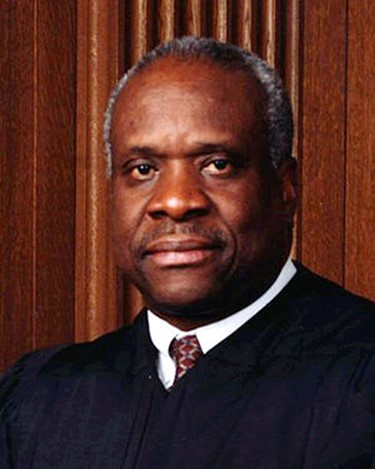
The current interpretation of this clause supported by everyone on the US Supreme Court but Thomas is Congress can regulate the possession of marijuana because this affects interstate commerce. Justice Scalia explains:
…the Commerce Clause permits congressional regulation of three categories:
(1) the channels of interstate commerce;
(2) the instrumentalities of interstate commerce, and persons or things in interstate commerce; and
(3) activities that "substantially affect" interstate commerce.
As …the Court affirms today, Congress may regulate noneconomic intrastate activities only where the failure to do so "could … undercut" its regulation of interstate commerce.
… This is not a power that threatens to obliterate the line between "what is truly national and what is truly local.
Justice Thomas rejects this view and wants to return to the original meaning of the interstate commerce clause:
Respondent’s local cultivation and consumption of marijuana is not "Commerce … among the several States."
Certainly no evidence from the founding suggests that "commerce" included the mere possession of a good or some personal activity that did not involve trade or exchange for value.
In the early days of the Republic, it would have been unthinkable that Congress could prohibit the local cultivation, possession, and consumption of marijuana
and
If the Federal Government can regulate growing a half-dozen cannabis plants for personal consumption (not because it is interstate commerce, but because it is inextricably bound up with interstate commerce), then Congress’ Article I powers – as expanded by the Necessary and Proper Clause – have no meaningful limits.
and further:
If the majority is to be taken seriously, the Federal Government may now regulate quilting bees, clothes drives, and potluck suppers throughout the 50 States.
This makes a mockery of Madison’s assurance to the people of New York that the "powers delegated" to the Federal Government are "few and defined", while those of the States are "numerous and indefinite."
In closing, Thomas said:
The majority prevents States like California from devising drug policies that they have concluded provide much-needed respite to the seriously ill.
Our federalist system, properly understood, allows California and a growing number of other States to decide for themselves how to safeguard the health and welfare of their citizens.
The adoption of the view of Thomas could not be more unlikely. Most federal regulation in the United States is based on linking it to the power of the Congress to regulate interstate commerce and foreign commerce. Thomas once noted that:
[w]hen asked at oral argument if there were any limits to the Commerce Clause, the Government was at a loss for words
The decriminalisation of marijuana in the United States will have to be based on more and more states choosing to decriminalise in the hope that the Federal Government does not enforce its rather savage criminal laws on drugs in their state. That’s is what seems to be happening. Whether that will still happen when a Republican wins the White House in 2016 remains to be seen.
Three American States have even passed hopelessly unconstitutional right to try laws. These laws purport to allow the residents try experimental drugs that have not yet received approval of the Federal level by the FDA.
Even under the narrow interpretation of federal powers by Justice Thomas, these laws are unconstitutional. These laws nonetheless have social value because they are push the boundaries of the current political sense consensus.
This evaluation applies to marijuana decriminalisation laws too. They test the current boundaries and can create the possibility of social change through democratic action.
Many who want a strong central government forget that the social agendas of the crazies to the left and right of them will also be implemented all in good time at the national level as well. Power rotates in any democracy so with enough time the meddlesome preferences of most sides of politics will be legislated into law so that everyone ends up been annoyed and over-regulated and more than a few end up before the courts and even in prison.
A wiser course in constitutional design is to give the parliament as much powers as you might wish those wreckers and crazies that make up your political opponents to have when they come to office, as they surely must in six or nine years time. Even the British Labour Party took an interest in devolution and an assembly for London after 15 years of Maggie Thatcher, good and hard.
Meddlesome preferences or ban smoking, but keep your hands of my dope
14 Mar 2014 3 Comments
in liberalism, Public Choice Tags: meddlesome preferences, political correctness
I was having a conversation in the pub about social control of private behaviours that harmed no one else.
James Buchanan captures the essence of this mind-set with his phrase “meddlesome preferences”, whereby:
“the elitist, who somehow thinks that his or her own preferences are ‘superior to,’ ‘better than, ‘ or ‘more correct’ than those of other[s], tries to control the behaviour of everyone else, while holding fast to his or her own liberty to do as he or she pleases.”
Much of the culture war over political correctness is about resentment that the other side has had a chance to enact into law their meddlesome preferences when they were last in government.

From “Politics and Meddlesome Preferences”, in volume 13 of the Collected Works of James Buchanan:
Consider the following politically orchestrated regulations:
- Prohibition on private leaf burning.
- Prohibition of the possession of handguns.
- Prohibition of the sale or use of alcoholic beverages.
- Prohibition of smoking in public places or places of business.
- Prohibition on driving or riding in an automobile without fastening seat belts.
- Prohibition on driving or riding on a motorcycle without wearing crash helmets.
It seems quite possible that at least in some political jurisdictions, a majority of voters might be found to support at some time or another in the past each and every one of the six activities above.
In a democracy, politicians respond to the electorate, and electoral majorities may, in a piecemeal fashion, close off one liberty after another. The political process may well work so as to make each and every person in the relevant community worse off with enactment and enforcement of all of the prohibitions listed than he or she would be if none of the prohibitions were enacted.
To add to Buchanan, the progressive left preaches deference to government – reverence for experts and the need to protect society from itself – and the right of democratic majorities, guided by elite experts, to govern very much as they see fit, as long as they do not interfere with their stash of dope and sexual privacy. Free choice for me, but not for thee!
The conservative Right has its own taboos and plenty of meddlesome preferences but is stout in the defence of religious freedom (for Christians and Jews at least).
The powers of government should be limited to the power you would give to those crazies and busy-bodies to the Left or Right of you when they next get their turn in power, as always will happen in 3, 6 or 9 years’ time or so.
 Utopia, you are standing in it!
Recent Comments