The Real “Truth About the Economy:” Have Wages Stagnated?
12 Sep 2016 Leave a comment
in applied welfare economics, economics, labour economics, poverty and inequality Tags: middle class stagnation, top 1%
Workers’ Compensation: Growing Along with Productivity
04 Jun 2016 Leave a comment
in applied welfare economics, economic history, politics - USA Tags: living standards, measurement error, middle class stagnation, wage stagnation

More on the top 1% giving women a pass on the great wage stagnation
23 May 2016 Leave a comment
in discrimination, economic history, economics of media and culture, gender, human capital, labour economics, labour supply, occupational choice, poverty and inequality Tags: gender wage gap, middle class stagnation, reversing gender gap, wage stagnation
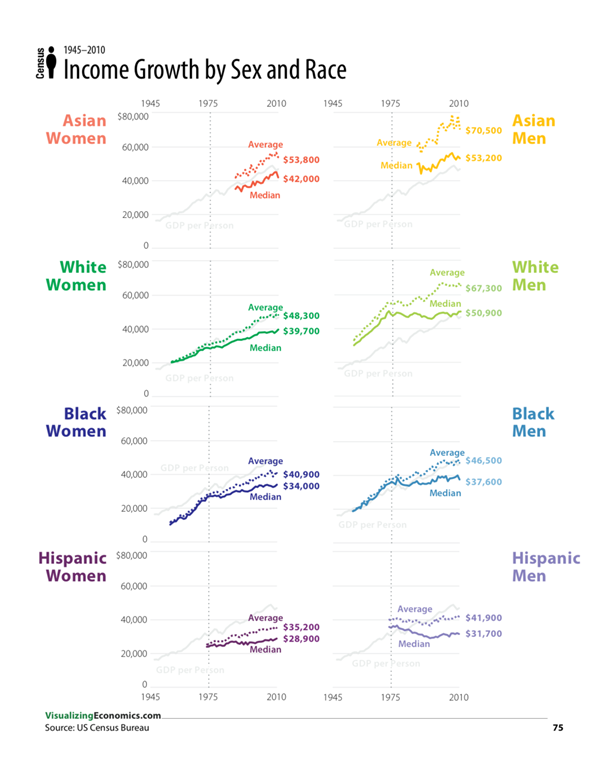
Source: Read Online — Visualizing Economics.

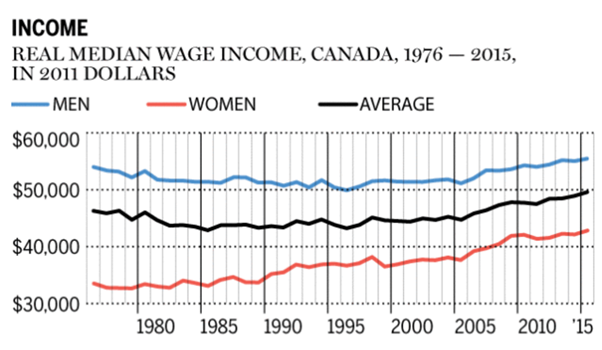
The top 1% gave Canadian women a pass on real wage stagnation too
07 May 2016 Leave a comment
in applied welfare economics, discrimination, economic history, gender, labour economics, labour supply Tags: Canada, gender wage gap, middle class stagnation, reversing gender gap, top 1%, wage stagnation
Median Income for Married Couples with Both Spouses Working
23 Mar 2016 Leave a comment
in economic history, economics of love and marriage, labour economics Tags: asymmetric marriage premium, middle class stagnation, pessimism bias, wage stagnation
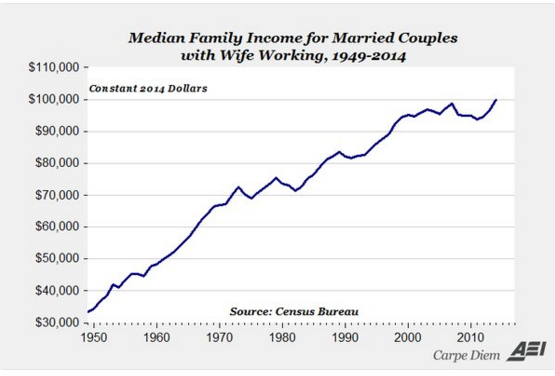
Source: Mark Perry.
More on the reversing gender pay gap or men getting their comeuppances?
10 Jan 2016 Leave a comment
in discrimination, economic history, gender, human capital, labour economics, labour supply, occupational choice, politics - USA Tags: gender wage gap, middle class stagnation, reversing gender gap, wage stagnation
The middle class is starting to wither away
21 Dec 2015 Leave a comment
in economic history, economics of media and culture, labour economics Tags: middle class stagnation
@BernieSanders are the rich getting richer & poor getting poorer or are just men getting their comeuppance?
16 Oct 2015 Leave a comment
in applied welfare economics, economic history, politics - USA Tags: 2016 presidential election, expressive voting, gender wage gap, Leftover Left, middle class stagnation, reversing gender gap, top 1%, Twitter left, wage stagnation
The Typical Male U.S. Worker Earned Less in 2014 Than in 1973: blogs.wsj.com/washwire/2015/… http://t.co/PmTmmfsfbE—
Demos Action (@DemosAction) September 21, 2015
For the first time ever, women are more likely to have bachelor's degrees than men. vox.com/2015/10/13/951… http://t.co/ffK7iiU2Kq—
Demos (@Demos_Org) October 14, 2015
@RobinHoodTax @helenkellyCTU does the average worker earn less than 40 years ago?
30 Sep 2015 Leave a comment
in applied welfare economics, economic history, Marxist economics, politics - New Zealand, politics - USA Tags: good old days, living standards, measurement error, middle class stagnation, productivity measurement, The Great Enrichment, wage stagnation
https://twitter.com/RobinHoodTax/status/648963471690698752/photo/1
For Economic Justice, America Badly Needs Some Raises goo.gl/iA3Ecp #RobinHoodTaxUSA robinhoodtax.org/why http://t.co/0wx4kCpb4Q—
Robin Hood Tax (@RobinHoodTax) September 23, 2015
Innovation is letting us accomplish more with less. Learn more: buff.ly/1LmtAZD #tech #progress http://t.co/e2kQlGu3NA—
HumanProgress.org (@humanprogress) June 22, 2015
@RichardvReeves Why did women get a pass on the great wage stagnation and exploitation by the top 1%?
19 Sep 2015 1 Comment
in discrimination, econometerics, economic history, gender, human capital, labour economics, labour supply, poverty and inequality Tags: female labour force participation, gender wage gap, male labour force participation, middle class stagnation, middle-class stand nation, wage stagnation
Few labour markets statistics make much sense unless broken down by gender.
Women working full-time, year-round jobs earned 78.6% of what similar men did in 2014 on.wsj.com/1KlsIC8 http://t.co/amouJSkPMr—
Real Time Economics (@WSJecon) September 19, 2015
Wages growth is no exception with female wages growth quite good for a long period of time after the 1970s – a period in which male earnings stagnated.
The beginning of male wage stagnation seemed to coincide with the closing of the gender wage gap.
U.S. wage growth doesn't look as weak when you account for benefit costs covered by employers on.wsj.com/1JJ2EmV http://t.co/s0tJutTjBy—
Nick Timiraos (@NickTimiraos) July 06, 2015
Presumably if men were previously profiting from patriarchy, that should have some implications for future wage growth and promotions for men as women catch up.
Presumably if men were previously profiting from patriarchy, that should have some implications for future wage growth for men as women catch up. Men lost the wage premium they previously earned from the sex discrimination directly in hiring, wage setting and promotions and investing in more education because they expected to be discriminated favourably at the expense of women.
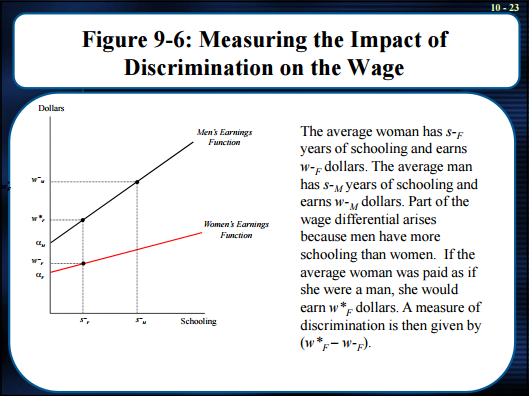
Not surprisingly the convergence in the male-female wage ratios started in the 1970s which was the decade that male wage stagnation started.

The gender wage gap started converging again also pretty much in lockstep with the top 1% starting to grab higher and higher proportions of income.
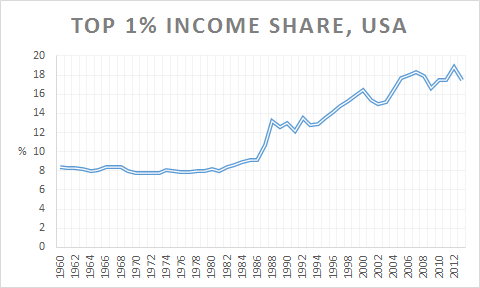
Source: Alvaredo, Facundo, Anthony B. Atkinson, Thomas Piketty and Emmanuel Saez, The World Top Incomes Database.
Why did the top 1% only pick on men in the great wage stagnation?
27 Jul 2015 Leave a comment
in discrimination, economic history, gender, labour economics Tags: middle class stagnation, reversing gender gap, top 1%, wage stagnation
Average & median incomes diverged more for men than for women as income inequaltiy grew bit.ly/16XXzQq http://t.co/Tp0IAXqxH8—
Catherine Mulbrandon (@VisualEcon) August 20, 2013
Middle class stagnation versus food poverty
15 Jun 2015 Leave a comment
in politics - USA, population economics, poverty and inequality, technological progress Tags: good old days, middle class stagnation, The Great Enrichment, wage stagnation
CHART: As a share of income, spending on food has gone from 25% in 1930s to < 10% in 2013. http://t.co/pxRgf6tNOZ—
Mark J. Perry (@Mark_J_Perry) May 14, 2015
@phattonez Note that almost 50% of food expenditures are for now food away from home. http://t.co/zWAu0Zlw82—
Mark J. Perry (@Mark_J_Perry) May 18, 2015
Why did the top 1% only pick on men when they increased inequality over recent decades?
06 Jun 2015 Leave a comment
in discrimination, gender, human capital, labour economics, labour supply, unions Tags: gender wage gap, middle class stagnation, reversing gender gap, superstar wages, superstars, top 1%, wage stagnation
Gender pay gap in corporate America twitter.com/BuzzFeedAndrew… http://t.co/AOFxcUQ8Rk—
Charts and Maps (@ChartsandMaps) April 12, 2015
 Utopia, you are standing in it!

Recent Comments