via Milton Friedman – A Conversation On Minimum Wage – YouTube.
Celebrating humanity's flourishing through the spread of capitalism and the rule of law
07 Jul 2014 Leave a comment
in applied price theory, labour economics, minimum wage, Public Choice Tags: Free to Choose, Milton Friedman, minimum wage
04 Jul 2014 Leave a comment
in business cycles, fiscal policy, macroeconomics, Milton Friedman, monetary economics Tags: Allan Meltzer, JM Keynes, liquidity trap, Milton Friedman
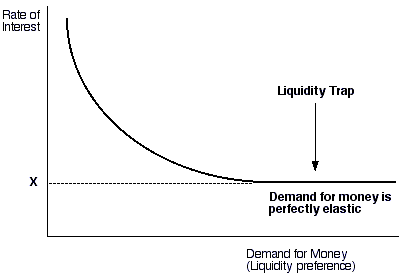
In the Keynesian pipedream, in a liquidity trap, there is perfect substitutability of money and bonds at a zero short-term nominal interest rate. This renders monetary policy ineffective.
Keynesians claim that the demand for money may be so persistently high that the rate of interest could not fall low enough to stimulate investment sufficiently to raise the economy out of the depression. Allan Meltzer explains:
A liquidity trap means that increases in money by the central bank (monetary base) cannot affect output, prices, interest rates or other variables. Changes in the money stock are entirely matched by changes in the demand to hold money.
With a liquidity trap, the public simply hoards the money the central bank creates rather than attempting to run down additions to their cash balances with increased consumer expenditure. This limitless accumulation of money by the public is not a real world phenomenon. The public will not forever accumulate money.
Auerbach and Obstfeld noted in "The Case for Open-Market Purchases in a Liquidity Trap" that to the extent that long-term interest rates are positive short-term interest rates are expected to be positive in the future, trading money for interest-bearing public debt through open market operations reduces future debt-service requirements.
Central banks perhaps should contrive liquidity traps because they can then buy back the public debt because of the unlimited demand for money.
The logic of the liquidity trap is people will without limit give up bonds for non-interest bearing cash. If monetary policy is impotent near the zero bound, the central bank should buy trillions of dollars of federal bonds and payoff the public debt. This is a logical implication of liquidity traps for an optimal fiscal policy!!!! Is my reasoning wrong?
In addition to D.H. Robertson, Jacob Viner, Milton Friedman, Philip Cagan, Don Patinkin, Auerbach and Obstfeld, Robert H. Lucas, Greg Mankiw, and Bernanke and Blinder as sceptics about a liquidity trap, Keynes wrote in 1936:
Whilst the limiting case might become practically important in future, I know of no example of it hitherto. Indeed, owing to the unwillingness of most monetary authorities to deal boldly in debts of long term, there has not been much opportunity for a test.
Meltzer, who wrote A History of the Federal Reserve, Vol. 1: 1913-1951 points to several periods when interest rates were at or close to zero:
“In 1954, interest rates were 0.5 percent or below, and we had no problem recovering,” he says. “In 1948 to 1949, we had zero interest rates. Also in 1937 to 1938. We had no problem recovering.”
The Pigou effect states that when there is deflation of prices, employment (and output) will be increased due to an increase in wealth (and thus consumption). The deflation increases the value of cash balances and therefore the wealth of consumers. They spend some of this additional wealth.
After reading the annual reports of the Fed in the 1920s and 1930s, Milton Friedman noticed the following pattern:
In the years of prosperity, monetary policy is a potent weapon, the skilful handling of which deserves the credit for the favourable course of events; in years of adversity, other forces are the important sources of economic change, monetary policy had little leeway, and only the skilful handling of the exceedingly limited powers available prevented conditions from being even worse
01 Jul 2014 Leave a comment
in applied price theory, labour economics, minimum wage, Public Choice Tags: Milton Friedman, minimum wage
The minimum wage law is most properly described as a law saying that employers must discriminate against people who have low skills. That’s what the law says.
The law says that here’s a man who has a skill that would justify a wage of $5 or $6 per hour (adjusted for today), but you may not employ him, it’s illegal, because if you employ him you must pay him $9 per hour.
So what’s the result? To employ him at $9 per hour is to engage in charity. There’s nothing wrong with charity. But most employers are not in the position to engage in that kind of charity.
Thus, the consequences of minimum wage laws have been almost wholly bad. We have increased unemployment and increased poverty.
26 Jun 2014 Leave a comment
in macroeconomics, Milton Friedman, monetarism Tags: Milton Friedman, monetarism, The Fed

Milton Friedman argued that no member of the Fed would have ever answered yes to that question.
21 Jun 2014 Leave a comment
in applied price theory, comparative institutional analysis, F.A. Hayek, Milton Friedman Tags: Adam Smith, FA Hayek, Milton Friedman, Pete Boetkke, spontaneous order

Pete Boettke has written extensively about how The Wealth of Nations is about social order among strangers. The market is a social order much larger than our span of moral sympathy.
In civilized society [man] stands at all times in need of the co-operation and assistance of great multitudes, while his whole life is scarce sufficient to gain the friendship of a few persons. In almost every other race of animals each individual, when it is grown up to maturity, is entirely independent, and in its natural state has occasion for the assistance of no other living creature.
But man has almost constant occasion for the help of his brethren, and it is in vain for him to expect it from their benevolence only. He will be more likely to prevail if he can interest their self-love in his favour, and show them that it is for their own advantage to do for him what he requires of them.
Whoever offers to another a bargain of any kind, proposes to do this. Give me that which I want, and you shall have this which you want, is the meaning of every such offer; and it is in this manner that we obtain from one another the far greater part of those good offices which we stand in need of.
To realize this social cooperation, Boettke argues that social institutions must be in place such as private property, keeping promises through contract, and the acceptance of the legitimacy of the transfer of property by consent. The division of labour is the key to the ability of the market system to produce social cooperation among distant and different anonymous actors.
The civilising influence of commerce is well-known as is it as the key to peace. We fear neither Russia nor China because of extensive economic interdependencies makes war pointless for all. The common market ended war in Western Europe.
The co-operation and peace is a spontaneous product of Hayek’s concept of catallaxy which is
the order brought about by the mutual adjustment of many individual economies in a market
The youtube clip is Milton Friedman’s discussion of the famous essay I, Pencil and how strangers cooperated in peace and harmony in the market even though they might hate each other if they ever met. I, Pencil details the complexity of its own creation and the numerous people involved is the absence of a master mind, of anyone dictating or forcibly directing these countless actions. Instead, we find the invisible hand at work.
Capitalism is a system which enables cooperation between millions of strangers so that they may jointly pursue their diverse goals.
20 Jun 2014 Leave a comment
in development economics, growth miracles, Milton Friedman Tags: Chile, China, double standards, Milton Friedman, tinpot dictatorships, totalitarian dictatorships


In March 1975, Friedman had a 45-minute meeting with Pinochet while he was on a private visit to Chile. Friedman later wrote a letter to that tin-pot military dictator proposing some economic remedies. That advice was the same advice he gave to countries all around the world such as to the government of India in 1955 .
Friedman advocated quick and severe cuts in government spending and inflation, deregulation, a floating exchange rate and more open international trade policy and to
provide for the relief of any cases of real hardship and severe distress among the poorest classes.
Milton Friedman first visited China in 1980. According to Ronald Coase’s book on Chinese economic reform, as part of that visit, Friedman gave a week long seminar to Chinese government officials. Friedman met with the leadership of this totalitarian dictatorship. Friedman returned again as a guest of the Chinese government in 1988 and 1993:
Milton Friedman and his wife Rose visited China in 1980 and 1988 to learn about the economic reform that was taking place there and to share their economic knowledge and insights with the Chinese people.
Friedman gave lectures in numerous cities and held discussions with government officials, managers, bankers, students, professors and even with ordinary people in their homes and on the streets.
In their second visit they met with Zhao Ziyang… General Secretary of the Chinese Communist Party, to discuss China’s economic reform.
In his meetings with the Chinese leaders when he first visited China in 1980, Friedman strongly emphasised
the importance of unfettered markets, pointing to China’s neighbour, Hong Kong, as a model to be followed by mainland China.
Steven Cheung wrote about those visits and the extremely sophisticated discussions Friedman had with top Chinese officials and their economic advisers in 1988 with Cheung as his translator. The only two points they disagreed on was the control that the Communist Party had over the society and when to loosen exchange-rate controls. Cheung said that Zhao’s rationale for delay deserved a good grade in any graduate exam. Following Friedman’s meetings with Zhao, he said the general secretary
was the best economist I have ever met from a socialist country
Subsequent to his 1988 meeting with Zhao Ziyang, Milton Friedman wrote him a letter that gave much the same advice that he gave to Pinochet. Friedman also advised the Chinese against following the market socialism model of Yugoslavia because although it would work for a while before further economic growth required privatisation.
Why is it wrong to have one 45 minute meeting with the tin-pot dictator and yet give seminars and detailed policy advice to a totalitarian dictatorship. Friedman would spend the rest of his life being defamed as an accomplice to evil for meeting Pinochet for 45 minutes. Friedman later noted that he gave communist dictatorships the same advice he gave Pinochet:
It’s curious. I gave exactly the same lectures in China that I gave in Chile. I have had many demonstrations against me for what I said in Chile.
Nobody has made any objections to what I said in China. How come?
If the same standard of evidence is applied to all people who visit dictatorships, Friedman must be a Communist agent or at least a collaborator and responsible for all the horrors that took place in China before and after he visited: the Great Leap Forward and the cultural revolution would be examples. Friedman also visited Yugoslavia: market socialism is his fault as well.
19 Jun 2014 Leave a comment
in great depression, macroeconomics Tags: great depression, Lee Ohanian, Milton Friedman
Friedman and Schwartz argue that the great depression was caused by a collapse of the money supply due to the negligence of the Fed that turned what should have been a garden-variety recession that started in late 1929.
Lee Ohanian argues that there was a steep industrial decline in the USA in 1929 began before monetary contractions or banking panics in 1930 and 1933. The figure below shows manufacturing industry hours worked between January 1929 and September 1930, and measures of the money stock from Friedman and Schwartz corresponding to M1 and M2. Manufacturing industry hours decline substantially and abruptly in late 1929 while money supply fall only about 4% and 1%, respectively.

This sharp decline in the manufacturing sector (a decline of nearly 30% by the fall of 1930 )began before monetary contraction or banking panics – the conventional culprits:
The data in the above figure shows that a factor other than monetary contractions or bank runs were central to the onset of the Great Depression.
Nominal wages declined by little during the early stages of the Depression. in September 1931 nominal wage rates were 92 per cent of their level two years earlier. Since a significant price deflation had occurred during these two years, real wages rose by 10 per cent during the same period, while gross domestic product fell by 27 per cent.
With a substantial depression in employment mostly in the manufacturing sector, any explanation of the onset of the great depression in the United States must start with an explanation of why the labour market failed to clear in that sector, why manufacturing decline was so immediately severe before significant monetary contraction and banking panics, why the Depression was so asymmetric across sectors, and provide a theory for why industrial sector wages were persistently well above their market-clearing level.
Just to make it harder for you,nominal wages in the agricultural sector will fell by 40% over the same period in which wages in the manufacturing sector did not fall to all. As Ohanian notes:
The Depression was the first time in the history of the US that wages did not fall during a period of significant deflation.”
Any explanation based on wage rigidity or sluggish wage adjustment or employee resistance to wage cuts must explain why this resistance was so effective in the manufacturing sector but so ineffective in the agricultural sector. Ohanian concluded that:
…the Depression is the consequence of government programs and policies, including those of Hoover, that increased labour’s ability to raise wages above their competitive levels.
17 Jun 2014 Leave a comment
in applied price theory, applied welfare economics Tags: Milton Friedman, value judgements


15 Jun 2014 Leave a comment
in history of economic thought, Public Choice Tags: conspiracy theories, FA Hayek, Milton Friedman, Mont Pelerin Society, neoliberalism, vast right-wing conspiracy
 |
 |
Few had even heard of the Mont Pelerin Society until the late 1990s and the internet age. The ringmaster of the neoliberal conspiracy still has a very ordinary looking webpage.
Lead conspirator Hayek was so little known at his death in 1992 that finding extensive obituaries of him in newspapers is hard. Some may be behind pay walls. Of those that were found, they weren’t very long and forgot to mention Hayek as the leader of a global cabal that rule the waves :
When Keynesian thought prevailed and his reputation went into eclipse, Mr. Hayek turned to philosophy and psychology, which he first taught at the University of Chicago, where he wrote what many consider to be a second masterpiece, “The Constitution of Liberty “.
His son’s obituaries in 2006 were longer and more fulsome than his father’s mostly on the back of who his now famous father were:
Lawrence Hayek escaped from the formidable shadow of his father, the great economist-philosopher, Professor F. A. Hayek, into high-level medical research within the NHS, only to spend much of his final decade responding to the worldwide interest in the scholar many regard — along with Milton Friedman — as the father of Thatcherism.
Hayek, the Mont Pelerin Society’s and neoliberal conspiracy’s alleged linchpin wasn’t even able to get a job in the University of Chicago economics department. Along with Mises, their salaries were paid by a private foundation. Neither could get paid university appointments in the United States. Hayek was Keynes’s principal critic in the 1930s, and upon Keynes’s death in 1946, the most famous economist in the world at that time.
Despite being a colony of the vast neo-liberal conspiracy, mentioning Milton Friedman’s name in the 1980s at job interviews in Canberra would have been extremely career limiting. Not much better in the early 1990s.
How times has changed. The reasons are well summarised by Bruce Caldwell:
But how important were [members of the Mont Pèlerin Society] in the emerging global consensus that began in the 1980s in favour of trade liberalization and privatization?
Were not, for example, the dismal performance of Keynesian demand management policies in the United States, Britain, and elsewhere in the 1970s; the heavy-handed actions of the trade unions in Britain during the “Winter of Discontent”; the sclerotic performance of countries like India who had embraced a modified version of the planning model for their own; and, of course, the patent economic and political failures of the East Bloc, far more important in turning the tide, however briefly, towards globalization?
Was not George Stigler (himself a founding member of the Society) right in his comment about economists that “our influence appears to be powerful only when we support policies ripe for adoption” (Stigler 1987, p. 11)?
see Daniel Stedman Jones (2012). Masters of the Universe: Hayek, Friedman, and the Birth of Neoliberal Politics and P. Mirowski and D. Plehwe, eds. (2009), The Road from Mont Pelerin: The Making of the Neoliberal Thought Collective for the handbook on the cabal leading the vast right-wing conspiracy. For example,
The Road from Mont Pèlerin presents the key debates and conflicts that occurred among neoliberal scholars and their political and corporate allies regarding trade unions, development economics, antitrust policies, and the influence of philanthropy. The book captures the depth and complexity of the neoliberal “thought collective” while examining the numerous ways that neoliberal discourse has come to shape the global economy.
Masters of the Universe traces the ascendancy of neoliberalism from the academy of interwar Europe to supremacy under Reagan and Thatcher and in the decades since. Daniel Stedman Jones argues that there was nothing inevitable about the victory of free-market politics. Far from being the story of the simple triumph of right-wing ideas, the neoliberal breakthrough was contingent on the economic crises of the 1970s and the acceptance of the need for new policies by the political left.
19 May 2014 1 Comment
in Alfred Marshall, applied welfare economics, David Friedman, labour economics, minimum wage Tags: David Card, interpersonal comparision of utility, Milton Friedman, minimum wage, offsetting behaviour, The fatal conceit, The pretense to knowledge
Raising the minimum wage by a substantial amount would price working poor people out of the job market.
A far better way to help them would be to subsidize their wages or – better yet – help them acquire the skills needed to earn more on their own…
Raise the legal minimum price of labour above the productivity of the least skilled workers and fewer will be hired.
If a higher minimum means fewer jobs, why does it remain on the agenda of some liberals?
A higher minimum would undoubtedly raise the living standard of the majority of low-wage workers who could keep their jobs. That gain, it is argued, would justify the sacrifice of the minority who became unemployable.
The argument isn’t convincing. Those at greatest risk from a higher minimum would be young, poor workers, who already face formidable barriers to getting and keeping jobs. Indeed, President Reagan has proposed a lower minimum wage just to improve their chances of finding work.
What does the New York Times say in 2014?
The minimum wage is specifically intended to take aim at the inherent imbalance in power between employers and low-wage workers that can push wages down to poverty levels.…
The weight of the evidence shows that increases in the minimum wage have lifted pay without hurting employment
Both the White House and the New York Times are not the best of Bayesian updaters because the author of the one study on which they are very much hang their hats for their policy conclusions about no job losses from a minimum wage increase interprets his results with very much less zeal than they do:
I think careful research on the topic has found that for this range of minimum wage increase, the almost unmistakable conclusion is that there will be little in the way of job losses, while the wages of low-end workers will get a boost (his underlining).
The claims of the White House and the New York Times that the minimum wage can be lifted without hurting employment are a long bow from what Andrajit Dube said about small changes in the minimum wage having small adverse effects on unemployment:
What Andrajit Dube said s not much different from everyone else on the minimum wage – Nuemark is an example:
a 10 per cent increase in the minimum wage could reduce young adult employment by up to 2 per cent
David Card was always very careful amount about how his pioneering research was about how small increases in the minimum wage not reducing employment in the presence of search and matching costs:
From the perspective of a search paradigm, these policies make sense, but they also mean that each employer has a tiny bit of monopoly power over his or her workforce.
As a result, if you raise the minimum wage a little—not a huge amount, but a little—you won’t necessarily cause a big employment reduction. In some cases you could get an employment increase.
There is always offsetting behaviour: Barry Hirsch found that when the federal minimum wage went up in 2007, businesses just made their employees work harder to justify the expense.
I am always surprised that people might think that the minimum wage will have anywhere near its intended effects after market participants have had time to act to counter its effects as Peltzman explains:
Regulation creates incentives for behaviour to offset some or even all of the intended effect of the regulation…
Regulation seldom changes the forces that produces the particular results the regulators seek to change. So we need to ask whether the regulation really changes result or only the form in which the market forces assert themselves.
Is a minimum wage increase a Pareto improvement – a policy action done in an economy that harms no one and helps at least one person?

Obviously there are winners and losers from a minimum wage increase and these wins and loses must be summed up in some way as they are for all public policy changes.

When there are winners and losers from deregulation, the only thing seems to matter to many of those who support a minimum wage increase are the losses to the incumbent industry and its often well-paid workers rather than the gains to consumers, rich or poor.
For there to be a Marshall improvement, the sum of all of the gains and losses must sum to a positive.
A Marshall improvement from a minimum wage or any other change is measured by adding utilities as if everyone receives the same utility from a dollar. A dollar is a dollar to everyone as David Friedman explains:
A net improvement in the sense used by Marshall–what I have elsewhere called a Marshall improvement–is a change whose net value is positive, meaning that the total value to those who benefit, measured as the sum of the number of dollars they would each, if necessary, pay to get the change, is larger than the total cost to those who lose, measured similarly.
The advantage of the Marshall improvement criterion is we commonly observe people’s values of different things by seeing how much they are willing to pay for it.
Alfred Marshall was aware that treating people as if they all had the same utility for a dollar was a stretch but this was considered less relevant for policy changes that affect large and diverse groups of people. Individual differences could be expected to cancel out over a broad suite of policies in a well-functioning democracy so that most people gain in net terms through time. David Friedman explains:
I prefer to use the Marshallian approach, which makes the interpersonal comparison explicit, instead of hiding it in the ‘could be made but isn’t’ compensating payment…
a change that benefits a millionaire by $10 and costs a pauper $9 is a potential Pareto improvement, since if combined with a payment of $9.50 from the millionaire to the pauper it would benefit both. If the payment is not made, however, the change is not an actual Pareto improvement.
The ‘potential Paretian’ approach reaches the same conclusion as the Marshallian approach and has the same faults; it simply hides them better. That is why I prefer Marshall…
It is worth noting that although a Marshall improvement is usually not a Pareto improvement, the adoption of a general policy of ‘Wherever possible, make Marshall improvements’ may come very close to being a Pareto improvement…
Add up all the effects and, unless one individual or group is consistently on the losing side, everyone, or almost everyone, is likely to benefit.
This is the latest review of the minimum wage research from David Neumark:
The potential benefits of higher minimum wages come from the higher wages for affected workers, some of whom are in poor or low-income families.
The potential downside is that a higher minimum wage may discourage employers from using the low-wage, low-skill workers that minimum wages are intended to help.
If minimum wages reduce employment of low-skill workers, then minimum wages are not a “free lunch” with which to help poor and low-income families, but instead pose a trade-off of benefits for some versus costs for others.
Research findings are not unanimous, but evidence from many countries suggests that minimum wages reduce the jobs available to low-skill workers.
George Stigler set-out the conditions for a minimum wage to achieve its purported objectives in 1946, which have not been bettered:
If an employer has a significant degree of control over the wage rate he pays for a given quality of labour, a skilfully-set minimum wage may increase his employment and wage rate and, because the wage is brought closer to the value of the marginal product, at the same time increase aggregate output…
This arithmetic is quite valid but it is not very relevant to the question of a national minimum wage. The minimum wage which achieves these desirable ends has several requisites:
1. It must be chosen correctly… the optimum minimum wage can be set only if the demand and supply schedules are known over a considerable range…
2. The optimum wage varies with occupation (and, within an occupation, with the quality of worker).
3. The optimum wage varies among firms (and plants).
4. The optimum wage varies, often rapidly, through time.
A uniform national minimum wage, infrequently changed, is wholly unsuited to these diversities of conditions.
The case for a minimum wage was therefore hung, drawn and quartered in 1946 by Stigler. Not every cause and effect is open to policy manipulation because of the lack of the necessary knowledge about the relationship and insufficiently deft policy tools to exploit that knowledge in a timely fashion and as circumstances change. This information and organisational burden is such that the process of setting minimum wage increases is an example of public policy making that is groping about in the dark. Success can be neither appraised in advance nor later retrospectively determined.
30 Apr 2014 Leave a comment
in applied welfare economics, constitutional political economy, economics, Milton Friedman Tags: Alan Blinder, critical discussion, honest disagreement, Karl Popper, Lester Thurow, Milton Friedman, Peter Drucker, William Baumol
I find that people who call out other people and opposing analysis as ideological are themselves ideologues. They cannot see political differences as other than ideological cat fights.

This is rather than an honest difference of opinion over the effectiveness of different options to achieve a common end as Milton Friedman explained:
I venture the judgment, however, that currently in the Western world, and especially in the United States, differences about economic policy among disinterested citizens derive predominantly from different predictions about the economic consequences of taking action – differences that in principle can be eliminated by the progress of positive economics – rather than from fundamental differences in basic values, differences about which men can ultimately only fight.
Hayek attributed to his opponents nothing more than intellectual error. Hayek (1948) believed that:
we must recognize that it may be genuine error which leads the well-meaning and intelligent people who occupy those key positions in our society to spread views which to us appear a threat to our civilization. Nothing could be more important than to try to understand the sources of this error in order that we should be able to counter it.
Hayek (1968) continues:
The worst mistake a fighter for our ideals can make is to ascribe to our opponents dishonest or immoral aims. I know it is sometimes difficult not to be irritated into a feeling that most of them are a bunch of irresponsible demagogues who ought to know better…
we ought to realize that their conceptions derive from serious thinkers whose ultimate ideals are not so very different from our own and with whom we differ not so much on ultimate values, but on the effective means of achieving them.
William Baumol and Alan Blinder described the role of economics in policy debates as follows:
While economic science can contribute the best theoretical and factual knowledge there is on a particular issue, the final decision on policy questions often rests either on information that is not currently available or on tastes and ethical opinions about which people differ (the things we call ‘value judgments’), or on both.
Lester Thurow said that differences in the valuation of outcomes is at the basis of most disagreements:
Liberal and conservative economists most frequently disagree on who ought to be hurt and who ought to be helped. Their technical disagreements on who will be hurt and who will be helped are much less frequent.
Karl Popper argued that who made an argument is of little value. He said that the growth of knowledge depended not on the ethics of the individual scientists but on the critical spirit to scientific community as a whole. The critical scrutiny of others polices the truth:
The genuine rationalist does not think that he or anyone else is in possession of the truth; nor does he think that mere criticism as such helps us achieve new ideas.
But he does think that, in the sphere of ideas, only critical discussion can help us sort the wheat from the chaff.
He is well aware that acceptance or rejection of an idea is never a purely rational matter; but he thinks that only critical discussion can give us the maturity to see an idea from more and more sides and to make a correct judgement of it.
Peter Drucker championed a business rule of never making a decision until there is disagreement; only then do you know what you are planning to do:
Unless one has considered alternatives, one has a closed mind.
This above all, explains why effective decision-makers deliberately disregard the second major command of the textbooks on decision-making and create dissension and disagreement, rather than consensus.
Decisions of the kind the executive has to make are not made well by acclamation.
They are made well only if based on the clash of conflicting views, the dialogue between different points of view, the choice between different judgments.
The first rule in decision-making is that one does not make a decision unless there is disagreement
Alfred P. Sloan said at a meeting of one of his top management committees:
“Gentlemen, I take it we are all in complete agreement on the decision here.” Everyone around the table nodded assent.
“Then,”continued Sloan, “I propose we postpone further discussion of this matter until our next meeting to give ourselves time to develop disagreement and perhaps gain some understanding of what the decision is all about”.
15 Apr 2014 Leave a comment
in development economics, growth miracles, Milton Friedman, Murray Rothbard Tags: action bias, Hong Kong, illusion of competence, John Cowperthwaite, Milton Friedman
The Colonial Office sent John Cowperthwaite to Hong Kong in 1945 to serve eventually as its financial secretary from 1961.
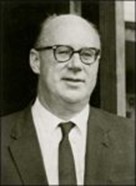
This Scotsman was very much a disciple of Adam Smith. In his first budget speech, in 1961, he said:
In the long run, the aggregate of decisions of individual businessmen, exercising individual judgment in a free economy, even if often mistaken, is less likely to do harm than the centralised decisions of a government, and certainly the harm is likely to be counteracted faster.
In his decade as financial secretary, real wages rose by 50 % and the share of the population in acute poverty fell from 50% to 15%. Milton Friedman met Cowperthwaite in 1963 and asked about the lack of economic statistics. Cowperthwaite answered:
“If I let them compute those statistics, they’ll want to use them for planning.” Friedman thought “How wise”.
Murray Rothbard got into a debate with George Stigler in the early 1960s about the dangers of collecting statistics. Rothbard argued that:
The individual consumer, in his daily rounds, has little need of statistics; through advertising, through the information of friends, and through his own experience, he finds out what is going on in the markets around him. The same is true of the business firm.
The businessman must also size up his particular market, determine the prices he has to pay for what he buys and charge for what he sells, engage in cost accounting to estimate his costs, and so on.
But none of this activity is really dependent upon the omnium gatherum of statistical facts about the economy ingested by the federal government. The businessman, like the consumer, knows and learns about his particular market through his daily experience.
… Statistics are the eyes and ears of the bureaucrat, the politician, the socialistic reformer. Only by statistics can they know, or at least have any idea about, what is going on in the economy.
… Cut off those eyes and ears, destroy those crucial guidelines to knowledge, and the whole threat of government intervention is almost completely eliminated
Cowperthwaite refused to collect economic statistics
for fear that I might be forced to do something about them
This action bias is a common bias of bureaucracies. Peter Lilley in the UK said:
…when there is a problem – a perceived political problem – officials come up with a range of options which excludes one option. I observed this when I was a humble PPS at the Department of Environment and suggested that we always ought to include this option on the list and it became known as “Lilley’s option” and that was do nothing.
Other psychological biases of bureaucracies are motivated reasoning, the focusing illusion, the affect heuristic and the illusion of competence. When Friedman asked him in 1963 to explain the mechanism which kept the Hong Kong dollar pegged to the pound, Cowperthwaite said that the Hong Kong & Shanghai Bank (through which the currency peg was operated) did not understand it:
Better they shouldn’t. They would mess it up.
His 2008 Guardian obituary noted that when asked what was the key thing that poor countries should do, Cowperthwaite once remarked:
They should abolish the office of national statistics.
The ideal faceless bureaucrat, Cowperthwaite said of his record:
I did very little. All I did was to try to prevent some of the things that might undo it.
.
07 Apr 2014 Leave a comment
in constitutional political economy, industrial organisation, politics - USA, Public Choice Tags: Cass Sunstein, Karl Popper, Milton Friedman
Cass Sunstein made some astute observations in Republic.com 2.0 about how the blogosphere forms into information cocoons and echo chambers. People can avoid the news and opinions they don’t want to hear.

This is not all that surprising. Many do not read the newspaper, or read those newspapers that fuel their initial beliefs. London is famous for its partisan newspapers each pandering to their own slice of the political spectrum.
The standard J.S. Mill view of deliberation is that group discussion is likely to lead to better outcomes, if only because competing views are stated and exchanged.
Sunstein has argued that there are limitless news and information options and, more significantly, there are limitless options for avoiding what you do not want to hear:
A common risk of debate is group polarisation. Members of the deliberating group move toward a more extreme position relative to their initial tendencies!
How many blogs are populated by those that denounce those who disagree? This is the role of the mind guard in group-think.
Debate is over-rated as compared to brute experience. Milton Friedman said this in his Nobel price lecture:
Government policy about inflation and unemployment has been at the centre of political controversy. Ideological war has raged over these matters.
Yet the drastic change that has occurred in economic theory has not been a result of ideological warfare.
It has not resulted from divergent political beliefs or aims.
It has responded almost entirely to the force of events: brute experience proved far more potent than the strongest of political or ideological preferences
The market process succeeds because it relies on a bare minimum of knowledge and hardly any deliberation but a lot of learning from experience.
A purpose of voting through secret ballots is both to bring the debate to a close and to clip the wings of those that shout the loudest and longest.
Sunstein in Infotopia wrote about how people use the Internet to spend too much time talking to those that agree with them and not enough time looking to be challenged:
In an age of information overload, it is easy to fall back on our own prejudices and insulate ourselves with comforting opinions that reaffirm our core beliefs. Crowds quickly become mobs.
The justification for the Iraq war, the collapse of Enron, the explosion of the space shuttle Columbia–all of these resulted from decisions made by leaders and groups trapped in "information cocoons," shielded from information at odds with their preconceptions. How can leaders and ordinary people challenge insular decision making and gain access to the sum of human knowledge?
Conspiracy theories had enough momentum of their own before the information cocoons and echo chambers of the blogosphere gained ground.
Must everything be the result of a grand plan? As Karl Popper explains:
…a theory which is widely held but which assumes what I consider the very opposite of the true aim of the social sciences; I call it the "conspiracy theory of society."
It is the view that an explanation of a social phenomenon consists in the discovery of the men or groups who are interested in the occurrence of this phenomenon (sometimes it is a hidden interest which has first to be revealed), and who have planned and conspired to bring it about.
This view of the aims of the social sciences arises, of course, from the mistaken theory that, whatever happens in society – especially happenings such as war, unemployment, poverty, shortages, which people as a rule dislike – is the result of direct design by some powerful individuals and groups.
Cass Sunstein in another book defines a conspiracy theory as:
An effort to explain some event or practice by reference to the machinations of powerful people, who have also managed to conceal their role.
He goes on to argue that millions hold conspiracy theories – that powerful people work together to withhold the truth about some important practice or terrible event.
Conspiracy theories attribute extraordinary powers to political leaders and bureaucracies to plan, to control others, and to maintain secrets. Conspiracy theories overestimate the competence and discretion of these political leaders and bureaucracies, who are assumed to be able to make and carry out sophisticated secret plans, despite ample evidence that most government actions do not remain secret for long.
Conspiracy theories also assume that these nefarious secret plans are easily detected by members of the public without the need for special access to the key information or any investigative resources.
Sunstein also argued that a distinctive feature of conspiracy theories is their self-sealing quality. Conspiracy theorists are not persuaded by an attempt to dispel their theories and look at these attempts as further proof of the conspiracy.
Karl Popper argued that conspiracy theories overlook the pervasive unintended consequences of political and social action; they assume that all consequences must have been intended by someone.

Most people lack direct or personal information about the explanations for terrible events, and they are often tempted to attribute such events to some nefarious actor as a way of coping with an uncertain world. More than a few blogs help them round-up the usual suspects.
Celebrating humanity's flourishing through the spread of capitalism and the rule of law
Scholarly commentary on law, economics, and more
Beatrice Cherrier's blog
Celebrating humanity's flourishing through the spread of capitalism and the rule of law
Celebrating humanity's flourishing through the spread of capitalism and the rule of law
Celebrating humanity's flourishing through the spread of capitalism and the rule of law
Why Evolution is True is a blog written by Jerry Coyne, centered on evolution and biology but also dealing with diverse topics like politics, culture, and cats.
Celebrating humanity's flourishing through the spread of capitalism and the rule of law
Celebrating humanity's flourishing through the spread of capitalism and the rule of law
A rural perspective with a blue tint by Ele Ludemann
DPF's Kiwiblog - Fomenting Happy Mischief since 2003
Celebrating humanity's flourishing through the spread of capitalism and the rule of law
The world's most viewed site on global warming and climate change
Tim Harding's writings on rationality, informal logic and skepticism
A window into Doc Freiberger's library
Let's examine hard decisions!
Commentary on monetary policy in the spirit of R. G. Hawtrey
Thoughts on public policy and the media
Celebrating humanity's flourishing through the spread of capitalism and the rule of law
Politics and the economy
A blog (primarily) on Canadian and Commonwealth political history and institutions
Reading between the lines, and underneath the hype.
Economics, and such stuff as dreams are made on
"The British constitution has always been puzzling, and always will be." --Queen Elizabeth II
Celebrating humanity's flourishing through the spread of capitalism and the rule of law
Celebrating humanity's flourishing through the spread of capitalism and the rule of law
WORLD WAR II, MUSIC, HISTORY, HOLOCAUST
Undisciplined scholar, recovering academic
Celebrating humanity's flourishing through the spread of capitalism and the rule of law
Res ipsa loquitur - The thing itself speaks
Celebrating humanity's flourishing through the spread of capitalism and the rule of law
Researching the House of Commons, 1832-1868
Articles and research from the History of Parliament Trust
Reflections on books and art
Posts on the History of Law, Crime, and Justice
Celebrating humanity's flourishing through the spread of capitalism and the rule of law
Exploring the Monarchs of Europe
Cutting edge science you can dice with
Small Steps Toward A Much Better World
“We do not believe any group of men adequate enough or wise enough to operate without scrutiny or without criticism. We know that the only way to avoid error is to detect it, that the only way to detect it is to be free to inquire. We know that in secrecy error undetected will flourish and subvert”. - J Robert Oppenheimer.
The truth about the great wind power fraud - we're not here to debate the wind industry, we're here to destroy it.
Celebrating humanity's flourishing through the spread of capitalism and the rule of law
Celebrating humanity's flourishing through the spread of capitalism and the rule of law
Economics, public policy, monetary policy, financial regulation, with a New Zealand perspective
Celebrating humanity's flourishing through the spread of capitalism and the rule of law
Restraining Government in America and Around the World


 Utopia, you are standing in it!
Recent Comments