At the 2014 General Election 31.64% of all voters split their vote compared to 30.70% in 2011. Slightly over 80% of Labour Party and National Party voters give both their party vote and electorate vote to the same party.
Source: The Electoral Commission.
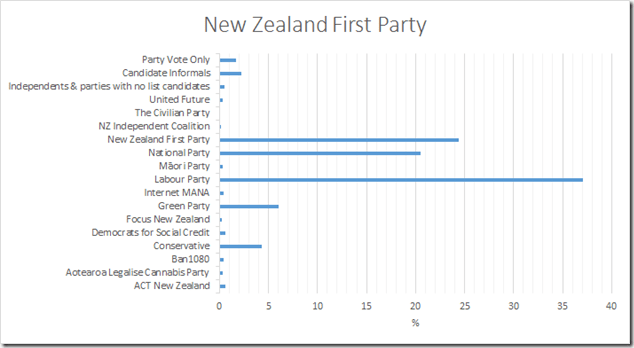
New Zealand First vote splitting data above suggests more Labour voters vote New Zealand First than National Party voters by a noticeable margin. 1/3rd of voters who gave their party vote to New Zealand First voted Labour with their electorate vote. This compares to one in five New Zealand First voters who gave their electorate vote to the National Party.
Source: The Electoral Commission.
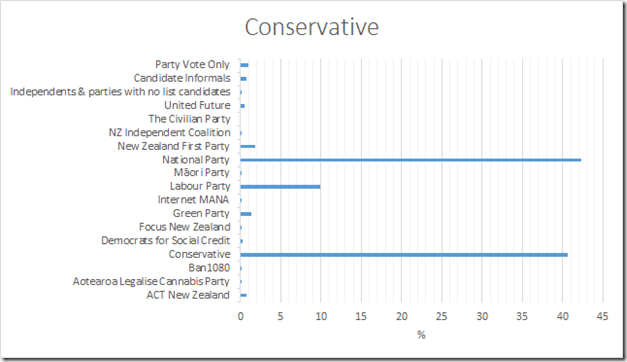
It’s a different story with the Conservative Party. A good 40% of Conservative Party voters give their electorate vote to National. This compares to a 10% split to the Labour Party.
The National Party has much to gain from the collapse of the Conservative Party as does fellow populist party New Zealand First. This split vote analysis does not throw much insight into how New Zealand First would benefit from a collapse in the Conservative Party.
If New Zealand First picks up a significant amount of the current party vote for the Conservative Party if the latter was to fold, New Zealand First will pick up one or two list seats in the next general election giving it the balance of power.
The only thing that could be said is the lack of Labour voters among Conservative Party voters suggest they are reluctant to support New Zealand First because in the past it has supported Labour Governments. The Conservative Party effectively promised to support a National Party Government.
A vote for the Conservative Party is a vote for a National Party government. A vote for New Zealand First is much more likely to see a Labour Government. That suggests to me that many Conservative Party voters are National Party voters at heart.
 Utopia, you are standing in it!
Recent Comments