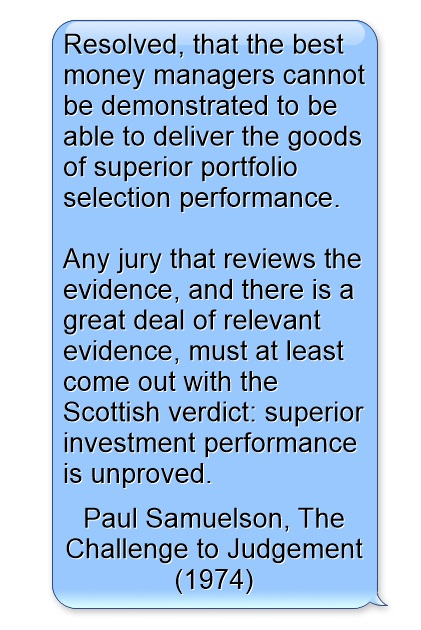
"Paul Samuelson" on the New Zealand superannuation fund beating the market
24 Feb 2015 Leave a comment
What were they thinking? NZ government super fund loses the lot on loan to already failing bank in one of the PIGS.
20 Feb 2015 Leave a comment
in economics of bureaucracy, entrepreneurship, financial economics, politics - New Zealand Tags: active investing, corruption, euro crisis, Index of Economic Freedom, junk bonds, passive investing, Portugal, risk diversification, state owned enterprises
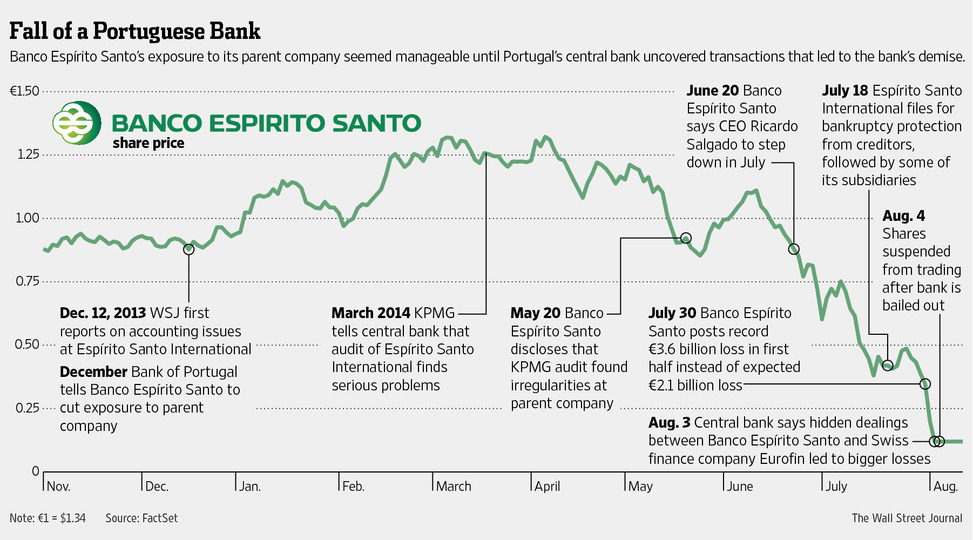
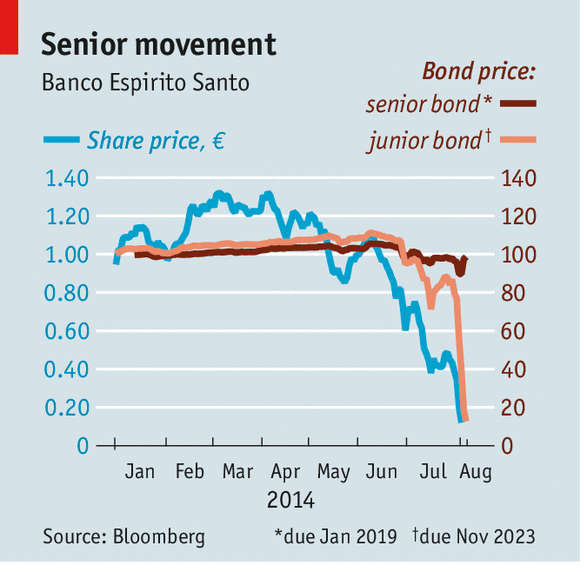
A Portuguese bank on the verge of collapse – what were they thinking?
That would have been the response of many newspaper readers this morning upon learning the New Zealand Superannuation Fund has lost nearly $200 million in taxpayers’ cash on a "risk-free" loan it provided to Lisbon-based Banco Espirito Santo (BES) on July 3.
The loan – part of a US$784 million credit package US investment bank Goldman Sachs put together through its Oak Finance vehicle – was made exactly one month before Portugal’s central bank broke up BES and split the country’s biggest lender into two, with one part holding the good assets and the toxic assets placed in the other.
Unfortunately, the Oak Finance loan is now stranded in the so-called "bad bank" following a retrospective law change by the Bank of Portugal.
Christopher Adams: What were they thinking? – Business – NZ Herald News.
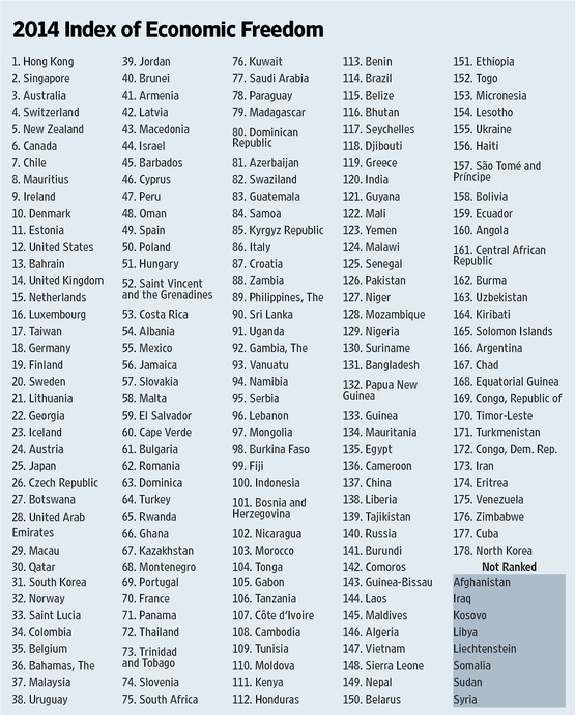
This is what the 2015 index of Economic Freedom has to say about Portugal on the rule of law:
In 2013, the OECD expressed concern over Portugal’s reluctance to crack down on foreign bribery, particularly in regard to its former colonies Brazil, Angola, and Mozambique.
Since 2001, Portugal had officially acknowledged only 15 bribery allegations, and there had been no prosecutions. The judiciary is constitutionally independent, but staff shortages and inefficiency contribute to a considerable backlog of pending trials.
Actively managed share funds are on the way out
20 Feb 2015 Leave a comment
in entrepreneurship, financial economics, industrial organisation, survivor principle Tags: active investing, efficient markets hypothesis, passive investing, William F. Shape
After costs, the return on the average actively managed dollar will be less than the return on the average passively managed dollar for any time period.
—William F. Sharpe, 1990 Nobel Laureate
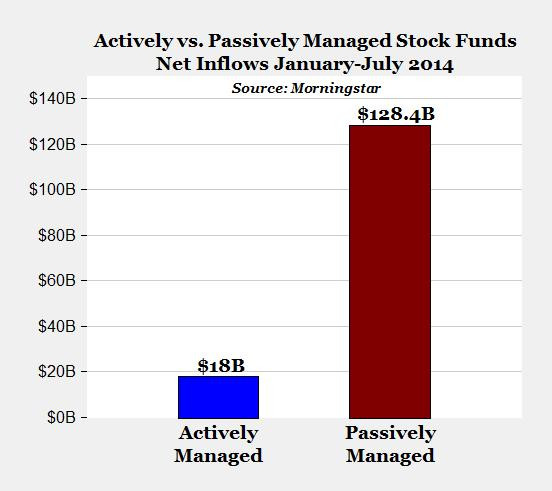
4 out of 5 actively managed fund portfolios underperformed all index fund portfolios in all scenarios tested.
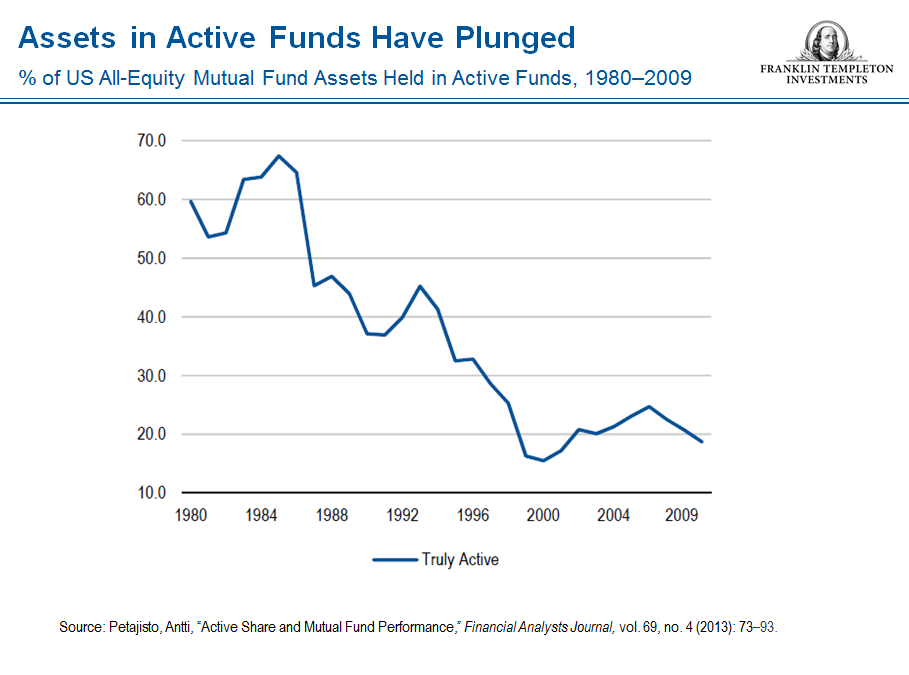

via The tide is turning as investors switch from high-cost, actively managed funds to index funds for lower costs, higher returns » AEI | Carpe Diem Blog » AEIdeas and Mutual Fund Expenses | Lion’s Share.
.
Who Routinely Trounces the U.S. Stock Market? Try 2 Out of 2,862 Funds – NYTimes.com
30 Jul 2014 Leave a comment
in entrepreneurship, financial economics, survivor principle Tags: active investing, efficient markets hypothesis, indexed linked investing, passive investing, stock picking

For the three years ended March 2014, 14.10% of large-cap funds, 16.32% of mid-cap funds and 25.00% of small-cap funds maintained a top-half ranking over three consecutive 12-month periods. Random expectations would suggest a rate of 25%.
After five years, two funds are still beating the market in each of the last five years.The rest of fallen by the wayside.
via Who Routinely Trounces the Stock Market? Try 2 Out of 2,862 Funds – NYTimes.com

 Utopia, you are standing in it!
Recent Comments