Political bias, free trade and @berniesanders @realdonaldtrump
31 Mar 2016 Leave a comment
in applied price theory, applied welfare economics, economics of media and culture, industrial organisation, international economics, politics - USA, Public Choice, public economics, rentseeking Tags: 2016 presidential election, antiforeign bias, antimarket bias, makework bias, pessimism bias, rational irrationality
Median Income for Married Couples with Both Spouses Working
23 Mar 2016 Leave a comment
in economic history, economics of love and marriage, labour economics Tags: asymmetric marriage premium, middle class stagnation, pessimism bias, wage stagnation
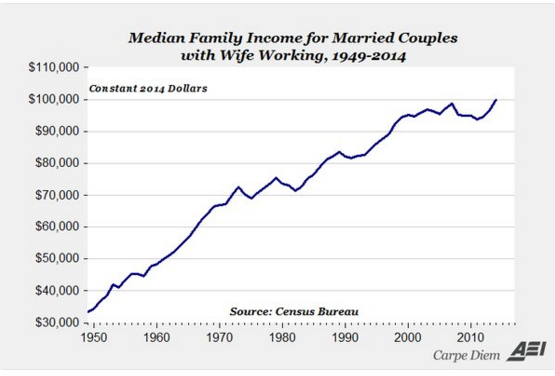
Source: Mark Perry.
The 1st @PaulKrugman on globalisation & development @harleyhs #TPPANoWay
22 Mar 2016 Leave a comment
in development economics, economic history, growth disasters, growth miracles, international economics Tags: anti-market bias, antiforeign bias, GATT, gender analysis, gender wage gap, makework bias, NAFTA, pessimism bias, preferential trading agreements, rational irrationality, TPPA, WTO
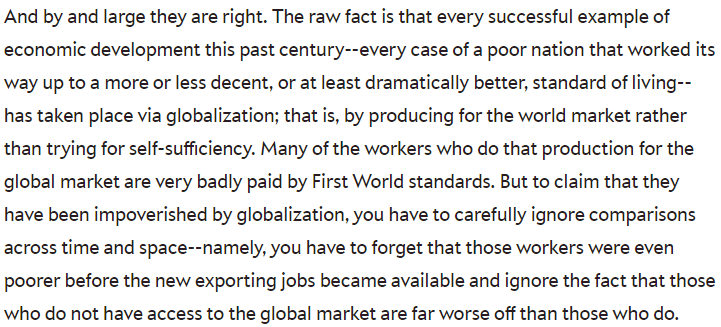
Source: Paul Krugman (1997) Enemies of the WTO.
This visiting American education professor who specialises in globalisation, claimed in the linked radio interview that real wages had fallen in the USA and Mexico. Even for the bottom 20% of the USA, their after-tax household incomes increased by 40% since 1979, with most of that after the signing of NAFTA.
Everything that is bad in crony capitalist Mexico is the fault of NAFTA if our visiting academic is to be believed despite trade tripling and investment increasing 600% because of NAFTA.
Women’s earnings growth has been perfectly fine over the last 40 years despite the horrors of NAFTA and the attack on unions and workers rights by a top 1% emboldened by NAFTA and globalisation, if our visiting academic is to be believed.
Gender analysis, gender analysis, where is his gender analysis of NAFTA? Few labour market statistics make sense without being broken down by sex because of the immense economic progress of women in the last 50 years. Can NAFTA claim credit for that?
Did Earth Hour save any power? @GreenpeaceNZ
21 Mar 2016 Leave a comment
in energy economics, environmental economics, environmentalism, global warming Tags: Earth Hour, expressive politics, expressive voting, Greenpeace, Human Achievement Hour, New Zealand Greens, pessimism bias, rational irrationality
Regression time! Using Saturdays only, control for temp and time, earth hour had zero effect. @bcshaffer #ableg https://t.co/krTy8DFvrE—
Trevor Tombe (@trevortombe) March 20, 2016
Remembering @JeremyCorbyn’s good old days
20 Mar 2016 Leave a comment
in economic history, politics - USA, urban economics Tags: British economy, British politics, pessimism bias, The Great Enrichment
@James_ARobins yet another @MaxRashbrooke #inequality fact check
17 Mar 2016 Leave a comment
in applied welfare economics, economic growth, economic history, labour economics, poverty and inequality, unemployment Tags: antimarket bias, pessimism bias, rational irrationality, The Great Enrichment, top 1%

Source: Do inequality and poverty matter? | Pundit – Brian Easton (2016) .
I will outsource to Brian Easton, the CTU, the CTU’s Bill Rosenberg and Closer Together Whakatata Mai – reducing inequalities because the continual correction of Max Rashbrooke on poverty and inequality is becoming tiring.
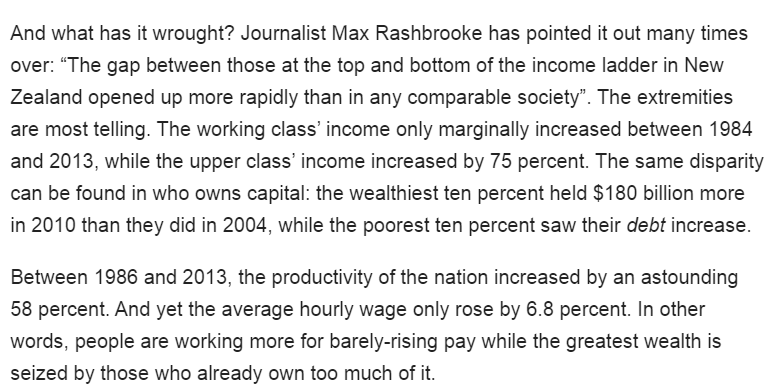
Source: Love in the time of crisis, James Robins, Wednesday, 16 March 2016, Newstalk NZ.
A brief history of inequality-from Treasury paper Fig4. Note Employment Contracts Act,GST,income tax,benefit cuts,WFF http://t.co/y4w3cUsgjD—
Bill Rosenberg (@WJRosenbergCTU) June 27, 2015
Inequality has not risen for at least 20 years as Bill Rosenberg tweeted. The rise in inequality in the late 1980s and early 1990s was followed by an employment boom that lasted to 2009.
Unemployment was as low as 3 1/2% for several years despite a large increase in labour force participation. Furthermore, the gender wage gap in New Zealand fell rapidly to now be the smallest in any industrialised country.
As the Facebook photos show, there has been strong income and wage growth despite the grizzling of the left. The return of income growth and wages growth after 20 years of real wage stagnation followed the economic reforms of the 1980s and the passage of the Employment Contracts Act in 1991.
As the CTU shows below, the economic reforms in the 1980s put an end to a sharp decline in the relative economic performance of the New Zealand economy.
The value of New Zealand owner occupied homes, net capital stock and human capital stock since 1987
17 Mar 2016 Leave a comment
in applied welfare economics, economic history, economics of education, entrepreneurship, human capital, labour economics, politics - New Zealand, poverty and inequality, urban economics Tags: household wealth, housing prices, pessimism bias, top 1%
Tring Le found that the human capital stock was consistently 2.6 times the value of the physical capital stock of New Zealand.
I decided to apply that ratio to the net capital stock of New Zealand estimates of Statistics New Zealand back to 1987 to see what we get. It is pretty standard for the value of human capital to be two to two and one-half times the value of physical capital.

Source: National Accounts (Industry Benchmarks): Year ended March 2013 and Lˆe Thi. Vˆan Tr`ınh, Estimating the monetary value of the stock of human capital for New Zealand, University of Canterbury PhD thesis (September 2006), Table 4.8: Human and physical capital stocks.
All the above chart says it is most wealth in New Zealand is held by ordinary people either as their human capital or the value of their homes.
This @amprog conservative antipoverty dictionary does not add up
08 Mar 2016 Leave a comment
in applied welfare economics, economic history, economics of bureaucracy, labour economics, politics - USA, poverty and inequality, Public Choice, welfare reform Tags: 1996 US welfare reforms, pessimism bias, social insurance, welfare state
From @EugeneSteuerle: Combined tax rates and creating a 21st century social welfare budget tpc.io/1GCdrYF http://t.co/aNRPqz5gAc—
Tax Policy Center (@TaxPolicyCenter) June 28, 2015

The only alternative offered by the Centre for American Progress is send them on a course. This response, which is the standard policy response to any labour market crisis, will not solve poverty, mush less inequality.
Will more education decrease inequality? A simulation provided an answer. nyti.ms/1xw5m9W http://t.co/paQp19BEWc—
The Upshot (@UpshotNYT) March 31, 2015
This @amprog lead in picture and its 1st figure about minimal improvement in living standards in 30 years just does not gel somehow
05 Mar 2016 Leave a comment
in applied welfare economics, economic history, economics of media and culture, industrial organisation, politics - USA Tags: good old days, Leftover Left, pessimism bias, rational irrationality, smart phones, The Great Enrichment

Source: When I Was Your Age | Center for American Progress.
The claim by the Centre for American progress is that despite being more educated and working in a more productive economy, 30-year-olds today barely make more than 30-year-old Baby Boomers did in 1984.

Source: When I Was Your Age | Center for American Progress.
Nearly everything from RadioShack ad in 1991 is replaced by a smartphone. https://t.co/xGh6ZzW1Nx—
Vala Afshar (@ValaAfshar) December 19, 2015
The apps in your smartphone cost $900,000 thirty years ago —@datarade https://t.co/pjw7q4QGDp—
Vala Afshar (@ValaAfshar) October 29, 2015
@NZGreens @nzlabour @uklabour @berniesanders bite a gift horse in the mouth when complaining about the ignorance of the average voter
23 Feb 2016 Leave a comment
in applied price theory, economic history, economics of information, politics - New Zealand, Public Choice Tags: anti-foreign bias, anti-market bias, Bryan Caplan, Deirdre McCloskey, make-work bias, New Zealand Greens, New Zealand Labour, pessimism bias, rational ignorance, rational irrationality, votor demographics
Fascinating. Yawning chasm between why Labour members think they lost and why voters think they did. From @thetimes http://t.co/MvhZYI2CTr—
Joe Watts (@JoeWatts_) July 23, 2015
Left-wingers do whinge about voters not understanding; about how if only the voters understood better their arguments than they do now. The Left thinks voters just keep getting it wrong.
They do not know how lucky they are. Rational ignorance and rational irrationality are a rich harvest for the policies of Labour and the Greens.
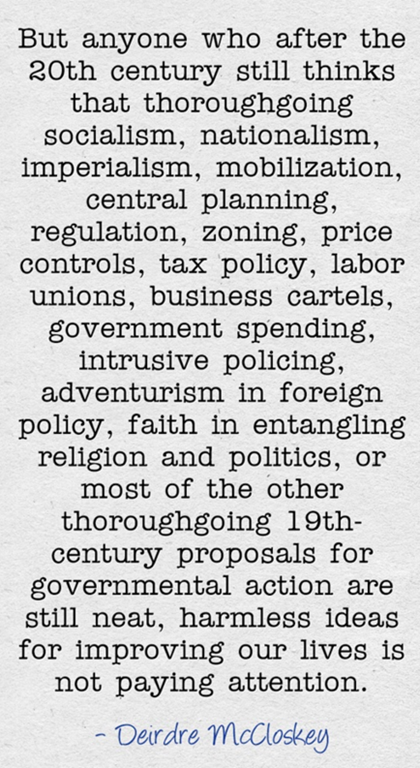
Most of the policies of Labour and the Greens are premised on cultivating the rational irrationalities of voters. These lead to Bryan Caplan’s pessimism bias, an anti-market bias, an anti-foreign bias and make-work bias:
The evidence—most notably, the results of the 1996 Survey of Americans and Economists on the Economy—shows that the general public’s views on economics not only are different from those of professional economists but are less accurate, and in predictable ways.
The public really does generally hold, for starters, that prices are not governed by supply and demand, that protectionism helps the economy, that saving labour is a bad idea, and that living standards are falling.
Politicians mindful of re-election must pander to these four biases.
Fortunately, for the New Zealand Labour Party and the Green Party of Aotearoa New Zealand, voters have no rational reason to correct these four biases. Voters are rationally irrational. As each individual counts so little, why spend any time correcting biased political beliefs?
Anti-market bias: The tendency to underestimate the benefits of the market mechanism. The typical voter equates market phenomena such as profitability and interest as examples of unbridled monetary confiscations by ‘greedy’ businesses. This biased against the market, despite all its successes, is a rich field to till for both Labour and the Greens
Anti-foreign bias: The tendency to underestimate the economic benefits of interaction with foreigners. This antagonism towards such trends as outsourcing employment overseas, or selling raw materials to faraway traders, is reminiscent of the mercantilism Adam Smith so brilliantly demolished but it still lives on today in the hearts of the voting citizenry. Labour and the Greens play to that bias shamelessly.
Make-work bias: The tendency to underestimate the economic benefits from conserving labour. Those who look to the visible face of job losses overlook the job gains (often by those who lost their jobs) to be made tomorrow in emerging industries. The Greens and Labour are sure-fire enemies of creative destruction.
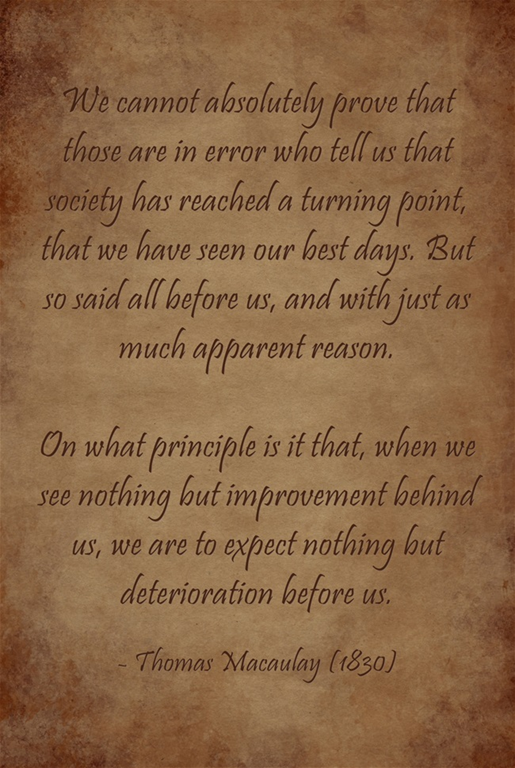
Pessimistic bias: The tendency to overestimate the severity of economic problems, and to underestimate the recent past, present and future performance of the economy. In The Progress Paradox (2003), Gregg Easterbrook ridicules abundance denial:
Our forebears, who worked and sacrificed tirelessly in the hopes their descendants would someday be free, comfortable, healthy, and educated, might be dismayed to observe how acidly we deny we now are these things.
Many average voters seem to feel that Malthus was correct in diagnosing the allegedly poor prospects for the market economy.
Where would the voting base of the Greens be without a pessimism bias? They are professional pessimists and doomsday prophets from their earliest days. Labour assumes working class Tories are dupes of what is left of fading media barons such as Rupert Murdoch.

@realdonaldtrump @BernieSanders are equally ignorant and unfit for office
09 Feb 2016 Leave a comment
in applied welfare economics, economic history, labour economics, macroeconomics, politics - USA Tags: 2016 presidential election, antiforeign bias, antimarket bias, Leftover cab left, pessimism bias, rational rationality, The Great Enrichment, Twitter left

@BernieSanders @HillaryClinton an average American works 11% less than in 1950, but earns 246% more
05 Nov 2015 Leave a comment
in economic history, politics - USA Tags: 2016 presidential elections, antimarket bias, good old days, Leftover Left, living standards, pessimism bias, rational ignorance, rational rationality, The Great Enrichment, Twitter left
Everything’s Amazing and Nobody’s Happy
18 Aug 2015 Leave a comment
in applied welfare economics, development economics, economic history, economics of information, economics of media and culture, growth disasters, growth miracles, liberalism Tags: antimarket bias, Bryan Caplan, capitalism and freedom, life expectancies, living standards, pessimism bias, The Great Enrichment, The Great Escape, The Great Fact
 Utopia, you are standing in it!
Recent Comments