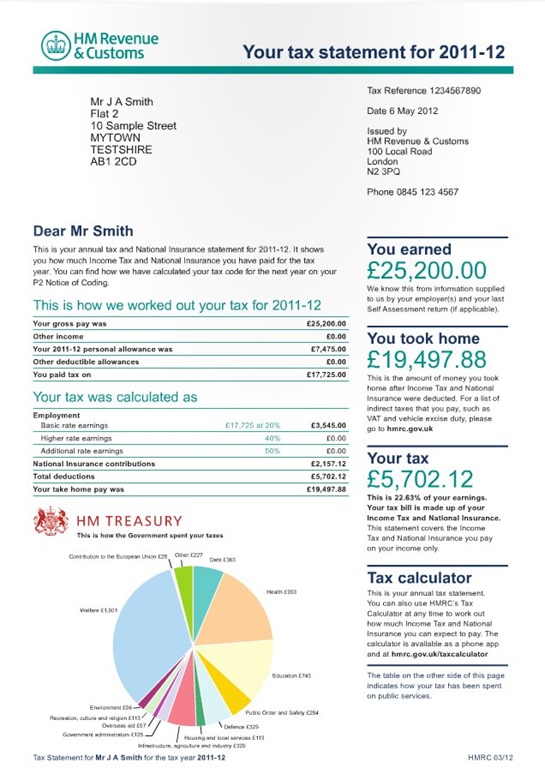
Every national and local government should include this pie chart with tax assessments
11 Feb 2015 Leave a comment
Millennials Don’t Know What “Socialism” Means
11 Feb 2015 Leave a comment
in comparative institutional analysis, constitutional political economy, economics of media and culture, Marxist economics, politics - USA Tags: economics of socialism, rational ignorance, rational irrationality

Competing visions of success – left and right
06 Feb 2015 Leave a comment
in applied welfare economics, entrepreneurship, human capital, labour economics, occupational choice, politics - New Zealand, politics - USA Tags: activists, distributive justice, do gooders, expressive voting, Leftover Left, poverty and inequality, rational ignorance, rational irrationality, top 1%
Why popularist politics work: People Are Terrible at Estimating Income Inequality
05 Feb 2015 Leave a comment
in economics of information, politics - Australia, politics - New Zealand, politics - USA, Public Choice Tags: expressive voting, poverty and inequality, rational ignorance, rational irrationality, the top 1%, urban myths


Saving Civilization: 2009 vs 2015
27 Jan 2015 Leave a comment
in environmental economics, politics - Australia, politics - New Zealand, politics - USA Tags: activists, climate ala, climate alarmism, do gooders, expressive voting, green rent seeking, rational ignorance, rational irrationality
An absolutely excellent collection of climate alarmist statements by hacks whose jobs depended on fermenting confusion and moral panic


Five years ago, we were told that the 2009 Copenhagen climate summit was the last chance to save civilization. As the 2015 Paris summit approaches, the same sort of fear mongering is ramping up.
Earlier this week, a climate declaration published as a full-page ad in the international edition of New York Times tried to frighten us. It told us that:
the UN Climate Summit in Paris in December 2015 may be the last chance to agree a treaty capable of saving civilization; [bold added]
The declaration insisted that global warming may “cause the very fabric of civilization to crash.” It said charitable foundations should therefore divert resources away from other projects – presumably building hospitals and schools, preventing blindness and malaria, ensuring basic sanitation – in order to “save civilization” from the climate scourge.
Problem is, we’ve heard this before. Not so very long ago, the British Prime…
View original post 86 more words
Charles Krauthammer on what conservatives and liberals think of each other
25 Jan 2015 Leave a comment
in liberalism, politics - Australia, politics - New Zealand, politics - USA Tags: Charles Krauthammer, expressive voting, Leftover Left, media bias, rational ignorance, rational irrationality

Overcoming Bias : Exposing Scientist Liberality
24 Jan 2015 Leave a comment
in economics of media and culture, environmental economics, global warming, occupational choice, personnel economics Tags: academic bias, activists, climate alarmism, expressive 13, rational ignorance, rational irrationality

If the public knew the truth, I expect two effects:
- The public would consider scientists to be less authoritative as a neutral source on policy questions, and
- Since scientists are respected, the public would become less conservative and more liberal.
Gordon Tullock on avoiding difficult decisions about saving lives – updated
24 Jan 2015 Leave a comment
in constitutional political economy, economics of bureaucracy, economics of regulation, Gordon Tullock, health and safety, health economics, income redistribution, James Buchanan, labour economics, Rawls and Nozick Tags: expressive voting, health and safety, James Buchanan, rational ignorance, rational irrationality, statistical life, veil of ignorance, veil of insignificance, veil of uncertainty

Gordon Tullock wrote a 1979 New York Law Review book about avoiding difficult choices. His review was of a book by Guido Calabresi and Philip Bobbitt called Tragic Choices which was about the rationing: the allocation of kidney dialysis machines (a “good”), military service in wartime (a “bad”), and entitlements to have children (a mixed blessing).
Tullock argued that we make a decision about how to allocate resources, how to distribute the resources, and then how to think about the previous two choices. People do not want to face up to the fact resources are scarce and they face limits on their powers.
To reduce the personal distress of making these tragic choices, Tullock observed that people often allocate and distribute resources in a different way so as to better conceal from themselves the unhappy choices they had to make even if this means the recipients of these choices are worse off and more lives are lost than if more open and honest choices were made up about there only being so much that can be done.
The Left over Left and union movement spends a lot of time pontificating about how we must not let economics influence health and safety policy rather than help frame public policy guidance on what must be done because scarcity of resources requires the valuation of life in everything from health, safety, and environmental regulations to road building. health budgeting is full of tragic choices about how much is spend to save so lives and where and for how long.
The Left over Left and the union movement deceive themselves and others into make futile gestures to make themselves feel good. These dilettantes cannot assume that they are safely behind a veil of insignificance. They have real influence on how public policy on health and safety are made.
A major driver of the opposition among the Left over Left and the union movement to the use of cost-benefit analysis and the valuation of statistical lives is its adoption makes people confront the tragic consequence of any of the choices available to them.
By saying how dare you value a statistical life does not change the fact that choices made without this knowledge will still have tragic consequences, and more lives may be lost because people want to conceal from themselves the difficult choices that they are making about others as voters and as policy-makers.
One of the purposes of John Rawls’ veil of ignorance and Buchanan and Tullock’s veil of uncertainty is that the basic social institutions be designed and agreed when we have abstracted from the grubby particulars of our own self-interest. Buchanan and Tullock explain the thought experiment this way
Agreement seems more likely on general rules for collective choice than on the later choices to be made within the confines of certain agreed-upon rules. …
Essential to the analysis is the presumption that the individual is uncertain as to what his own precise role will be in any one of the whole chain of later collective choices that will actually have to be made.
For this reason he is considered not to have a particular and distinguishable interest separate and apart from his fellows.
This is not to suggest that he will act contrary to own interest; but the individual will not find it advantageous to vote for rules that may promote sectional, class, or group interests because, by supposition, he is unable to predict the role that he will be playing in the actual collective decision-making process at any particular time in the future.
He cannot predict with any degree of certainty whether he is more likely to be in a winning or a losing coalition on any specific issue. Therefore, he will assume that occasionally he will be in one group and occasionally in the other.
His own self-interest will lead him to choose rules that will maximize the utility of an individual in a series of collective decisions with his own preferences on the separate issues being more or less randomly distributed.
Behind the veil of ignorance and the veil of uncertainty, we would all agree that resources are limited, including in the health sector and some drugs can’t be funded – choices must be made.
Once we go in front of the veil of ignorance and find out that we are the one missing out on that drug, naturally, our views will change. We agreed to these rules as fair for the distribution of basic social resources when, as John Rawls put it:
…no one knows his place in society, his class position or social status; nor does he know his fortune in the distribution of natural assets and abilities, his intelligence and strength, and the like.
Is always the case that someone just falls on the other side of any line in the sand. If you move that line, there is always another set of people who are just on the other side.


Voter profiles – utilitarian/instrumental, swinging and expressive | Alex White
23 Jan 2015 Leave a comment
in applied welfare economics, Public Choice Tags: expressive voting, rational ignorance, rational irrationality, voter demographics
I just came across this great blog by Alex White on the three types of voters: utilitarian/instrumental, swinging and expressive. His diagrammatic expressions of them are superb. Most enlightening.

His first diagram above shows three consumer types of engagement with a brand: utilitarian, low involvement and expressive.
- Utilitarian decision making is one that is typically high involvement, but are partly price sensitive;
- Low involvement buyers do not spend a lot of time researching the features of the product or service, beyond a cursory glance; and
- Expressive consumers are ones who make in depth purchases where there is a high engagement. Their decision to purchase precedes research. The research itself serves to rationalise the purchase decision. Often, they will feel a relationship with the brand and identify with the brand’s values.
White then overlaps these brand engagement profiles on voter profiles in the next diagram made up of utilitarian/instrumental, swinging and expressive and then fleshes out these voter types depending on whether they are rusted or swinging.

- The rusted-on utilitarian voter votes on a specific issue and are loyal to the party that represents the best fit with that issue. For example, the Greens and forestry, or Labor and education. So long as they view the party as best fitting or addressing their issue, they’ll vote for that party.
- A swinging utilitarian voter listens to announcements during campaigns, and tries to make a decision based on what is best for them. These swinging voters are susceptible to the pork barrel promises. Utilitarian voters are sensitive to their expectations being met.
- The swinging low engagement voter has no party familiarity, no interest in politics, and do not do any assessment of party policies; they make up their mind based on availability of the party on Election Day (so the presence of people handing out how-to-votes is important). They see no difference between parties; they are completely switchable, so there is no brand loyalty. A low involvement voter is really looking at the absence of negatives.
- The rusted on expressive voter votes to convey their values or beliefs, and often strongly identify with the party, or with a party leader. They are partisans who seek out research or information to justify their support for that party. The have a strong emotional connection to the party, or they may be ideologues and identify with a political philosophy rather than the party.
- The swinging expressive voter is an ideologue whose voting decision is based on their political ideology. For example, strong environmentalists who support the Greens Party because of their commitment to conservation rather than to the Party itself. The swinging expressive voter may change their vote if they feel a party ceases to represent their value set or beliefs. The expressive voter expectations align with their values or ideology. Their relationship to the party can be very committed, but also very critical. They may tolerate or forgive lapses on policy areas outside the voter’s core values — and they can be passionate advocates.
Alex White has set out a great topology of voters, and how a political party or lobby group should appeal to different types of voters based on their engagement and information needs. White is secretary of UnionsACT, the peak body for 33 unionists Unions in Canberra.
Killer green technologies alert: wind farms kill protected endangered species
23 Jan 2015 Leave a comment
in energy economics, environmental economics Tags: activists, endangered species, expressive voting, green hypocrisy, killer green technologies, Leftover Left, rational ignorance, rational irrationality, windfarms

A great chart that may be misleading because so many taxpayers pay no net income tax
15 Jan 2015 Leave a comment
in Public Choice, taxation Tags: expressive voting, rational ignorance, tax incidence
Very useful #DataViz! UK now gives a breakdown of what your taxes were spent on.
Example via bit.ly/1BAz9vh http://t.co/Ero8h6kHCM—
Max Roser (@MaxCRoser) January 05, 2015
 Utopia, you are standing in it!
Recent Comments