
Social desirability bias in surveys: I rarely see reusable bags at super checkout – do you? Salvos must be inundated with clothes?
25 Nov 2018 Leave a comment
in econometerics, environmental economics, global warming Tags: climate alarmism, plastic bags, recycling, social desirability bias, survey bias
Save the oceans – stop recycling plastic
29 Jun 2018 Leave a comment
in development economics, economics of regulation, environmental economics Tags: recycling
John Stossel – Recycling Stupidity
30 Mar 2018 Leave a comment
in economics of media and culture, energy economics, environmental economics Tags: recycling
.@oxfam is overfunded. Prioritises recycling over refugee relief @oxfamnz
18 Mar 2018 1 Comment
in defence economics, development economics, environmental economics, growth disasters Tags: NGOs, ODA, recycling
#Manila too busy recycling to make water safe to drink
29 Dec 2016 Leave a comment
in environmental economics, health economics Tags: Philippines, public health, recycling
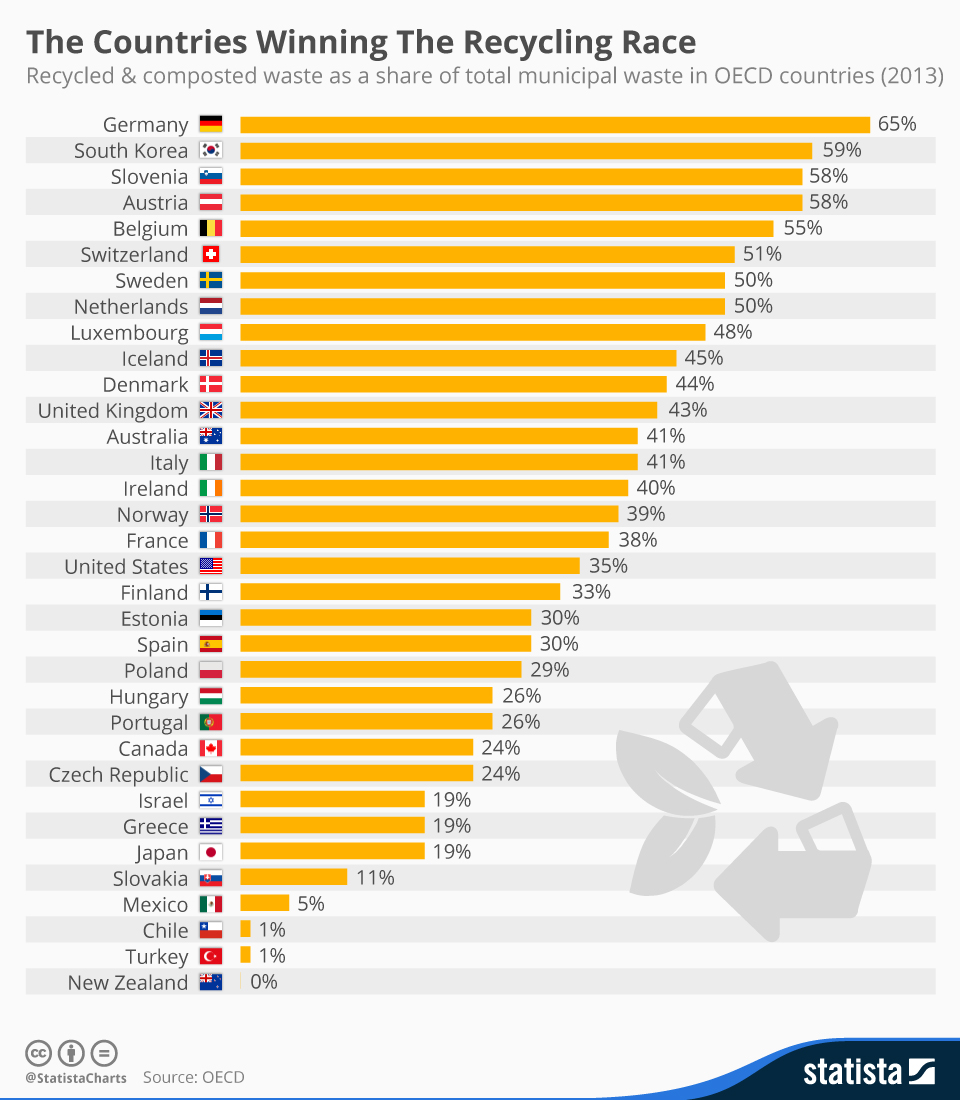
Recycling Dumpster Diving: A "Victimless" Crime?
06 May 2016 Leave a comment
in applied price theory, economics of crime, environmental economics, law and economics, property rights Tags: recycling

“Each week my family separates our recyclables from our regular trash. The former are put in our blue bin and are placed out on the curb for pickup on Wednesday mornings.
Last Tuesday night, I walked to Westwood Village to attend a dinner when I saw two individuals diving into all of my neighbours’ recycling bins (which were on the street curb) to extract the recyclables.
These "entrepreneurs" had a large truck filled with plastic bottles and aluminium cans that they were clearly loading up to take to a place to collect the recyclables fees. Is this a crime?
I view it as an economic crime for the following reason. The only reason this "trash treasure" was easy to access in the blue bins on the street was because the well meaning law abiding citizens wasted their time sorting their trash and kindly placing it outside.
Our tax dollars goes to the unionized guys who drive the recyclable trucks to pick this stuff up. If there is nothing to pick up, because the pirates have stolen the treasure, then recyclable trucks are losing $ as they are bringing in no revenue. So, this operating profit loss is just a transfer from the city to the pirates. My tax dollars and my time are being used to transfer $ to pirates.
The environment is no cleaner and is likely to dirtier because of the duplication of transportation (the recycling truck and the dirty private pirate trucks). I saw the same thing in Berkeley. What is to be done? A green cop shooting tranquilizer darts?”
Source: Environmental and Urban Economics: Recycling Dumpster Diving: A "Victimless" Crime?
Penn and Teller on recycling – the practice of ‘feeling good for no reason’ | Carpe Diem Blog
05 May 2015 Leave a comment


I knew it: killer green technologies alert – reusable grocery bags can kill (unless washed)
20 Sep 2014 1 Comment
in environmentalism, health economics Tags: do gooders, environmental movement, killer green technologies, offsetting behaviour, recycling, reusable grocery bags, unintended consequences
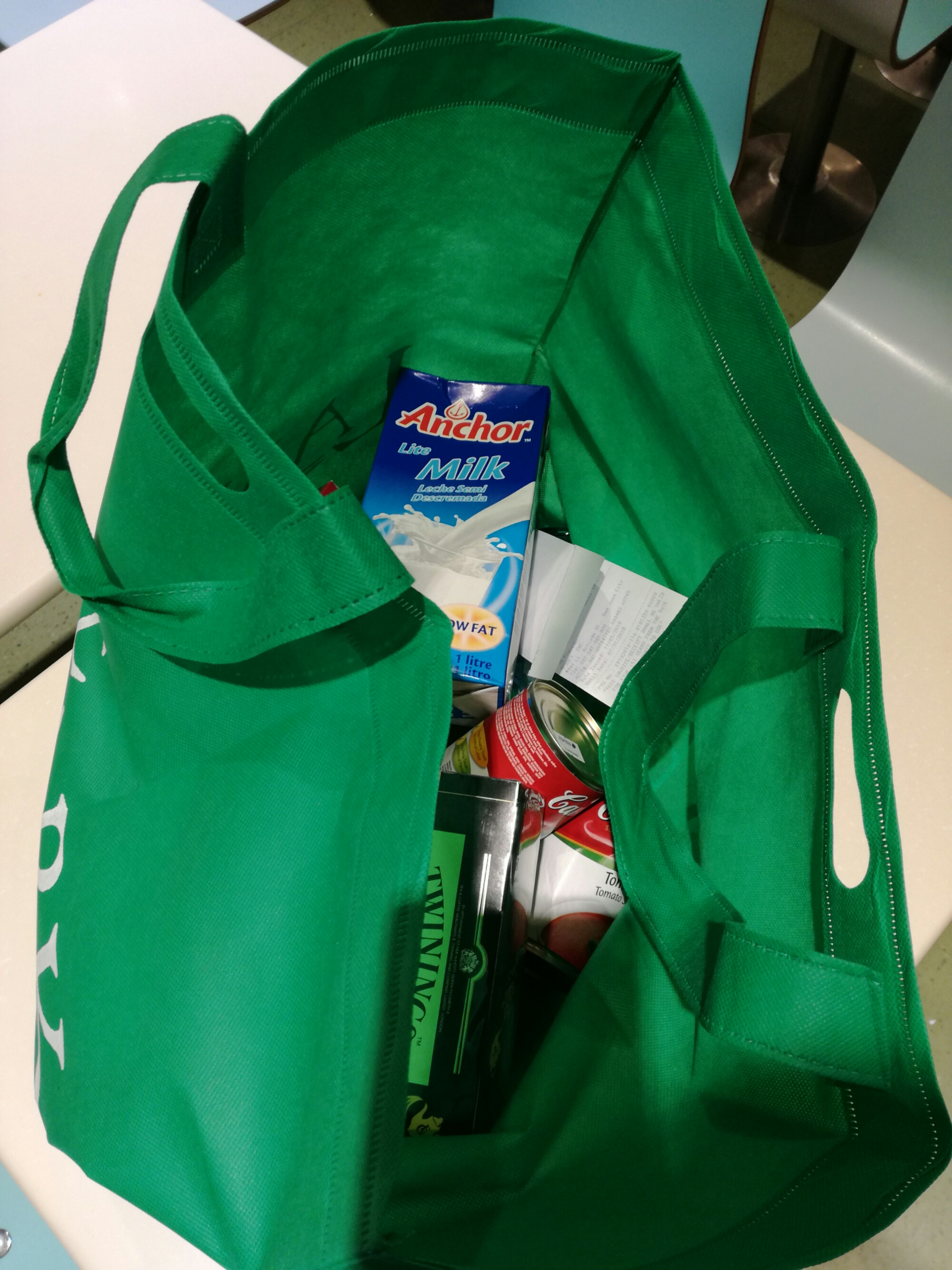
Reusable grocery bags often carry raw meat and are stored for convenience in the trunk of cars that sit outside in the sun. Reusable grocery bags are friendly breeding environment for E. coli bacteria, which can cause severe illness and death.
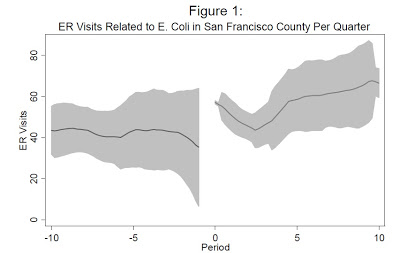
The above figure shows the number of emergency room visits in San Francisco County related to E. coli for the 10 quarters before and after the reusable grocery bags enactment of the ordinance: zero on the horizontal axis is the date the ordinance went into effect. The shaded area around the line is a 95% statistical confidence interval. There is a discontinuous jump in the number of emergency room visits immediately after the reusable grocery bags ordinance was enacted.
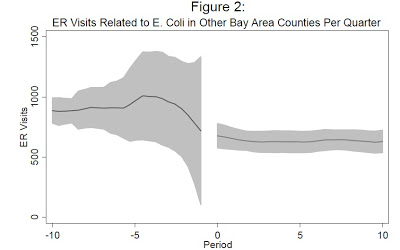
San Francisco experiences about 12 deaths per year from intestinal infections, and that the restrictions on plastic bags probably let to another 5-6 deaths per year in that city and several dozen additional hospitalisations.
Government recycling interferes with private recycling
02 Aug 2014 Leave a comment
in environmental economics, environmentalism Tags: expressive voting, recycling

It is a crime in New York to steal garbage put out for recycling.
Why charging for plastic bags doesn’t work
31 Jul 2014 Leave a comment
in economics of regulation, environmental economics, environmentalism Tags: expressive voting, plastic bags, recycling

My local supermarket tried to charge for plastic bags then backed down because of customer protests.
In the UK, a compulsory 5p charge on plastic bags first resulted in a sharp drop consumption then a rise in in the use of plastic bags last year. It seems the immediate change in behaviour reaped by the new charges is short-lived and it doesn’t take long for old habits to re-emerge.
Attaching a cost to something that was free certainly reduces frivolous consumption, but if that cost that is too low can merely act to pay off one’s conscience.
Beware of putting a price on guilt and letting people down.
A classic paper from 2000, Gneezy and Rustichini studied what happened when day-care centres in Israel tried to reduce late parental pick-ups by introducing fines.
Before long, late pick-ups had not reduced, they had doubled. Why? Because parents felt that the fine was a price worth paying and the guilt which had previously controlled their behaviour was assuaged.


‘Recycling is garbage’ from the NY Times in 1996; it broke the record for hate mail | AEIdeas
22 Apr 2014 Leave a comment
in applied welfare economics, market efficiency Tags: fatal conceit, John Tierney, Mark Perry, pretence to knowledge, recycling
Mark Perry for Earth Day linked to the classic 1996 New York Times Magazine article “Recycling is Garbage” by New York Times columnist John Tierney. He wrote about those millions who suffer from “garbage guilt,” as Tierney describes the religious components of recycling.
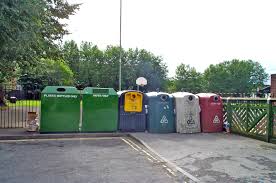
Tierney’s argument was that recycling may be the most wasteful activity in modern America:
Rinsing out tuna cans and tying up newspapers may make you feel virtuous, but it’s a waste of time and money, a waste of human and natural resources.
You can understand why Tierney’s article set the record for the greatest amount of hate mail in New York Times history.
 Utopia, you are standing in it!
Recent Comments