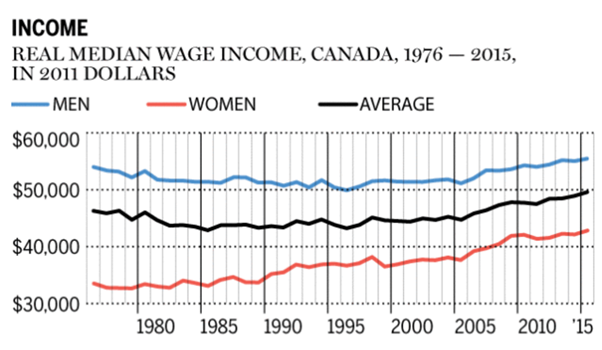
Source: Terence Corcoran: Liberal Budget; Donald Trump Demagoguery | Financial Post.
Celebrating humanity's flourishing through the spread of capitalism and the rule of law
07 May 2016 Leave a comment
in applied welfare economics, discrimination, economic history, gender, labour economics, labour supply Tags: Canada, gender wage gap, middle class stagnation, reversing gender gap, top 1%, wage stagnation
06 May 2016 Leave a comment
in discrimination, gender, labour economics, labour supply, occupational choice Tags: gender wage gap, reversing gender gap
23 Apr 2016 Leave a comment
in economic history, economics of education, economics of media and culture, gender, human capital, labour economics, labour supply, occupational choice Tags: gender gap, gender wage gap, reversing gender gap
19 Feb 2016 Leave a comment
in economics of education, labour economics, labour supply, occupational choice Tags: education premium, reversing gender gap
06 Feb 2016 Leave a comment
in discrimination, economics of education, gender, human capital, labour economics Tags: PISA, reversing gender gap

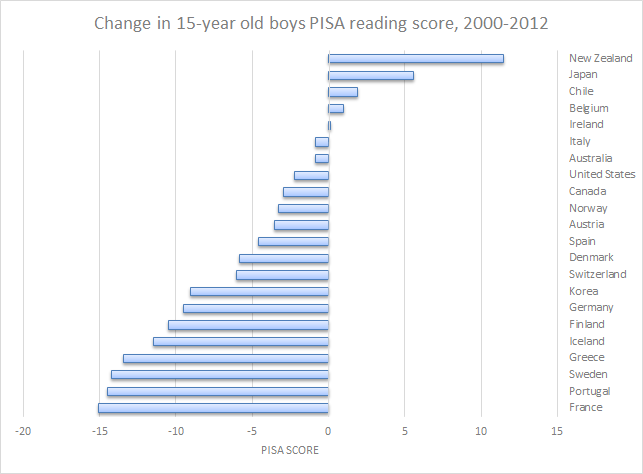
Source: OECD Family Database – OECD.
05 Feb 2016 Leave a comment
in discrimination, economics of education, human capital, labour economics, labour supply Tags: PISA, reversing gender gap
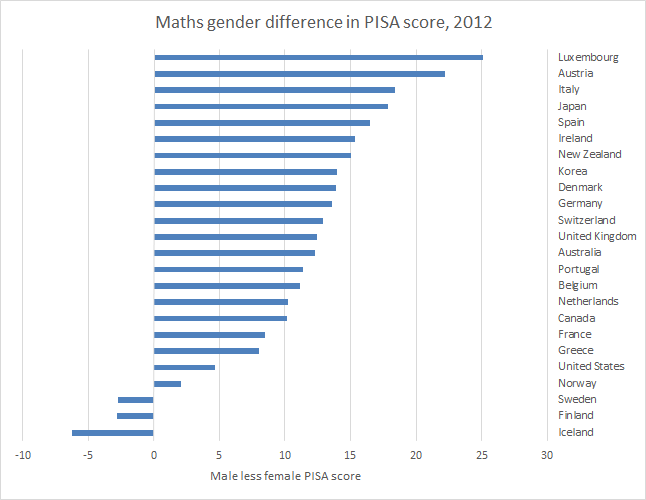
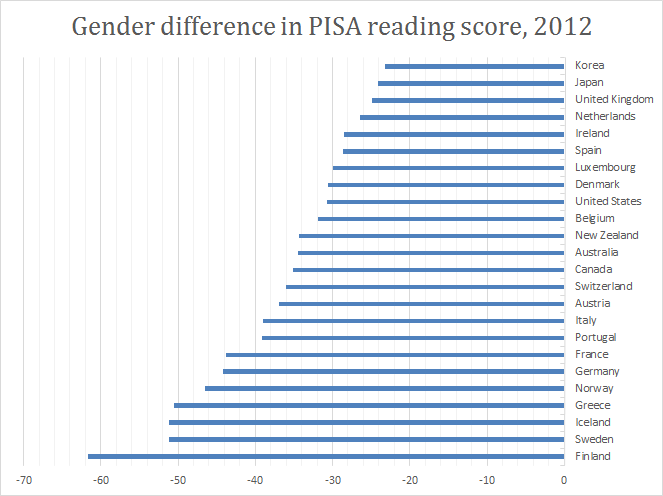
Source: OECD Family Database – OECD.
04 Feb 2016 Leave a comment
in discrimination, economics of love and marriage, gender, human capital, labour economics, labour supply, occupational choice, transport economics, urban economics Tags: asymmetric marriage premium, commuting times, gender wage gap, reversing gender gap
Few labour market statistics have any meaning unless broken down by gender. The compensating differentials that explain much of the family pay gap extend strongly to commuting times.
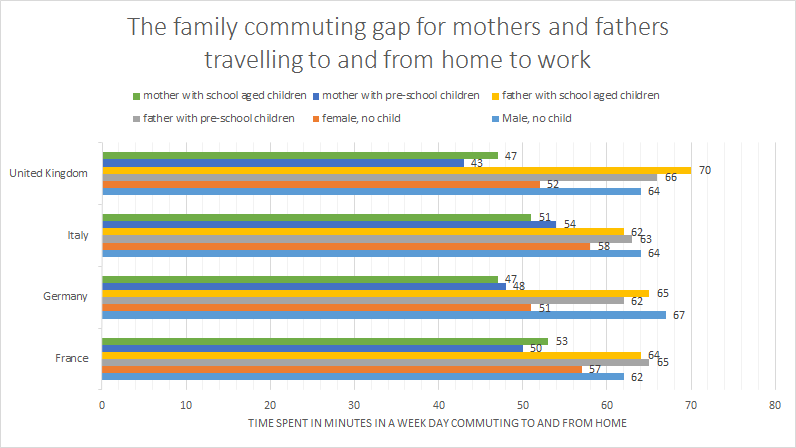
Source: OECD Family Database – OECD, Table LMF2.6.A.
Mothers commute a good 15 to 20 minutes less than fathers in the UK, Italy, Germany and France. Single women commute 5 to 10 minutes further than mothers. Single men and fathers commute much the same distance.
04 Feb 2016 Leave a comment
in discrimination, economics of education, gender, human capital, labour economics Tags: PISA, reversing gender gap
31 Jan 2016 2 Comments
in discrimination, gender, labour economics, labour supply, occupational choice, transport economics, urban economics Tags: commuting times, compensating differentials, gender wage gap, reversing gender gap
Commuting times need to be incorporated into calculations of the gender wage gap because they do represent a serious fixed cost of working that is higher for men than for women.
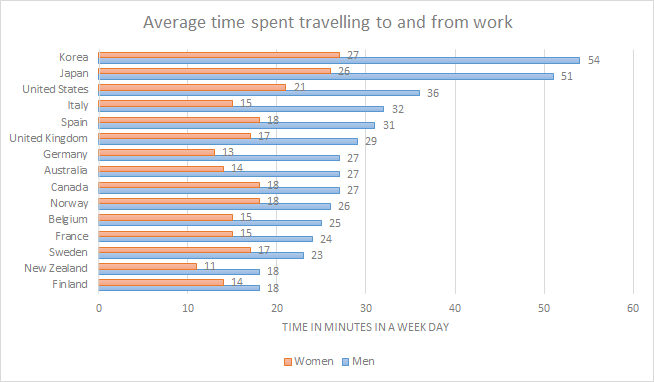
Source: OECD Family Database.
Not only is the commuting time for female workers less, there is much less variation across the OECD member countries than for men.
The figures for New Zealand are so low that they are suspicious.
13 Jan 2016 1 Comment
in discrimination, economic history, economics of education, gender, human capital, labour economics Tags: College premium, education premium, graduate premium, reversing gender gap
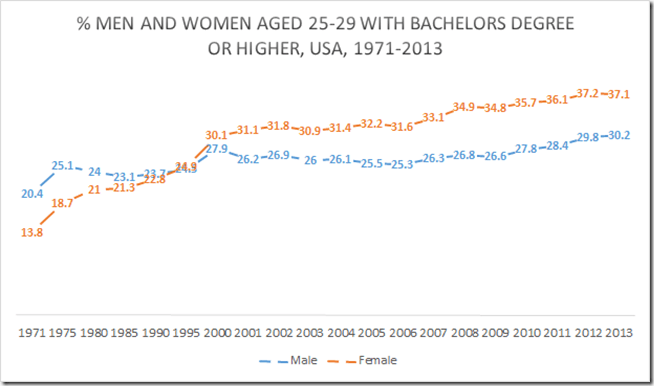
The gender gap in higher education reversed in the year 2000
10 Jan 2016 Leave a comment
in discrimination, economic history, gender, human capital, labour economics, labour supply, occupational choice, politics - USA Tags: gender wage gap, middle class stagnation, reversing gender gap, wage stagnation
28 Dec 2015 Leave a comment
in economics of media and culture, gender, labour economics Tags: marathons, reversing gender gap
08 Dec 2015 Leave a comment
in applied price theory, discrimination, economics of education, gender, human capital, labour economics, managerial economics, occupational choice, organisational economics, personnel economics, politics - Australia, politics - New Zealand, politics - USA Tags: economics of personality traits, gender wage gap, reversing gender gap

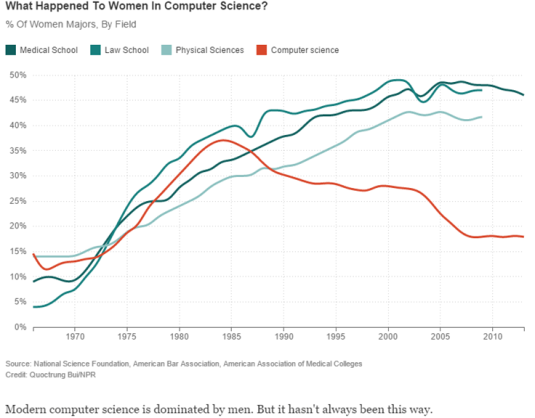
Women started drifting away from computer science in the mid-1980s. The interpretation put forward by the professional grievance industry, that is, by National Public Radio in the USA is:
The share of women in computer science started falling at roughly the same moment when personal computers started showing up in U.S. homes in significant numbers.
These early personal computers weren’t much more than toys. You could play pong or simple shooting games, maybe do some word processing.
And these toys were marketed almost entirely to men and boys. This idea that computers are for boys became a narrative. It became the story we told ourselves about the computing revolution. It helped define who geeks were, and it created techie culture.
 Source: NPR
Another interpretation is there are systematic differences between teenage boys and teenage girls in verbal and written skills. Young women moved away from enrolling in computer…
View original post 224 more words
06 Dec 2015 Leave a comment
in discrimination, gender, health and safety, labour economics Tags: gender gap, job safety, reversing gender gap, workplace fatalities
10 Nov 2015 Leave a comment
in discrimination, gender, labour economics, labour supply, occupational choice, politics - New Zealand Tags: gender wage gap, part-time work, reversing gender gap
The unadjusted gender wage gap is regarded as a reliable measure of sex discrimination in these day, apparently, because the adjusted wage gap is too small to maintain the rage. In the data below, the gender wage gap is in favour of women. That is an unreliable unadjusted gender wage because many part-time male workers are teenagers. Many part-time female workers are professionals.
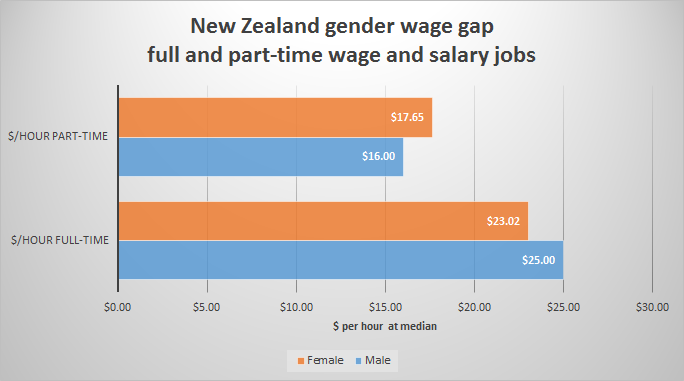
Source: Statistics New Zealand, New Zealand Income Survey, June quarter 2015
Celebrating humanity's flourishing through the spread of capitalism and the rule of law
Scholarly commentary on law, economics, and more
Beatrice Cherrier's blog
Celebrating humanity's flourishing through the spread of capitalism and the rule of law
Celebrating humanity's flourishing through the spread of capitalism and the rule of law
Celebrating humanity's flourishing through the spread of capitalism and the rule of law
Why Evolution is True is a blog written by Jerry Coyne, centered on evolution and biology but also dealing with diverse topics like politics, culture, and cats.
Celebrating humanity's flourishing through the spread of capitalism and the rule of law
Celebrating humanity's flourishing through the spread of capitalism and the rule of law
A rural perspective with a blue tint by Ele Ludemann
DPF's Kiwiblog - Fomenting Happy Mischief since 2003
Celebrating humanity's flourishing through the spread of capitalism and the rule of law
The world's most viewed site on global warming and climate change
Tim Harding's writings on rationality, informal logic and skepticism
A window into Doc Freiberger's library
Let's examine hard decisions!
Commentary on monetary policy in the spirit of R. G. Hawtrey
Thoughts on public policy and the media
Celebrating humanity's flourishing through the spread of capitalism and the rule of law
Politics and the economy
A blog (primarily) on Canadian and Commonwealth political history and institutions
Reading between the lines, and underneath the hype.
Economics, and such stuff as dreams are made on
"The British constitution has always been puzzling, and always will be." --Queen Elizabeth II
Celebrating humanity's flourishing through the spread of capitalism and the rule of law
Celebrating humanity's flourishing through the spread of capitalism and the rule of law
WORLD WAR II, MUSIC, HISTORY, HOLOCAUST
Undisciplined scholar, recovering academic
Celebrating humanity's flourishing through the spread of capitalism and the rule of law
Res ipsa loquitur - The thing itself speaks
Celebrating humanity's flourishing through the spread of capitalism and the rule of law
Researching the House of Commons, 1832-1868
Articles and research from the History of Parliament Trust
Reflections on books and art
Posts on the History of Law, Crime, and Justice
Celebrating humanity's flourishing through the spread of capitalism and the rule of law
Exploring the Monarchs of Europe
Cutting edge science you can dice with
Small Steps Toward A Much Better World
“We do not believe any group of men adequate enough or wise enough to operate without scrutiny or without criticism. We know that the only way to avoid error is to detect it, that the only way to detect it is to be free to inquire. We know that in secrecy error undetected will flourish and subvert”. - J Robert Oppenheimer.
The truth about the great wind power fraud - we're not here to debate the wind industry, we're here to destroy it.
Celebrating humanity's flourishing through the spread of capitalism and the rule of law
Celebrating humanity's flourishing through the spread of capitalism and the rule of law
Economics, public policy, monetary policy, financial regulation, with a New Zealand perspective
Celebrating humanity's flourishing through the spread of capitalism and the rule of law
Restraining Government in America and Around the World

 Utopia, you are standing in it!
Recent Comments