
@EricCrampton from 10 years agohttps://t.co/uUxGlW1enl
— Jim Rose (@JimRosenz) December 22, 2015
Celebrating humanity's flourishing through the spread of capitalism and the rule of law
19 Dec 2015 1 Comment
in applied price theory, discrimination, economics of education, gender, human capital, labour economics, labour supply, politics - New Zealand, politics - USA, poverty and inequality Tags: charter schools, racial discrimination, Roland Fryer
17 Sep 2015 Leave a comment
in economics of education, human capital, managerial economics, organisational economics, politics - New Zealand, politics - USA, Public Choice Tags: economics of early childhood education, economics of personality traits, economics of schools, racial discrimination, Roland Fryer
Roland Fryer believes “high-quality education is the new civil rights battleground”. He is an extraordinary man who was carrying a gun and selling drugs at 14 and an assistant professor of economics at Harvard at the age of 27. He is fearless as a researcher.

Source: Roland Fryer On Why Good Schools Matter – Forbes
Roland Fryer is the first Afro-American to win the John Bates Clark Medal econ.st/1FrmzDL http://t.co/QoAZWyRVEX—
Charles Read (@EconCharlesRead) April 27, 2015
15 Feb 2015 Leave a comment
in discrimination, human capital, labour economics, poverty and inequality Tags: poverty and inequality, racial discrimination, Roland Fryer
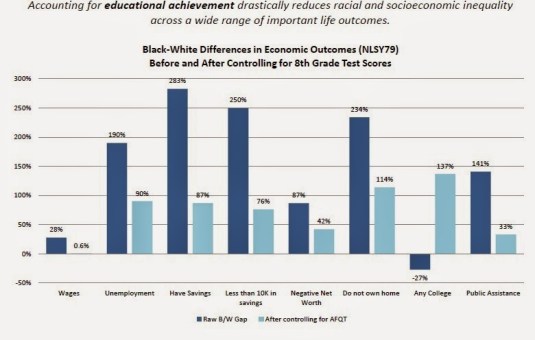
Roland Fryer carried a gun at 14 as a member of the gang; worked extra jobs at college to pay off his father’s bail bondsman; and an assistant professor at Harvard at the age of 27. He is the sharpest economist around working on the economics of inequality and discrimination.
01 Dec 2014 Leave a comment
in applied welfare economics, labour economics, labour supply, minimum wage, politics - New Zealand, poverty and inequality, welfare reform Tags: Carmel Sepuloni, inequality and poverty, James Heckman, James Julius Wilson, labour economics, Roland Fryer, welfare reform

Lindsay Mitchell has a nice blog today on the views of the new Labour Party spokesman on social development – the New Zealand ministerial portfolio covering social security and social welfare
Carmen Sepuloni disagrees with National Party’s policy of requiring solo mothers to look for work. She believed there should be support for sole parents to return to work, but not a strict compulsion:
It is a case by case basis. I don’t think it should be so stringent because it’s not necessarily to the benefit of their children.
The American sociologist James Julius Wilson in The Truly Disadvantaged (1987) and When Work Disappears (1996) wrote about how more children are growing-up without a working father living in the home and thereby gleaning the awareness that work is a central expectation of adult life:
. . . where jobs are scarce, where people rarely, if ever, have the opportunity to help their friends and neighbors find jobs. . . many people eventually lose their feeling of connectedness to work in the formal economy; they no longer expect work to be a regular, and regulating, force in their lives.
In the case of young people, they may grow up in an environment that lacks the idea of work as a central experience of adult life — they have little or no labor force attachment.
Carmel Sepuloni appears to believe that work is not a central expectation of adult life. Hard work used to be a core value of the Labour Party.
The toughest week of door knocking for the Labour Party in the 2011 general elections was after the Party promised that the in-work family tax credit should also be paid to welfare beneficiaries.
Voters in strong Labour Party areas were repulsed by the idea. These working-class Labour voters thought that the in-work family tax credit was for those that worked because they had earnt it through working on a regular basis. The party vote of the Labour Party in the 2011 New Zealand general election fell to its lowest level since its foundation in 1919 which was the year where it first contested an election.
When Sepuloni was on the Backbenchers TV show prior to the recent NZ general election, she was asked by the host whether she would support a $40 per hour minimum wage if that would mean equality. She did not hesitate to say yes.
Sepuloni does not seem to have noticed that wages must have something to do with the value of what you produce and the ability of your employer to sell it at a price that covers costs.
The economic literatures (Heckman 2011; Fryer 201o) and sociological literatures (Wilson 1978, 1987, 2009, 2011), particularly in the U.S. is suggesting that skill disparities resulting from a lower quality education and less access to good parenting, peer and neighbourhood environments produce most of the income gaps of racial and ethnic minorities rather than factors such as labour market discrimination.
Grounds for optimism about the effectiveness of welfare reform in overcoming barriers to employment lie in the success of the 1996 federal welfare reforms in the USA.
The subsequent declines in welfare participation rates and gains in employment were largest among the single mothers previously thought to be most disadvantaged: young (ages 18-29), mothers with children aged under seven, high school drop-outs, and black and Hispanic mothers. These low-skilled single mothers who were thought to face the greatest barriers to employment. Blank (2002) found that:
At the same time as major changes in program structure occurred during the 1990s, there were also stunning changes in behavior. Strong adjectives are appropriate to describe these behavioral changes.
Nobody of any political persuasion-predicted or would have believed possible the magnitude
of change that occurred in the behavior of low-income single-parent families over this decade.
People have repeatedly shown great ability to adapt and find jobs when the rewards of working increase and eligibility for welfare benefits tighten.
via Lindsay Mitchell: Carmel Sepuloni: be careful what you ask for.
Celebrating humanity's flourishing through the spread of capitalism and the rule of law
Scholarly commentary on law, economics, and more
Beatrice Cherrier's blog
Celebrating humanity's flourishing through the spread of capitalism and the rule of law
Celebrating humanity's flourishing through the spread of capitalism and the rule of law
Celebrating humanity's flourishing through the spread of capitalism and the rule of law
Why Evolution is True is a blog written by Jerry Coyne, centered on evolution and biology but also dealing with diverse topics like politics, culture, and cats.
Celebrating humanity's flourishing through the spread of capitalism and the rule of law
Celebrating humanity's flourishing through the spread of capitalism and the rule of law
A rural perspective with a blue tint by Ele Ludemann
DPF's Kiwiblog - Fomenting Happy Mischief since 2003
Celebrating humanity's flourishing through the spread of capitalism and the rule of law
The world's most viewed site on global warming and climate change
Tim Harding's writings on rationality, informal logic and skepticism
A window into Doc Freiberger's library
Let's examine hard decisions!
Commentary on monetary policy in the spirit of R. G. Hawtrey
Thoughts on public policy and the media
Celebrating humanity's flourishing through the spread of capitalism and the rule of law
Politics and the economy
A blog (primarily) on Canadian and Commonwealth political history and institutions
Reading between the lines, and underneath the hype.
Economics, and such stuff as dreams are made on
"The British constitution has always been puzzling, and always will be." --Queen Elizabeth II
Celebrating humanity's flourishing through the spread of capitalism and the rule of law
Celebrating humanity's flourishing through the spread of capitalism and the rule of law
WORLD WAR II, MUSIC, HISTORY, HOLOCAUST
Undisciplined scholar, recovering academic
Celebrating humanity's flourishing through the spread of capitalism and the rule of law
Res ipsa loquitur - The thing itself speaks
Celebrating humanity's flourishing through the spread of capitalism and the rule of law
Researching the House of Commons, 1832-1868
Articles and research from the History of Parliament Trust
Reflections on books and art
Posts on the History of Law, Crime, and Justice
Celebrating humanity's flourishing through the spread of capitalism and the rule of law
Exploring the Monarchs of Europe
Cutting edge science you can dice with
Small Steps Toward A Much Better World
“We do not believe any group of men adequate enough or wise enough to operate without scrutiny or without criticism. We know that the only way to avoid error is to detect it, that the only way to detect it is to be free to inquire. We know that in secrecy error undetected will flourish and subvert”. - J Robert Oppenheimer.
The truth about the great wind power fraud - we're not here to debate the wind industry, we're here to destroy it.
Celebrating humanity's flourishing through the spread of capitalism and the rule of law
Celebrating humanity's flourishing through the spread of capitalism and the rule of law
Economics, public policy, monetary policy, financial regulation, with a New Zealand perspective
Celebrating humanity's flourishing through the spread of capitalism and the rule of law
Restraining Government in America and Around the World
 Utopia, you are standing in it!
Recent Comments