
Karl Popper argued that the three golden rules of science were test, test and test. A good hypothesis forbid certain things to occur, and the more it forbids, the better, more scientific the hypothesis is.

That is because if what the hypothesis forbids occurs, the hypothesis is refuted. Science is a set of testable propositions, propositions that can be refuted.
Why climate scientists say things like: "warming in the climate system is unequivocal." vox.com/cards/global-w… http://t.co/COb7v9Z5Er—
Vox Maps (@VoxMaps) May 12, 2015
Looking around for confirmation is an old trick of Marxists and astrologists. Once they read their sacred texts, everything around them was explained except for a few glaring anomalies that actually refuted their hypothesis:
I found that those of my friends who were admirers of Marx, Freud, and Adler, were impressed by a number of points common to these theories, and especially by their apparent explanatory power. These theories appeared to be able to explain practically everything that happened within the fields to which they referred.
The study of any of them seemed to have the effect of an intellectual conversion or revelation, opening your eyes to a new truth hidden from those not yet initiated. Once your eyes were thus opened you saw confirming instances everywhere: the world was full of verifications of the theory.
Whatever happened always confirmed it. Thus its truth appeared manifest; and unbelievers were clearly people who did not want to see the manifest truth; who refused to see it, either because it was against their class interest, or because of their repressions which were still "un-analysed" and crying aloud for treatment.
Marxists and astrologers and other pseudoscientists got around the inconvenience of repeated refutation by specifying a protective belt of axillary hypotheses, which grew with time that explained away these growing anomalies in their basic hypothesis.
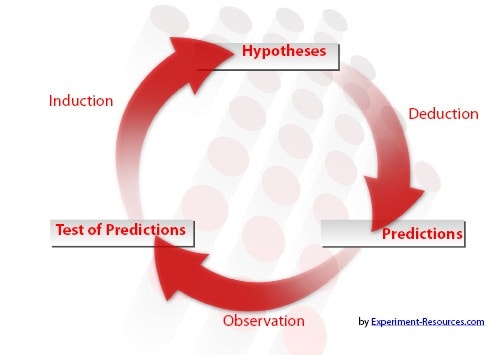
Too much of current public discussion of climate science is about what particular instances confirm rather than contradict. What does the global warming hypothesis strictly forbid?

Popper argued that you look for what contradicts rather than confirm. He developed quite simple rules early in life:
These considerations led me in the winter of 1919-20 to conclusions which I may now reformulate as follows.
(1) It is easy to obtain confirmations, or verifications, for nearly every theory-if we look for confirmations.
(2) Confirmations should count only if they are the result of risky predictions;that is to say, if, unenlightened by the theory in question, we should have expected an event which was incompatible with the theory-an event which would have refuted the theory.
(3) Every "good" scientific theory is a prohibition: it forbids certain things to happen. The more a theory forbids, the better it is.
(4) A theory which is not refutable by any conceivable event is non-scientific. Irrefutability is not a virtue of theory (as people often think) but a vice.
(5) Every genuine test of a theory is an attempt to falsify it, or to refute it. Testability is falsifiability; but there are degrees of testability; some theories are more testable, more exposed to refutation, than others; they take, as it were, greater risks.
(6) Confirming evidence should not count except when it is the result of a genuine test of the theory; and this means that it can be presented as a serious but unsuccessful attempt to falsify the theory. (I now speak in such cases of"corroborating evidence.")
(7) Some genuinely testable theories, when found to be false, are still upheld by their admirers-for example by introducing ad hoc some auxiliary assumption, or by re-interpreting theory ad hoc in such a way that it escapes refutation. Such a procedure is always possible, but it rescues the theory from refutation only at the price of destroying, or at least lowering, its scientific status. (I later described such a rescuing operation as a "conventionalist twist" or a"conventionalist stratagem.")
One can sum up all this by saying that the criterion of the scientific status of a theory is its falsifiability, or refutability, or testability.
When a hypothesis is tested and fails the test because what it forbid to happen actually occurred , for example, new insights into the underlying science are frequently gained. Clinging tenaciously to correct theories leads only to a sterile science. This is the fundamental difference between science and superstition. When the facts contradict, you can learn from that refutation and grow rather than become defensive.
What academics are really saying http://t.co/e5E4H0YRqf—
Conrad Hackett (@conradhackett) February 14, 2015
 Utopia, you are standing in it!
Recent Comments