From http://coyoteblog.com/coyote_blog/2004/12/progressives_di.html
Celebrating humanity's flourishing through the spread of capitalism and the rule of law
15 Sep 2020 Leave a comment
in applied welfare economics, comparative institutional analysis, constitutional political economy, development economics, economic growth, economic history, economics of bureaucracy, economics of regulation, entrepreneurship, growth disasters, growth miracles, health economics, history of economic thought, human capital, income redistribution, industrial organisation, Joseph Schumpeter, labour economics, labour supply, law and economics, liberalism, libertarianism, macroeconomics, Marxist economics, minimum wage, occupational choice, occupational regulation, politics - Australia, politics - New Zealand, politics - USA, poverty and inequality, property rights, Public Choice, public economics, rentseeking, survivor principle, unemployment, unions Tags: The fatel conceit, The Great Enrichment
05 Jul 2014 Leave a comment
in macroeconomics, Milton Friedman, organisational economics Tags: forecasting errors, Keynesian macroeconomics, leads and lags on monetary policy, The fatel conceit, The pretence to knowledge

A market economy is subject to fluctuations which need to be corrected, can be corrected, and therefore should be corrected
Franco Modiglani
Milton Friedman’s vision is far more circumspect because of the limits on the information people have and their ability to update that information. His critique has nothing to do with his views on macroeconomics:
The central problem is not designing a highly sensitive [monetary] instrument that offsets instability introduced by other factors [in the economy], but preventing monetary arrangements becoming a primary source of instability…
Keynesians have a host of metaphors in their rhetorical arsenal; one frequently voiced is that a wise government should “lean against the wind” when choosing policy. Friedman jumped on this:
We seldom know which way the economic wind is blowing until several months after the event, yet to be effective, we need to know which way the wind is going to be blowing when the measures we take now will be effective, itself a variable date that may be a half year or a year or two from now. Leaning today against next year’s wind is hardly an easy task in the present state of meteorology
Friedman’s remarks, as even his strong critics admit, strike at the heart of any activist stabilisation policy. By meeting Keynesians on their own theoretical turf and scrutinising their practice, Friedman manages to produce objections that both Keynesians and non-Keynesians must take seriously.
A key part of any response to Friedman rests on the ability of forecasters to do their jobs with tolerable accuracy. After reading the annual reports of the Fed, Milton Friedman noticed the following pattern:
In the years of prosperity, monetary policy is a potent weapon, the skilful handling of which deserves the credit for the favourable course of events; in years of adversity, other forces are the important sources of economic change, monetary policy had little leeway, and only the skilful handling of the exceedingly limited powers available prevented conditions from being even worse
Central banks pay due to the implications of the leads and lags on monetary policy only as an ex-post facto rationalisation for disappointment.
28 Jun 2014 1 Comment
in economic growth, macroeconomics, Milton Friedman Tags: Milton Friedmand, The fatel conceit, The pretense to knowledge
First of all, I don’t think the president has a great deal to do with keeping the economy going…
I think presidents have a great deal to do with keeping the economy from growing…
I think the economy is largely independent of the government, and what keeps it going is its own internal development.
However, you can short-circuit that internal development. If you impose very high taxes, and eliminate the incentive to innovate, to improve, to take risks, and do things, you’ll kill the economy. And that’s what’s happened over and over again in other countries around the world.
27 Jun 2014 Leave a comment

12 Jun 2014 Leave a comment
in development economics, environmental economics, growth miracles Tags: The fatel conceit, The Great Fact
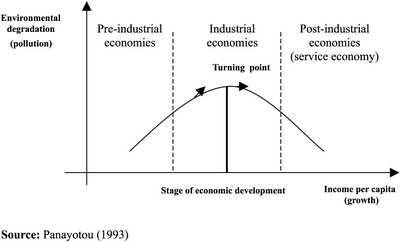
When I was in Japan, I was told that in the 1960s, cities and prefectures welcomed polluting industries because of the better paid jobs they offered.
At that time, shipping companies used like to go to Tokyo because the pollution in Tokyo Bay was so bad that it would clean all the barnacles off their ships. That made them sail faster.
Japanese incomes and wages doubled over the course of the 1960s.
In the early 1970s, the LDP stole the environmental policies of their opponents in a really big crack down on pollution because the country could now afforded them. The Japanese voter was now prepared to support stricter pollution standards and environmental controls.
Celebrating humanity's flourishing through the spread of capitalism and the rule of law
Scholarly commentary on law, economics, and more
Beatrice Cherrier's blog
Celebrating humanity's flourishing through the spread of capitalism and the rule of law
Celebrating humanity's flourishing through the spread of capitalism and the rule of law
Celebrating humanity's flourishing through the spread of capitalism and the rule of law
Why Evolution is True is a blog written by Jerry Coyne, centered on evolution and biology but also dealing with diverse topics like politics, culture, and cats.
Celebrating humanity's flourishing through the spread of capitalism and the rule of law
Celebrating humanity's flourishing through the spread of capitalism and the rule of law
A rural perspective with a blue tint by Ele Ludemann
DPF's Kiwiblog - Fomenting Happy Mischief since 2003
Celebrating humanity's flourishing through the spread of capitalism and the rule of law
The world's most viewed site on global warming and climate change
Tim Harding's writings on rationality, informal logic and skepticism
A window into Doc Freiberger's library
Let's examine hard decisions!
Commentary on monetary policy in the spirit of R. G. Hawtrey
Thoughts on public policy and the media
Celebrating humanity's flourishing through the spread of capitalism and the rule of law
Politics and the economy
A blog (primarily) on Canadian and Commonwealth political history and institutions
Reading between the lines, and underneath the hype.
Economics, and such stuff as dreams are made on
"The British constitution has always been puzzling, and always will be." --Queen Elizabeth II
Celebrating humanity's flourishing through the spread of capitalism and the rule of law
Celebrating humanity's flourishing through the spread of capitalism and the rule of law
WORLD WAR II, MUSIC, HISTORY, HOLOCAUST
Undisciplined scholar, recovering academic
Celebrating humanity's flourishing through the spread of capitalism and the rule of law
Res ipsa loquitur - The thing itself speaks
Celebrating humanity's flourishing through the spread of capitalism and the rule of law
Researching the House of Commons, 1832-1868
Articles and research from the History of Parliament Trust
Reflections on books and art
Posts on the History of Law, Crime, and Justice
Celebrating humanity's flourishing through the spread of capitalism and the rule of law
Exploring the Monarchs of Europe
Cutting edge science you can dice with
Small Steps Toward A Much Better World
“We do not believe any group of men adequate enough or wise enough to operate without scrutiny or without criticism. We know that the only way to avoid error is to detect it, that the only way to detect it is to be free to inquire. We know that in secrecy error undetected will flourish and subvert”. - J Robert Oppenheimer.
The truth about the great wind power fraud - we're not here to debate the wind industry, we're here to destroy it.
Celebrating humanity's flourishing through the spread of capitalism and the rule of law
Celebrating humanity's flourishing through the spread of capitalism and the rule of law
Economics, public policy, monetary policy, financial regulation, with a New Zealand perspective
Celebrating humanity's flourishing through the spread of capitalism and the rule of law
Restraining Government in America and Around the World
 Utopia, you are standing in it!
Recent Comments