Do vaccines work?
19 Sep 2015 Leave a comment
in applied welfare economics, health economics Tags: anti-vaccination movement, infectious diseases, The Great Escape, vaccinations, vaccines
The Great Escape for 10-year-old Americans
16 Sep 2015 Leave a comment
in economic history, health economics, politics - USA Tags: clean drinking water, health and sanitation, life expectancies, public health, The Great Escape, The Great Fact, vaccines
The Health Transition in the US + public health and medical milestones.
New paper: bit.ly/1F1OxYi http://t.co/8IW8EjCkwQ—
Max Roser (@MaxCRoser) September 12, 2015
The Great Escape by continent
14 Sep 2015 Leave a comment
in development economics, economic history, growth disasters, growth miracles, health economics Tags: Africa, child mortality, China, India, infant mortality, life expectancies, South America, The Great Escape
'The world is getting better all the time, in 11 maps and charts' – bit.ly/1M7W4Xr http://t.co/slB6oStjFq—
Max Roser (@MaxCRoser) July 14, 2015
What do #McDonalds & @GreenpeaceNZ no longer have in common? @NZGreens @RusselNorman
12 Sep 2015 Leave a comment
in economics of regulation, environmental economics, environmentalism, global warming, health economics, politics - New Zealand Tags: anti-science left eye global warming, climate alarmism, GMOs, Greenpeace, Leftover Left, New Zealand Greens, Russell Norman, The Great Escape, The Great Fact, Twitter left
Like McDonalds, Greenpeace globally is a brand. I read the papers every day in detail but are utterly clueless as to who its leaders are. That is a deliberate branding decision so people cannot conflate the inevitably dodgy and far left backgrounds of its leaders and activist support base with self appointed environmental do-gooders brand.

That is no longer so in New Zealand where a middle-age political junkie retiring as co-leader of the New Zealand Greens will now be their CEO in New Zealand.
.@RusselNorman to lead @GreenpeaceNZ bit.ly/1K08JJj http://t.co/M4QNmeGQjr—
Greenpeace NZ (@GreenpeaceNZ) September 10, 2015
If Russell Norman wants to do his job properly, you should never give an interview, never appear in public.
Incoming @GreenpeaceNZ leader @RusselNorman says Greenpeace critical for humanity's future stuff.co.nz/national/polit… http://t.co/XqpxYjYmf4—
Greenpeace NZ (@GreenpeaceNZ) September 12, 2015
What is worse is the carrying on by the Greens about the retirement of Russell Norman to lead the Greenpeace in New Zealand.
If they wanted to maintain the political effectiveness of Greenpeace, they should have made a short press release congratulating him on his retirement and wishing him well in his new job and saying little more. The Greens should stop carrying on as though you have taken over Greenpeace New Zealand.
I do not wish Greenpeace well with its anti-growth, anti-science, anti-human agenda, so I hope this was a mistake and I hope I am not interrupting them in making that mistake.
The Great Escape in Chinese infant mortality was stunning
11 Sep 2015 Leave a comment
in development economics, economic history, growth disasters, growth miracles, health economics, Marxist economics Tags: child mortality, China, global poverty, infant mortality, stream poverty, The Great Escape
China's infant mortality rate fell 85% since 1970, nearing the U.S. rate. buff.ly/1g7eLNk #health http://t.co/b9eno1jk6X—
HumanProgress.org (@humanprogress) September 08, 2015
The Great Escape actually accelerated after the GFC
10 Sep 2015 Leave a comment
in development economics, economic history, global financial crisis (GFC), growth disasters, growth miracles, health economics, labour economics, macroeconomics, poverty and inequality Tags: child poverty, extreme poverty, global poverty, India, The Great Escape, The Great Fact
In 1993, >30% of India's urban population lived in extreme poverty. In 2011? Only 13%. buff.ly/1iutlQA http://t.co/238hsW2aeF—
HumanProgress.org (@humanprogress) September 09, 2015
The Great Fact – undernourishment in developing countries (under the jackboot of neoliberalism)
10 Sep 2015 Leave a comment
in development economics, economic history, growth disasters, growth miracles, health economics Tags: capitalism and freedom, extreme poverty, global hunger, The Great Escape, The Great Fact
Initial reactions to anaesthetics
07 Sep 2015 Leave a comment
in economic history, health economics Tags: creative destruction, The Great Escape
Life Expectancy in the #EU and the #US
02 Sep 2015 Leave a comment
in health economics, politics - USA Tags: EU, life expectancy, The Great Escape
Life Expectancy in the #EU and the #US
by RegioGIS http://t.co/cp7t0ee9wF—
Max Roser (@MaxCRoser) March 22, 2015
Income & life expectancy around the world
01 Sep 2015 Leave a comment
in development economics, growth disasters, growth miracles, health economics Tags: life expectancy, The Great Escape
Income & life expectancy around the world
Let's get all of the world to the top right corner!bit.ly/1939raP http://t.co/I83URpGeOX—
Max Roser (@MaxCRoser) May 12, 2015
Creative destruction in health crises
30 Aug 2015 Leave a comment
in economic history, economics of media and culture, health economics Tags: creative destruction, obesity, The Great Escape
Americans started consuming fewer calories when they saw the health crisis, not the jiggle. nyti.ms/1SMGoYE http://t.co/xsFR3U71tO—
The Upshot (@UpshotNYT) July 29, 2015
No country for young Zimbabweans? # Zimbabwe life expectancies by age and gender since 1990
25 Aug 2015 1 Comment
in economic history, health economics Tags: AIDS, life expectancies, The Great Escape, Zimbabwe
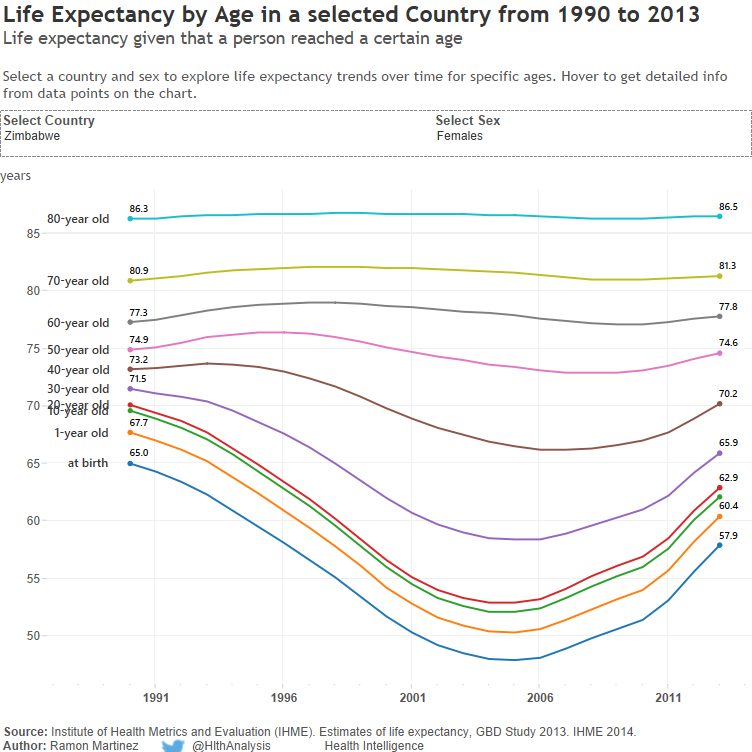
Source: Life Expectancy by Age in selected Country from 1990 to 2013 | Health Intelligence.
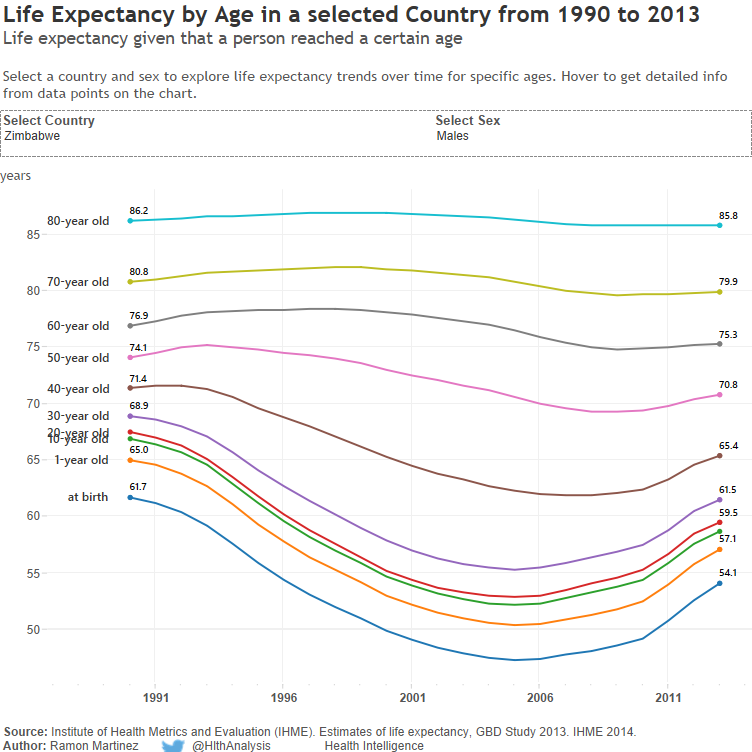
Source: Life Expectancy by Age in selected Country from 1990 to 2013 | Health Intelligence.
@GreenpeaceNZ @NZGreens environmentalism is not face of the future
24 Aug 2015 Leave a comment
in economic history, environmental economics, global warming, Public Choice Tags: air pollution, climate alarmism, global warming, The Great Escape, voter demographics, water pollution
The Great Fact simply stated
23 Aug 2015 Leave a comment
“The only people much better off than $3 [a day]…"—@DeirdreMcClosk. See how far we've come: buff.ly/1Bbh5N6 http://t.co/H1W0VGbI8D—
HumanProgress.org (@humanprogress) June 12, 2015
 Utopia, you are standing in it!

Recent Comments