What the experiments of the 20th century told me

It would have been hard to know the wisdom of Friedrich Hayek or Milton Friedman or Matt Ridley or Deirdre McCloskey in August of 1914, before the experiments in large government were well begun.

But anyone who after the 20th century still thinks that thoroughgoing socialism, nationalism, imperialism, mobilization, central planning, regulation, zoning, price controls, tax policy, labour unions, business cartels, government spending, intrusive policing, adventurism in foreign policy, faith in entangling religion and politics, or most of the other thoroughgoing 19th-century proposals for governmental action are still neat, harmless ideas for improving our lives is not paying attention.

Deirdre McCloskey

P.T. Bauer on development aid as a precondition to development in the Third World

Foreign aid is clearly not a neces­sary condition of economic devel­opment. This fact is obvious from the history of the developed coun­tries, all of which began poor and have invariably progressed with­out government-to-government aid.

It is clear also from the his­tory of many underdeveloped coun­tries — Hong Kong, Japan, Malaya — which have advanced in recent decades without foreign aid.

P.T. Bauer (1966)

Economic progress versus environmental quality

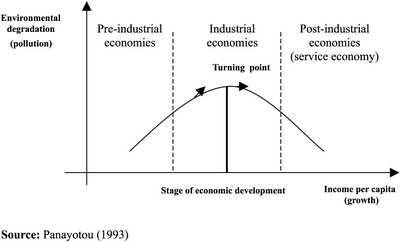
When I was in Japan, I was told that in the 1960s, cities and prefectures welcomed polluting industries because of the better paid jobs they offered.

At that time, shipping companies used like to go to Tokyo because the pollution in Tokyo Bay was so bad that it would clean all the barnacles off their ships. That made them sail faster.

Japanese incomes and wages doubled over the course of the 1960s.

In the early 1970s, the LDP stole the environmental policies of their opponents in a really big crack down on pollution because the country could now afforded them. The Japanese voter was now prepared to support stricter pollution standards and environmental controls.

The 1972 Limits To Growth book predicted that industrialization would increase air pollution until civilization collapsed and a few other things

HT: Bjørn Lomborg

Paul Ehrlich in 1970 predicted a USA decimated by hunger in the year 2000: just 23 million inhabitants living on less calories than the average African gets today

HT: Cool It

In Praise of Cheap Labor | Paul Krugman (1997)

The lofty moral tone of the opponents of globalization is possible only because they have chosen not to think their position through.

While fat-cat capitalists might benefit from globalization, the biggest beneficiaries are, yes, Third World workers.

After all, global poverty is not something recently invented for the benefit of multinational corporations…

wherever the new export industries have grown, there has been measurable improvement in the lives of ordinary people.

Partly this is because a growing industry must offer a somewhat higher wage than workers could get elsewhere in order to get them to move.

More importantly, however, the growth of manufacturing–and of the penumbra of other jobs that the new export sector creates–has a ripple effect throughout the economy. The pressure on the land becomes less intense, so rural wages rise; the pool of unemployed urban dwellers always anxious for work shrinks, so factories start to compete with each other for workers, and urban wages also begin to rise.

via In Praise of Cheap Labor.

The great enrichment – Deirdre McCloskey’s 2013 John Bonython lecture on ABC Radio

Capitalism has raised living standards worldwide by a thousand fold. Societies that respect innovation and entrepreneurship can expect more of the same.

In the space of just a couple of hundred years real incomes and living standards have risen dramatically. From peasantry to prosperity – how did it happen ?

According to McCloskey in her 2013 John Bonython lecture presented by the Centre for Independent Studies, it was ideological change, rather than saving or exploitation, that created this prosperous modern world.

McCloskey proclaims  “it’s OK to be in business”  and asks those critical of capitalism to re-think their opposition.

Business and enterprise, she suggests, is altruistic, cooperative and the best way to lift living standards in developing and emerging economies.

In a marvellous speech in India on the origins of economic freedom (and its subsequent fruits), Deirdre McCloskey aptly crystallizes the deeper implications of her work on bourgeois virtues and bourgeois dignity:

The leading Bollywood films changed their heroes from the 1950s to the 1980s from bureaucrats to businesspeople, and their villains from factory owners to policemen, in parallel with a similar shift in the ratio of praise for market-tested improvement and supply in the editorial pages of The Times of India…

Did the change from hatred to admiration of market-tested improvement and supply make possible the Singh Reforms after 1991?

Without some change in ideology Singh would not in a democracy have been able to liberalize the Indian economy…

…After 1991 and Singh much of the culture didn’t change, and probably won’t change much in future.

Economic growth does not need to make people European.

Unlike the British, Indians in 2030 will probably still give offerings to Lakshmi and the  son of Gauri, as they did in 1947 and 1991.

Unlike the Germans, they will still play cricket, rather well.

So it’s not deep “culture.” It’s sociology, rhetoric, ethics, how people talk about each other.

The Great Enrichment – Kids react to old computers version

Poverty isn’t what it used to be

In 1960-61, according to the BLS Consumer Expenditure Survey, the bottom one-fourth of American homes spent about 12 per cent more than their pre-tax reported incomes each year.

By 2011, according to that same survey, those in the lowest quintile were spending nearly 125 per cent more than their reported pre-tax incomes and nearly 120 per cent more than their reported post-tax, post-transfer incomes.

By 2011, average per capita housing space for people in poverty was higher than the U.S. average for 1980, and crowding (more than one person per room) was less common for the 2011 poor than for the non-poor in 1970.

More than three-quarters of the 2011 poor had access to one or more motor vehicles, whereas nearly three-fifths were without an auto in 1972-73.

Refrigerators, dishwashers, washers and dryers, and many other appliances were more common in officially impoverished homes in 2011 than in the typical American home of 1980 or earlier.

Microwaves were virtually universal in poor homes in 2011, and DVD players, personal computers, and home Internet access are now typical in their amenities of the poor that not even the richest U.S. households could avail themselves of at the start of the War on Poverty in 1964.

The charts the third of the charts below shows below show that below American households that are poor and that are not poor do not differ greatly in the consumer amenities that they.


Percentage of Poor U.S. Households Which Have Various Amenities

Percentage of All U.S. Households Which Have Various Amenities

Amenities in Typical Households

Americans counted as poor today are manifestly living longer, are healthier, better nourished (or over-nourished), and more schooled than their predecessors half a century ago.

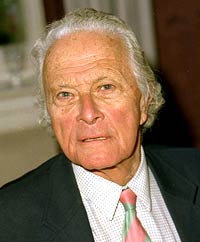
Piketty: A Wealth of Misconceptions by Don Boudreaux

Piketty’s method of doing economics involves frequent grand proclamations about "social justice" and economic "evolutions," but he offers no analyses of the dynamics of individual decision-making, often referred to as "microeconomics," that should be central to the issues he raises…

Revealingly, Piketty writes of income and wealth as being claimed or "distributed," never as being earned or produced. The resulting statistics are too aggregated—too big-picture—to reveal what is happening to individuals on the ground…

He imagines that such aggregates interact in robotic fashion through a logic of their own, unmoved by individual human initiative, creativity, or choice…

If we follow the advice of Adam Smith and examine people’s ability to consume, we discover that nearly everyone in market economies is growing richer…

THE U.S. IS THE bête noir of Piketty and other progressives obsessed with monetary inequality.

But middle-class Americans take for granted their air-conditioned homes, cars, and workplaces—along with their smartphones, safe air travel, and pills for ailments ranging from hypertension to erectile dysfunction…

At the end of World War II, when monetary income and wealth inequalities were narrower than they’ve been at any time in the past century, these goods and services were either available to no one or affordable only by the very rich.

So regardless of how many more dollars today’s plutocrats have accumulated and stashed into their portfolios, the elite’s accumulation of riches has not prevented the living standards of ordinary people from rising spectacularly…

Piketty’s disregard for basic economic reasoning blinds him to the all-important market forces at work on the ground—market forces that, if left unencumbered by government, produce growing prosperity for all. Yet, he would happily encumber these forces with confiscatory taxes.

via Piketty: A Wealth of Misconceptions – Barron’s.

Robert Lucas on the role of income redistribution in economic development

clip_image002

Of the tendencies that are harmful to sound economics, the most seductive, and in my opinion the most poisonous, is to focus on questions of distribution.

In this very minute, a child is being born to an American family and another child, equally valued by God, is being born to a family in India.

The resources of all kinds that will be at the disposal of this new American will be on the order of 15 times the resources available to his Indian brother.

This seems to us a terrible wrong, justifying direct corrective action, and perhaps some actions of this kind can and should be taken.

But of the vast increase in the well-being of hundreds of millions of people that has occurred in the 200-year course of the industrial revolution to date, virtually none of it can be attributed to the direct redistribution of resources from rich to poor.

The potential for improving the lives of poor people by finding different ways of distributing current production is nothing compared to the apparently limitless potential of increasing production.

via The Industrial Revolution: Past and Future 2003 Annual Report Essay by Robert E. Lucas, Jr

Deirdre McCloskey on why poverty matters more than inequality (BBC Radio interview)

In place of capitalism, she talks of a system of ‘market-tested innovation and supply’:

You have to ask what the source of the inequality is.

If the source is stealing from poor people, I’m against it.

But if the source is, you got there first with an innovation that everyone wants to buy, so you get paid some crazy sum, you ought to be paid so much, don’t you think?

There is noting to be gained by focusing on inequality.

McCloskey

McCloskey’s characteristically extravagant self-description:

postmodern free-market quantitative rhetorical Episcopalian feminist Aristotelian woman who was once a man.

She asks that compared to all the envy driven policies, what has helped the poor more than increasing the size of pie?

McCloskey argued that:

  • Equality is not an ethically sensible purpose.
  • Changes in inequality was made an issue by the intellectuals, not by the working class.
  • Absolute poverty is what matters and can be solved.
  • Inequality is a fool’s errand.
  • Who are you going to trust to fix a problem is the key?
  • You must look at the actual ability of government to do various things.
  • predicting the future of human affairs is a deeply foolish project.

Life expectancy at birth and 65 in 1900, 1950, and 2000

Image

Make Bono history | The Economist


Presidents and prime ministers in the West have made grandiloquent speeches about making poverty history for fifty years.

In 2000 the United Nations announced a series of eight Millenium Development Goals to reduce poverty, improve health and so on. The impact of such initiatives has been marginal at best.

Almost all of the fall in the poverty rate should be attributed to economic growth.

Fast-growing economies in the developing world have done most of the work.

Between 1981 and 2001 China lifted 680m people out of poverty.

Since 2000, the acceleration of growth in developing countries has cut the numbers in extreme poverty outside China by 280m

Between 1981 and 2010, China lifted a 680 million people out poverty—more than the entire population of Latin America. This cut the poverty rate in China from 84% in 1980 to about 10% in 2010.

The record of poverty reduction has profound implications for aid.

One of the main purposes of setting development goals was to give donors a wish list and persuade them to put more resources into the items on the list.

This may have helped in some areas but it is hard to argue that aid had much to do with halving poverty.

via Poverty: Not always with us | The Economist and The Economist 

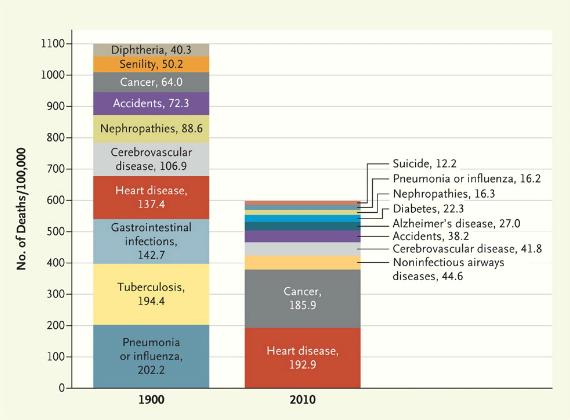
How We Used to Die

aside from a halving in the chances of dying in an accident, Pneumonia/influenza, tuberculosis, and gastrointestinal infections each claimed more lives per 100,000 people than did heart disease in 1900. The major causes of death 100 years ago are now historic curios rather than current threats.

via priceonomics.com

Previous Older Entries Next Newer Entries

Bassett, Brash & Hide

Celebrating humanity's flourishing through the spread of capitalism and the rule of law

Truth on the Market

Scholarly commentary on law, economics, and more

The Undercover Historian

Beatrice Cherrier's blog

Matua Kahurangi

Celebrating humanity's flourishing through the spread of capitalism and the rule of law

Temple of Sociology

Celebrating humanity's flourishing through the spread of capitalism and the rule of law

Velvet Glove, Iron Fist

Celebrating humanity's flourishing through the spread of capitalism and the rule of law

Why Evolution Is True

Why Evolution is True is a blog written by Jerry Coyne, centered on evolution and biology but also dealing with diverse topics like politics, culture, and cats.

Down to Earth Kiwi

Celebrating humanity's flourishing through the spread of capitalism and the rule of law

NoTricksZone

Celebrating humanity's flourishing through the spread of capitalism and the rule of law

Homepaddock

A rural perspective with a blue tint by Ele Ludemann

Kiwiblog

DPF's Kiwiblog - Fomenting Happy Mischief since 2003

The Dangerous Economist

Celebrating humanity's flourishing through the spread of capitalism and the rule of law

Watts Up With That?

The world's most viewed site on global warming and climate change

The Logical Place

Tim Harding's writings on rationality, informal logic and skepticism

Doc's Books

A window into Doc Freiberger's library

The Risk-Monger

Let's examine hard decisions!

Uneasy Money

Commentary on monetary policy in the spirit of R. G. Hawtrey

Barrie Saunders

Thoughts on public policy and the media

Liberty Scott

Celebrating humanity's flourishing through the spread of capitalism and the rule of law

Point of Order

Politics and the economy

James Bowden's Blog

A blog (primarily) on Canadian and Commonwealth political history and institutions

Science Matters

Reading between the lines, and underneath the hype.

Peter Winsley

Economics, and such stuff as dreams are made on

A Venerable Puzzle

"The British constitution has always been puzzling, and always will be." --Queen Elizabeth II

The Antiplanner

Celebrating humanity's flourishing through the spread of capitalism and the rule of law

Bet On It

Celebrating humanity's flourishing through the spread of capitalism and the rule of law

History of Sorts

WORLD WAR II, MUSIC, HISTORY, HOLOCAUST

Roger Pielke Jr.

Undisciplined scholar, recovering academic

Offsetting Behaviour

Celebrating humanity's flourishing through the spread of capitalism and the rule of law

JONATHAN TURLEY

Res ipsa loquitur - The thing itself speaks

Conversable Economist

Celebrating humanity's flourishing through the spread of capitalism and the rule of law

The Victorian Commons

Researching the House of Commons, 1832-1868

The History of Parliament

Articles and research from the History of Parliament Trust

Books & Boots

Reflections on books and art

Legal History Miscellany

Posts on the History of Law, Crime, and Justice

Sex, Drugs and Economics

Celebrating humanity's flourishing through the spread of capitalism and the rule of law

European Royal History

Exploring the Monarchs of Europe

Tallbloke's Talkshop

Cutting edge science you can dice with

Marginal REVOLUTION

Small Steps Toward A Much Better World

NOT A LOT OF PEOPLE KNOW THAT

“We do not believe any group of men adequate enough or wise enough to operate without scrutiny or without criticism. We know that the only way to avoid error is to detect it, that the only way to detect it is to be free to inquire. We know that in secrecy error undetected will flourish and subvert”. - J Robert Oppenheimer.

STOP THESE THINGS

The truth about the great wind power fraud - we're not here to debate the wind industry, we're here to destroy it.

Lindsay Mitchell

Celebrating humanity's flourishing through the spread of capitalism and the rule of law

Alt-M

Celebrating humanity's flourishing through the spread of capitalism and the rule of law

croaking cassandra

Economics, public policy, monetary policy, financial regulation, with a New Zealand perspective

The Grumpy Economist

Celebrating humanity's flourishing through the spread of capitalism and the rule of law

International Liberty

Restraining Government in America and Around the World