Thomas Kuhn’s Structure of Scientific Revolutions showed that sciences do not march onwards and upwards towards the light. Kuhn found that once a central paradigm is selected, there is no testing or sifting, and tests of basic assumptions only take place after accumulated failures and anomalies in the ruling paradigm plunge the science into a crisis.
Scientists do not give up the failing paradigm until a new paradigm arrives, which resolves the failures and anomalies that caused the crisis. It takes a theory to beat a theory.
Murray Rothbard, when discussing Kuhn, pointed to economics is an example of a science which moves in a zigzag fashion, with old fallacies sometimes elbowing aside earlier but sounder paradigms.
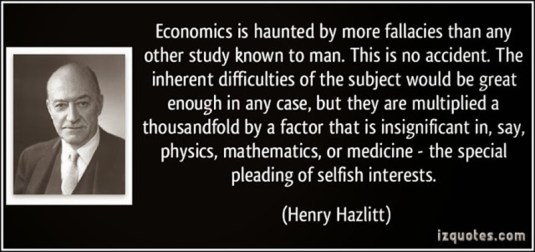
Thomas Humphrey wrote an excellent 250-year long literature surveys of both the rules versus discretion debate and the cost-push theories of inflation in the 1998 and 1999 Richmond Fed Quarterly.
Humphrey wrote the reviews to see if economics was a progressive science in the sense that superior new ideas relentlessly supplant inferior old ones.
Humphrey showed that policy rules were popular in good times to contain inflation, and when unemployment was rising, discretionary policies returned to vogue. The policy debate keeps recycling because
- people forget the lessons of the past; and
- For better or worse, politicians and the public have tended to believe that central banks, the focus of his studies, have the power to boost output, employment, and growth permanently.
Mercantilists, with their fears of hoarding and scarcity of money together with their prescription of cheap (low interest rates) and plentiful cash as a stimulus to real activity, tend to gain the upper hand when unemployment is the dominant problem.
Classicals, chanting their mantra that inflation is always and everywhere a monetary phenomenon, tend to prevail when price stability is the chief policy concern.
Cost-push fallacies about inflation were even more resilient against repeated refutations.
There is nothing new under the sun in macroeconomics. The same issues that divided twentieth-century monetarists and non-monetarists as well as current macroeconomists were discussed by everyone from David Hume (1752) to Knut Wicksell (1898) and in the Bullionist-Anti-Bullionist and the Currency School-Banking School controversies:
- rules v. discretion,
- inflation as a monetary v. real cost push phenomenon,
- direct v. inverse money-to-price causality,
- central bank-determined v. market demand-determined money stocks,
- exogenous v. endogenous money, and
- backing v. supply-and-demand theories of money’s value
Current macroeconomists and monetary economists often unaware of the eighteenth and nineteenth-century origins of the ideas they employ.
Barro (1989) “New Classicals and New Keynesians, or the Good Guys and the Bad Guys”, made the point that Keynesian macroeconomics does not seek out new theoretical results for testing; rather the aim is to provide respectability for the basic viewpoints and policy stances of the old Keynesian models.
Bellante (1992) likewise, noted that the search in Keynesian economics for microeconomic foundations is to blunt criticism, rather than because it is otherwise useful. The analytical apparatus may change, but the policy conclusions remain the same.
 Utopia, you are standing in it!
Recent Comments