The Rawlsian social justice case for super-entrepreneurs and many more billionaires

The report SuperEntrepreneurs shows that:

  • SuperEntrepreneurs founded half the largest new firms created since the end of the Second World War
  • There is a strong correlation between high rates of SuperEntrepreneurship in a country and low tax rates
  • a low regulatory burden and high rates of philanthropy both correlate strongly with high rates of SuperEntrepreneurship
  • Active government and supranational programmes to encourage entrepreneurship – such as the EU’s Lisbon Strategy – have largely failed.
  • Yet governments can encourage entrepreneurialism by lowering taxes (particularly capital gains taxes which have a particularly high impact on entrepreneurialism while raising relatively insignificant revenues); by reducing regulations; and by vigorously enforcing property rights.
  • High rates of self-employment and innovative entrepreneurship are both important for the economy.
  • Yet policy makers should recognise that they are not synonymous and should not assume policies which encourage self-employment necessarily promote entrepreneurship.
  • Policy makers should use a definition of entrepreneurship which is based on innovation.

SuperEntrepreneurs examined about 1,000 self-made men and women who have earned at least $1 billion dollars and who appeared in Forbes magazine list of the world’s richest people between 1996 and 2010.

Hong Kong has the most, with around three SuperEntrepreneurs per million inhabitants, followed by Israel, the US, Switzerland and Singapore.

The US is roughly four times more super-entrepreneurial than Western Europe and three times more super-entrepreneurial than Japan.

Super-entrepreneurs tend to be well-educated – 84% have a university degree.

Many started their own company but there is no clear relationship between self-employment and successful entrepreneurship

Steven Kaplan and Joshua Rauh’s “It’s the Market: The Broad-Based Rise in the Return to Top TalentJournal of Economic Perspectives 2013 found that those in the Forbes 400 richest are less likely to have inherited their wealth or grown-up wealthy.

Today’s super-rich are self-made rich because they produce new and better products and services that people wanted and are willing to pay for.

John Rawls was alive to the importance of incentives in a just and prosperous society.

With his emphasis on fair distributions of income, Rawls’ initial appeal was to the Left. Left-wing thinkers then started to dislike his acceptance of capitalism and his tolerance of large discrepancies in income and wealth.

Rawls excluded envy when we are behind his veil of ignorance designed the social contract about how the society will be organised. He believed that principles of justice should not be affected by individual inclinations, which are mere accidents.

Rawls also argued that the liberties and political status of equal citizens encourage self-respect even when one is less well off than others; and background institutions (including a competitive economy) make it likely that excessive inequalities will not be the rule. He supposes that

the main psychological root of our liability to envy is a lack of self-confidence in our own worth combined with a sense of impotence

Then there is the old Russian joke that tells the story of a peasant with one cow who hates his neighbour because he has two. A sorcerer offers to grant the envious farmer a single wish any thing he wants: “Shoot my neighbour’s cow!” he demands.

via http://www.kiwiblog.co.nz/2014/04/entrepreneurship.html

Bill Gates “pre-reviewed” Piketty years ago

Bill Gates once said:

You take away the top 20 employees of Microsoft, we’ll just be an ordinary company. Top employees are what makes us.

File:Dts news bill gates wikipedia.JPG

via Gary Becker on Human Capital | Atanu Dey On India’s Development.

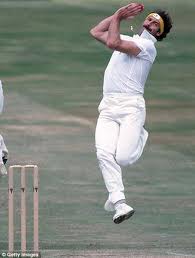
The economics of Dennis Lillee and Steve Jobs

Dennis Lillee was paid £1,200 to tour England in 1972 for five months. He was paid the same to tour for three months in 1975. Now a world-class fast bowling coach, he would probably not get out for bed for £1,200

dkl

When Kerry Packer bid for the Australian cricket rights in the 1970s, he offered $500,000 per year. That was about ten times what the ABC was paying at the time

The Australian cricket TV rights sold for over $500 million in 2013 for a 5-year deal.

Today’s international cricketers are millionaires – widely respected and beloved members of the top 1% of income earners. Most think it is great that top sports people make millions over their career. No plans for the Occupy Wall Street crowd to occupy the MCG, Wimbledon or the Olympics to complain about superstar sports salaries and prizes.

Lillee and other top athletes, celebrities, actors, musicians and entertainers are all paid much more for much the same reason that CEOs, money market managers, top lawyers and tech entrepreneurs are paid much more than in the past.

They are superstars who are able to leverage their talent through communications technology advances on a national and global level. They can apply ‘their talent to greater pools of resources and reach[ing] larger numbers of people thus becoming more productive and higher paid’.

  • Why is there envy over the pay of businessmen but not for superstar entertainers and athletes?
  • Did people boo World Series Cricket in 1977 because those cricketers could now make a decent living?
  • Do people complain when musicians and actors make it big?

Why is Steve Jobs strangely immune from top 1% envy despite his cheapness and meanness to others while Bill Gates is reviled as some sort of monopolist despite his giving most of his wealth away?

Was Jobs worth his pay? Apple shares went up and down in billions on news of Steve Jobs’s health.

When Hewlett Packard’s CEO Mark Hurd resigned unexpectedly, the value of HP shares dropped by about $10 billion! This makes his $30 million in annual compensation a bargain for his shareholders. Oracle’s shares rose 6% on word of Mr. Hurd’s hiring as co-president on an annual base salary of $950,000 and being eligible for up to a $10 million annual bonus. Perhaps he is under-paid?

See Kaplan, Steven N., and Joshua Rauh. 2013. It’s the Market: The Broad-Based Rise in the Return to Top Talent, Journal of Economic Perspectives 2013 for more.

Robert Nozick and J.K. Rowling

Tyler Cowen summarised Robert Nozick’s Wilt Chamberlain example, thus: a bunch of poor kids pay to see Wilt Chamberlain play basketball. Wilt gets the money, the kids get to see the game. Wilt is millions of dollars richer by the end of the season and the kids poorer. Since we wouldn’t object to any one of these individual voluntary market transactions, why should we object to the resulting new distributional pattern of income and wealth? Is this new pattern unjust?

Robert Nozick argued that most notions of distributive justice would require a continual and unjustified interference in personal liberties to stop people undoing equality by trading with people such as Wilt Chamberlain. Individuals would be stopped from using the fruits of their talents, abilities, and labour as they see fit.

Isn’t it time to update and internationalise the Wilt Chamberlain example?

  • A Scottish welfare mum decides to cheer herself up and write a book, going to local cafés to do so to escape from her unheated flat.
  • The initial print run was 1,000 books, five hundred of which were distributed to libraries.
  • J.K. Rowling is the first to become a billionaire by writing books.
  • Every one of those book purchases was voluntary.
  • Every one willingly gave up their money for her books.
  • Is this new distributional pattern of wealth and income unjust?

G.A. Cohen twisted and turned to argue that the fruits of Rowling’s mind and willingness to work, in effect, belong to us all?!

How many more Harry Potter books would have been written if Cohen is right and his ideas applied about taxing the rich?

Are you willing to risk explaining your answer to the young and not so young fans of Rowling’s books about how it would be part of a better world for them that the additional Harry Potter books were not written?

Instead of just letting young people buy her books if they want them, we must put up with constant interference with people’s liberties to prevent injustices from J.K. Rowling’s royalties stream getting too high.

Liberty upsets patterns. Allowing individuals freely to use their equal wealth and income as they choose will inevitably destroy any distributional pattern advocated by socialists and egalitarians. If anyone evaluates how just this or that pattern of income and wealth distribution is based on how things end up, they must constantly support interferences with people’s liberties. That people having rights and resources have moral histories was central to Nozick’s attack on Rawls. Nozick rejected Rawl’s notion of resources and talents being collective assets to be assigned by a central distributor.

More and more of the top 1% of income earners these days are superstar celebrities, athletes and entertainers. J.K. Rowling and most top celebrities, athletes and entertainers get a pass on distributional injustices and growing inequality resulting from their membership of the top 1% of income earners. Why?

Philosophers do spend a lot of time arguing over whether we own our own eyes and thus can can take our eyes with us behind the veil of ignorance or whether our spare good eye instead should be left outside to be redistributed through an eye lottery to the blind. But if we own our own eyes no matter what, why not our other natural gifts, talents, good health and work ethic?

P.S. J.K. Rowling is a socialist who gave millions to British Labour. She would not be able to do that if the 83% top income tax rates of 1970s British Labour had applied. Maybe she would have been another of the legion of left-wing tax exiles such as in the 1970s?

Next Newer Entries

Bassett, Brash & Hide

Celebrating humanity's flourishing through the spread of capitalism and the rule of law

Truth on the Market

Scholarly commentary on law, economics, and more

The Undercover Historian

Beatrice Cherrier's blog

Matua Kahurangi

Celebrating humanity's flourishing through the spread of capitalism and the rule of law

Temple of Sociology

Celebrating humanity's flourishing through the spread of capitalism and the rule of law

Velvet Glove, Iron Fist

Celebrating humanity's flourishing through the spread of capitalism and the rule of law

Why Evolution Is True

Why Evolution is True is a blog written by Jerry Coyne, centered on evolution and biology but also dealing with diverse topics like politics, culture, and cats.

Down to Earth Kiwi

Celebrating humanity's flourishing through the spread of capitalism and the rule of law

NoTricksZone

Celebrating humanity's flourishing through the spread of capitalism and the rule of law

Homepaddock

A rural perspective with a blue tint by Ele Ludemann

Kiwiblog

DPF's Kiwiblog - Fomenting Happy Mischief since 2003

The Dangerous Economist

Celebrating humanity's flourishing through the spread of capitalism and the rule of law

Watts Up With That?

The world's most viewed site on global warming and climate change

The Logical Place

Tim Harding's writings on rationality, informal logic and skepticism

Doc's Books

A window into Doc Freiberger's library

The Risk-Monger

Let's examine hard decisions!

Uneasy Money

Commentary on monetary policy in the spirit of R. G. Hawtrey

Barrie Saunders

Thoughts on public policy and the media

Liberty Scott

Celebrating humanity's flourishing through the spread of capitalism and the rule of law

Point of Order

Politics and the economy

James Bowden's Blog

A blog (primarily) on Canadian and Commonwealth political history and institutions

Science Matters

Reading between the lines, and underneath the hype.

Peter Winsley

Economics, and such stuff as dreams are made on

A Venerable Puzzle

"The British constitution has always been puzzling, and always will be." --Queen Elizabeth II

The Antiplanner

Celebrating humanity's flourishing through the spread of capitalism and the rule of law

Bet On It

Celebrating humanity's flourishing through the spread of capitalism and the rule of law

History of Sorts

WORLD WAR II, MUSIC, HISTORY, HOLOCAUST

Roger Pielke Jr.

Undisciplined scholar, recovering academic

Offsetting Behaviour

Celebrating humanity's flourishing through the spread of capitalism and the rule of law

JONATHAN TURLEY

Res ipsa loquitur - The thing itself speaks

Conversable Economist

Celebrating humanity's flourishing through the spread of capitalism and the rule of law

The Victorian Commons

Researching the House of Commons, 1832-1868

The History of Parliament

Articles and research from the History of Parliament Trust

Books & Boots

Reflections on books and art

Legal History Miscellany

Posts on the History of Law, Crime, and Justice

Sex, Drugs and Economics

Celebrating humanity's flourishing through the spread of capitalism and the rule of law

European Royal History

Exploring the Monarchs of Europe

Tallbloke's Talkshop

Cutting edge science you can dice with

Marginal REVOLUTION

Small Steps Toward A Much Better World

NOT A LOT OF PEOPLE KNOW THAT

“We do not believe any group of men adequate enough or wise enough to operate without scrutiny or without criticism. We know that the only way to avoid error is to detect it, that the only way to detect it is to be free to inquire. We know that in secrecy error undetected will flourish and subvert”. - J Robert Oppenheimer.

STOP THESE THINGS

The truth about the great wind power fraud - we're not here to debate the wind industry, we're here to destroy it.

Lindsay Mitchell

Celebrating humanity's flourishing through the spread of capitalism and the rule of law

Alt-M

Celebrating humanity's flourishing through the spread of capitalism and the rule of law

croaking cassandra

Economics, public policy, monetary policy, financial regulation, with a New Zealand perspective

The Grumpy Economist

Celebrating humanity's flourishing through the spread of capitalism and the rule of law

International Liberty

Restraining Government in America and Around the World